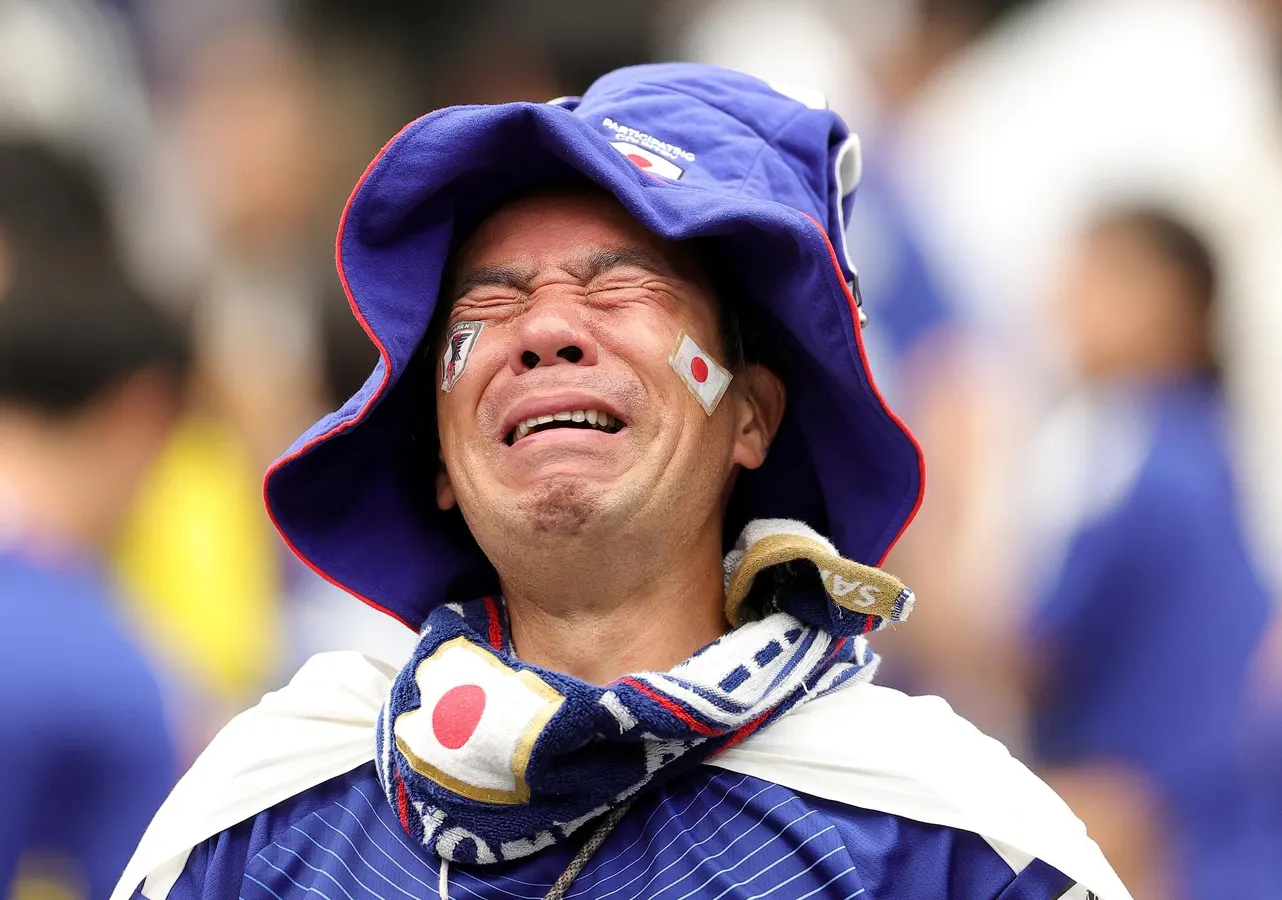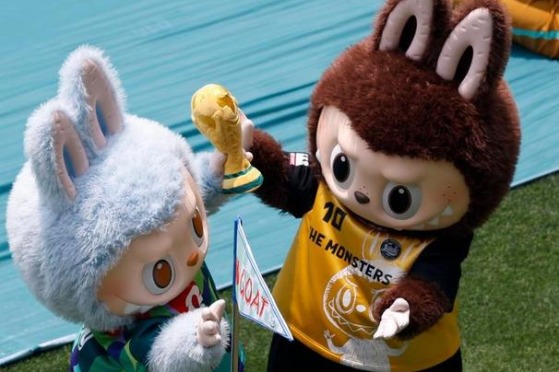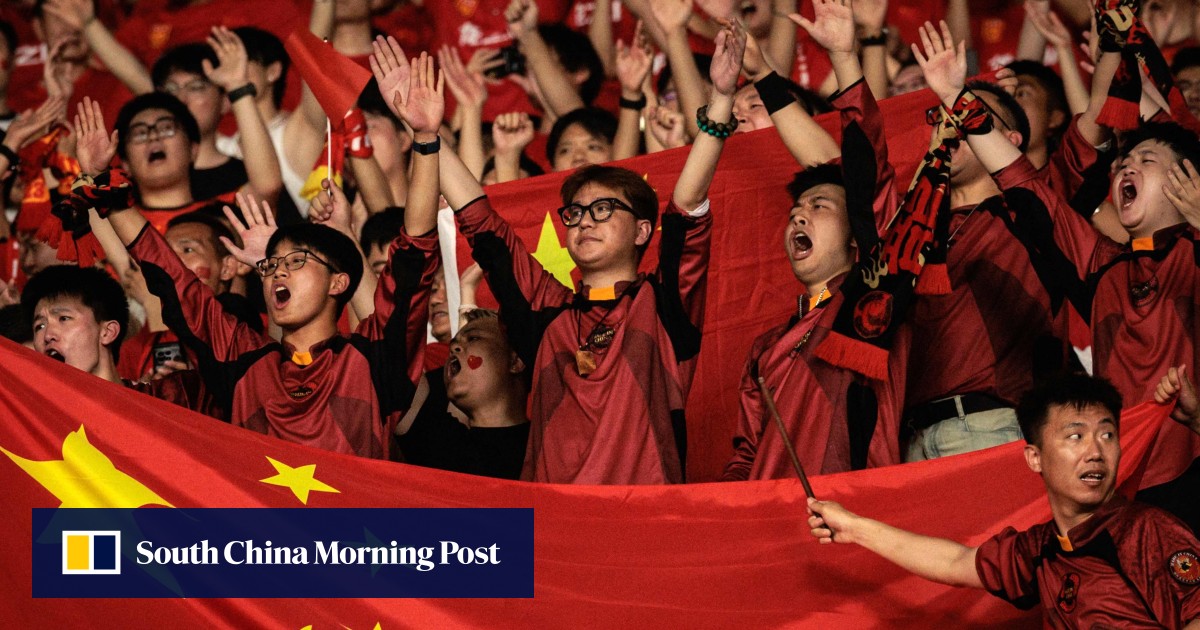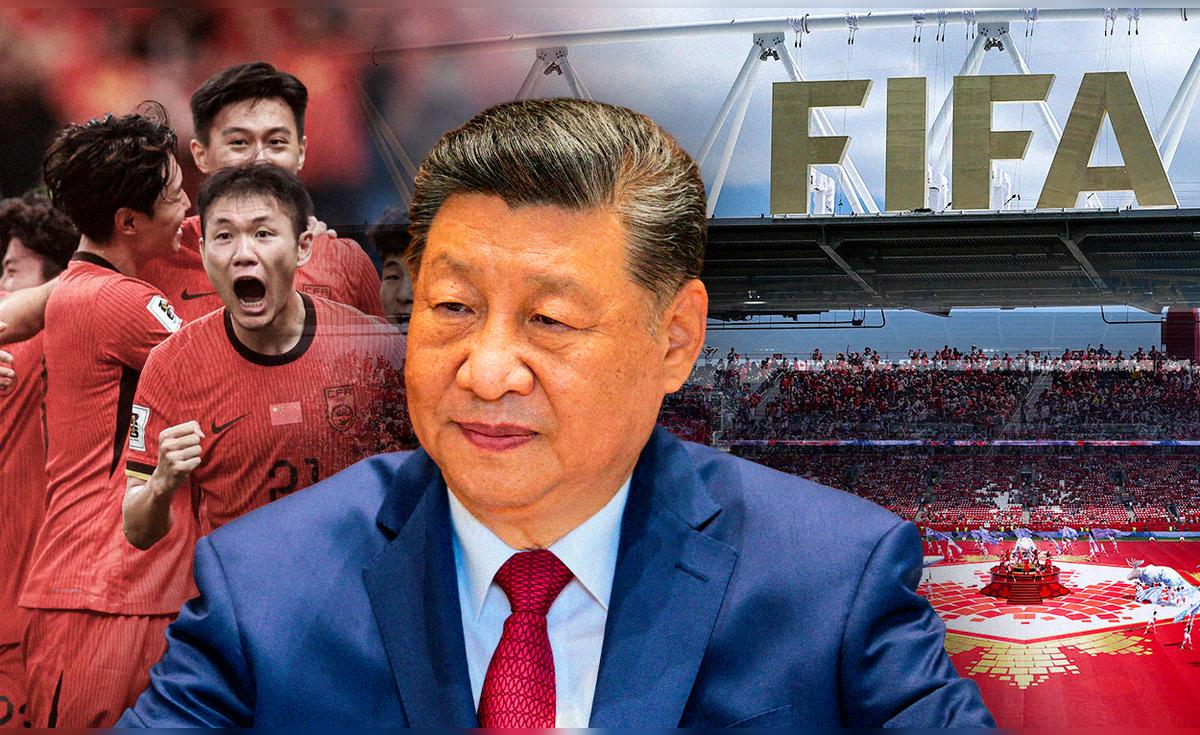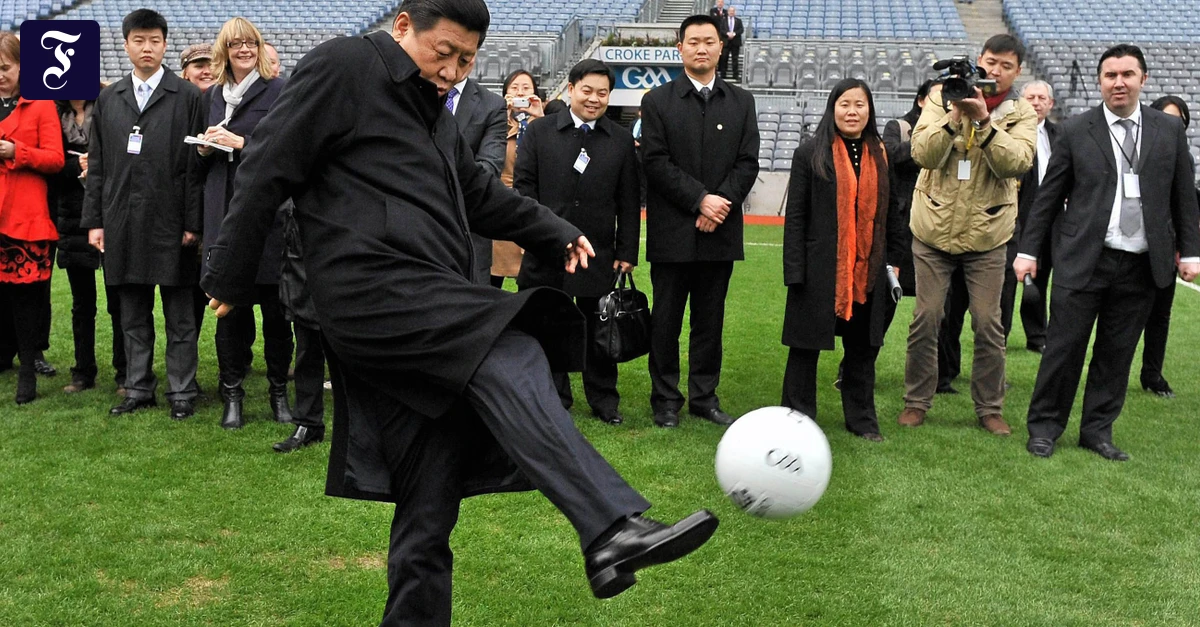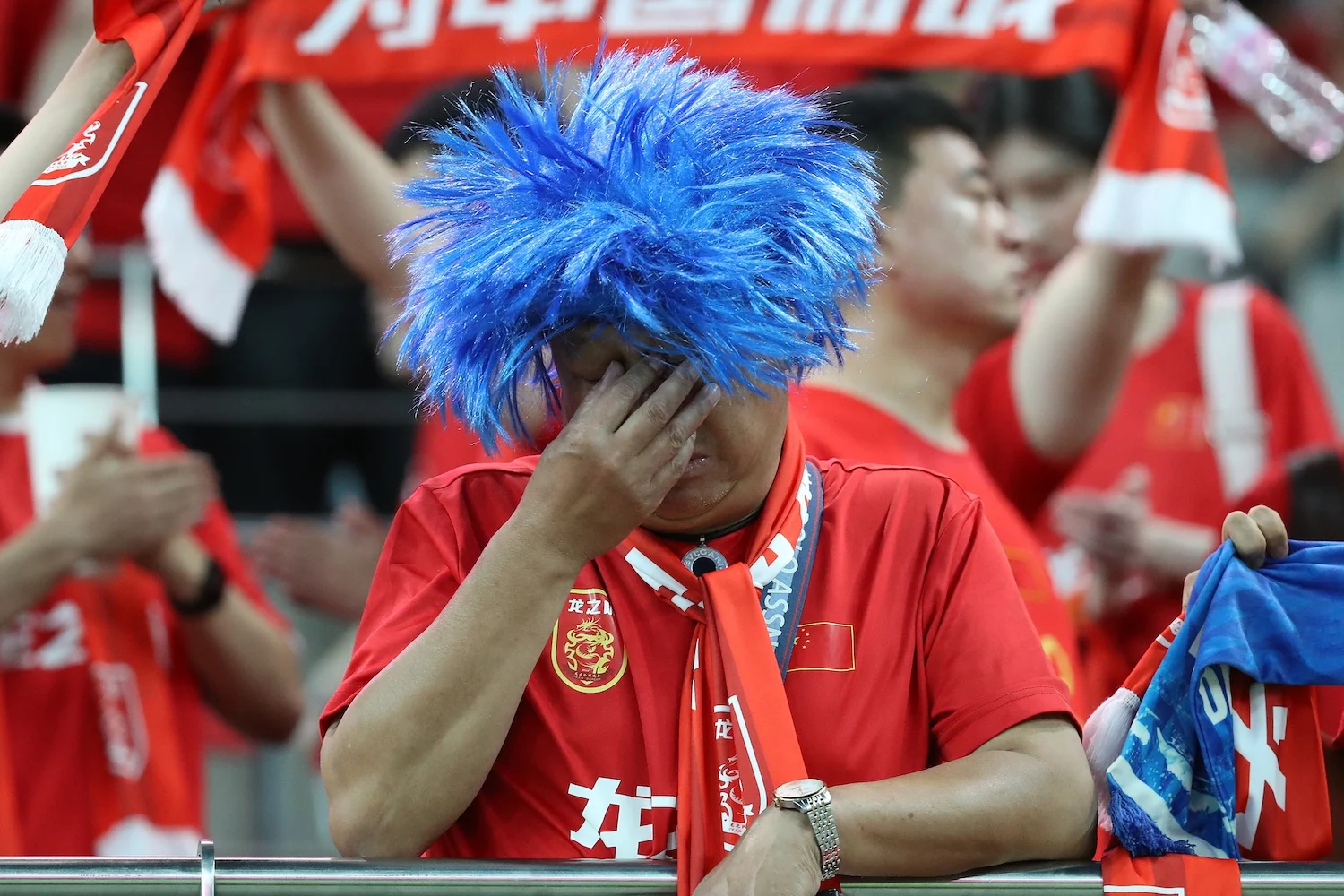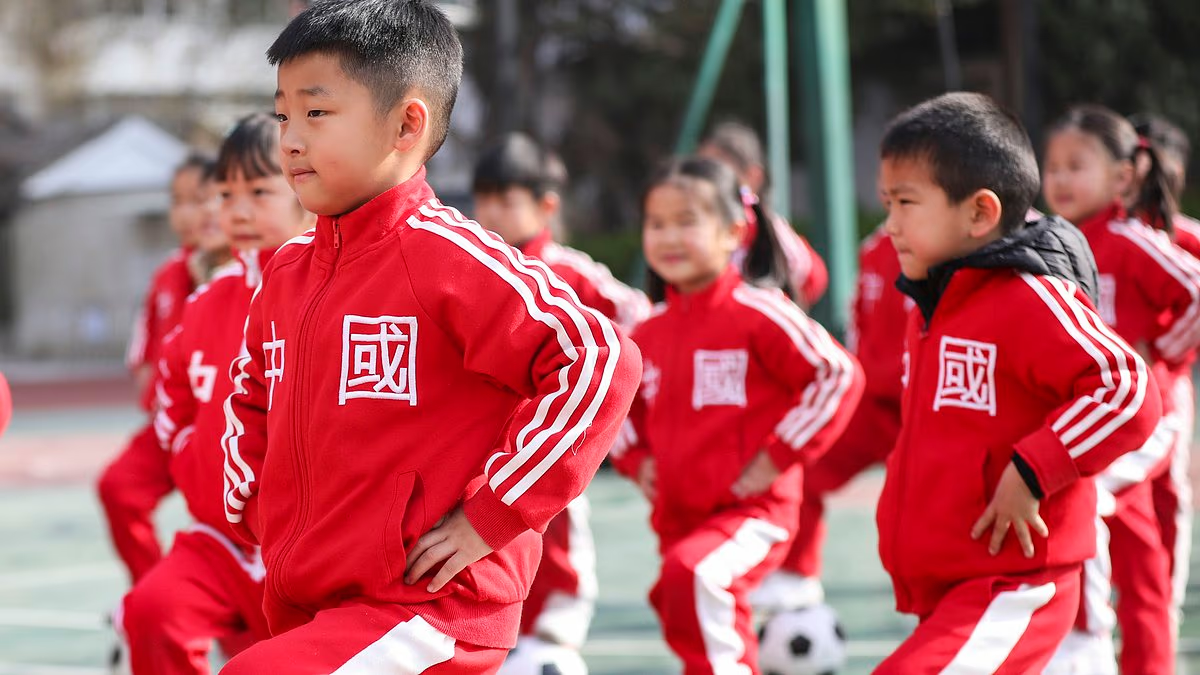
The World Cup is bigger than ever. Forty-eight teams started the tournament, including minnows like Curacao, the smallest country ever to qualify, Cape Verde, the tiny island nation that defied all expectations, and Uzbekistan.And yet economic superpower China is not among them, since the football-mad nation of 1.4 billion people could not muster 11 players capable of hitting the back of the net.Beijing’s highest profile participants are a discipline-obsessed referee and Labubu, a viral elf-like toy, which took part in the opening ceremony. The referee, Ma Ning, has become something of a cult figure back home, where he is known as ‘Card Master’ for his apparent eagerness to dole out red and yellow cards.Yet the glorification of Ma cannot hide the colossal failure of a decade-long, multi-billion-pound campaign to turn China into a football superpower. When President Xi Jinping launched the plan in 2015, China was ranked 81st in the world. It now ranks 91st.During the qualification stages for the current World Cup, it even lost 7-0 to arch rival Japan, a performance so dire it was seen as a national humiliation.What has, however, been world-class is the corruption – theft on such a vast scale that it has decimated the top ranks of the Chinese Football Association, as well as sweeping up players, coaches and referees – or ‘black whistles’ as the latter are known for their match-fixing prowess.In the latest crackdown, bans were imposed on 73 people, including former national team head coach (and ex-Everton player) Li Tie. When this year’s Chinese Super League started in April, nine of the 16 top-flight teams began with negative points after deductions for ‘match-fixing, gambling and corruption’.President Xi’s failed football dream is also a cautionary tale for those over-eager to hype his efforts to capture the commanding heights of the world economy. That’s because his top-down plans for turbo-charging Chinese innovation and technology through diktat and wads of money have a lot in common with his plans for football. There has been a colossal failure of the decade-long, multi-billion-pound campaign to turn China into a football superpower, writes Ian WilliamsDuring the qualification stages for the current World Cup, China even lost 7-0 to arch rival Japan in a performance so dire it was seen as a national humiliationXi’s vision was spelt out in ‘The Overall Chinese Football Reform and Development Programme’, published in 2015 with all the pizzazz of a state plan for coal, steel or pork production. That coincided with his state visit to Britain, when China’s supposedly football-mad president visited Manchester City, in which China subsequently bought a stake.Xi saw the world’s most popular game as the ultimate symbol of soft power, but one that remained a Western stronghold. That grip needed to be broken if he was to realise his ‘China dream’ of becoming a truly great power. The plan, like any good Communist Party project, set a series of targets, from the construction of pitches and recruitment of coaches to the number of children playing the game.Another goal was to host the World Cup, as China inevitably scaled ‘the highest global ranks’ of football. The strategy was linked to the burgeoning cult around Xi, who was portrayed as the ultimate football fan and ‘man of the people’, with state media showing China’s portly leader kicking around balls and watching youth games. Along with billions of pounds of government money, Chinese companies, always well-attuned to the needs of the Party, were urged to support the national effort. They pumped billions into clubs, bringing in foreign players on contracts worth up to £30 million a year.Italy’s World Cup-winning coach Marcello Lippi was appointed to head up China’s national men’s team on a reported salary of £20m a year, second only to Manchester United’s José Mourinho.According to FIFA, Chinese clubs spent £1.27 billion on international transfers between 2011 and 2020. As well as a £265m stake in Manchester City, Chinese investors bought into Southampton, West Bromwich Albion, Aston Villa, Birmingham and Wolverhampton Wanderers. Italy’s AC Milan and Inter Milan also fell into Chinese hands, as Beijing looked to tap into their marketing and coaching expertise.Meanwhile, Evergrande, the now bankrupt property giant, announced plans to build the world’s biggest football stadium in Guangzhou. The sheer volume of money being thrown at the game was astonishing – but, as we have seen, it was all for nothing.Others have blamed wider cultural traits for the failure on the field, arguing that China is simply not good at team sports.Some have blamed China’s one-child policy resulting in parents, over-protective of their only child, not wanting them to engage in contact sport, while a rigid and disciplined education system leaves little room to hang out on the football pitch.Fundamentally, though, football is a bottom-up, creative game that is not so responsive to the top-down, insufferably bureaucratic approach so beloved of a Communist Party riven with corruption.It is not like Olympic sports, such as gymnastics, where a rigid top-down approach has helped China gain global success. Here, the Party scouts for children at an early age, plucking them from their families for training at government-run sports schools. It is a machine with the single purpose of turning out other machines to win medals, while dogged by rumours of abuse and the use of performance enhancing drugs.Football doesn’t work like that. It’s a team sport, and footballing creativity and innovation is harder to manufacture – indeed, authoritarianism is almost guaranteed to destroy it. Football is an open, free-flowing game of countless permutations, relying on the brain as much, if not more, than physique. ‘Playing football is very simple, but playing simple football is the hardest thing there is,’ Dutch football legend Johan Cruyff once said. The soft power strategy was linked to the burgeoning cult around Xi, who was portrayed as the ultimate football fan and ‘man of the people’As Xi’s football dream began to unravel, Caixin, a Chinese business magazine, bravely pointed out that the Communist Party’s grand footballing plan was overseen by rapacious bureaucrats with no real interest in the game, whose plunder thrived in the absence of any transparency, accountability or independent oversight – a metaphor for Party rule.Rather like football, China is throwing billions at technology and innovation, its ambition for global dominance spelt out in a series of ambitious state plans. One is to build a world-class semi-conductor industry, where it currently lags, but it too has been plagued by corruption and waste, with large-scale plunder from a £37bn state-backed chip fund, dubbed the ‘Big Fund’.Last year, China’s annual science spending reached £41bn, but the National Natural Science Foundation of China (NSFC), which doles out state funds for basic research, accused 13 universities and 24 individuals of violations, including buying and selling papers and plagiarism. While the People’s Daily complained that widespread academic cheating ‘shake the foundations of technological innovation’.Last week, the Communist Party’s mouthpiece, the Global Times, sought to take credit for the strong performance of African teams, pointing out that China built many of their stadiums. It also grumbled that football doesn’t really matter, and the Chinese had better things to do than watch the World Cup.There are lessons to be learned from the beautiful game, foremost of which is that creativity cannot easily be manufactured and thrives best when you give room for people to breathe – and to innovate. But that is unlikely to be heeded on or off the field by a leader like Xi Jinping, so obsessed with security and control.Ian Williams is author of Vampire State: The Rise and Fall of the Chinese Economy
IAN WILLIAMS: How China's bid to become a football superpower failed
When President Xi Jinping launched the plan in 2015, China was ranked 81st in the world. It now ranks 91st. During the qualification stages for the current World Cup, it lost 7-0 to arch rival Japan.
1,259 words~6 min read