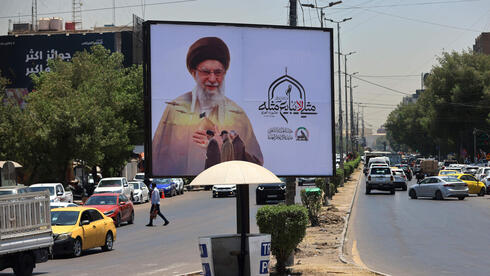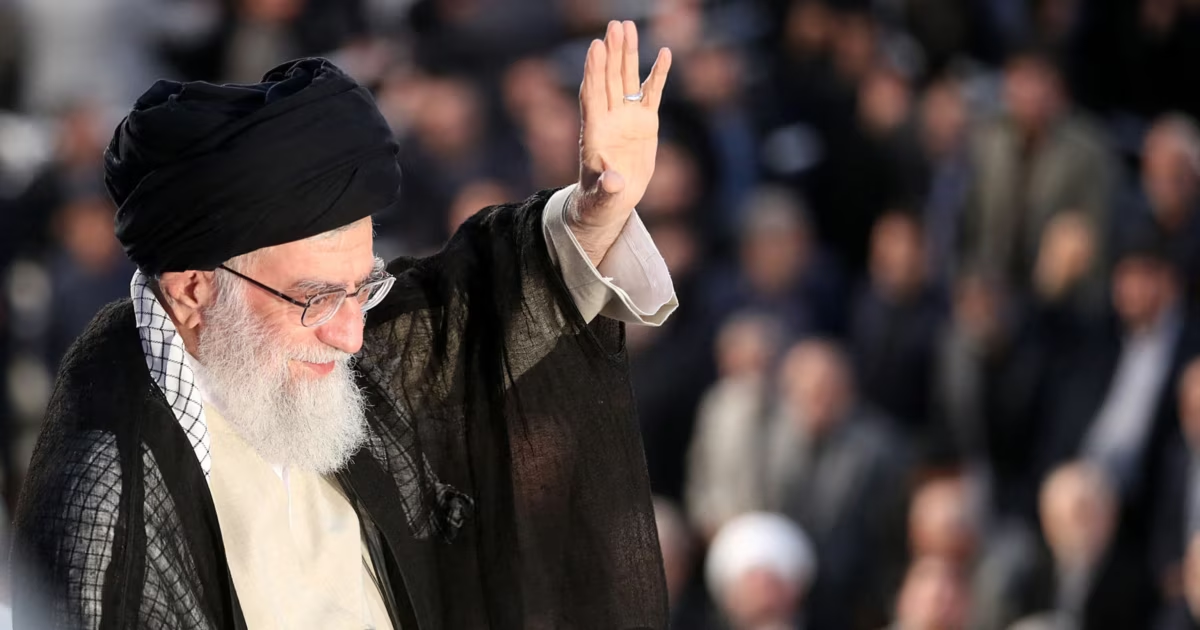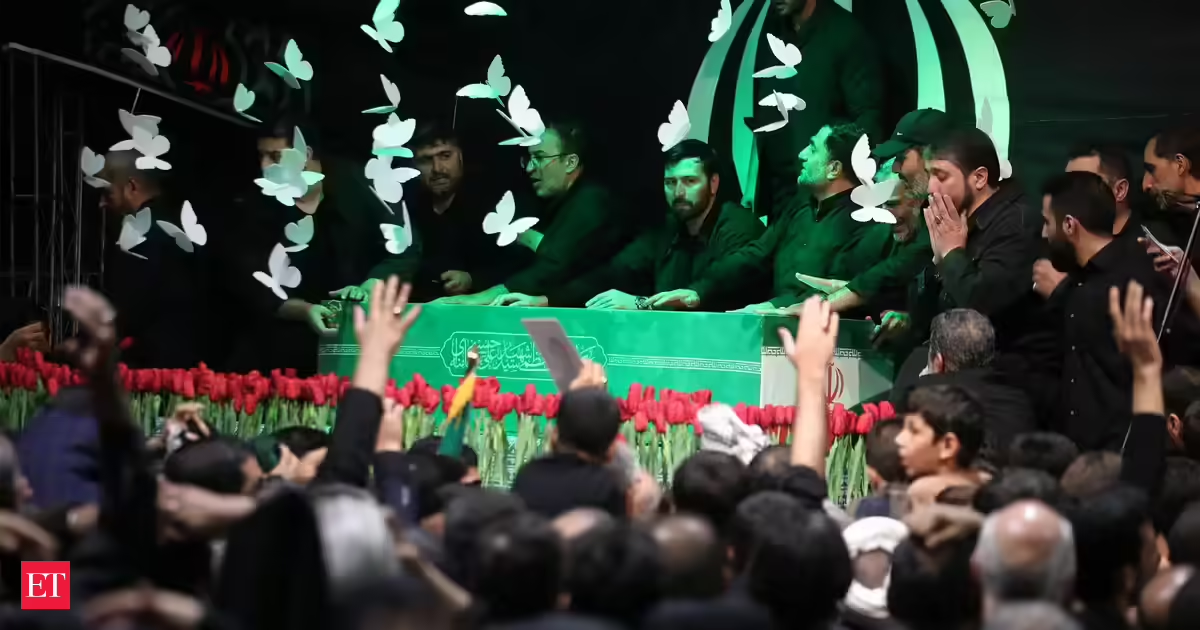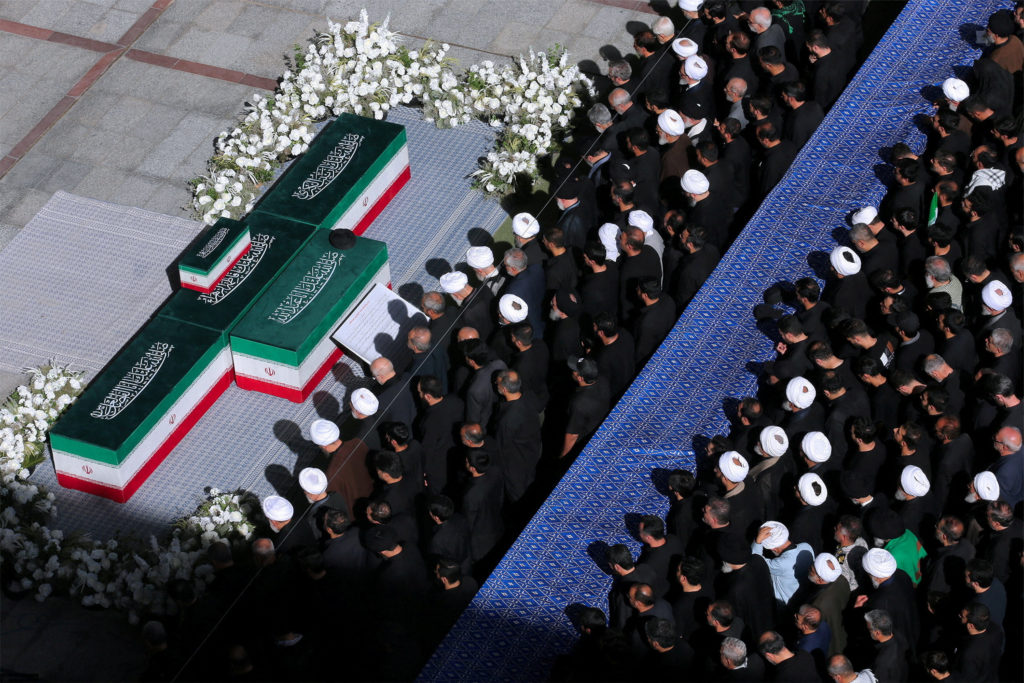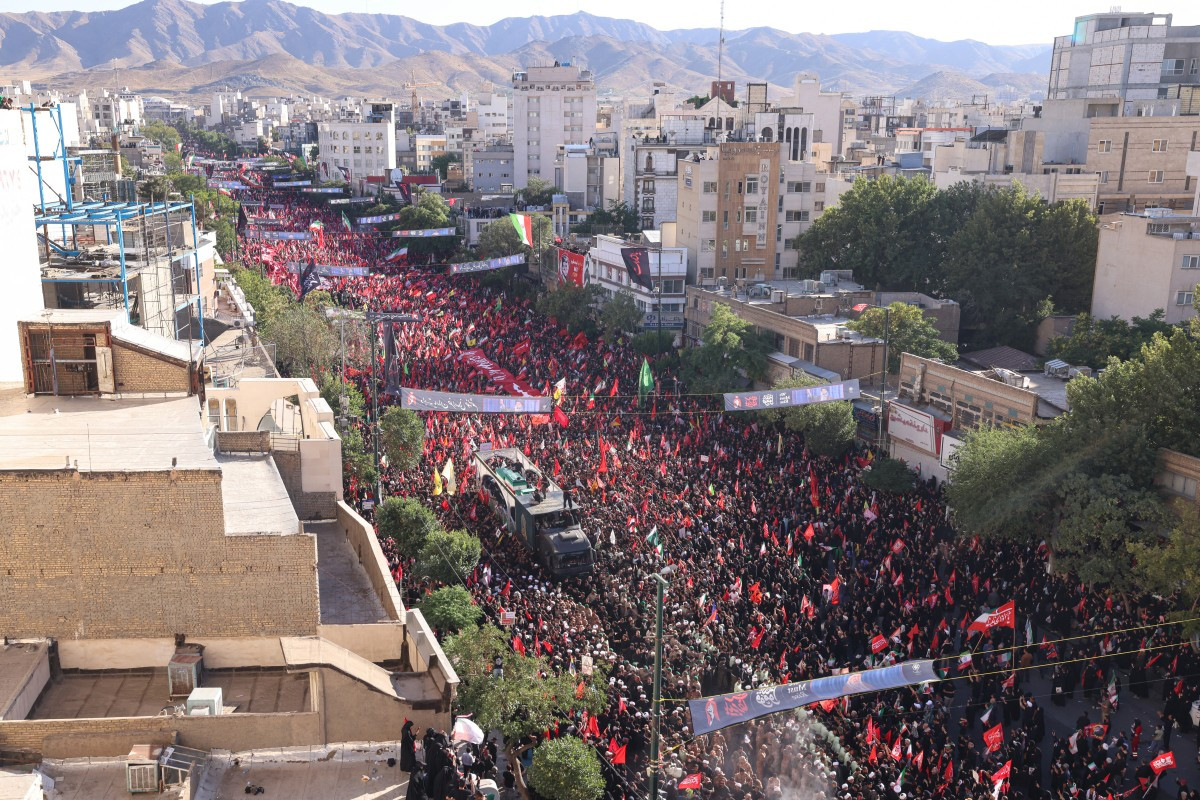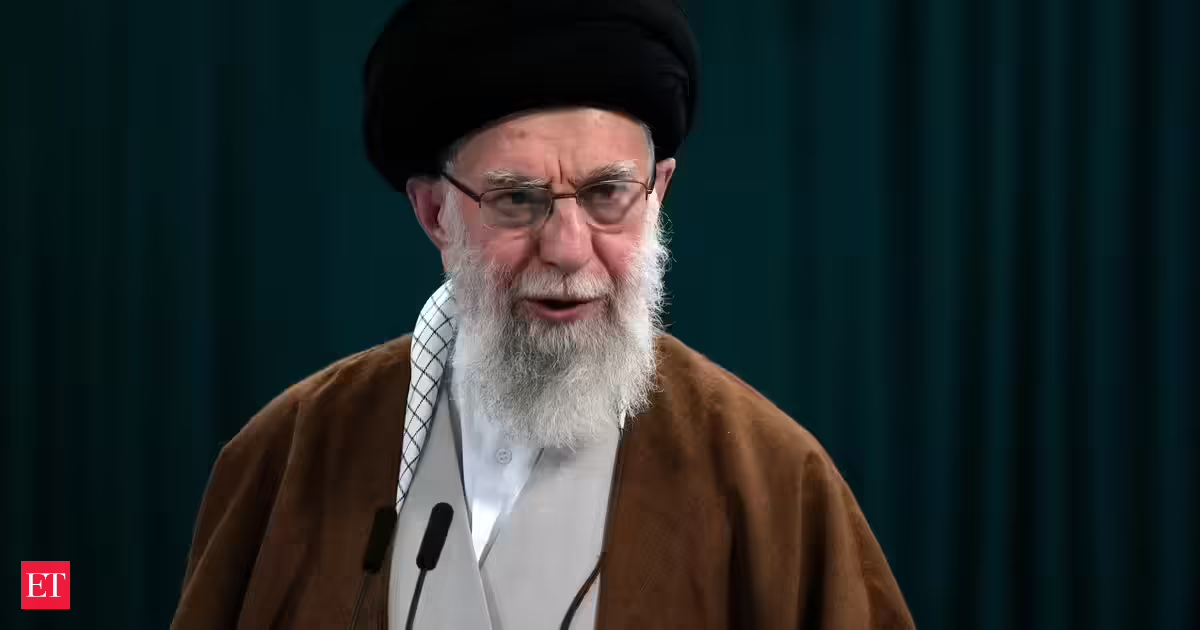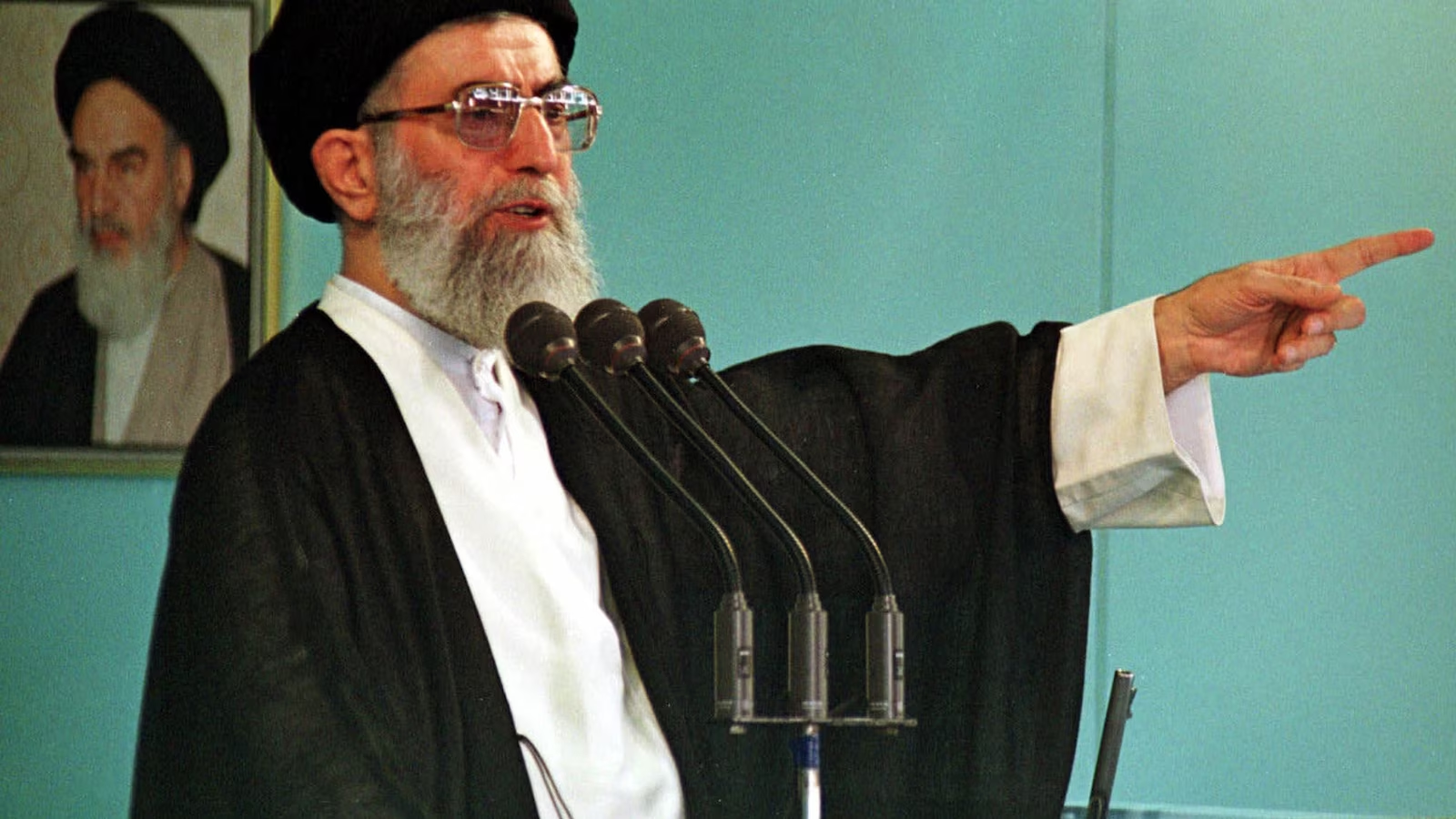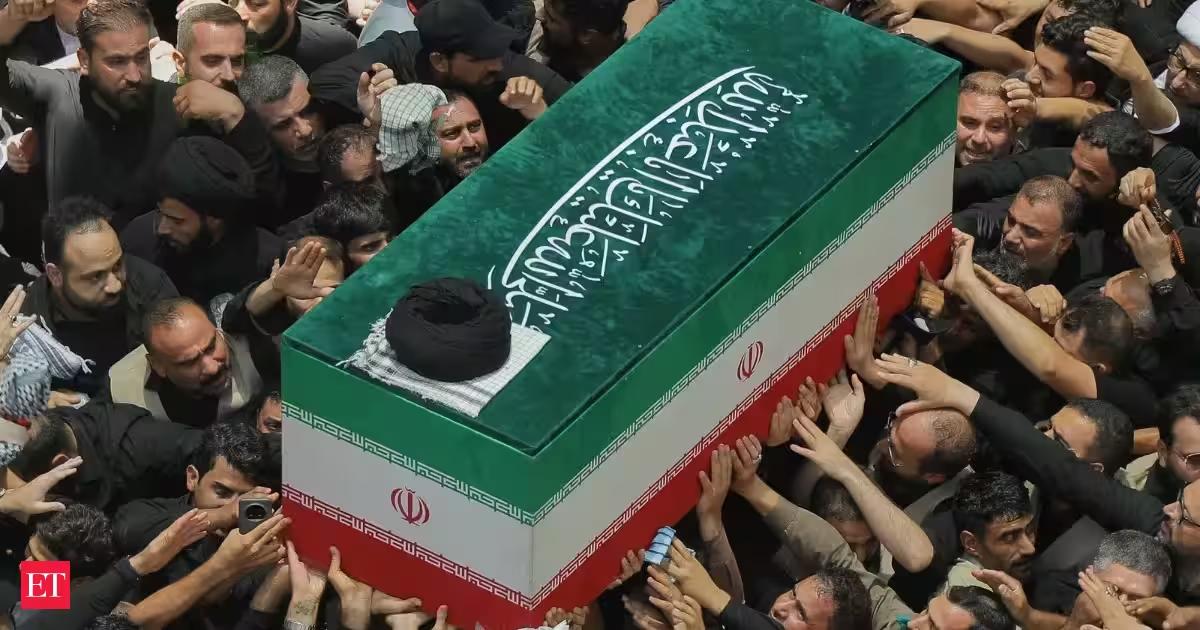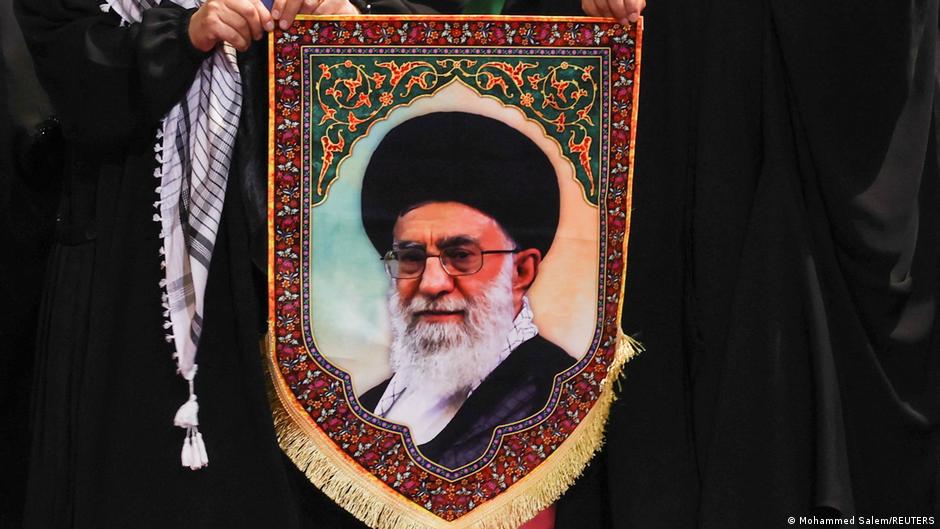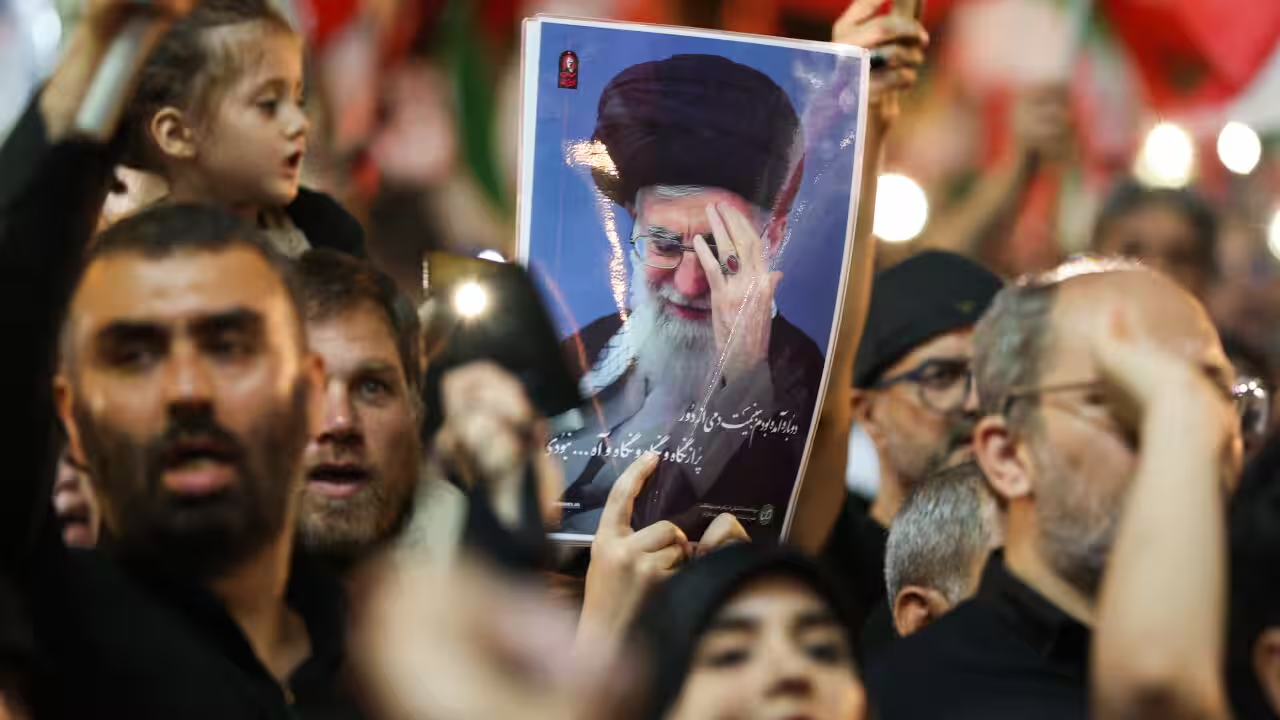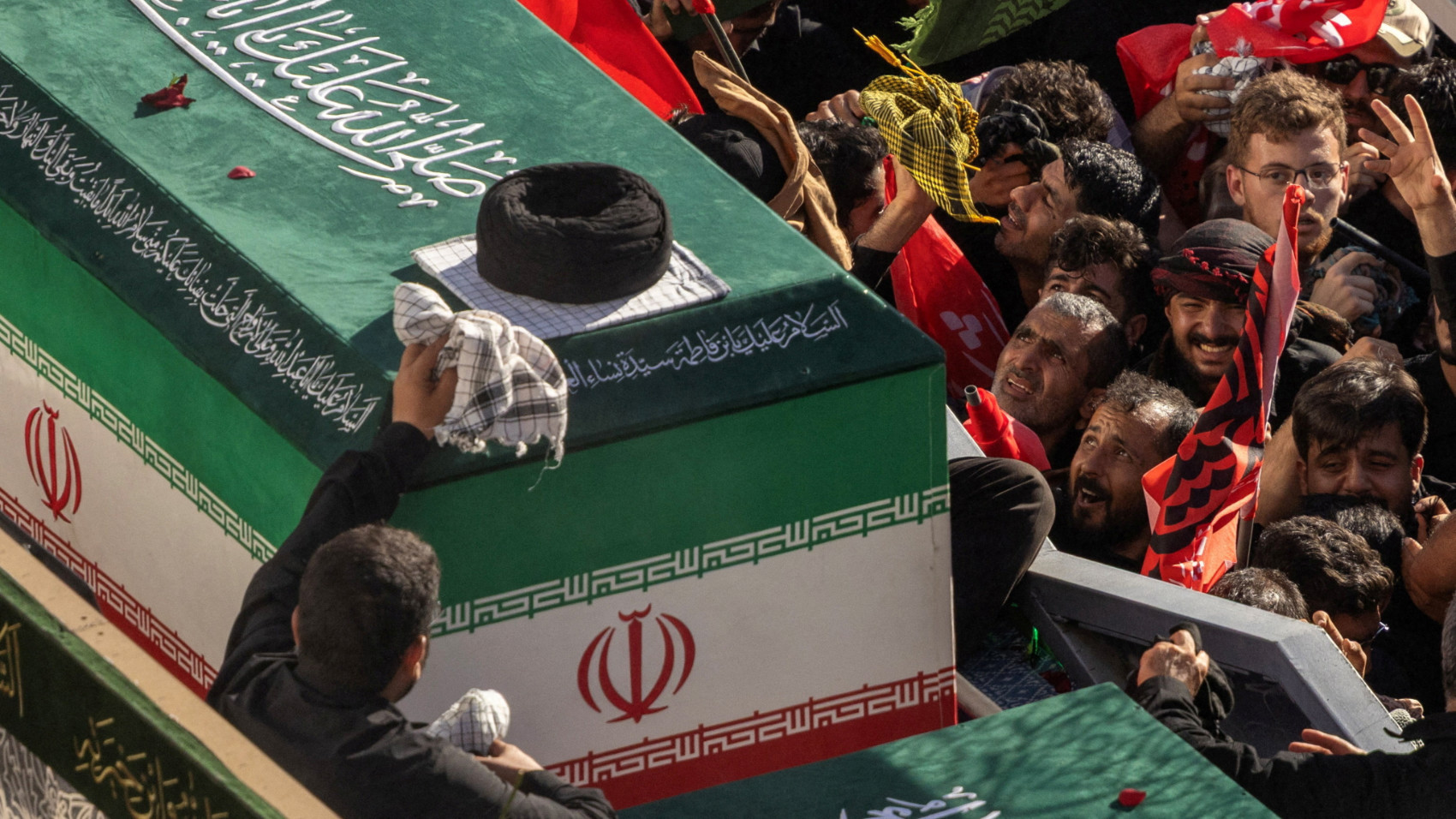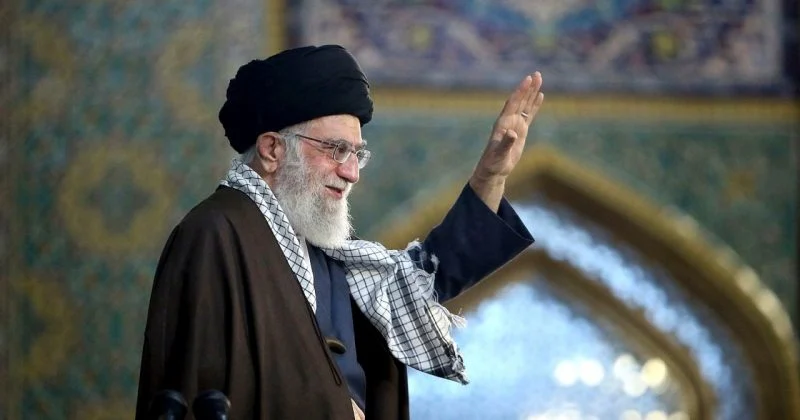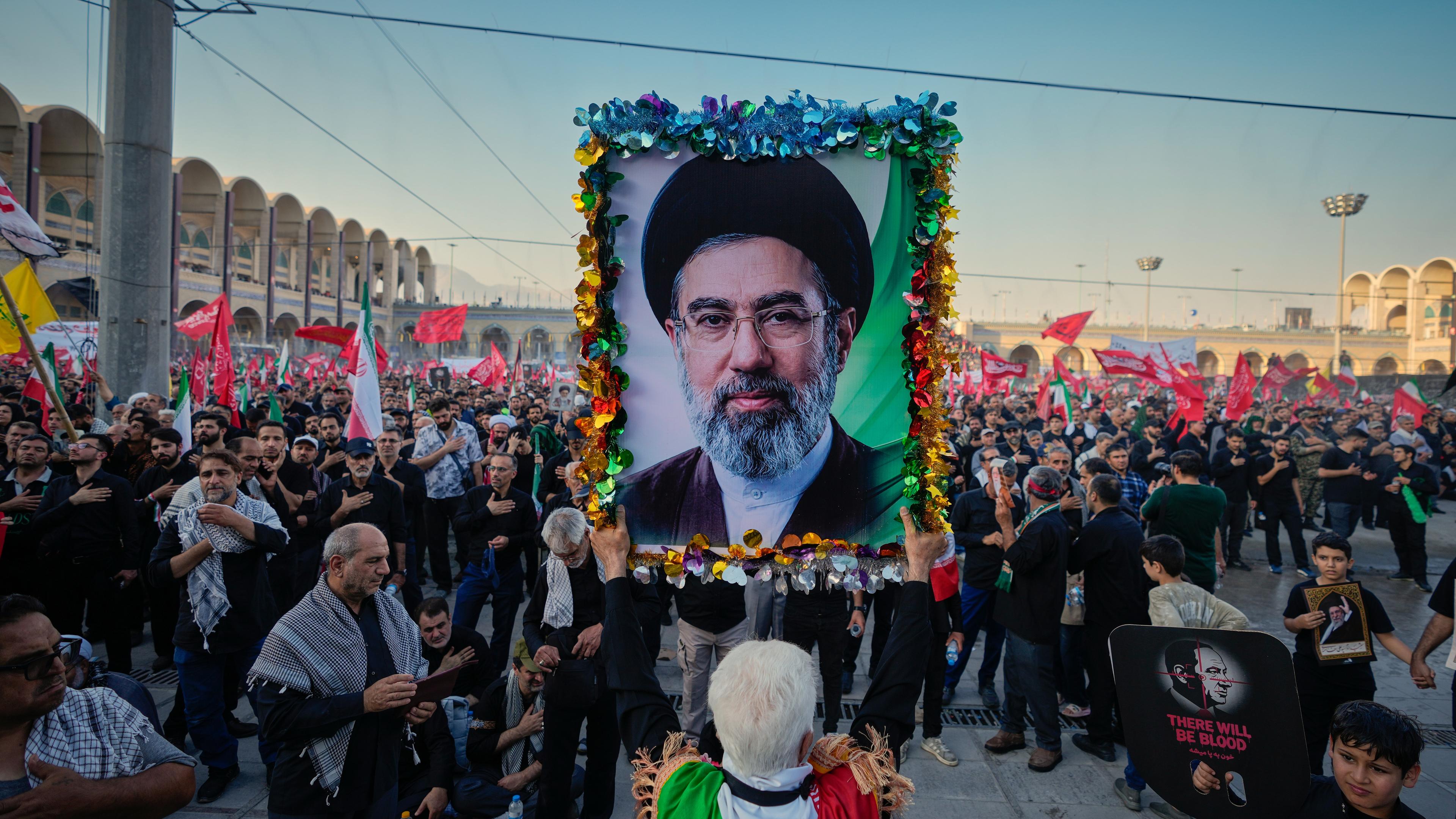
Khamenei, 86, was killed in the United States and Israeli airstrikes that marked the start of the war with Iran on Feb. 28. In the ensuing months, the fighting claimed the lives of over 50 senior-ranking political and military officials, reshaping the established leadership of Iran.That the strength of its leadership has irrevocably suffered is the exact notion Iran hopes to dispel with its high-visibility ceremonies this week. Experts say that the historic gatherings are meant to serve as a powerful endorsement of the Islamic Republic, demonstrating unity throughout the country despite the war’s massive economic and political setbacks. “The funeral of Ayatollah Khamenei is far more than a religious ceremony,” Negar Mortazavi, senior fellow at the Center for International Policy, tells TIME. “The message is that while the leader is gone, the Islamic Republic’s institutions remain intact and the state endures.”Iranian officials have vocalized similar sentiments. Qom Friday prayer leader Ayatollah Mohammad Saidi told state media on July 3 that the funeral is meant to be “another referendum for the Islamic Republic.”Iranian media said that up to 20 million people are expected to attend the funeral proceedings in Tehran. Adding to its display of crowd strength, most of the nation’s remaining leadership has been in attendance, including an appearance by the Islamic Revolutionary Guard Corps Commander-in-Chief, Gen. Ahmad Vahidi, who before last week had not been seen since the war began.Footage from Iranian state media also showed three of Khamenei's sons—Mostafa, Meysam, and Masoud—crying as the coffins of their father and other family members were carried out into Tehran's Grand Mosalla on Sunday. Yet, one of Khamenei’s sons has been notably absent from this show of state power: his successor, Mojtaba Khamenei.The missing successorThe new Supreme Leader has not been seen or heard publicly since his ascension, despite appearing on posters across Tehran. Iranian media reported that he did not attend his wife’s funeral last week. Defense Secretary Pete Hegseth said in March that Mojtaba had been “wounded and likely disfigured” by the attack that killed his father, mother, and wife. Reuters reported in April that the leader was recovering from severe facial and leg injuries—saying that he had potentially even lost a leg in the strikes. Those injuries could be one reason that the Supreme Leader is refraining from making an appearance, Mortazavi explains: “Avoiding a public appearance also prevents projecting an image of vulnerability at a moment when the state is trying to project resilience, unity, and strength.”Security concerns are another.The New York Times reported on July 4 that officials were concerned that an appearance might invite an assassination attempt on Mojtaba.“Following the assassination of his father at the beginning of the war, the new Supreme Leader would be among the highest-value targets for Israel, making public appearances risky,” Mortazavi says. President Donald Trump alluded to the potential vulnerability of a consolidated show of power in his remarks to Axios on Saturday, saying, “They are all there. One shot and we can take them all out.”“But we are not going to do that,” he added.In the meantime, Mojtaba Khamenei’s absence is notable—not only due to the somber significance of this week’s events, but also in light of the fragile ceasefire that reopened the Strait of Hormuz for at least 60 days while the U.S. and Iran seek to resolve outstanding concerns.Although Mortazavi says that the funeral is an opportunity to “reassure both domestic and regional audiences that the transition is under control,” it’s clear that the ongoing peace talks have influenced the tone of the ceremonies.Reporters from The New York Times said they heard chants of “Revenge, revenge,” and “No compromise, no surrender, only revenge,” from the crowd after poet Mohammad Rasouli called for the deaths of both Trump and Israeli Prime Minister Benjamin Netanyahu in his eulogy speech. “It is a disgrace for us if we do not kill your killer,” Rasouli said, addressing the body of Khamenei.With Iran's Supreme Leader remaining out of public view, the funeral's messaging has increasingly emphasized the conflict with Israel and the U.S.—and retribution for it—as much as the transition of power itself.The historic playbookKhamenei rose to power amid a ceremonial undertaking not dissimilar to this week’s events. The elaborate funeral of his predecessor, Ruhollah Khomeini, was also orchestrated to demonstrate leadership continuity in 1989.When Khomeini died of natural causes just under 10 years after founding the Islamic Republic, Iran wound up in Guinness World Records for the “largest percentage of population to attend a funeral.” An estimated 10.2 million people attended his funeral, which was equivalent to one-sixth of the country’s population at the time.The well-attended event devolved into chaos when mourners rushed the casket, the Associated Press reported, causing the deceased religious leader’s body to tumble out into the crowd. The crowd crush killed eight people, and hundreds were injured.Mortazavi calls this week’s funeral the “biggest political ritual” that Iran has seen since then.While attendance over the coming days may ultimately surpass the record-setting attendance for Khomeini’s funeral nearly four decades ago, the nation is divided when it comes to supporting the regime. In the months leading up to the war, protests ignited in all 31 of Iran’s provinces over economic hardship and human rights concerns. The subsequent crackdown from Iranian leadership reportedly killed as many as 30,000 people. Some Iranians have, however, expressed that the conflict itself might have rallied additional support for the regime, shifting blame from Iran’s leadership to Trump and the U.S. Trump told Axios on Saturday that he was surprised by the turnout of Iranians in support of the late Supreme Leader because he thought that they hated him.“Maybe it's fake tears," Trump said.On Monday, Khamenei’s funeral will continue with a 6-mile procession through central Tehran from Imam Hossein Square to Azadi Square, the site of the revolution that founded the Islamic Republic. Processions will also occur in the Shia cities of Karbala and Najaf in Iraq, one of the region’s Shi’ite-majority countries, before the late leader is buried in Mashhad, Iran’s holiest city, on July 9.Whether Mojtaba Khamenei ultimately appears before the ceremonies conclude could become one of the final—and most closely watched—symbols of Iran's effort to project continuity after one of the most consequential leadership transitions in the history of the Islamic Republic.
Khamenei's Funeral Is Meant to Project Strength. But Iran's New Leader Has Yet to Appear
Months after the death of Iran’s Supreme Leader, Ayatollah Ali Khamenei, on Feb. 28, his weeklong funeral is meant to demonstrate a seamless succession of power. But there has been one notable absence.
1,042 words~5 min read