I’ve spent enough time in production environments to know that 'chatting with an AI' is a useless metric if the AI can't touch the actual hardware or deployment state. You don't need a chatbot that tells you how neural networks work; you need a control plane that can audit your GPU instances when a deployment starts failing at 3 AM.
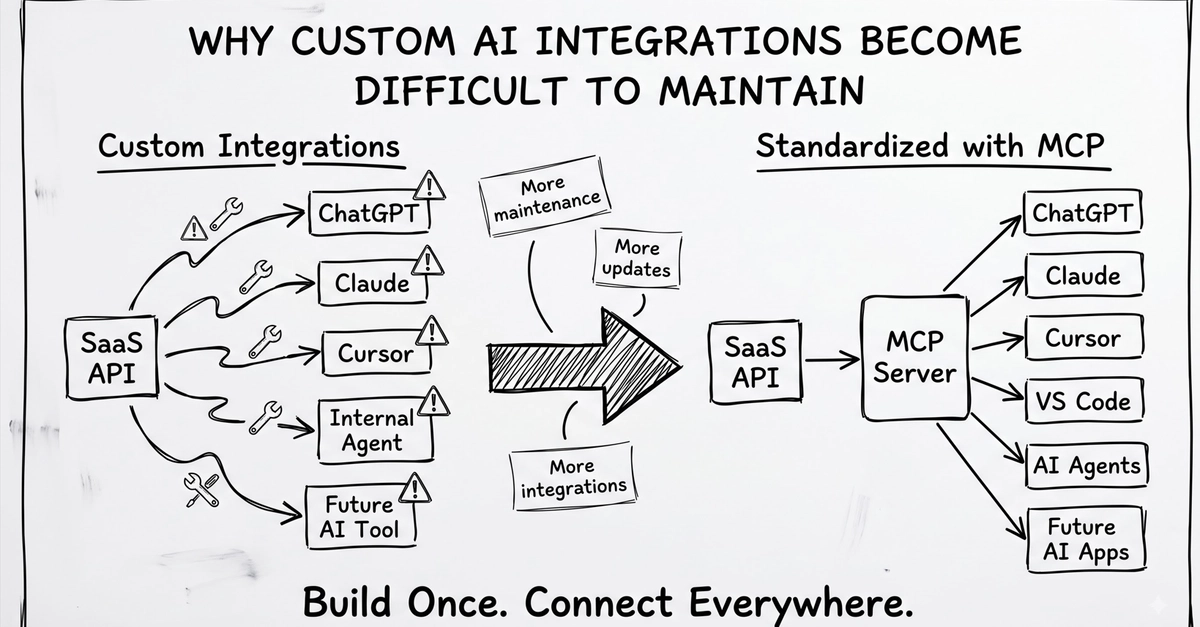
When we were looking at integrating Baseten into the Vinkius ecosystem, the goal wasn't to create another way to talk to an LLM. It was to turn Claude or Cursor from a coding assistant into a functional Machine Learning Operator. The Model Context Protocol (MCP) makes this possible because it moves beyond simple text prompting and provides actual tool definitions that map directly to Baseten’s API capabilities.
If you're managing models on Baseten, your reality isn't just 'is the model up?' It's 'what is the replica state? Are my autoscaling boundaries configured correctly? Is the inference latency spiking because of a specific versioned deployment?'
Moving from Chatting to Orchestration
The real utility of this MCP server lies in its ability to bridge the gap between natural language intent and structured execution. For example, when you use list_models, your agent isn't just reading a list; it's performing an inventory check on your managed assets. But the meat is in the deployment tools.