For the past two years, most of us integrated AI into our workflow using a "ping-pong" model: we write a prompt, get some code, copy-paste it, hit a bug, and paste the error back.
But in 2026, the tech stack is shifting from simple chat interfaces to Autonomous AI Agents.
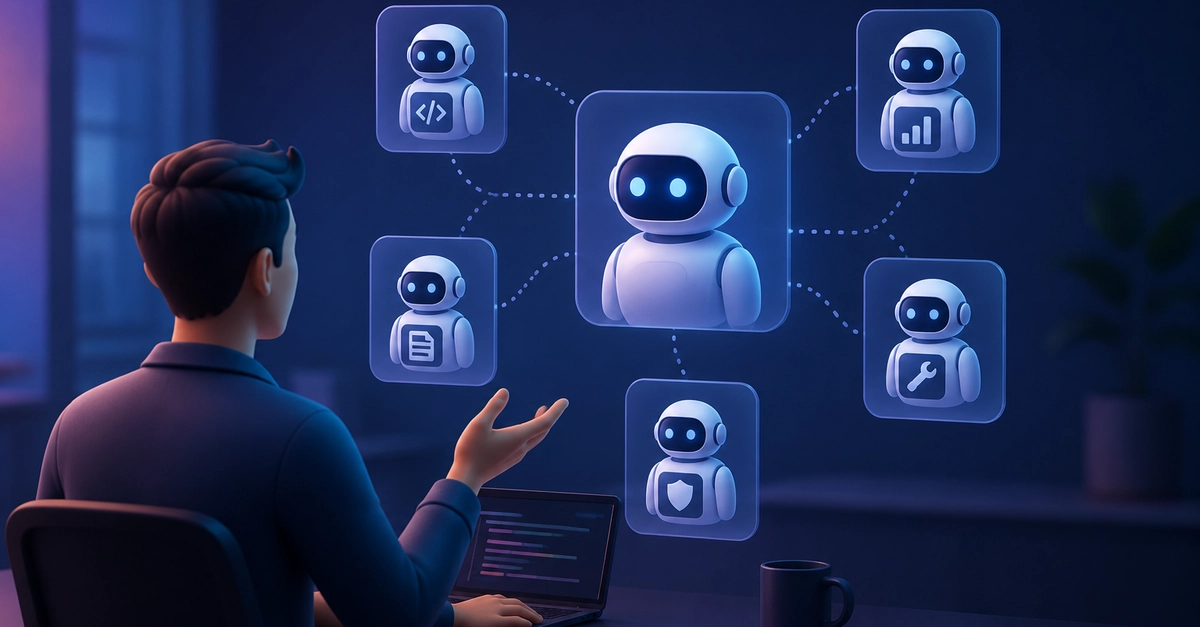
We aren't just talking about smarter chatbots. We are talking about production-ready systems that can plan, use specialized tools, debug themselves, and interact with our local development environments.
The Core Blueprint of an AI Agent
Unlike a standard LLM call that finishes after a single response, an AI Agent operates in an Evaluate-Act-Learn loop. To actually build or interact with one, you need to understand its three core pillars: