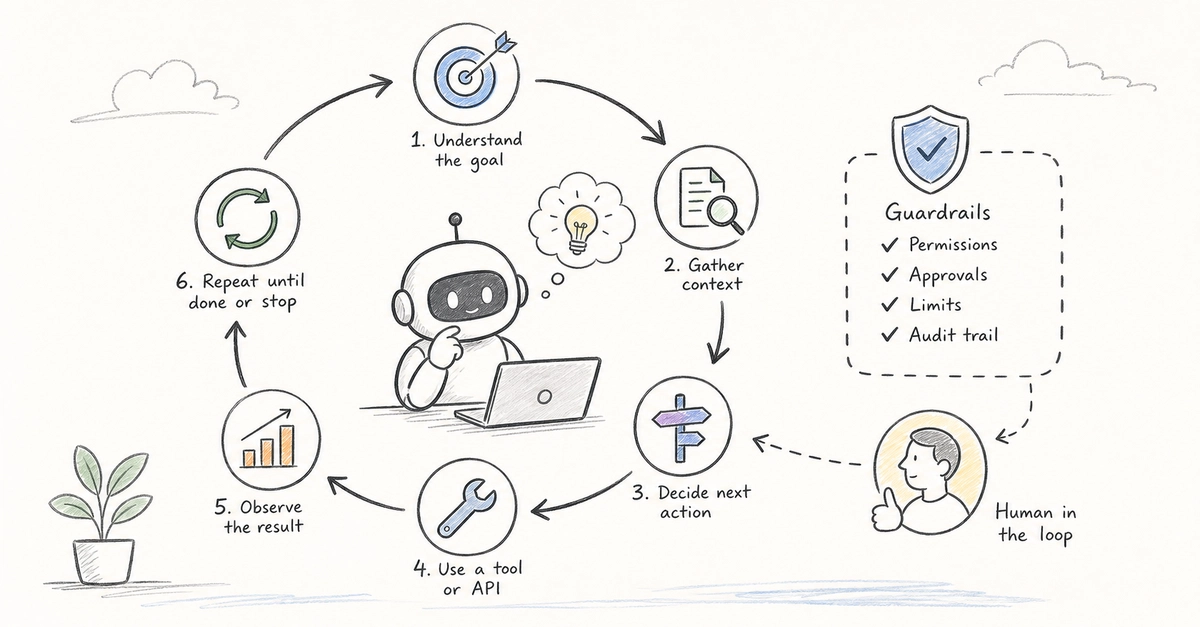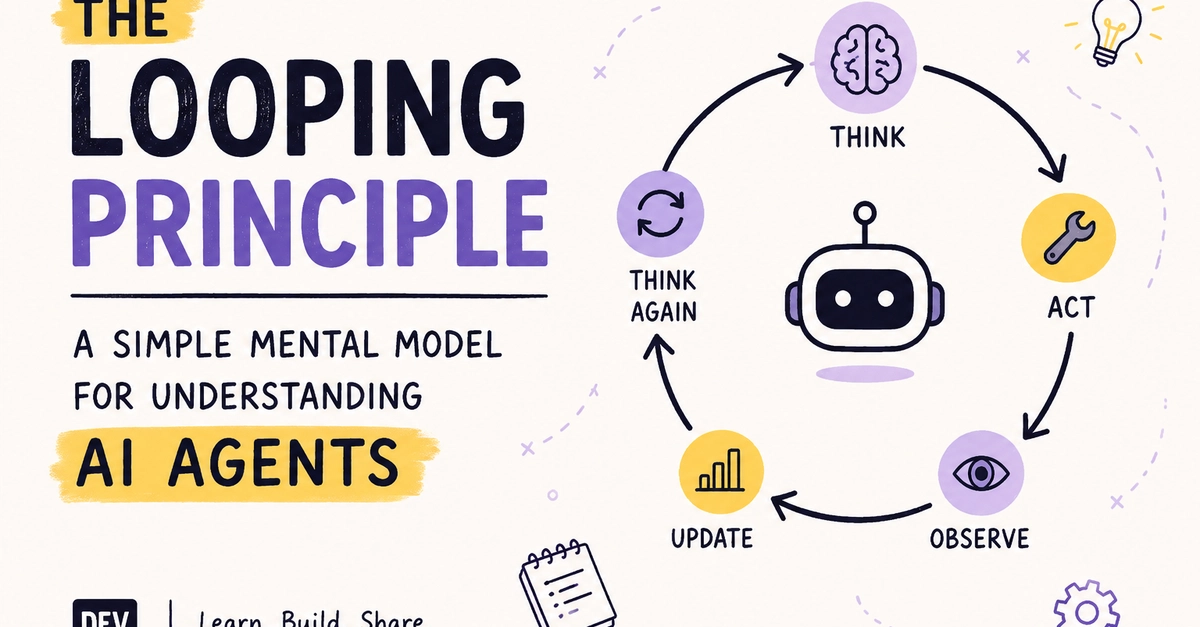
As enterprises adopt AI agents for increasingly complex workflows, experts say the future of AI will rely less on repeated human prompting and more on “loops”—self-directed cycles that allow AI systems to plan, verify, and refine their own work with minimal human intervention.In a company blog, Anthropic shared that the Claude Code team defines loops as agents repeating cycles of work until a stop condition is met.“Every prompt you send starts a manual loop with you directing each turn. Claude gathers context, takes action, checks its work, repeats if needed and responds. We call this the agentic loop,” it said.Anand Jain, Co-founder and Chief Marketing Officer at CleverTap, explained that while traditional prompting involves typing an instruction and receiving a response before manually entering the next instruction, a loop automates that final step.“A loop is an automated system where the AI prompts itself, or where one agent prompts another, working through a task on its own and checking each step against a goal, without a person typing the next instruction in between,” he said.Typically, he added, a prompt does not know if its own output was good. It can’t retry on its own, tell when it’s done, or hold itself to a standard unless a person checks every step. Loops close this gap by giving the system something to check itself against -- whether a passing test, a validated build, or a metric moving in the right direction. This means less manual prompting for the repeatable parts of a job.As AI moves from generating content to performing complex tasks, a single prompt often falls short, explained Jaspreet Bindra, Co-founder & CEO, AI & Beyond.For example, if an AI agent is asked to conduct research, compare options, draft a report and fact-check its findings, it cannot accomplish all of that through one prompt alone. It needs the ability to review its progress, retrieve additional information, correct mistakes and iterate. Loops help AI systems move beyond prediction and toward execution.However, prompting is not going away anytime soon. “What happens after the prompt is changing. Increasingly, the prompt will serve as the starting point rather than the entire interaction. Loops will take over the execution layer, allowing AI systems to reason through tasks, validate outputs and adapt as needed. The future is prompting combined with loops, where each plays a complementary role,” he said.Loops excel in long-running tasks like autonomous coding, supply chain optimisation, and compliance reporting, while prompting remains suitable for simple, one-off activities, according to Dr Srinivas Padmanabhuni, CTO of AiEnsured.“An employee’s role is shifting from managing every step of the process to defining goals, providing oversight, and making final decisions. This evolution transforms humans from prompt writers into system architects, reducing the need for manual, repeated prompting,” he said.However, loops typically increase the number of model interactions, which can raise inference costs and token usage. Every additional cycle of reasoning, checking, or tool usage consumes computational resources.Padmanabhuni shared that loops increase token consumption by 5 to 25x or more and require new infrastructure like prompt caching and state compression to keep costs under control.Bindra argued that the objective is not to minimise tokens, but to maximize outcomes. If a looping system produces significantly better results with fewer human interventions, the overall productivity gains can outweigh the additional computational costs.Published on July 5, 2026
Beyond prompts: AI loops power next generation of autonomous agents
Explore how AI loops enable autonomous agents to automate tasks, reducing human intervention and enhancing productivity in complex workflows.
553 words~3 min read