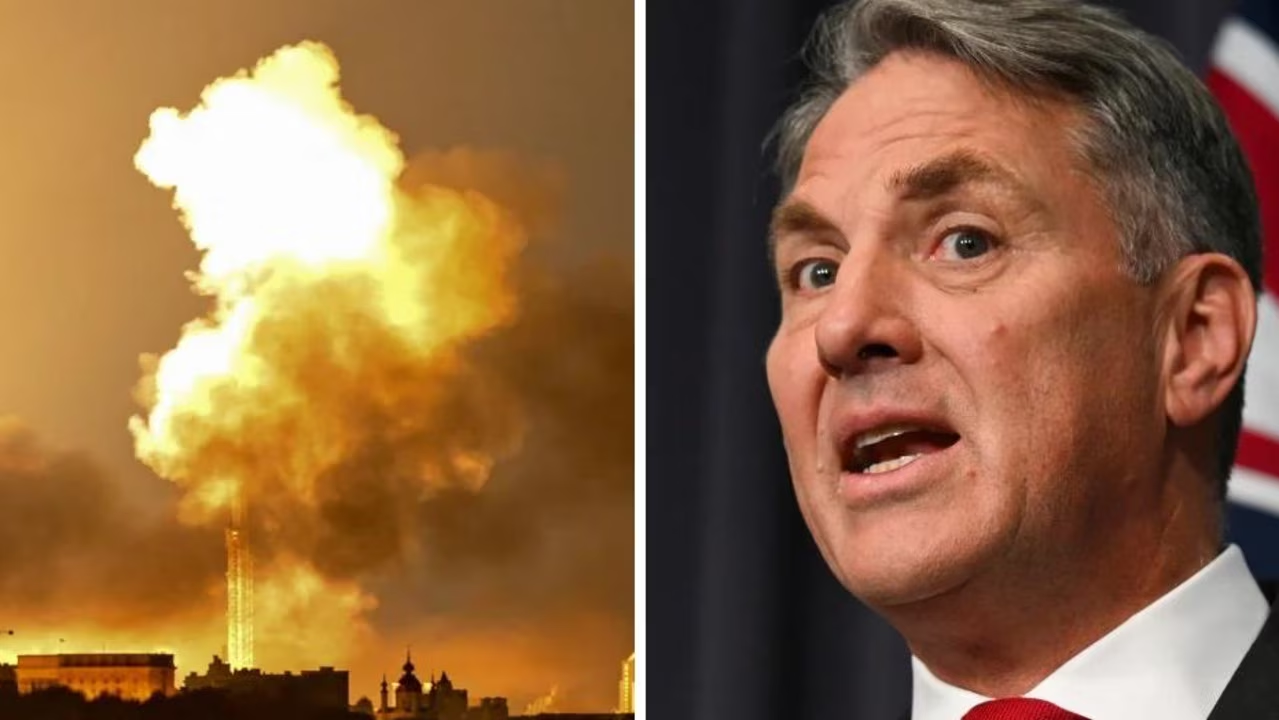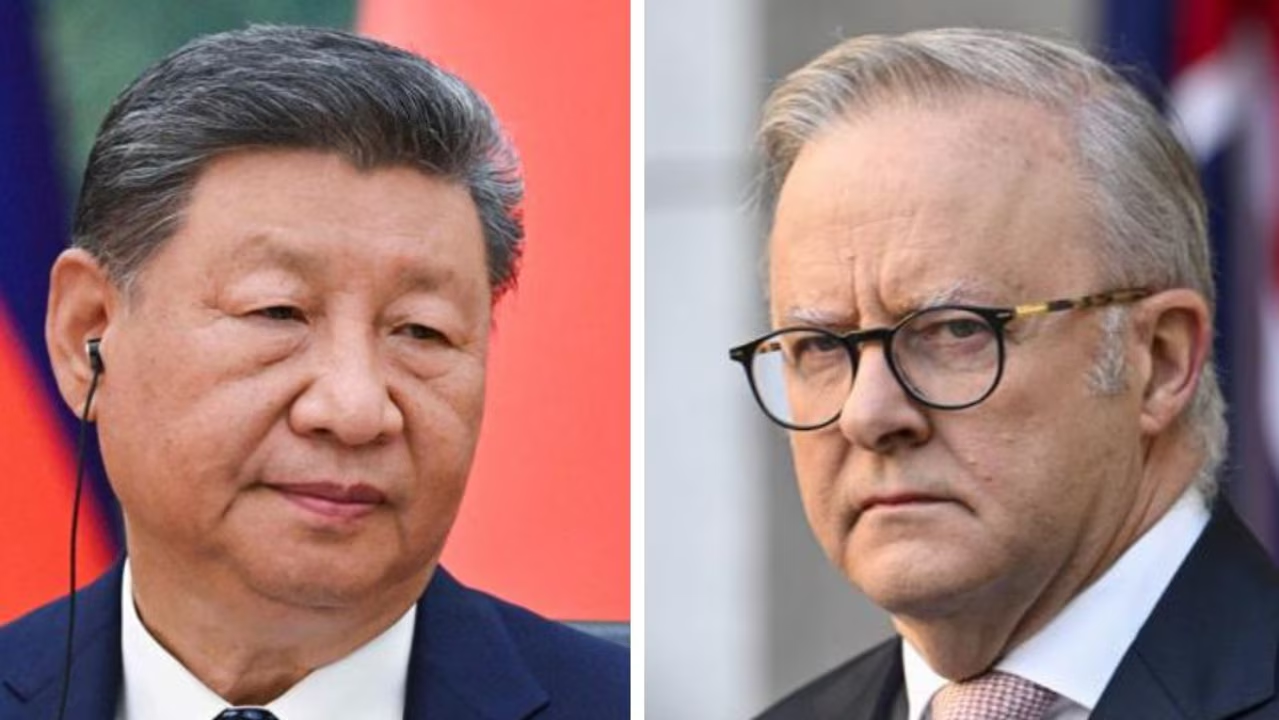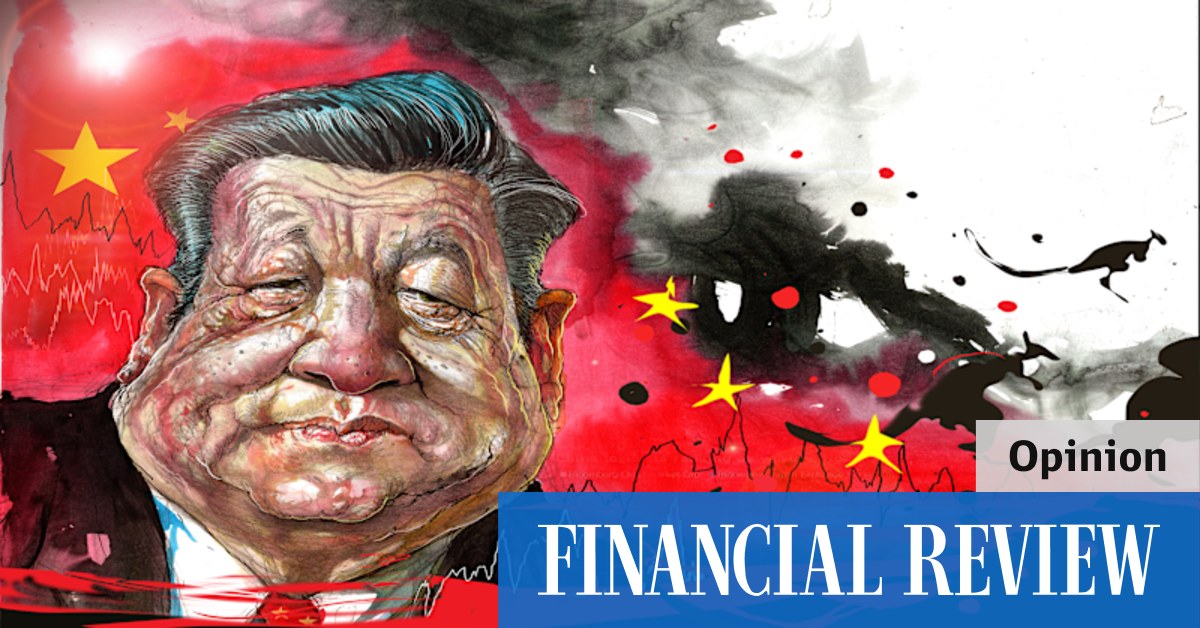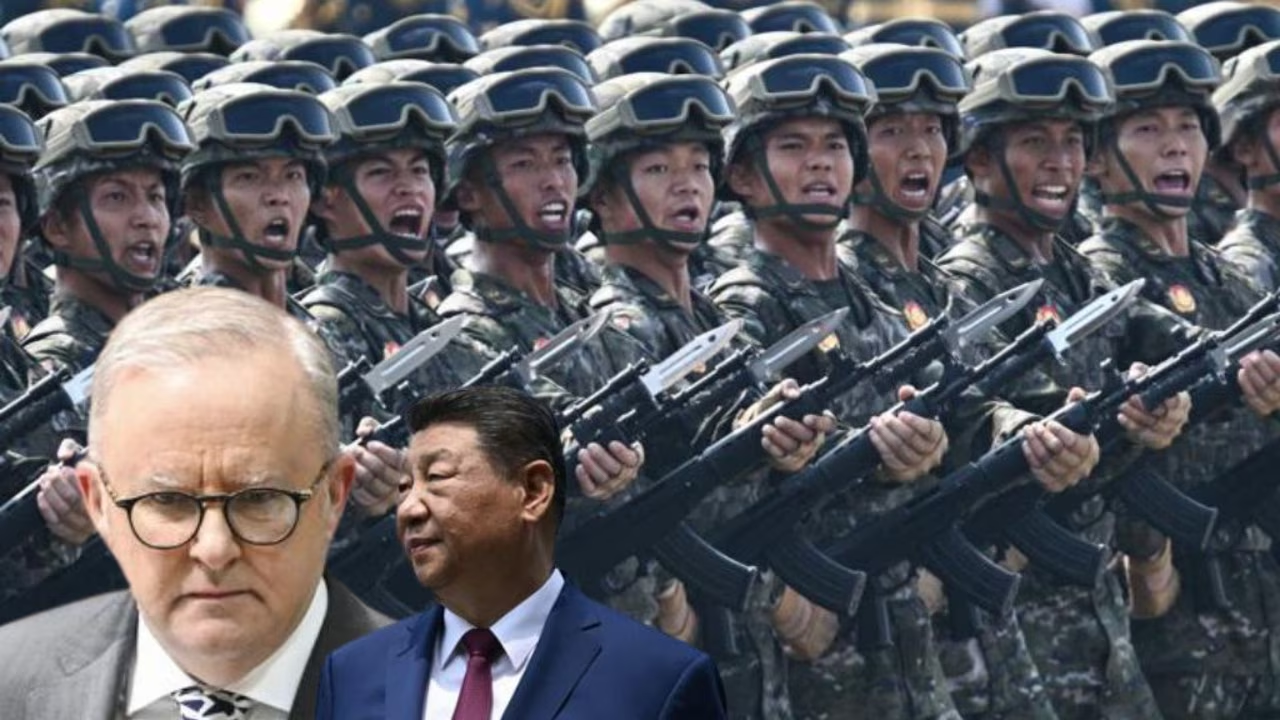
Australian politicians are too afraid to name China as a national security threat and are wasting precious time preparing the public for conflict, an academic has claimed.Atlantic Council director and US defence specialist Markus Garlauskas said he was shocked during his recent visit to Canberra to find China not being named more publicly for its menacing behaviour in the region.The former US intelligence adviser used his appearance at this year’s annual defence conference hosted by the Australian Strategic Policy Institute (ASPI) to warn Washington DC was taking note of the eerie silence.“One of the concerns I’ve had in the last couple of days that I’ve been here in Australia is the unwillingness to name China as a threat to Australia’s national security,” he exclusively told news.com.au.“There are all these oblique references to ‘another country’ or ‘another power’. We were having a conversation about deterrence and defence [at the conference] and over and over again, the People’s Republic of China (PRC) isn’t specifically mentioned as the threat being deterred, or the nature of the military challenge. That, as a foundation, really does concern me.”He said the government and think tanks should launch a public campaign to raise awareness, adding allies were growing increasingly concerned about Australia’s conduct and military preparedness.“[It needs to go] beyond the so-called ‘grey zone’ [of threat] and the military threat, and look at hypothetical scenarios about how the PRC could conduct aggression that could directly affect, or indirectly affect, Australia,” he said.“I think those sorts of conversations are really necessary to help Australians understand why it’s important for them to make the sacrifices necessary to help build up Australia’s defence capabilities.”He suggested Australia learn from the US’ approach of casting China as a threat in movies and books and called on politicians to be more upfront with the public by naming Beijing more publicly.A cornerstone of national defenceSuch is the threat of China that the 2024 National Defence Strategy (NDS) set out for the first time the concept of national defence and adopted a strategy of denial as a cornerstone of defence planning. This includes getting all government agencies behind a central goal of getting Australia prepared for confrontation with China.The 2026 NDS went one step further and outlined steps to make Australia more self-reliant so it could withstand enemy interference. This includes bolstering our defence industry through more funding and improving civil preparedness and national resilience.In a sign of the direction we may be heading, defence minister Richard Marles recently visited Finland and toured an underground bunker capable of holding 6000 people.Canberra will also invest $435 billion into defence spending over the coming decade to help build nuclear-powered subs and strengthen our defence posts in northern Australia. Funding is also going towards boosting our cyber capabilities, our air force and space capabilities.It’s the kind of approach Australian National University (ANU) professor of defence studies Peter Dean has long been advocating for.He said there were “ongoing conversations” in the national security community about how to approach China as a threat, but that Canberra would stick to its strategy of keeping things cordial with Beijing so trade between the two countries could continue mostly uninterrupted. “If you look at the government’s China handling strategy, it’s a prime case of strategic reassurance and engagement. Some people in the community want China called out more for its bad behaviour in the South China Sea and its behaviour around Taiwan, and to be more direct. For others, it’s like, what’s the benefit and gain of that versus the agenda of reassurance with China and trade with China and having good diplomatic relations? You’ve got to have both,” he said.The defence expert said there was still “space” for the government to be more blunt with the public about China and rebuffed claims Canberra was not being publicly critical enough.“The deputy prime minister has been very forward-leaning. I watch all his speeches as it’s my job, and his language is changing constantly, and it’s getting more direct. He started talking about China’s massive expansion of its nuclear arsenal. He’s being very direct about that stuff. But, you probably don’t hear it from other parts of government, as much, because that’s largely not their job,” he said.He said striking a balance between showing Beijing that Australia is ready to defend itself while also trying to maintain a friendly trading relationship would always be a tough juggling act.“Different people will disagree about the balance between those two things,” Prof Dean said.“You can say the government’s probably got the balance about right. Those who are more hawkish on China would say they don’t. Those who worry about the US as a security partner or an insecurity spiral in the region probably say they’re talking too much.”Australia, the world leaderIt’s not just Prof Dean who thinks Australia is doing its fair share in shifting how we talk about Beijing.Paul Myler, a former senior diplomat at the Australian embassy in Washington DC between 2021 and 2024, said since 2016, Australia has been a world leader in not only exposing China’s menacing moves, but pushing back.He said Australia’s decision to ban Chinese telco giant Huawei from providing equipment for the country’s 5G mobile networks in 2018 was a case in point.“We didn’t shy away from it, and we took it on and we did it in a way where we differentiated our concerns about what the Chinese government might be seeking to do from support from our longstanding, ethnically Chinese community here and we’ve done a great job of doing those two things separately,” he told news.com.au.This includes helping the university sector weed out Chinese interference without irritating Beijing, something he said our US allies have been less successful at doing.“I think in the US there is a little bit too much willingness to play the man rather than play the issue. We’ve always been country agnostic: these are the behaviours that we don’t accept. We don’t need to say who’s doing them.”That didn’t mean Canberra couldn’t be more frank with the Australian public about the deteriorating security environment in the region. “That’s a discussion we need to have a little more overtly with the Australian people without panicking them. It’s really difficult but I think being honest about things, and what your objectives are [helps],” he said.“We’re in the middle of a fuel crisis where we are concerned about our lines of fuel supply. That would be a great time to connect the dots between vulnerable sea lanes and nuclear-powered submarines. But no one’s really done that. “Yes, we can build more refineries onshore or we could have the apex predator of the undersea (nuclear-powered submarines) and have our armoury ready to protect our sea lanes. They’re both options.”Mr Myler said despite all the tough talk on China, the White House “buckled” the moment Beijing banned the export of Gallium, a critical component in the production of semiconductors, in a recent trade spat with the US.“[The US] is very vocal but as soon as the Chinese shut down Gallium supplies, as soon as China started rattling these sorts of things – which is, you know, very dangerous – the Trump administration starts to ramp up their efforts to get independence but the Oval Office, on the other hand, is like ‘oh well, there’s a way through it’, and then they buckle. Throw an offer of a soy bean contract on the table and Donald Trump runs at it like he hasn’t eaten for a month.”It comes as ASPI contributor and former Canadian defence official Raquel Garbers said allies needed to “get real” and “speak frankly” about China’s economic warfare on the West.“Unless we understand it and speak about it publicly, we bring in everyone who is a target, and that means all of the industry folks here, all the investors and all the researchers. Unless everyone understands what it is, how it is practised and what it means about military capabilities, we will never ready the defence industrial base,” she said at the conference.“What we will do, however, is effectively subsidise Beijing’s war machine because they will be nested inside our innovation systems, closing the technology gap we need for deterrence. They will be inside our industrial systems, ramping up their capacity, while driving our industries out of business and our companies into bankruptcy. “They will be nested inside really strategic supply chains and strategic sectors, positioned for espionage and sabotage operations. In a hyper-globalised economy, in a hyper-globalised world, economic warfare is the first phase of total war. And we need to understand that and get serious about it and speak frankly about it. If we fail to confront it, we’re simply subsiding the adversary.”Read related topics:China
Word Aussie leaders too scared to say
Australian politicians are too afraid to name China as a national security threat and are wasting precious time preparing the public for conflict, an academic has claimed.
1,450 words~7 min read