AI search agents rarely fail at multi-step research tasks because of the search itself. Their real problem is failing to ask the user for clarification when queries are ambiguous. That's the finding of a new benchmark from a team at Tencent Hunyuan and Tsinghua University. Repeated searching often performs worse than just guessing.
With DiscoBench, the researchers built a test framework that checks whether language models can spot ambiguity on their own during deep search chains, ask targeted follow-up questions, and correct their research path. Previous benchmarks like GAIA or BrowseComp assume user queries are complete and unambiguous.
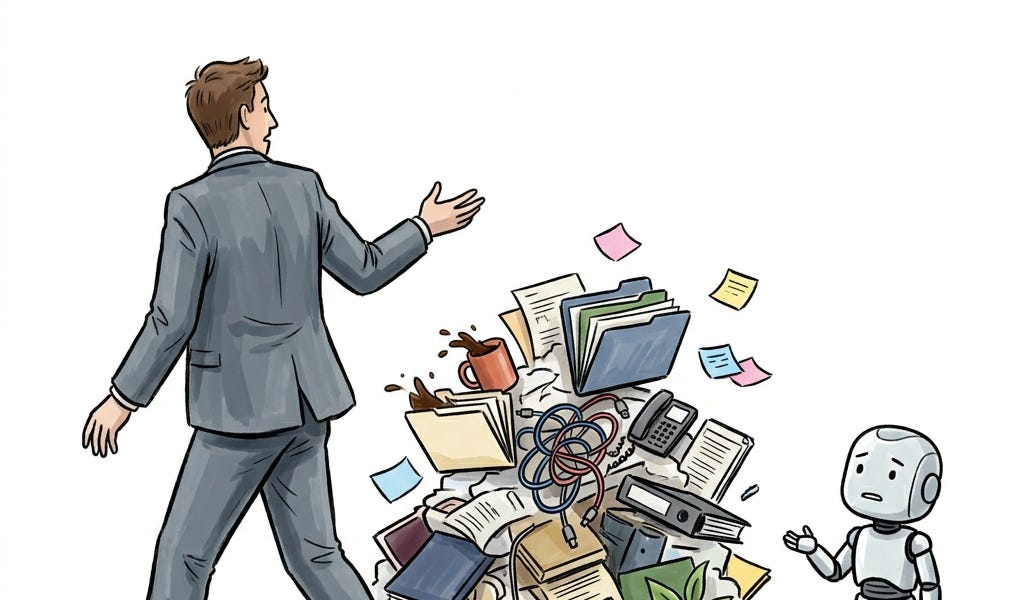
But real-world queries are often vague, incomplete, or flat-out wrong. In long reasoning chains, every unresolved ambiguity compounds and steers the agent down the wrong path. If the model picks the wrong entity at an early node, it keeps searching with clean syntax but misses the actual target entirely.
When a search agent guesses instead of clarifying ambiguities, the error cascades through the entire reasoning chain and produces a wrong final answer. | Image: Cheng et al.
Four types of ambiguity