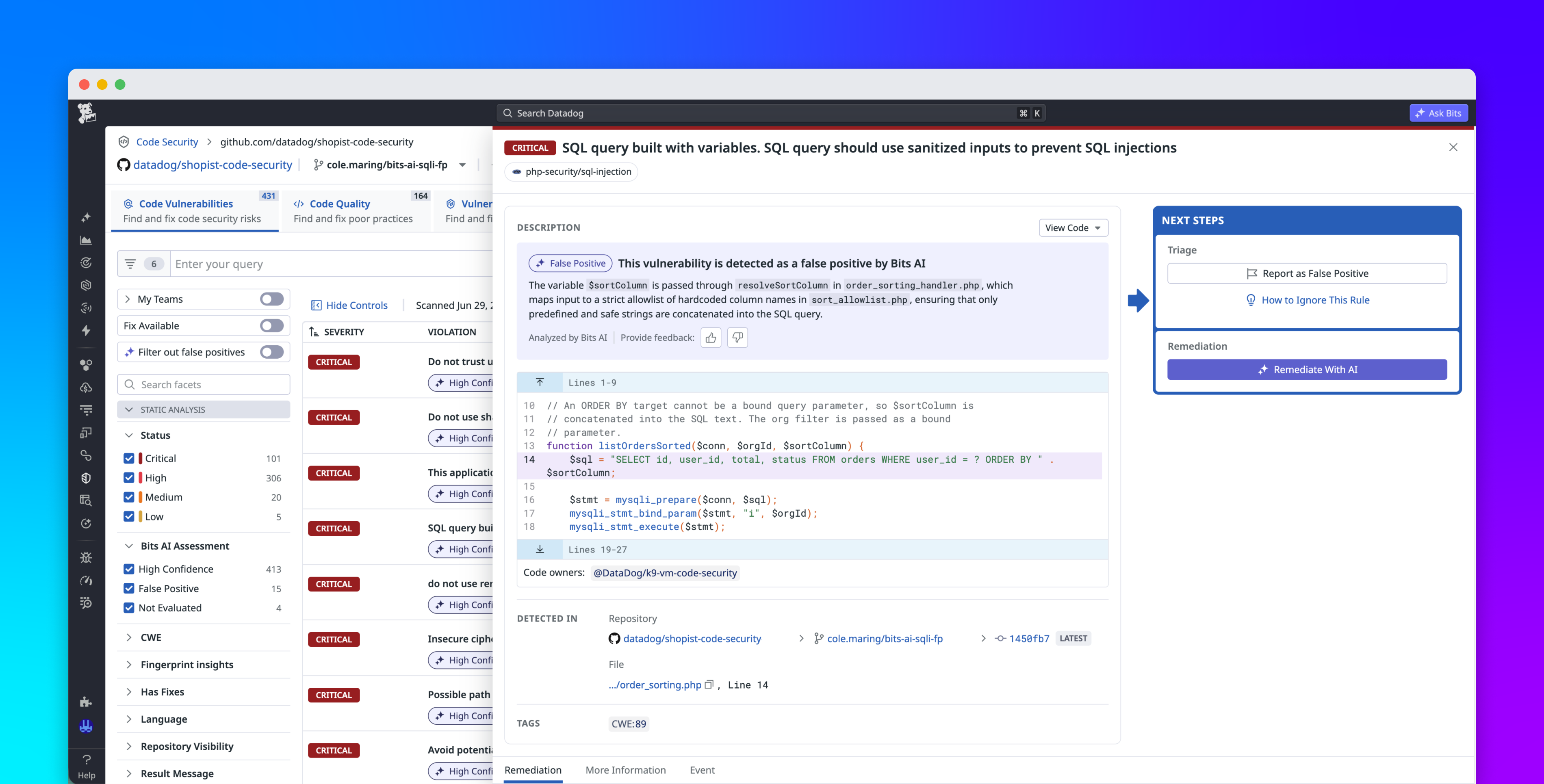
TL;DR — I took a small, intentionally vulnerable PHP application (a vehicle-workshop search and report system), ran Psalm — an open-source static analysis tool listed in the OWASP Source Code Analysis Tools catalog — with taint analysis enabled, and it caught SQL Injection, XSS and Path Traversal without executing a single line of code. Then I automated the scan with GitHub Actions so vulnerable code can never be merged again. Full demo repo: https://github.com/GianfrancoArocutipa/psalm-sast-demo(#)
What is SAST, in one paragraph?
Static Application Security Testing (SAST) analyzes the source code of an application — not the running app — looking for patterns that lead to vulnerabilities. Think of it as a security-focused code review performed by a machine: it runs in seconds, it never gets tired, and it can be wired into your CI pipeline so every commit is inspected before it reaches production. This is the "shift-left" idea at the heart of DevSecOps: find the bug when it costs 5 minutes to fix, not when it is being exploited.
Why Psalm?
Psalm, created by Vimeo, is best known as a PHP type checker, but since version 3 it ships a powerful taint analysis engine. Taint analysis tracks how untrusted data (a source, like $_GET) flows through the program until it reaches a dangerous function (a sink, like an SQL query or echo). If tainted data reaches a sink without passing through a sanitizer, Psalm raises an error and prints the entire data-flow path.