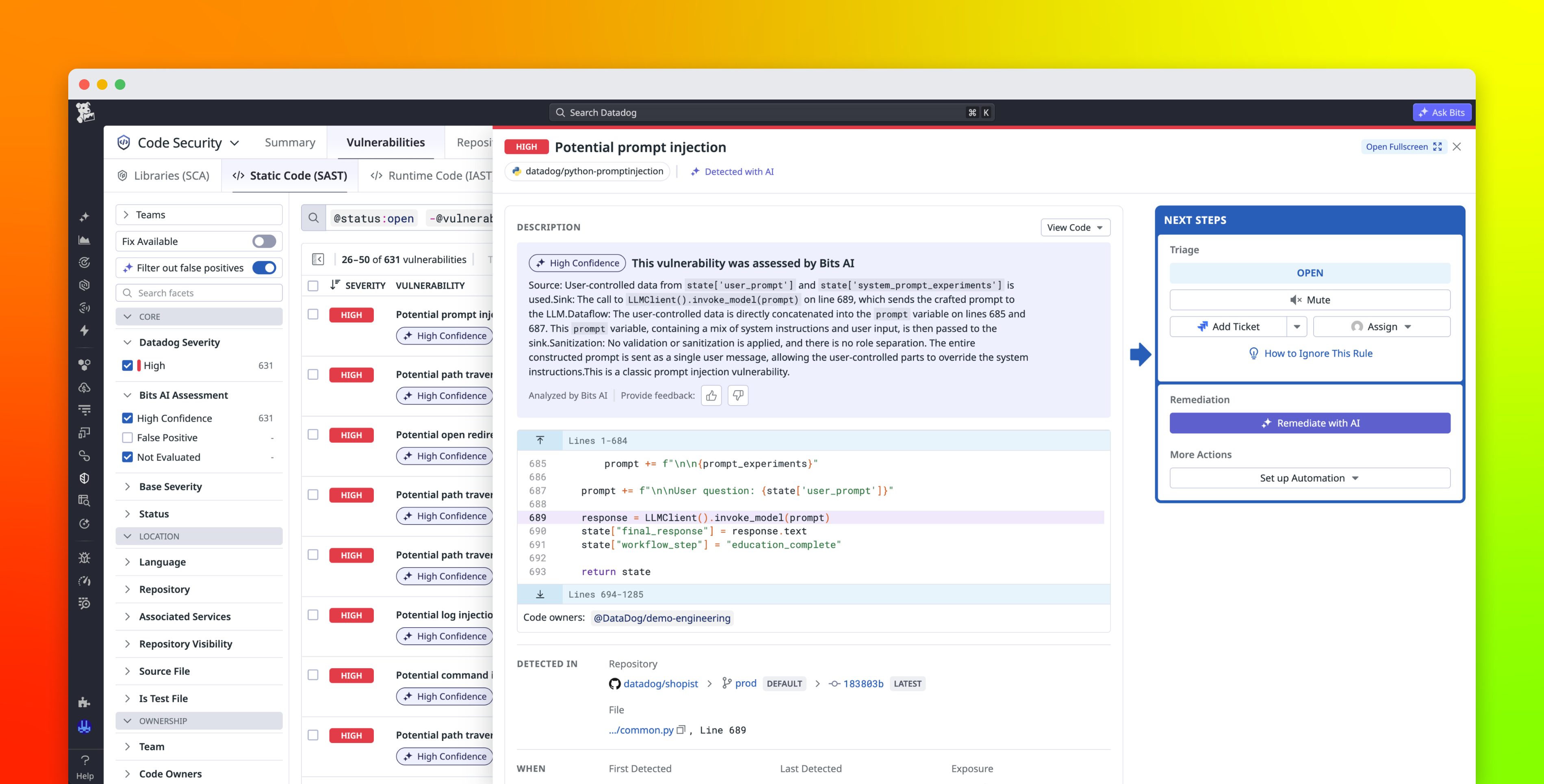
Static application security testing (SAST) tools are intentionally conservative. Traditional scanners identify code that appears exploitable and flag the snippet for review, even when protections elsewhere in the application prevent exploitation. Although that approach helps teams catch vulnerabilities, it also creates false positives that consume developer time, slow remediation efforts, and make future alerts easier to dismiss.
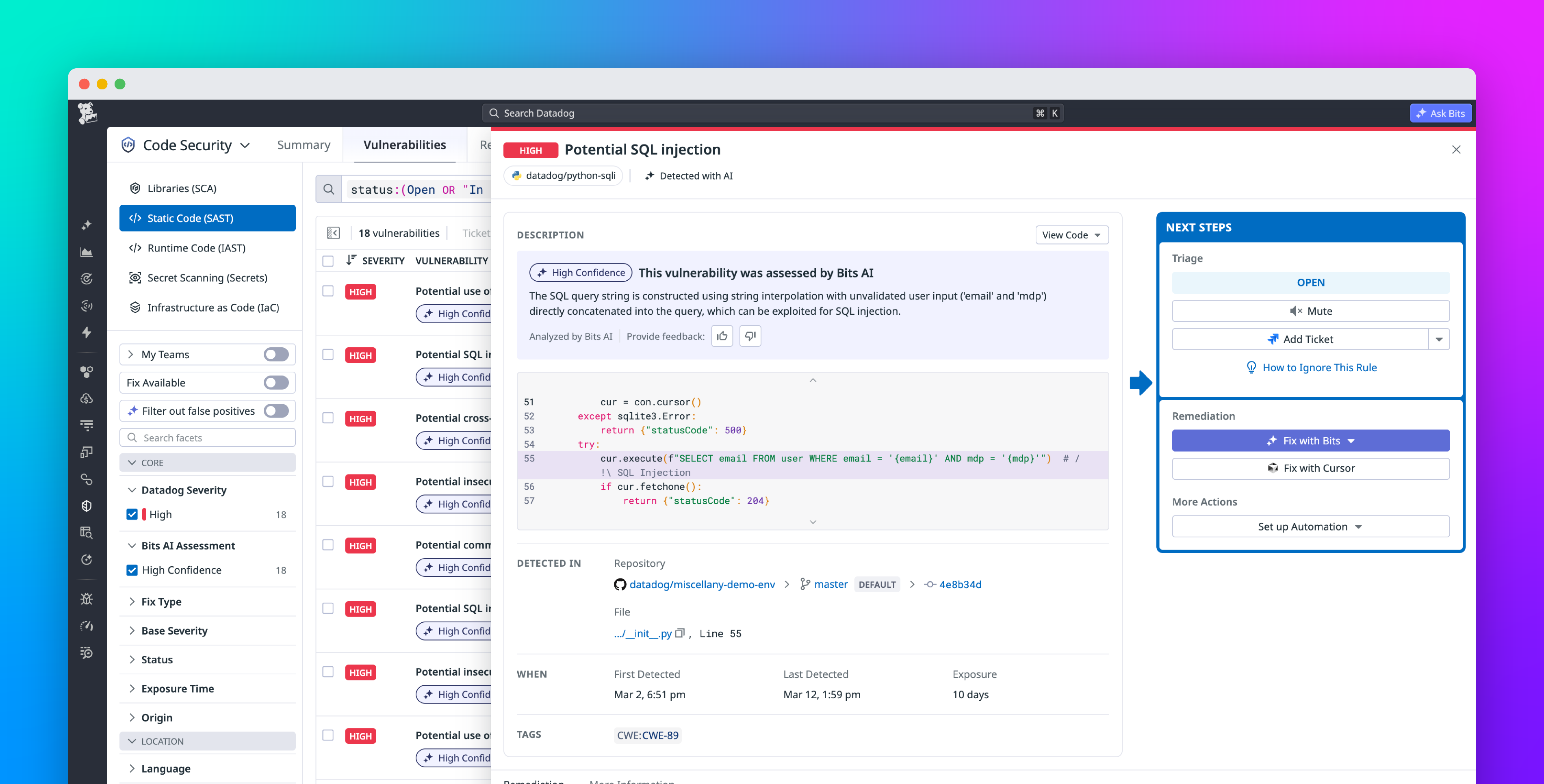
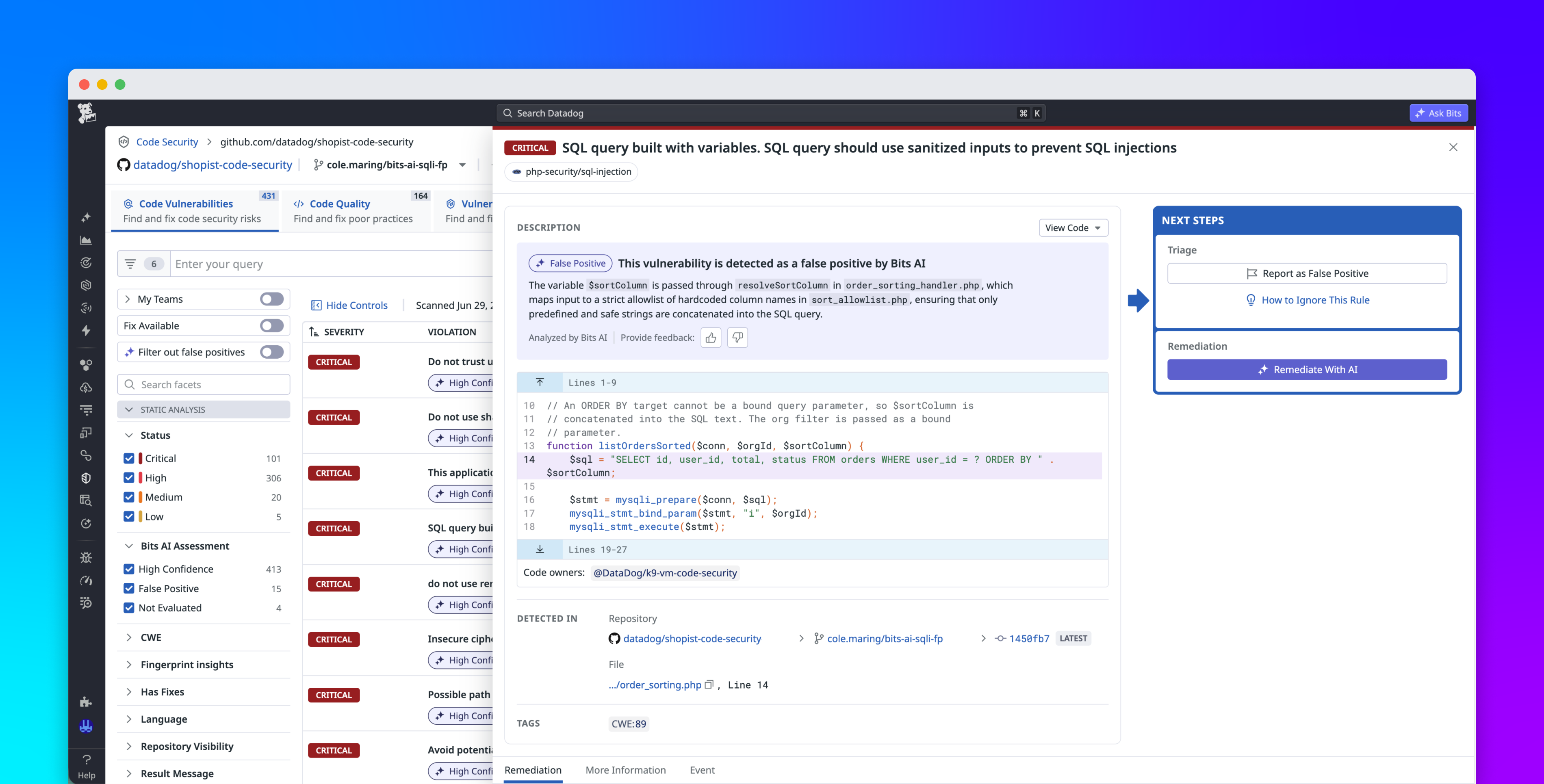
As part of Datadog Static Code Analysis in Datadog Code Security, Bits AI already helps teams prioritize findings by assessing whether a finding is likely to be a true positive or a false positive and providing a short explanation. Many findings, however, can’t be evaluated from the flagged file alone. A function might appear vulnerable until you discover that every caller validates its inputs or that an authorization check runs elsewhere in the request path. Other findings depend on team-specific conventions that aren’t visible in the code at all.
To help teams distinguish real vulnerabilities from false positives when evidence exists outside the flagged file, Datadog Static Code Analysis includes agentic evaluation and Bits Memories. Agentic evaluation brings repository-wide analysis to findings, and Bits Memories incorporates your organization’s knowledge into false positive assessments. In this post, we’ll explore how these capabilities help you: