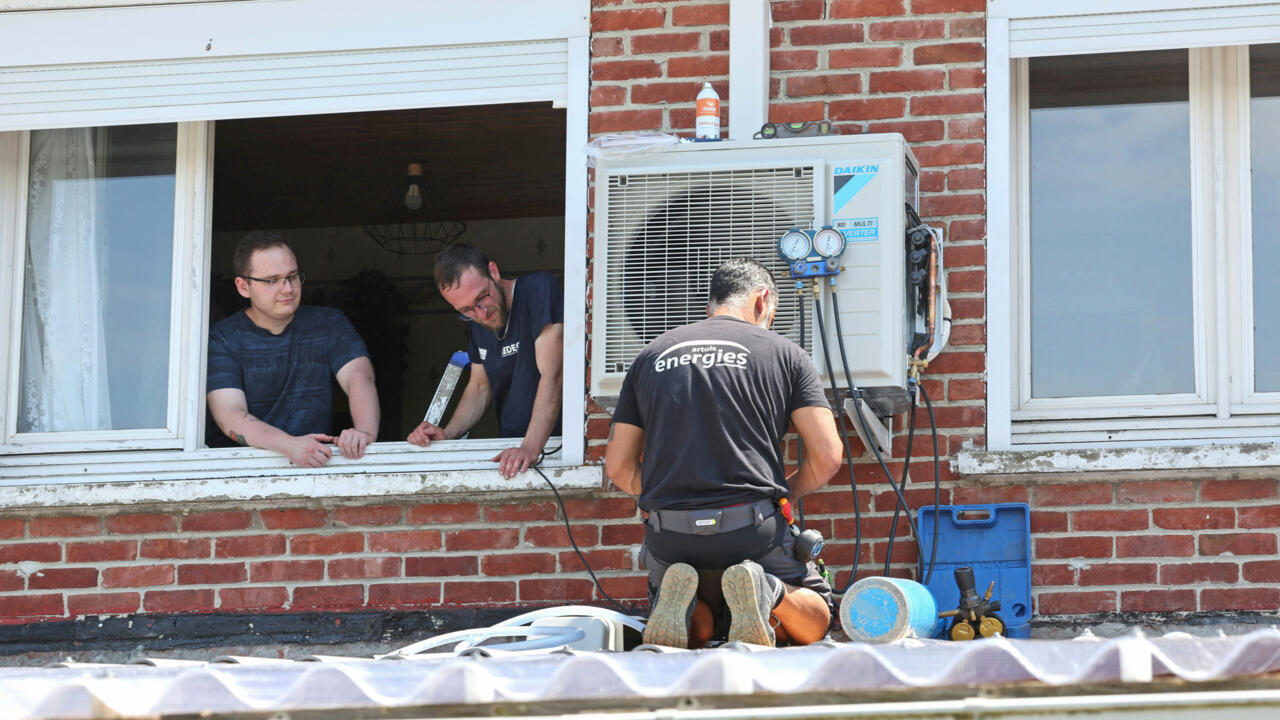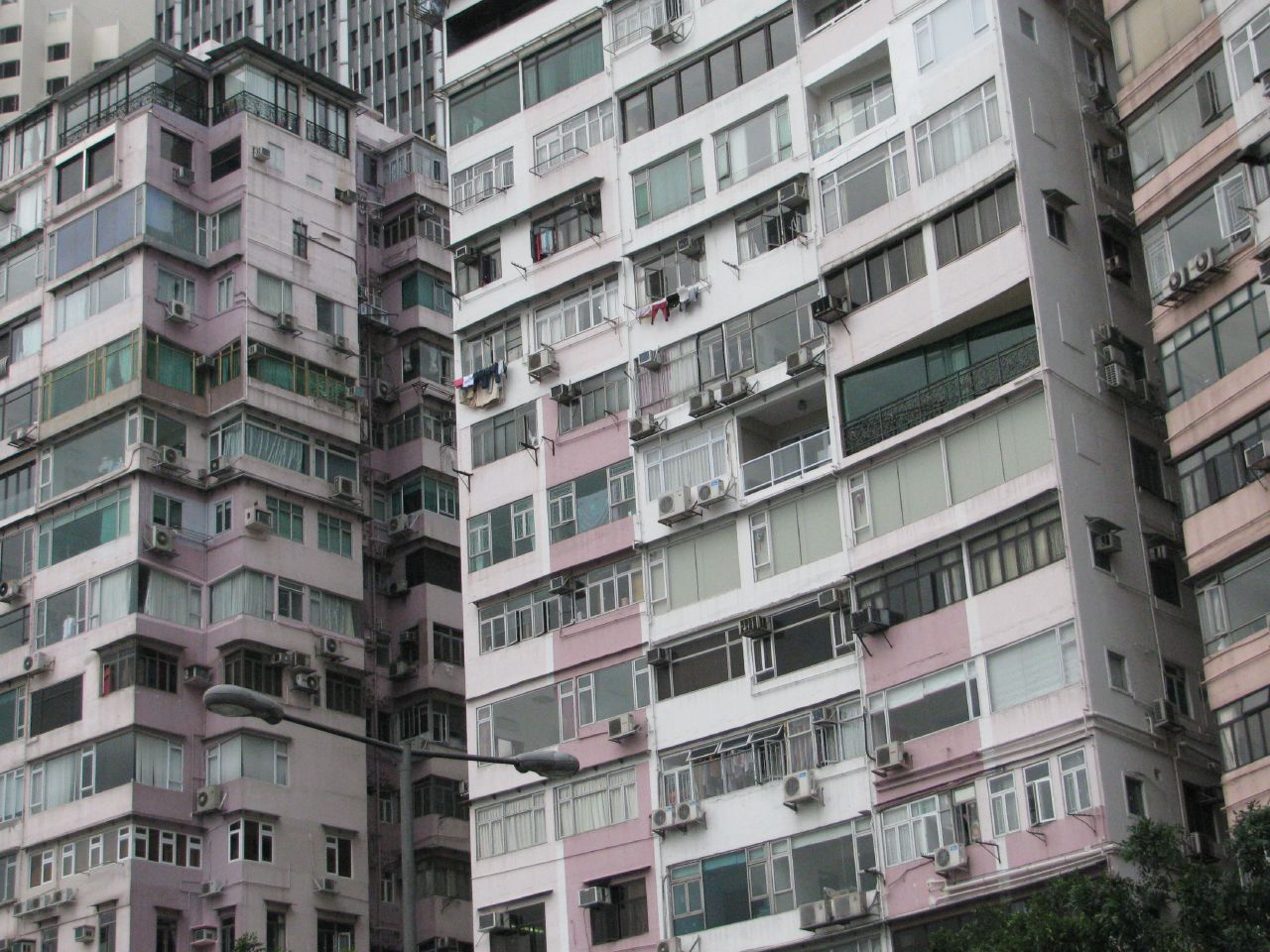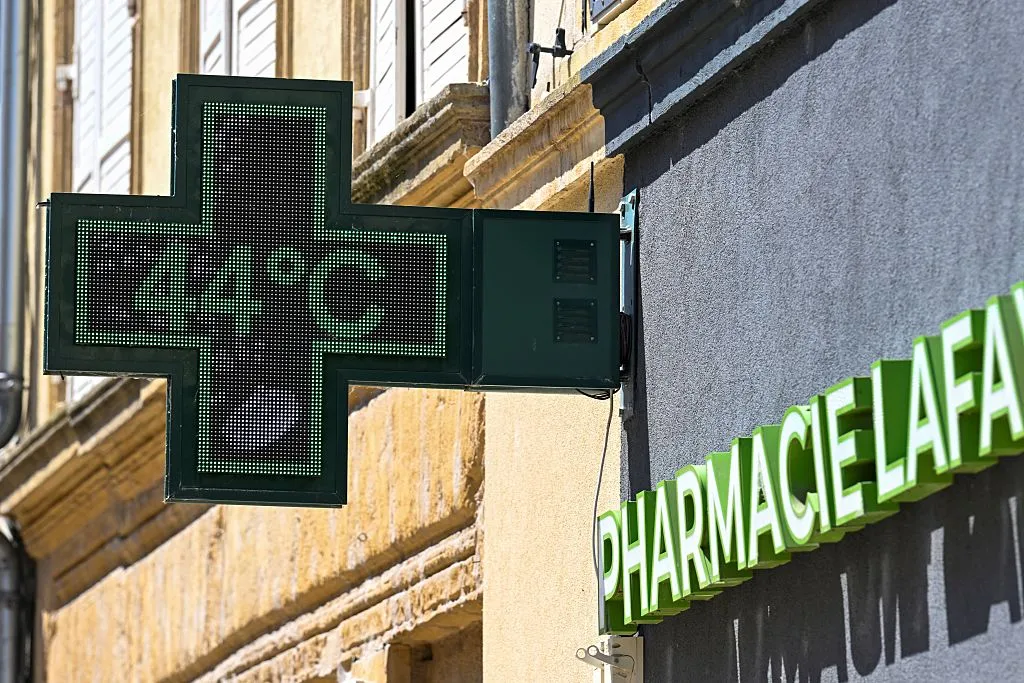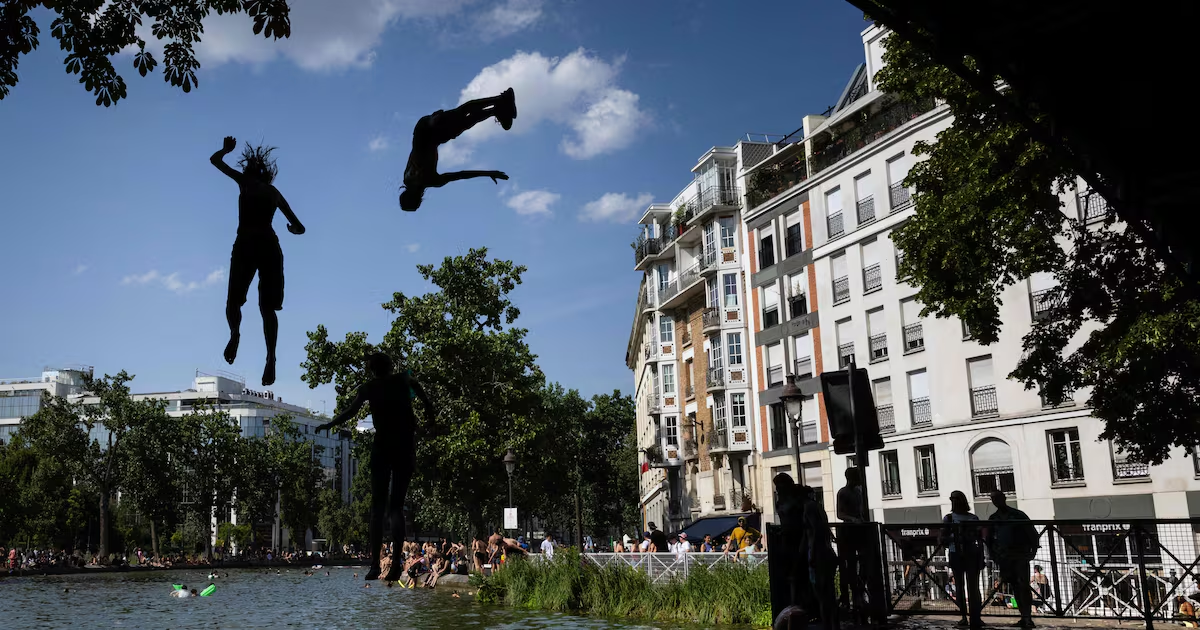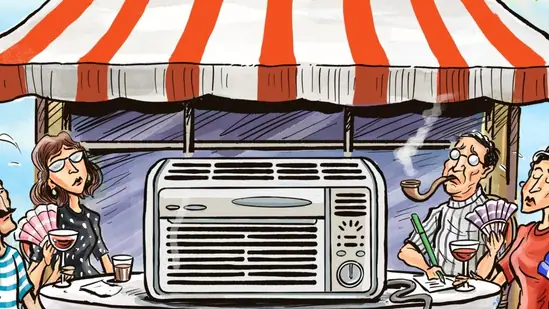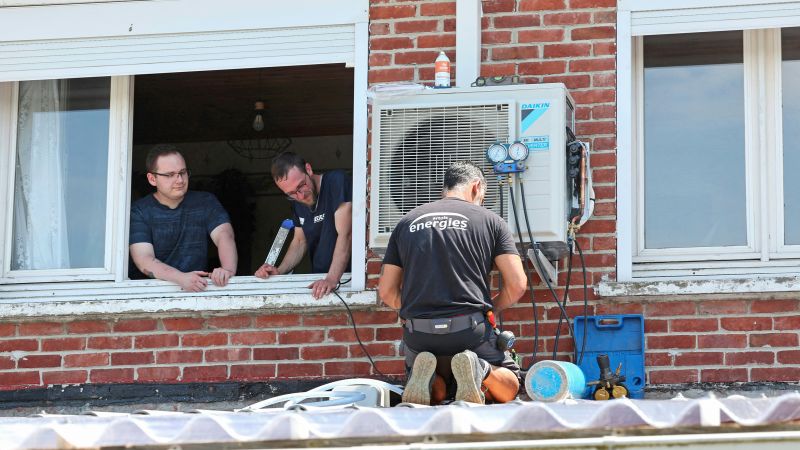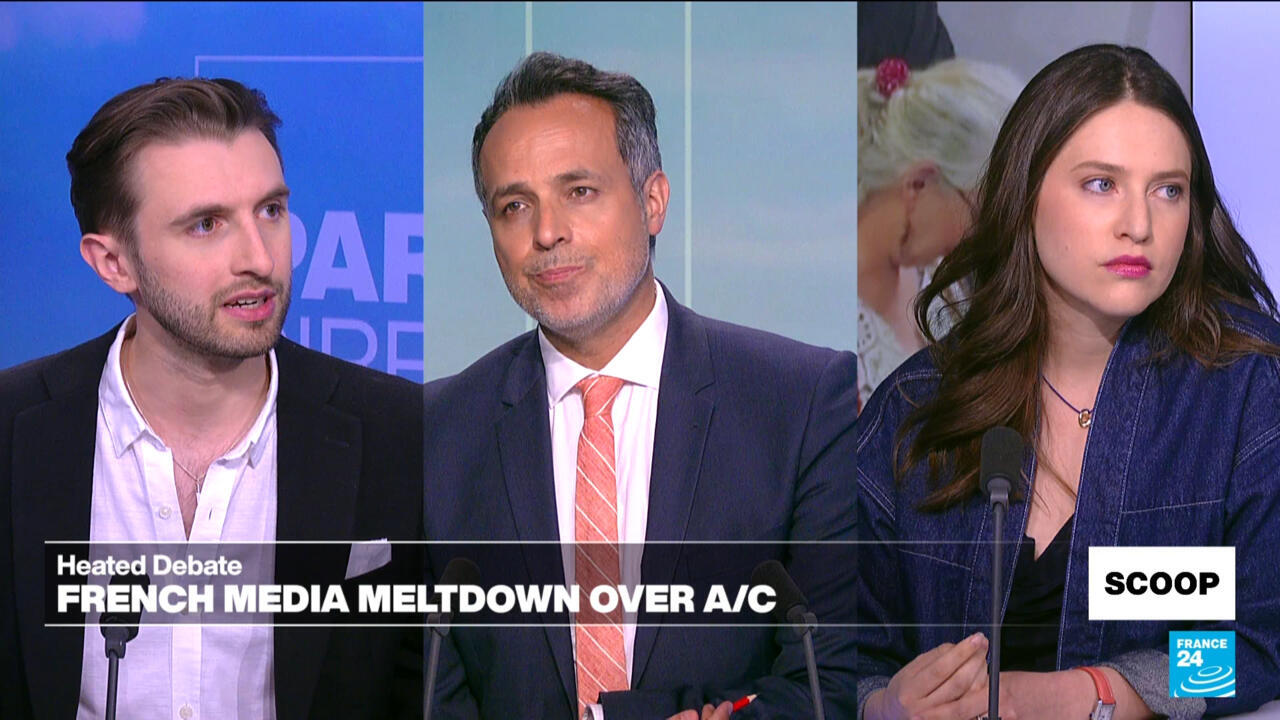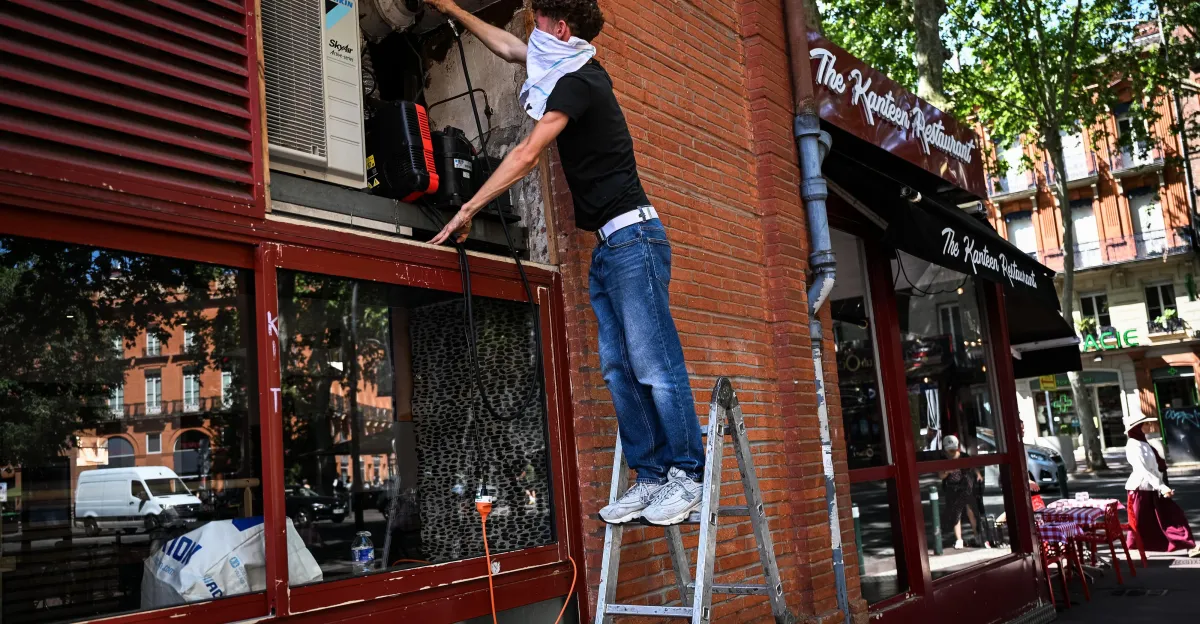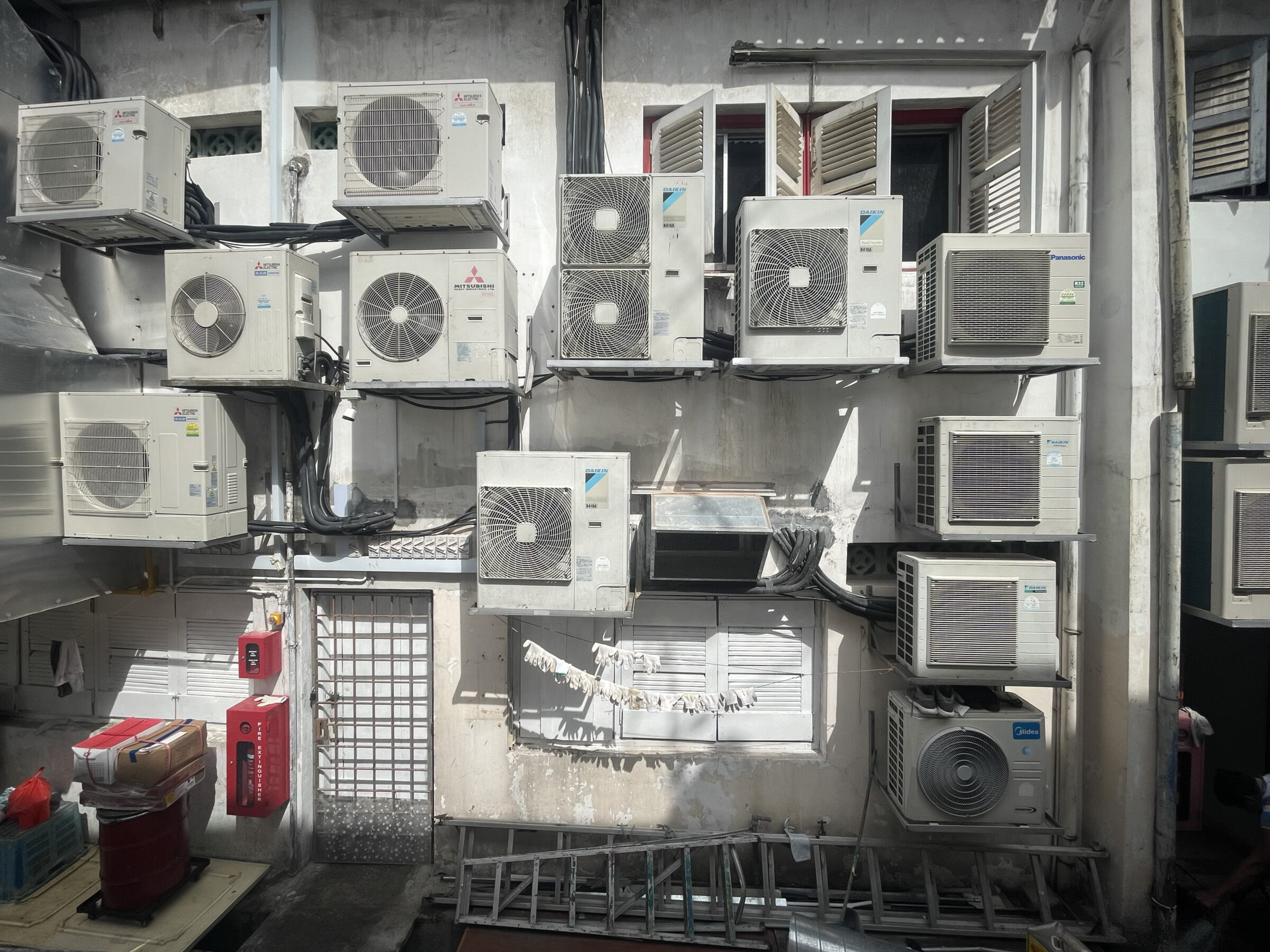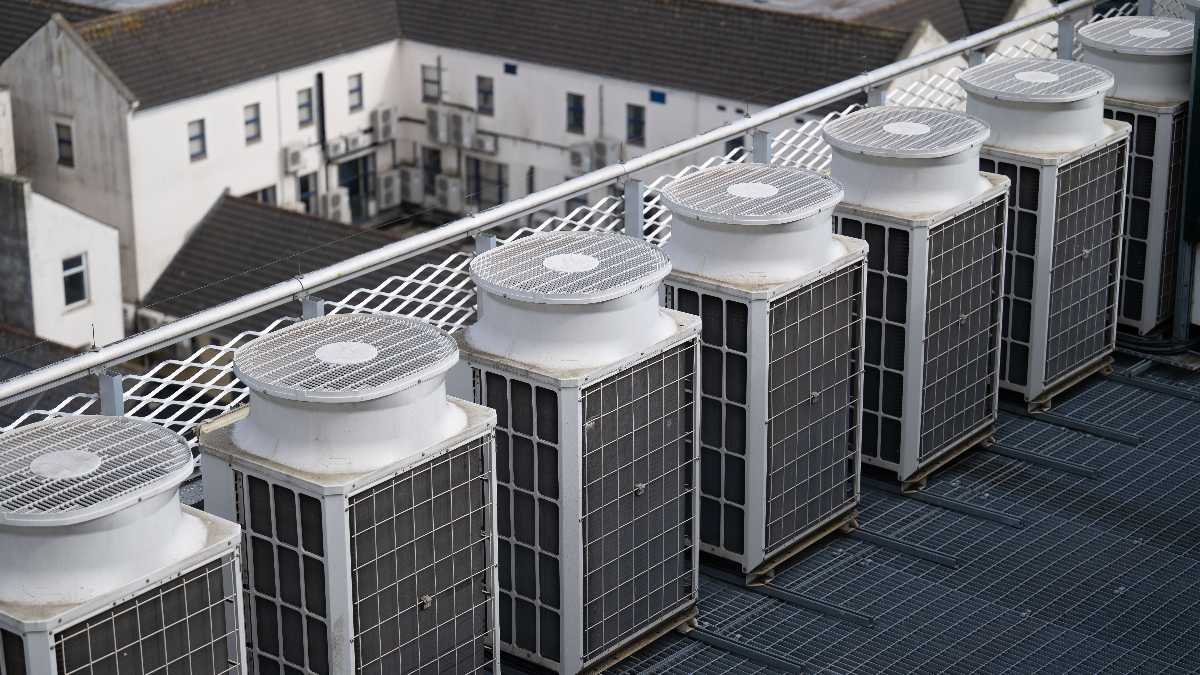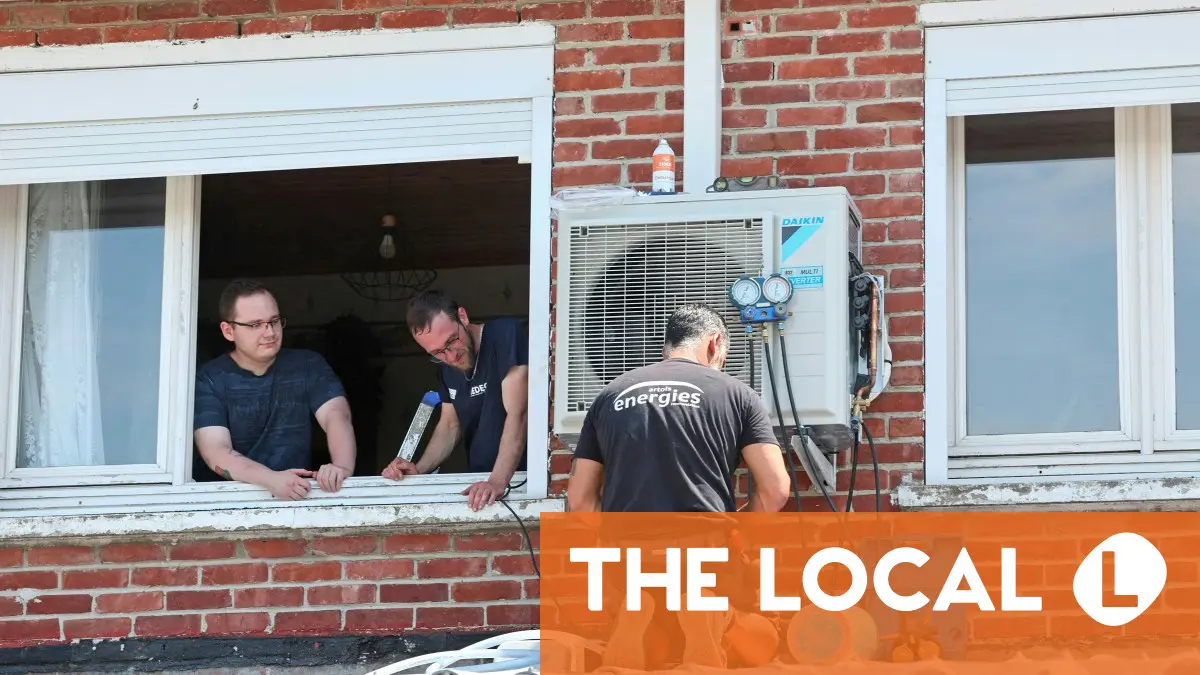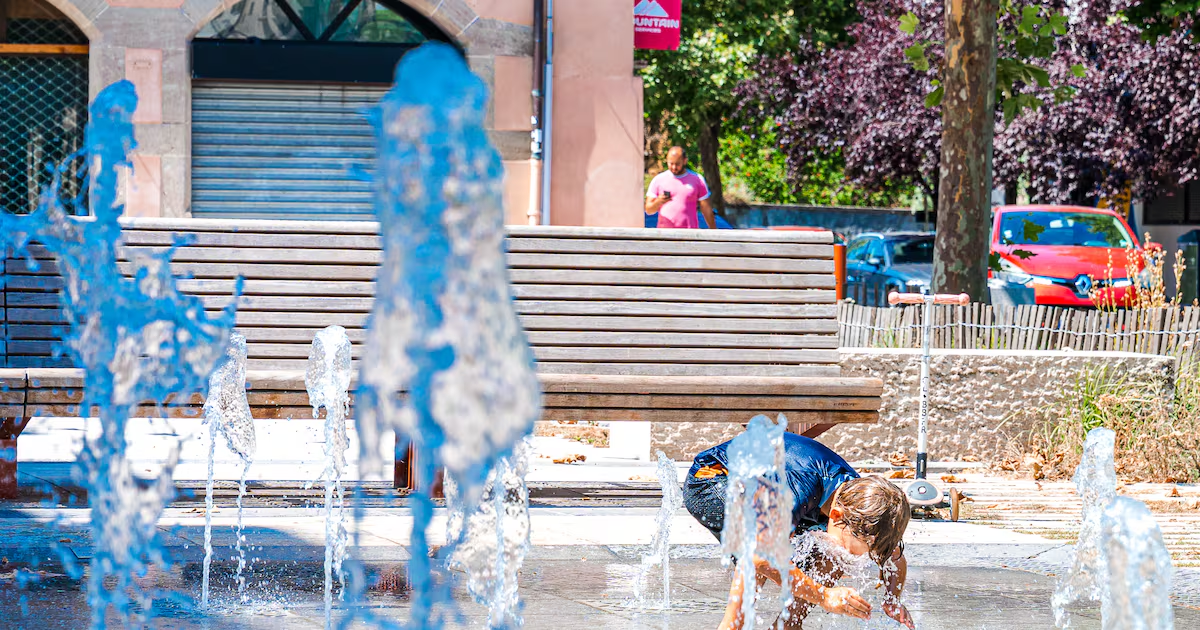
Unsurprisingly, air conditioning has become a huge political issue in France. Anyone who has lived in France, as I did in Lyons for a brief period, will know there is still tremendous disdain for air conditioning among the French. I often heard it dismissed as an unhealthy American invention. French people have an armoury of tactics to deal with heat – everything from the more recent tactic of pinning shiny emergency blankets to windows to reflect heat outwards, to the tradition of sealing windows and doors tight during the day and airing out at night. None of these remedies can cope with temperatures that led hospitals to reserve refrigerated lorries in anticipation of mortuaries being unable to cope with the excess deaths.Naomi O’Leary’s reporting from France last week described a society grinding to a halt in unrelenting heat. Marine Le Pen, president of the far-right National Rally (RN) – who is awaiting the results next week of an appeal against a five-year ban on seeking election after an embezzlement scandal – has declared RN to be the “party of air conditioning”. Predictably, her embrace of air conditioning has enraged the far-left presidential candidate, Jean-Luc Mélenchon, who accused RN of ignoring the dangers of increasing emissions.Pity those living under the zinc roofs of Paris. Yet if those living in the so-called maids’ rooms in the attics of Paris are suffering, the infamous banlieues, strongholds of support for LFI, Mélenchon’s party, are also unlivable during the heat.France experienced its hottest day on record on Wednesday with 40.3 degrees recorded in Paris. Video: Naomi O'Leary This overcrowded high-rise housing is filled with descendants of immigrants from former French colonies. The built-up areas with concrete facades, poor ventilation, little greenery and wide expanses of tarmac or paving become unbearably hot during the summer, even in the absence of a heatwave. Unlike his supporters living in intolerably hot flats, Mélenchon has a second home, a farmhouse in Loiret, near a wood. This apparent conflict between the immediate needs of human beings and the good of the planet is exploited by RN’s populism, but Mélenchon’s absolute rejection of air conditioning is equally doctrinaire.It is no coincidence that Marine Tondelier, the leader of the Green Party (also known as the Ecologists), has recently embraced a more nuanced position on air conditioning. She has said it has become a necessity for schools and hospitals. However, her position remains that it is a “maladaptive response” and that France needs to focus on sustainable architecture, retrofitting and expanding green spaces in cities.Paris mayor Emmanuel Grégoire. Photograph: Julien De Rosa/ AFP via Getty Images Similarly, the socialist mayor of Paris, Emmanuel Grégoire, has embraced a pragmatic, hybrid approach when he sanctioned 1,200 stand-alone air-conditioning units so that every school could have some cool areas, while still decrying individualised air conditioning as a scourge.The irony is that, although France relies less on renewable electricity than many other EU countries, its electricity supply is among the least carbon-intensive in Europe because so much of it comes from nuclear power. Even so, some plants had to be shut down last week when the rivers from which they pull cooling water became too warm. In more normal times, the greenhouse gas emissions associated with running air conditioning are comparatively low in France, although the manufacturing and installation of these units, as well as the leakage of chemical refrigerants, still carry an environmental cost. Nonetheless, air conditioning can form part of a relatively low-carbon response to rising temperatures if efficient air-to-air heat pumps – which can both heat and cool a building and are popular in France – are used. This is especially so if it also replaces fossil-fuel heating during the winter. The direction in which France should be moving anyway, towards more efficient energy use, can be part of the solution to the air-conditioning conundrum.But the French are also notorious for endless, petty regulation that impedes progress. In relation to retrofitting, according to Leila Abboud in the Financial Times, “billions have been earmarked to subsidise green home renovations, yet the programme was plagued both by excessive red tape and fraud, while efforts to expand renewable power have been slow”.[ El Niño conditions ‘developing rapidly’ with ‘extreme weather events’ more likely, WMO warnsOpens in new window ]We have little reason to be smug in Ireland. Although not concerned with retrofitting for air conditioning, research by Muireann Lynch and Niall Farrell of the ESRI found that Ireland is also nowhere near meeting its retrofitting targets. There are several reasons, including high capital costs, homeowners’ reluctance to face potential disruption, and complex administrative processes. There is also a potential conflict with homebuilding targets, as 50,000 retrofits per year would require 15,000 workers annually.Although we have experienced far lower temperatures than France so far this summer, climate change in the form of wetter winters and hotter summers is affecting Ireland too. Leadership and an ability to communicate that human needs drive climate adjustments are needed now. Despite the delusions of tech billionaires who think they can decamp to another planet, ultimately we all have but one home.
Breda O'Brien: Populists from both sides are seizing on the great air conditioning divide in France
Air conditioning is a thorny issue but it can form part of a relatively low-carbon response to rising temperatures
849 words~4 min read