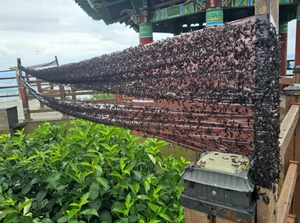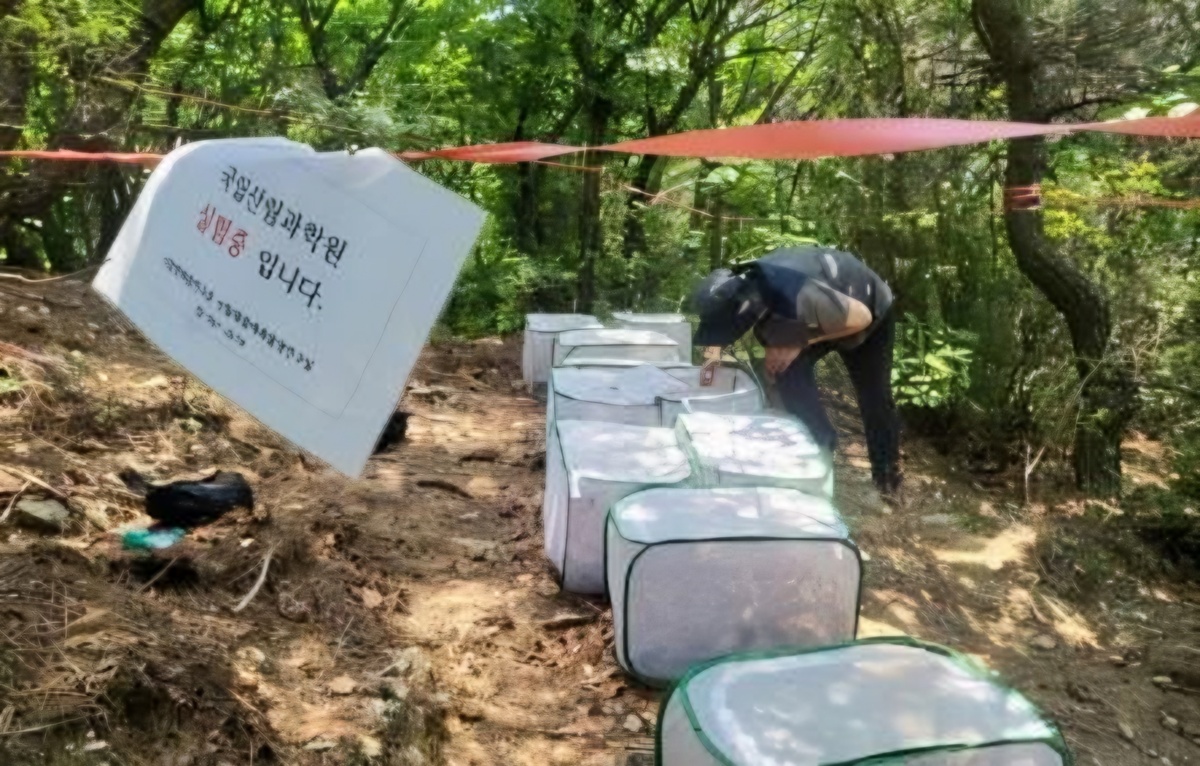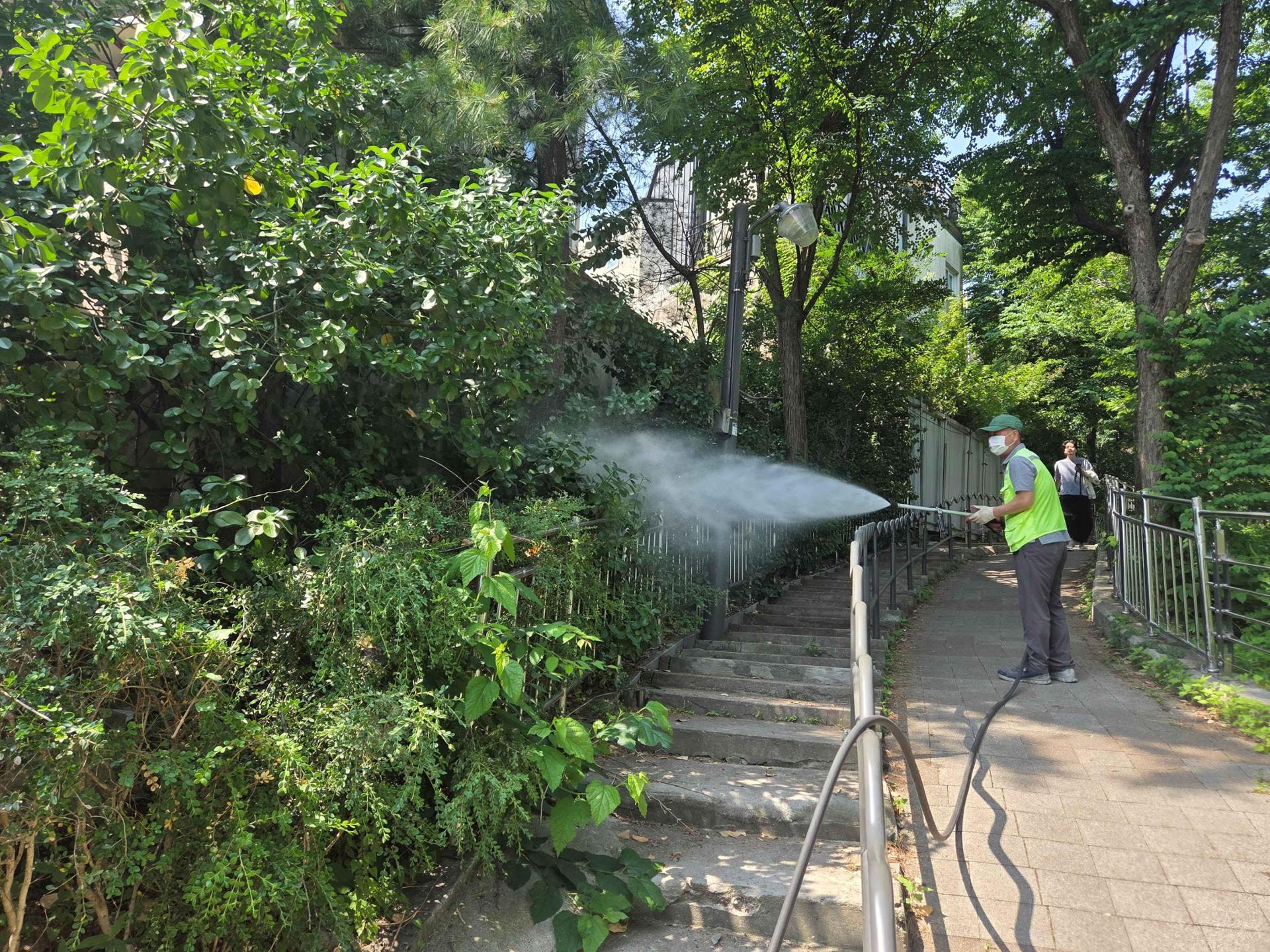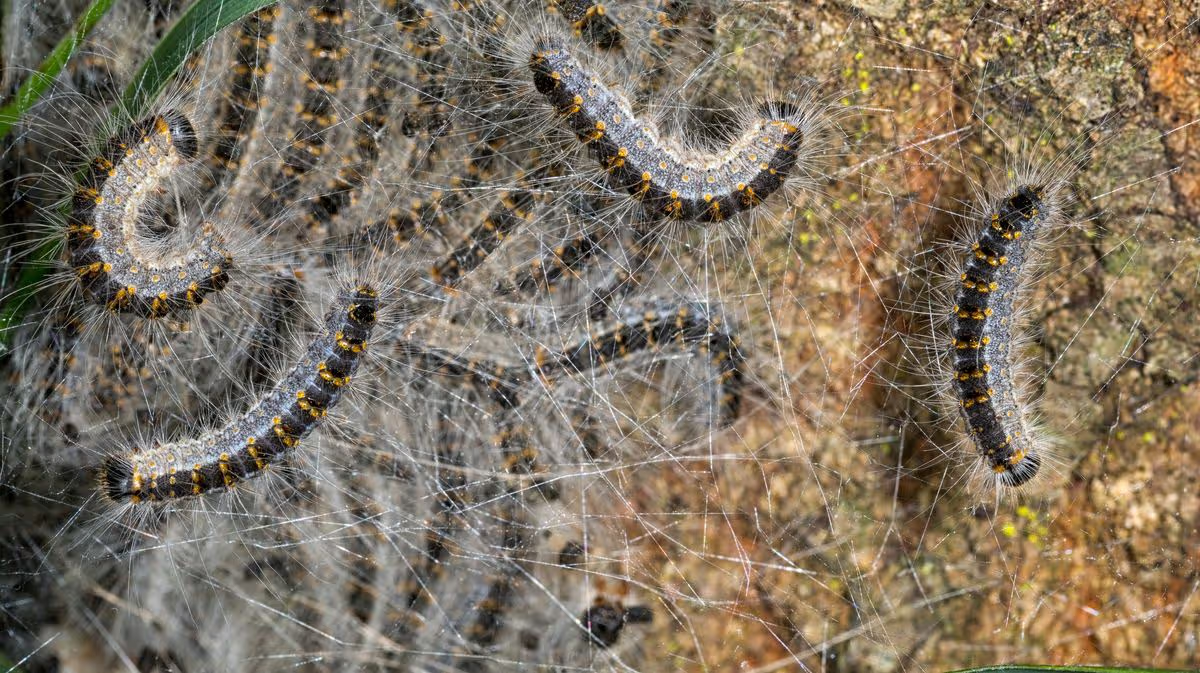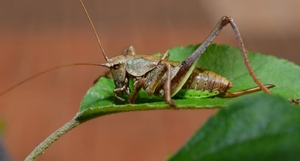
Brown katydid (The Rural Development Administration) As lovebug numbers fall, another insect is drawing complaints from residents in Seoul and nearby cities.Brown katydids, known scientifically as Paratlanticus ussuriensis, have recently been reported in large numbers around Mount Buram and Mount Surak in northeastern Seoul, as well as in Namyangju, Gyeonggi Province.Residents have posted online that the insects are appearing on hiking trails, apartment walls, pipes and even inside homes.Brown katydids are native to Korea and grow to about 3 to 4 centimeters as adults.They have brown or dark brown bodies and strong hind legs, allowing them to jump high. Some residents have mistaken them for camel crickets because of their similar appearance.The insects are not just a nuisance. When their numbers rise sharply, they can damage crops and are classified as outbreak pests. They are known to feed on fruits such as peaches, plums, grapes and apples, especially in orchards near mountains.Experts say people should avoid touching or trying to catch them, as brown katydids have strong jaws and can bite if handled or provoked.Their appearance comes as adult activity usually peaks in July and August. The insects hatch in spring and early summer after spending the winter as eggs underground.Experts point to changing temperatures as a possible reason for the increase.A previous study by the Rural Development Administration found that when temperatures rise by 2.5 degrees Celsius, the egg-laying rate of brown katydids can increase by 58 to 68 percent.Their eggs can also remain dormant for more than two years, raising the possibility of sudden outbreaks when conditions become favorable.Brown katydids have previously caused crop damage in parts of North Chungcheong Province, including Okcheon, Cheongwon and Boeun. Recent sightings around Seoul and the surrounding metropolitan area suggest their activity range may be expanding.The rise in katydid complaints comes as reports of lovebugs dropped sharply this year.According to the Seoul Metropolitan Government, lovebug-related complaints fell to 1,515 this year, down from 5,282 in 2025 and 9,296 in 2024. City officials believe early pest control measures, including larval control, expanded trapping devices and water-spraying drones, helped prevent another major outbreak.
Lovebugs fade, but biting katydids spread in Seoul area
As lovebug numbers fall, another insect is drawing complaints from residents in Seoul and nearby cities. Brown katydids, known scientifically as Paratlanticus u
350 words~2 min read