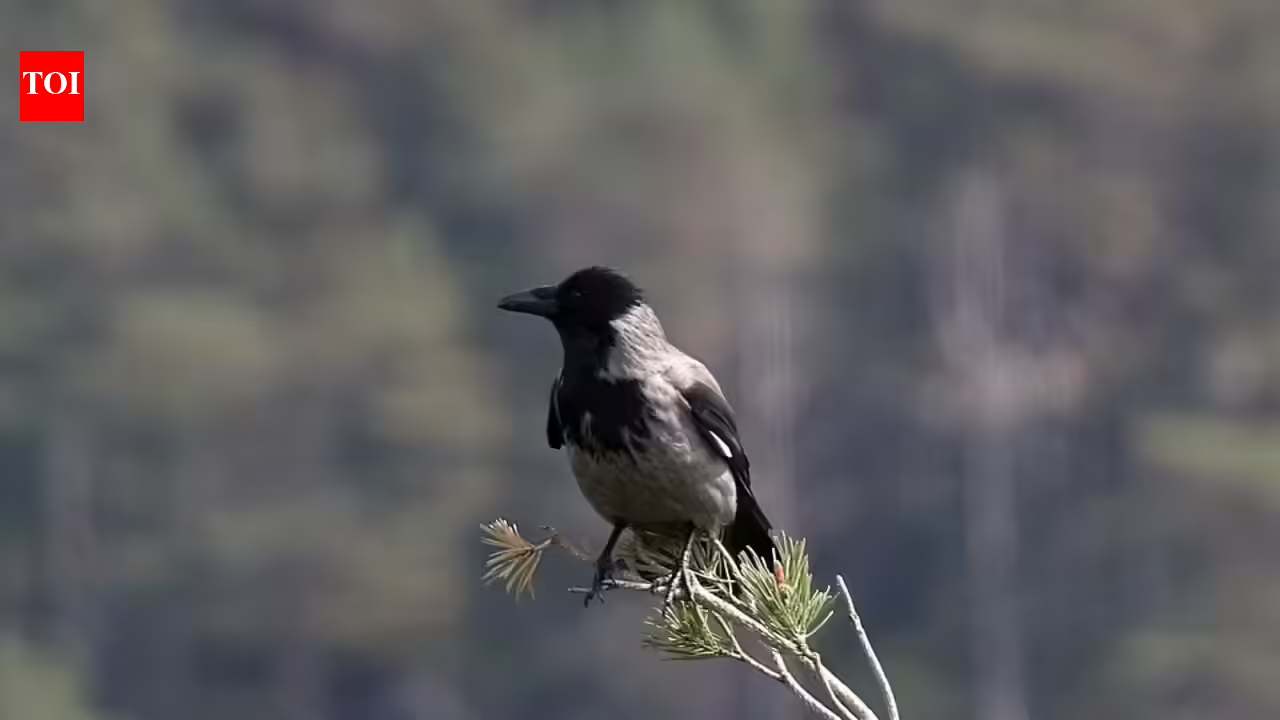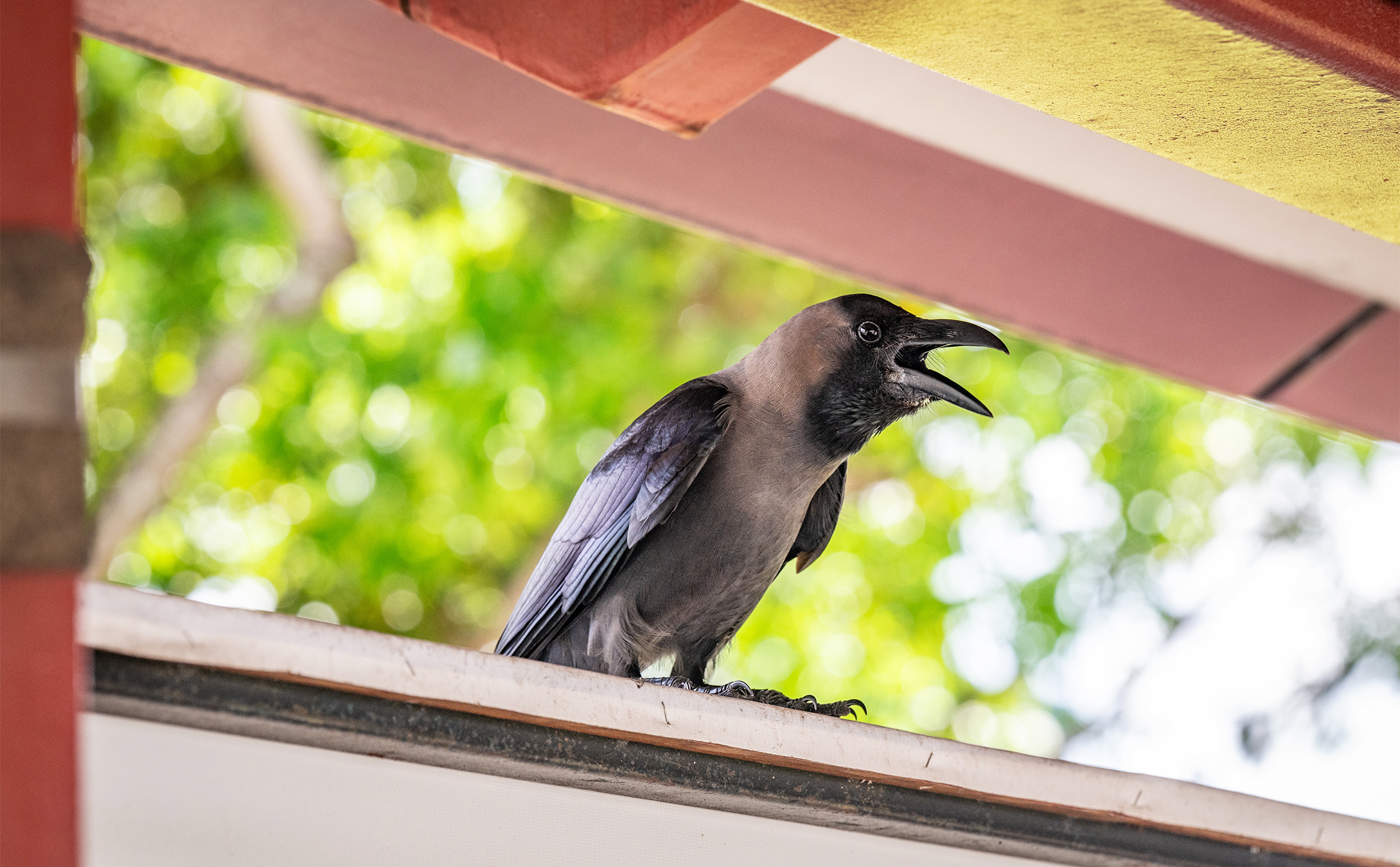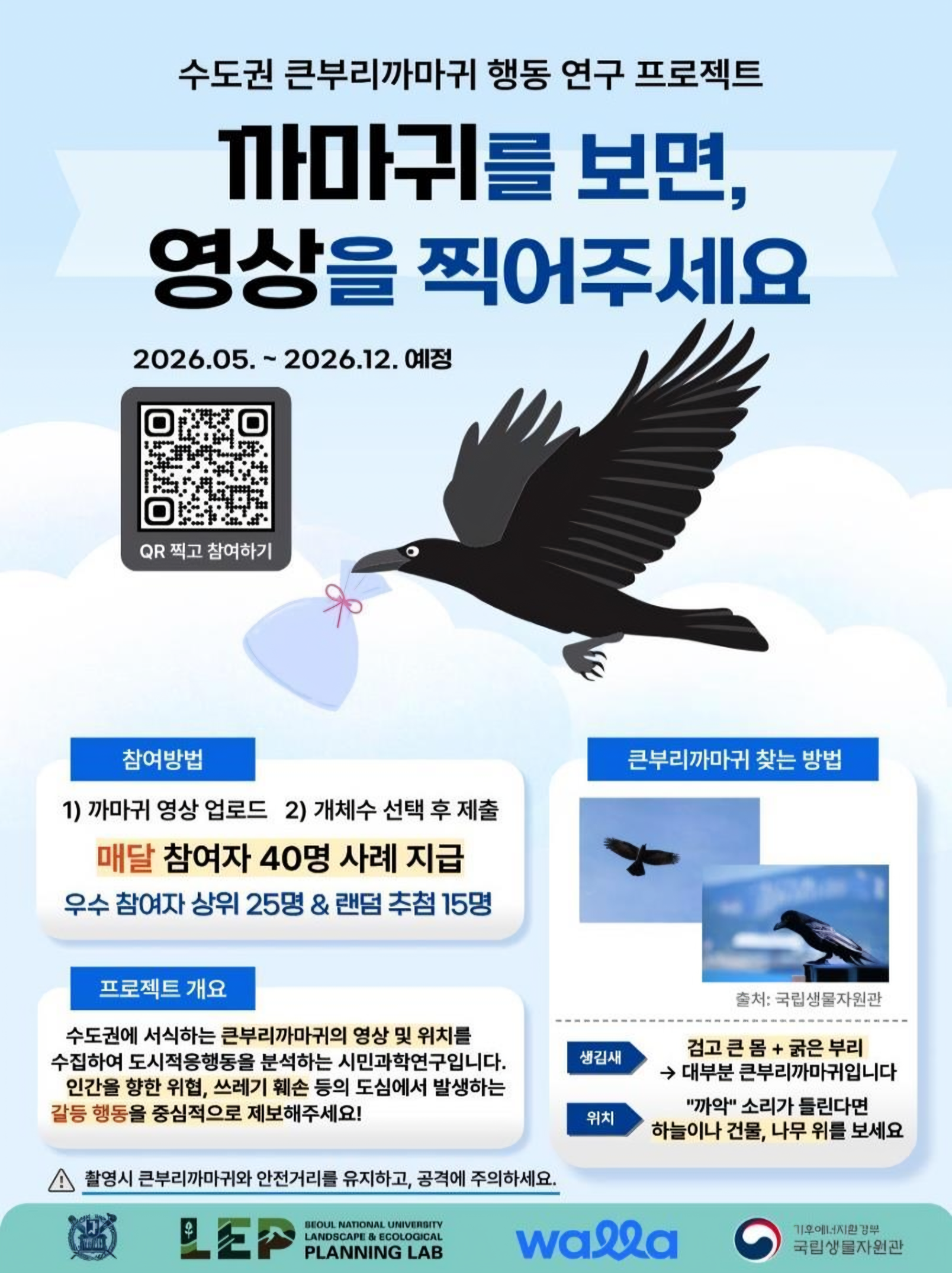
A promotional poster warns of attacks by large-billed crows / Courtesy of the Ministry of Climate, Energy and EnvironmentEnvironmental authorities in Korea issued a public safety advisory Wednesday, warning urban residents of an increase in aggressive behaviors by large-billed crows as the birds enter their peak breeding season. The Ministry of Environment and the National Institute of Biological Resources said they are distributing ecological guidelines to local governments to help mitigate conflicts between humans and the highly adaptable birds. While crows are a common fixture in metropolitan areas, officials noted that encounters turn hazardous between May and July, when fledgling crows leave their nests but remain clumsy fliers close to the ground. During this fledgling period, parent crows become acutely protective. Perceiving passing pedestrians as imminent threats to their offspring, the adult birds frequently launch defensive dive-bombs, targeting the heads and necks of unsuspecting humans. To minimize confrontations, wildlife officials urged the public to carry umbrellas, wear hats or use bags to shield their heads when walking through wooded urban parks. Pedestrians are also advised to avoid direct eye contact with the birds — which crows interpret as a provocation — and to quickly but calmly detour around marked nesting zones without running. Authorities strictly warned against feeding the crows, touching fallen chicks or swinging sticks at them, noting that such actions sharply escalate the birds' long-term hostility and collective memory.The large-billed crow, distinguished by its thick, curved beak and high intelligence, has thrived in Korea's changing urban ecosystem. The birds use telephone wires and street trees for nesting while foraging on food waste.Instead of culling, the government’s new policy directives emphasize nonlethal management, prioritizing public awareness and the securing of garbage bins. Under domestic wildlife protection laws, harming the birds or deploying unauthorized poison baits carries severe criminal penalties.“Reducing injuries requires a combination of public caution and enhanced local monitoring,” said Lee Chae-eun, the ministry's director of nature conservation.This article was published with the assistance of generative AI and edited by The Korea Times.
As crows dive-bomb pedestrians, gov't warns against eye contact - The Korea Times
Environmental authorities in Korea issued a public safety advisory Wednesday, warning urban residents of an increase in aggressive behaviors by lar...
335 words~2 min read