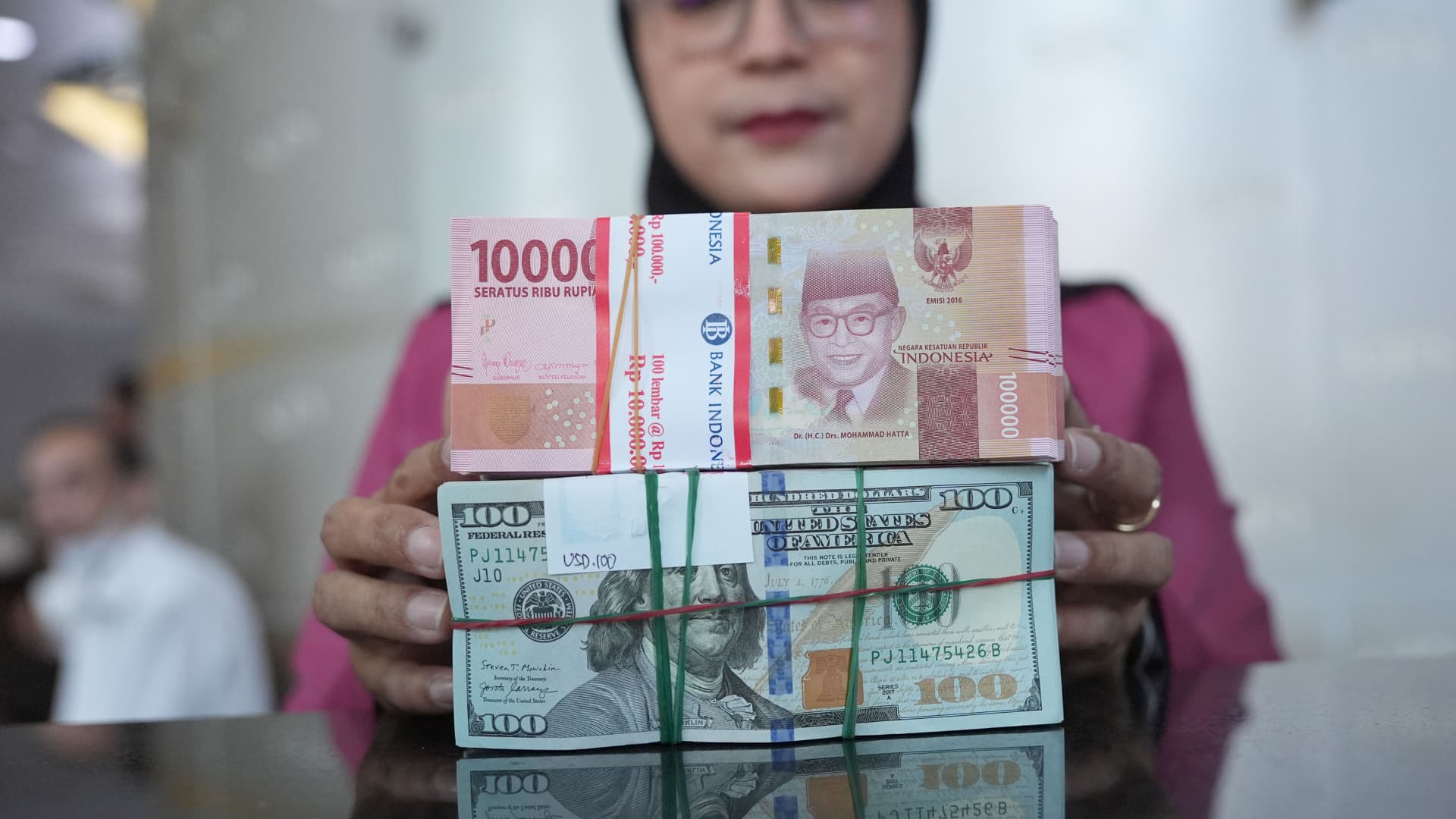
Indonesia’s capital outflows, weakening currency and rising borrowing costs are symptoms of a deeper policy problem. Since President Prabowo Subianto entered office in late 2024, fiscal and monetary policy have been operating out of sync, weakening investor confidence and amplifying economic vulnerabilities.
The first blow to investors’ confidence was Prabowo’s ‘jumbo’ cabinet filled with political allies and coalition appointees, many of whom lacked credible economic expertise. Subsequent policy announcements reinforced these concerns, including a free school meal program budgeted at Rp 71 trillion (US$4.3 billion) which lacked a credible delivery model and the village cooperatives scheme which lacked a clear operational framework.
The extreme top-down budget cut announced in January 2025 included reductions in regional government transfers, which contradicts the usual budget management strategy and contributed to a 1.38 per cent contraction in the government expenditure component of GDP. The cut was counterproductive as Indonesia’s slowing economy needed fiscal expansion rather than contraction.
Public frustration with the government peaked in August 2025 with widespread demonstrations across the country. The immediate trigger was the announcement of a monthly housing allowance of Rp 50 million (US$2800) for each member of parliament, widely perceived as insensitive to a public facing higher costs of living.