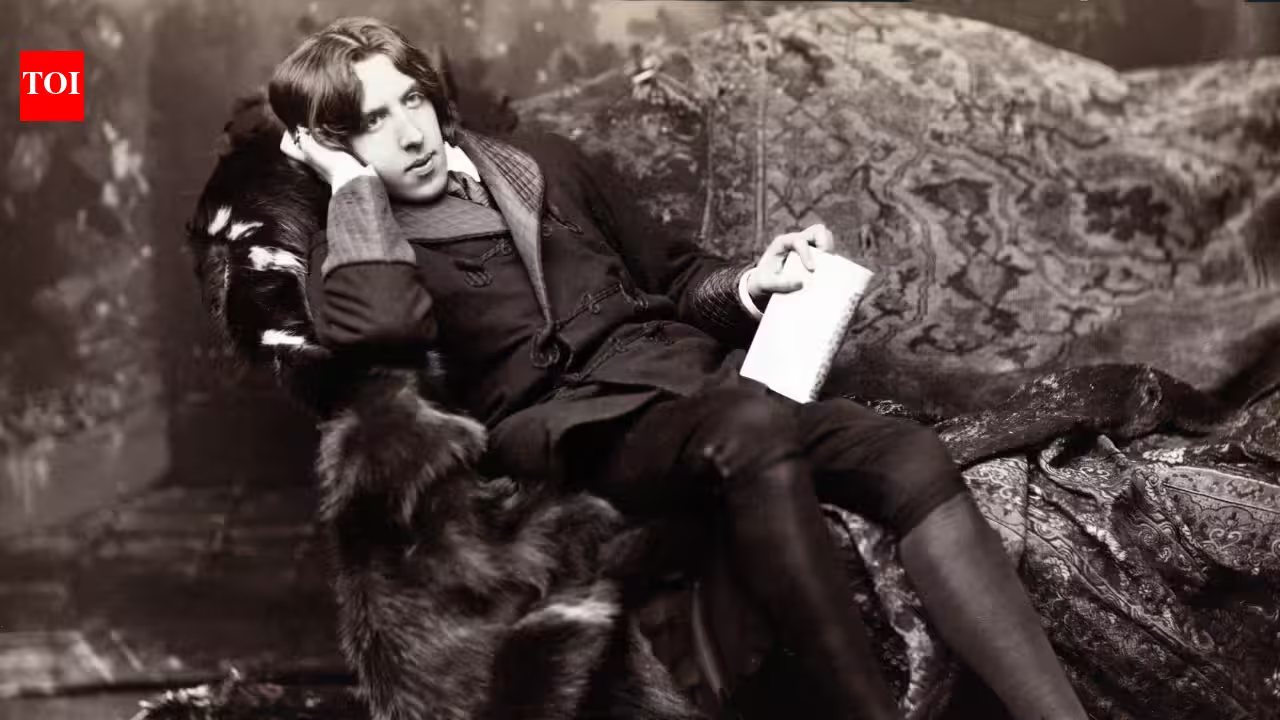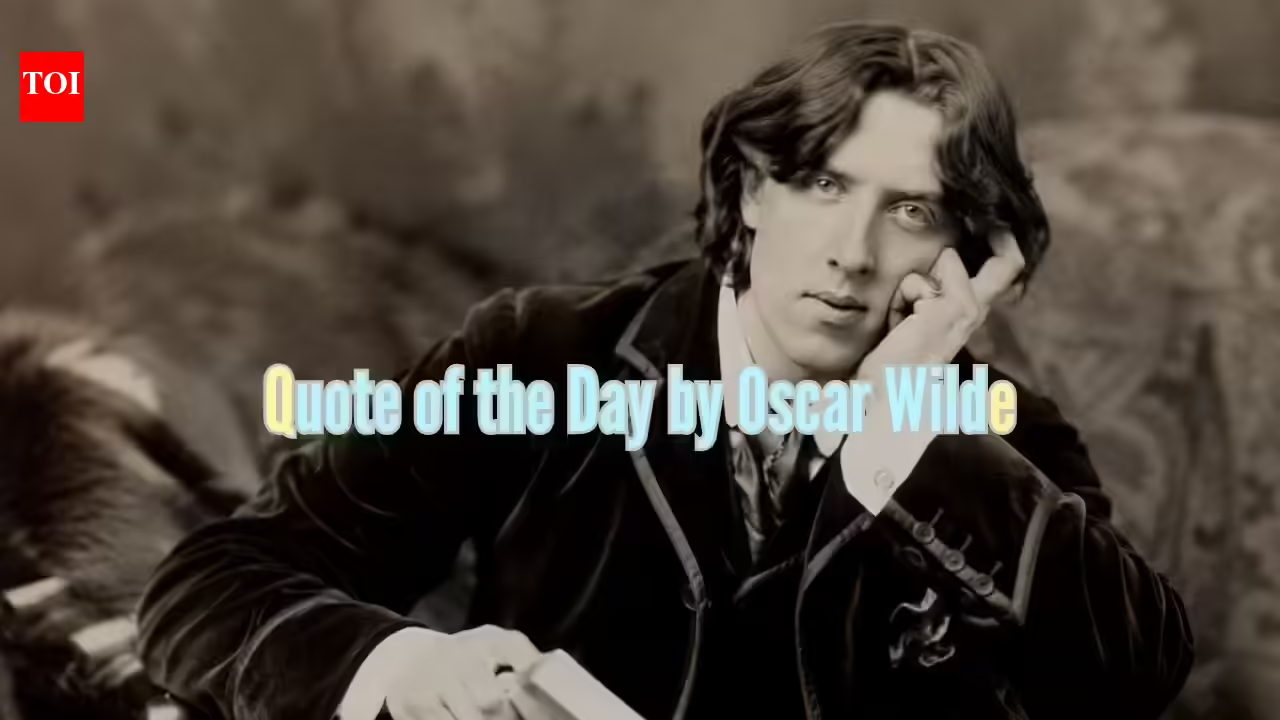
In the 1997 film Good Will Hunting, directed by Gus Van Sant, audiences meet a young mathematical genius who can solve impossibly complex equations but struggles with the emotional truths of life. The film raises an intriguing question: What truly makes someone fascinating? Is it knowing all the answers or having the courage to admit you don't? We encounter both kinds of people in everyday life: the expert who leaves us in awe with their knowledge and the endlessly curious person whose simple questions make us see the world differently. More than a century earlier, legendary Irish author Oscar Wilde captured this very paradox with his signature wit in his book Only Dull People Are Brilliant at Breakfast, reminding us that the most memorable people often live at the opposite ends of the spectrum. Quote of the Day by Oscar Wilde: “There are only two kinds of people who are really fascinating - people who know absolutely everything, and people who know absolutely nothing.”Why Oscar Wilde's quote on curiosity and human nature matters todayWe live in an era where information is everywhere, yet genuine curiosity often feels increasingly rare. Social media encourages people to appear knowledgeable about every topic, while fear of looking uninformed discourages many from asking simple questions. Wilde's remark playfully challenges this mindset by suggesting that fascination doesn't necessarily come from knowing "enough"; it comes from standing at either extreme of knowledge.The quote also reminds us that people who know a great deal can inspire through expertise, while those who know very little often inspire through unfiltered curiosity. In both cases, conversations become engaging because they either teach us something new or encourage us to see familiar things with fresh eyes.You Might Also Like:What Oscar Wilde's quote means in real lifeWilde wasn't literally claiming that only geniuses and completely ignorant people are interesting. Instead, if seen from a broader view, he was using exaggeration to highlight two qualities that make conversations memorable. Experts often fascinate us because they possess deep insight built through years of learning and experience. Meanwhile, people who approach the world without assumptions, especially children or those willing to admit they don't know something, often ask honest questions that others overlook.The deeper lesson is about intellectual humility. Many people spend their lives trying to appear knowledgeable, yet the most engaging individuals are often those who either truly understand a subject or openly acknowledge what they don't know. Wilde suggests that pretending to know everything while remaining only superficially informed is far less compelling than either genuine mastery or genuine curiosity.About Oscar WildeOscar Fingal O'Flahertie Wills Wilde (1854–1900) was an Irish poet, playwright, novelist, and essayist whose wit and literary brilliance made him one of the defining cultural figures of the late nineteenth century. Born in Dublin, he studied at Trinity College before attending Oxford University, where his exceptional talent earned him the prestigious Newdigate Prize for poetry. Wilde became famous not only for his writing but also for his flamboyant personality and sharp social commentary.His best-known works include The Picture of Dorian Gray, The Importance of Being Earnest, An Ideal Husband, and The Happy Prince and Other Tales. Although his literary achievements brought him lasting fame, his personal life became the subject of intense public scrutiny. Convicted of "gross indecency" because of his homosexuality, then a criminal offense in Britain, he served two years of hard labor. The experience devastated his health and finances, and he died in Paris in 1900 at the age of 46. In 2017, the British government posthumously pardoned Wilde under legislation known as the "Alan Turing law."Oscar Wilde's legacyMore than a century after his death, Wilde remains one of the most quoted writers in the English language. His plays continue to be performed worldwide, while his essays, fairy tales, and novel are studied for their wit, psychological depth, and criticism of social hypocrisy. Many of his observations about vanity, love, ambition, and human behavior feel remarkably modern, proving that clever humor can often reveal uncomfortable truths.
Quote of the Day by Oscar Wilde: ‘There are only two kinds of people who are really fascinating - people who know absolutely everything, and…’
Quote of the Day by Oscar Wilde suggests true fascination lies at the extremes: profound knowledge or unadulterated curiosity. In today's information-saturated world, where appearing knowledgeable often trumps genuine inquiry, Wilde's wit challenges us. He highlights how both deep expertise and humble questioning can illuminate our understanding. urging a re-evaluation of what truly makes individuals captivating.
667 words~3 min read