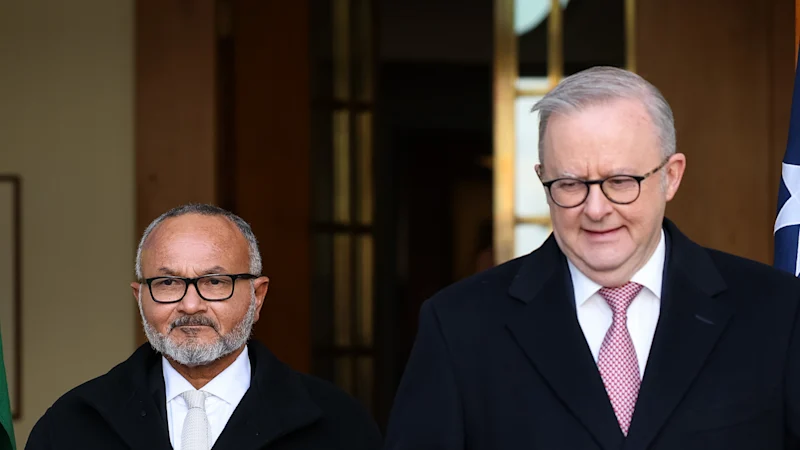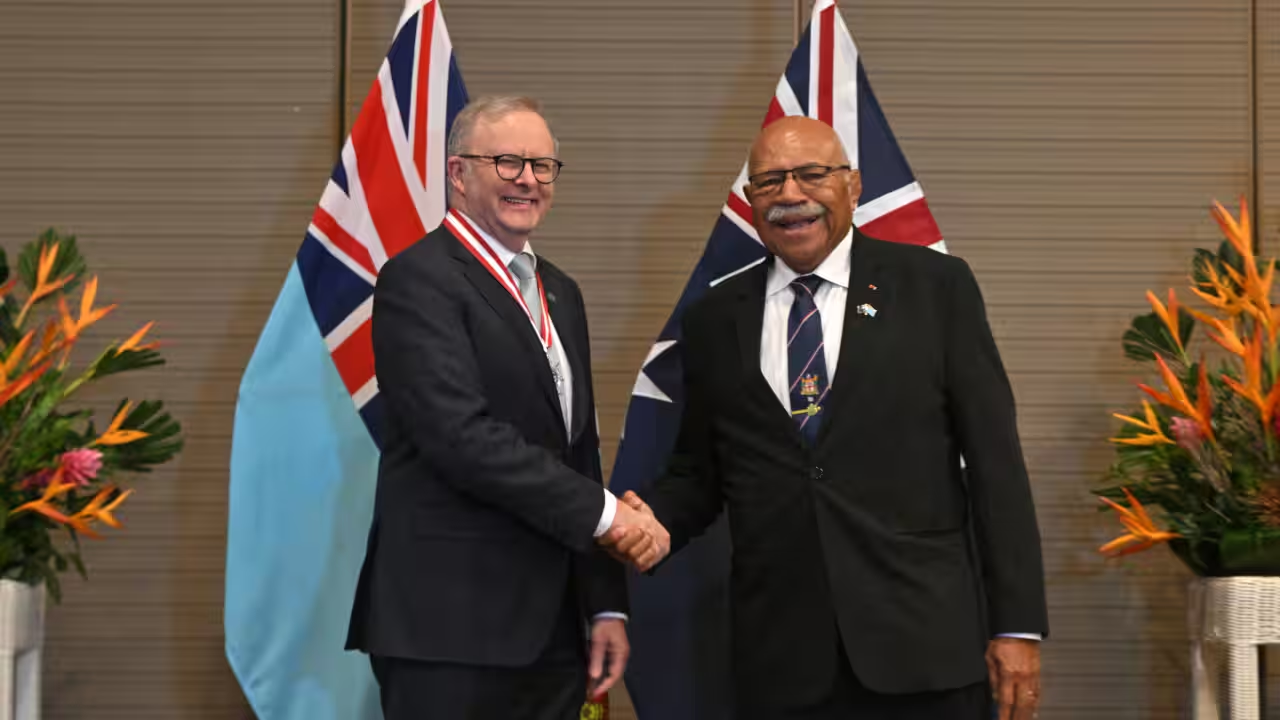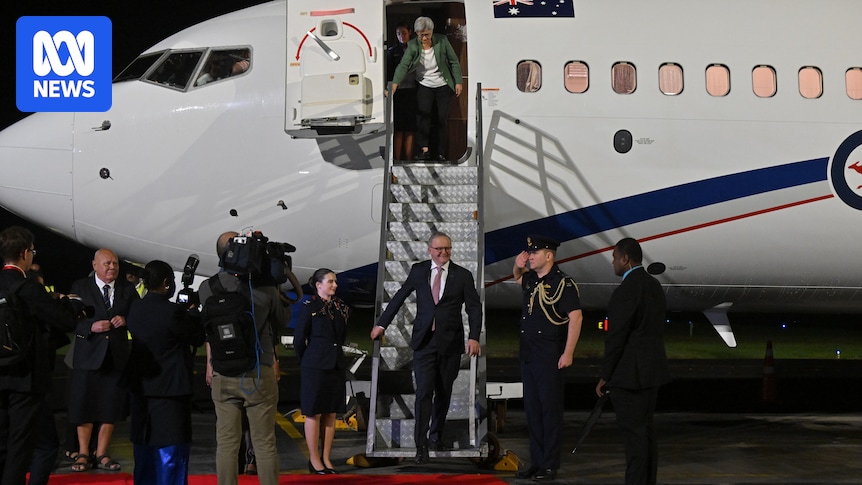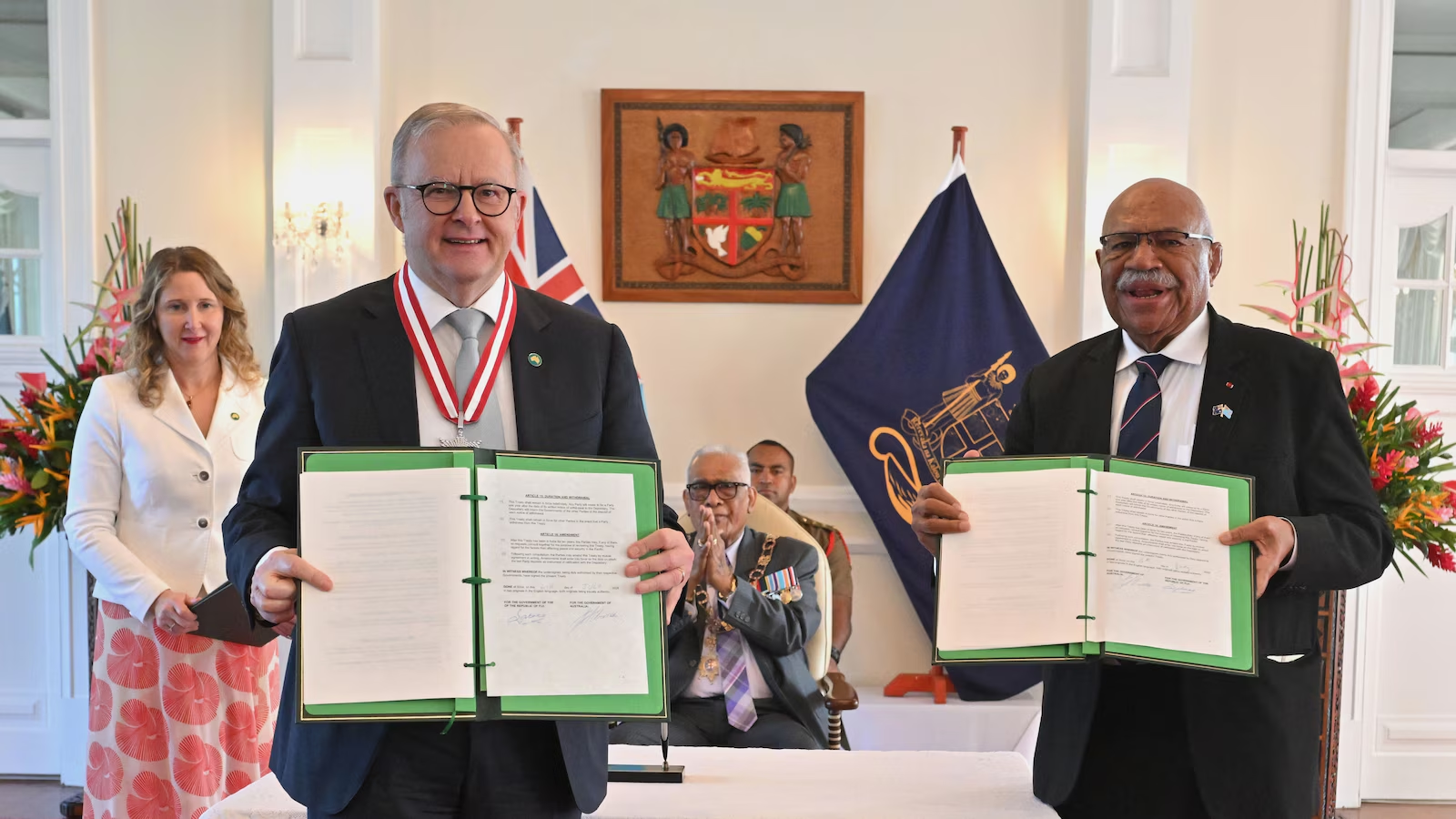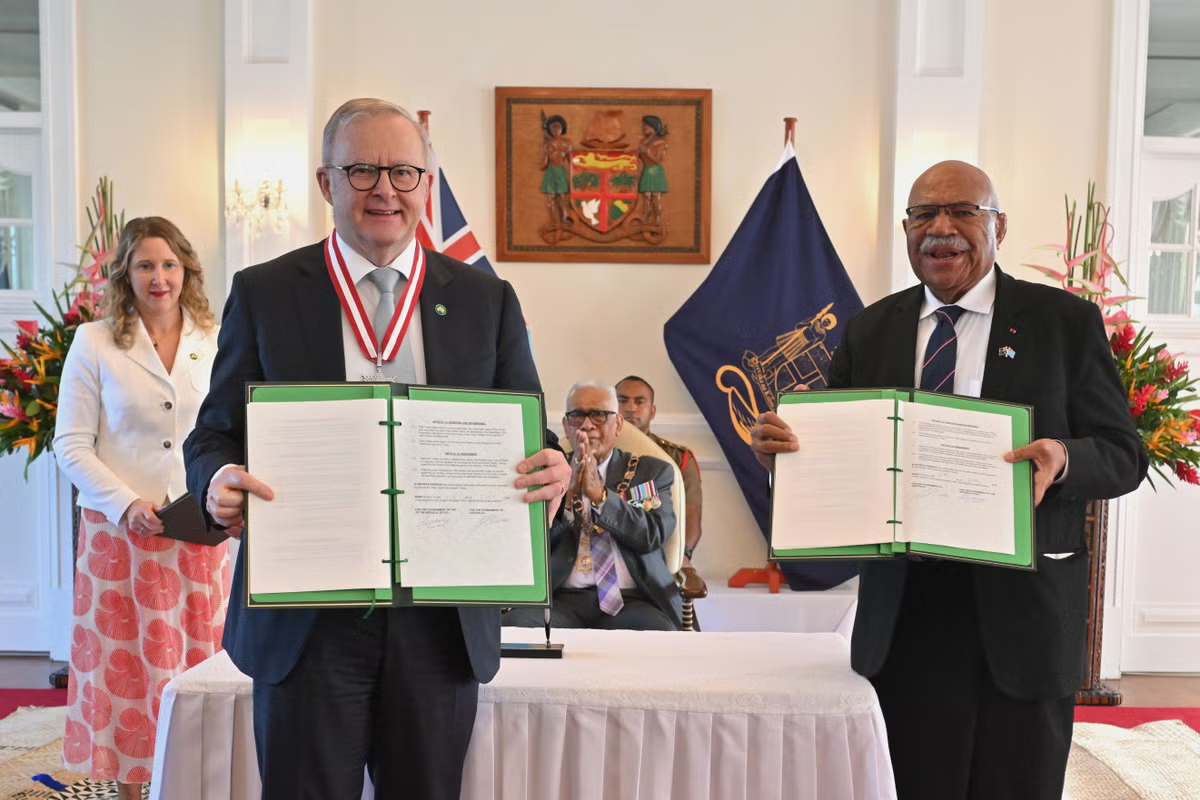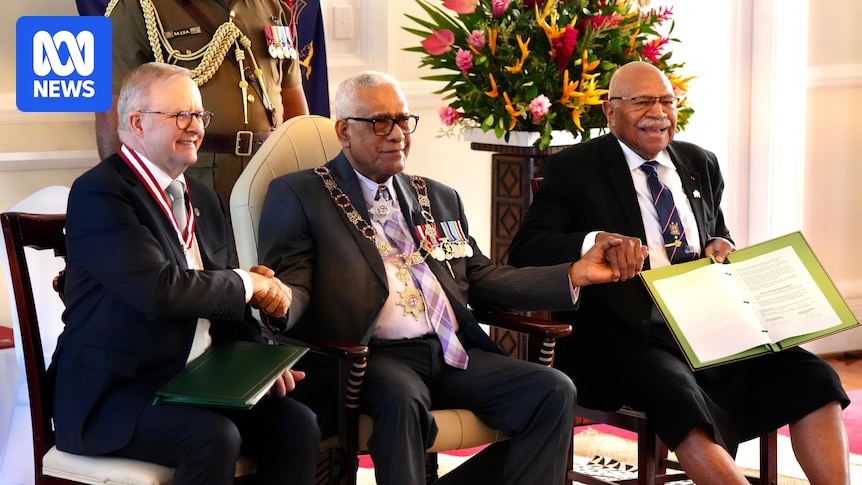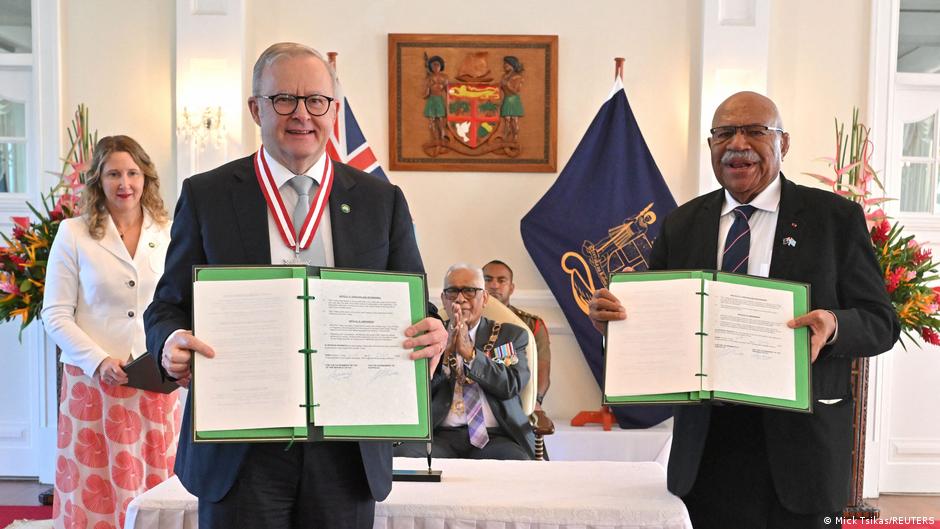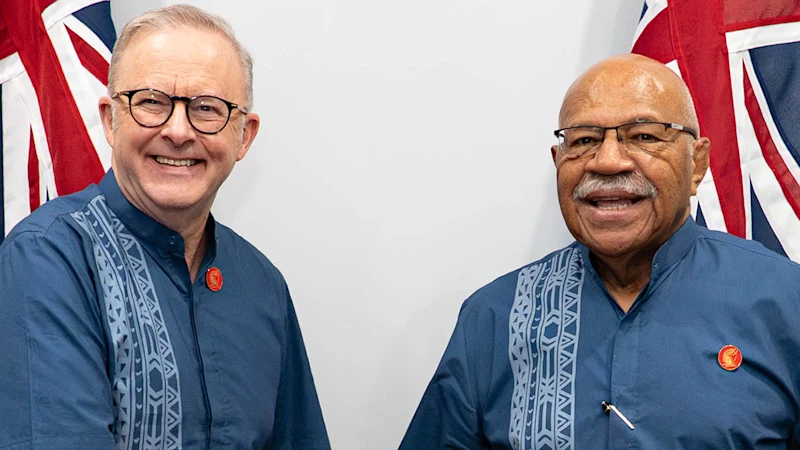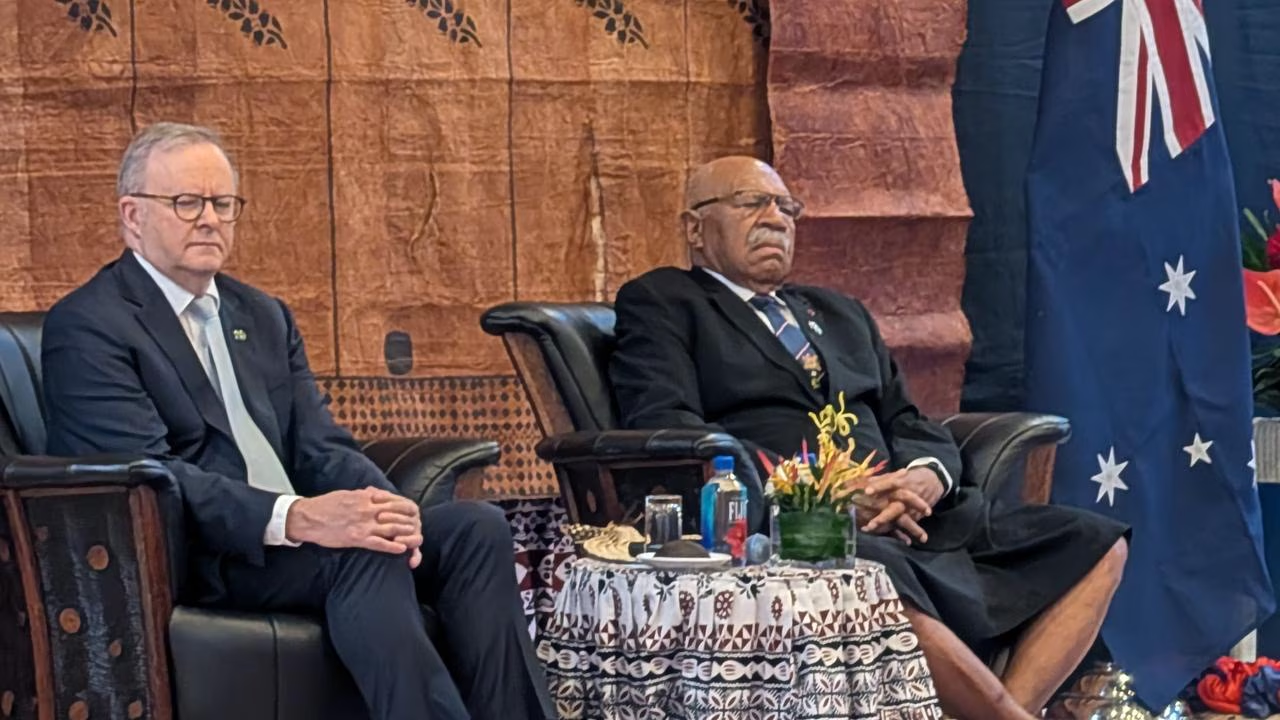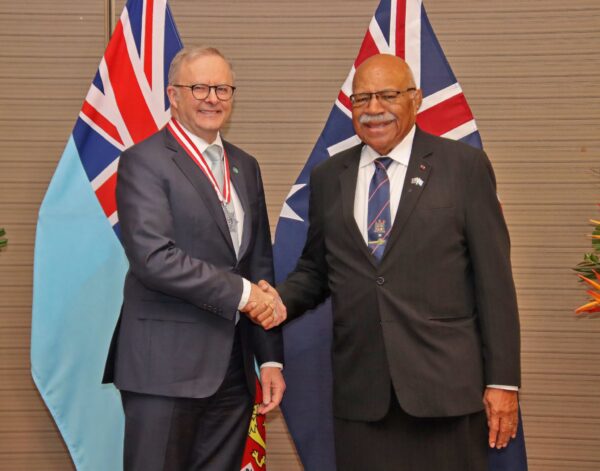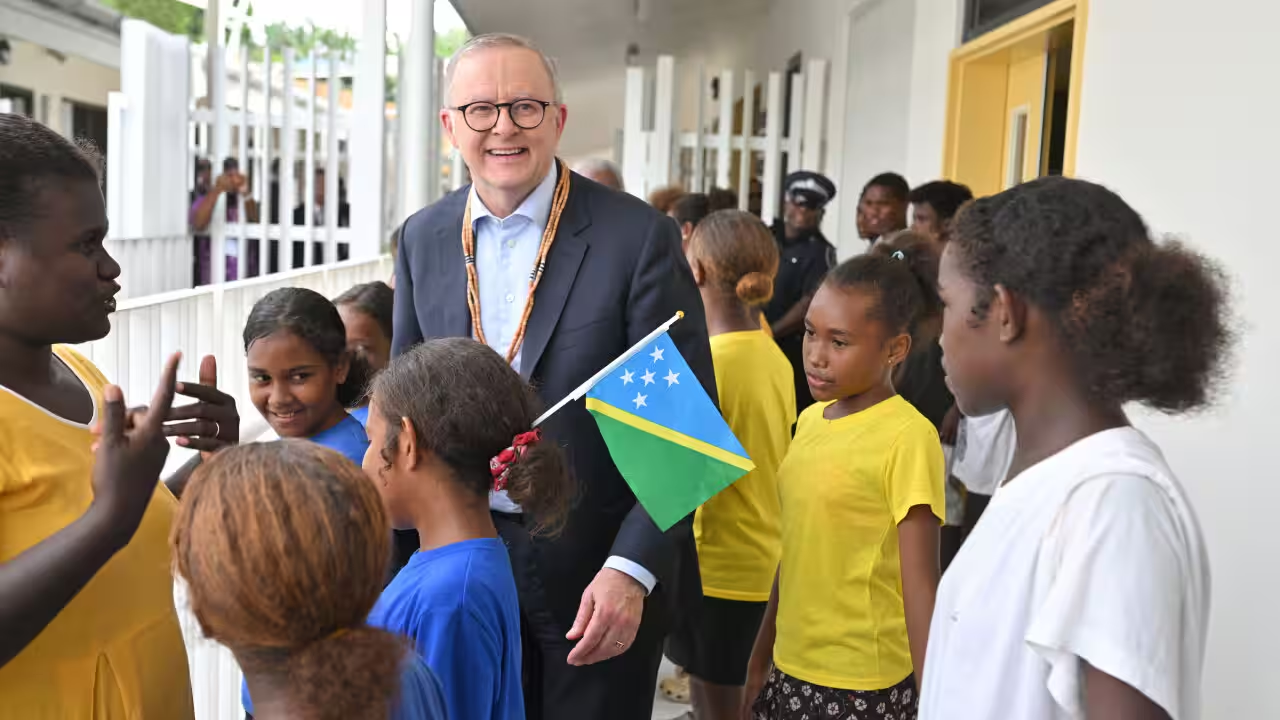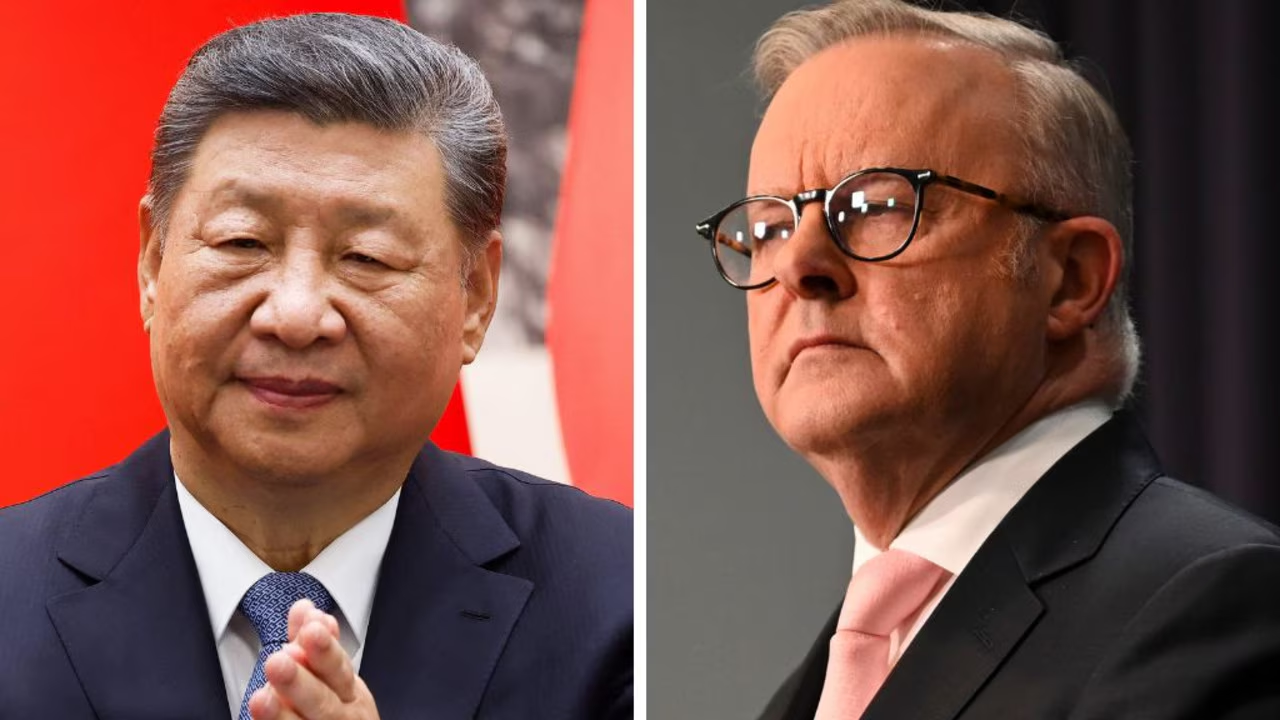
The “buzzword will be integration” when Anthony Albanese travels to Fiji for lightning talks as the prospect of a transformational regional security agreement gains momentum, a leading academic claims.The Prime Minister will travel to the capital Suva and the Solomon Islands next week ahead of the next meeting of leaders of the Pacific Island Forum in Palau next month. In the offing is the Vuvale Union, a long-gestating and wide-reaching agreement between Fiji and Australia.Once finalised, Vuvale – meaning family – is expected to deepen security co-operation between Canberra and Suva at a key time for the region.Australian officials have increasingly described the “permanent contest” in the Pacific between Australia and China, which has deepened its police presence and all but quashed diplomatic ties in the region with Taiwan – only the Marshall Islands, Tuvalu, and Palau maintain ties with Taipei.However, it is a Pacific-wide security agreement – one that could involve multiple Pacific nations – that has gained momentum in recent weeks.In early June, Solomon Islands Prime Minister Matthew Wale floated the idea while on an official trip to Canberra.Then, on June 24, deputy Liberal leader Ted O’Brien said in a National Press Club address the Coalition would establish with Pacific Island Forum members a co-designed South Pacific regional security agreement.He said the idea of a “broader Pacific security agreement” had “historical roots”.“Indeed, in his forthcoming visits to the region, I encourage Prime Minister Albanese to also canvas the idea with Pacific peers and provide the necessary support to back in those who wish to progress it,” he said. “A regional security agreement would help preserve the status quo of the Pacific and provide stability for the future by giving confidence to even the smallest Pacific state among us that they have the backing of us all.”Defence Industry Minister Pat Conroy has kept the door open to the idea but has not committed to it either.ANU Coral Bell School of Asia Pacific Affairs deputy director Graeme Smith said there was an “appetite” among Pacific Island Forum nations for a regional security agreement – a proposal, he said, that had been given new “impetus” because of the drawdown of the United States’ presence in the region.Importantly, it could also signal an end to the China question.“The whole drama of who’s going to sign with China … I think people are a bit over it,” he said. “This is a neat solution to the whole thing. It’s like, it's not that we don’t need you (China, Australia), but we’d rather lead it and call on you as required.”However, a comprehensive agreement faces challenges.There was not consensus among Pacific nations on China, Mr Smith said, with Kiribati – which maintains a strong relationship with Beijing – being a potential thorn.Then there is the issue of what each nation could contribute.Only Papua New Guinea and Fiji, as well as potentially Tonga and Vanuatu, had a “fully fledged” military able to contribute to a regional mission, Mr Smith said.“In many ways. Fiji would probably have the most experience because of their involvement in international peacekeeping,” he said. For Fiji, health, transnational crime, and climate change would likely be high on the agenda in talks with Mr Albanese when he arrives in Suva. Fiji faces one of the world’s fastest-growing HIV epidemics.It is also dealing with a boom in transnational crime, which Mr Smith said had both “an Australian angle and a Chinese angle”, with Australian bikie gangs and a high-profile Chinese Fijian national allegedly involved in the region’s drug trade.Mr Smith said the “buzzword will be integration” in talks between Mr Albanese and Fiji Prime Minister Sitiveni Rabuka.He expected the Vuvale Union to be signed while the Prime Minister was in Suva.“You could see some big announcements around transnational crime and possibly even further integration/co-operation between the Fijian police and the Australian police … even further training exercises (and) co-operation between the Australian military and the Fiji military,” he said.In May, Foreign Minister Penny Wong said the final details of the Vuvale Union would be negotiated by officials and ministers “in the coming weeks”.Pacific blitzThe trip caps off a diplomatic blitz between Canberra and Australia’s Pacific neighbours in recent weeks.In early-June, Solomon Islands Prime Minister Matthew Wale urged for a reset in relations between Honiara and Australia and agreed to advance talks for a new comprehensive bilateral treaty in a trip to Canberra only weeks after taking the top job. It was during that visit that Mr Wale raised the idea of a Pacific-wide security treaty.Honiara had until recently been the black sheep of Australia’s Pacific agenda, having signed a security pact with Beijing in 2022 that led to the deployment of Chinese police that same year following a spate of civil unrest.While Chinese police remain in the island nation – including deployment last year of a pilot surveillance and biometric data collection system in Solomon Islands villages – Mr Wale has struck a more Beijing-cynical tone, having pledged to release the confidential security agreement with China. In another win, Vanuatu Prime Minister Jotham Napat earlier this week ruled out allowing a Chinese military base on the island nation with the signing of the Nakamal Agreement – a long agreed to, but until this week unsigned, bilateral measure.Among a range of measures, Australia will provide additional training and equipment for Vanuatu’s police.It also reaffirmed a joint commitment to a Pacific-led responsibility for security.The region has faced challenges.Heavily dependent on imports, Pacific nations have been some of the most exposed to fuel shocks from the war in the Middle East.So, too, are they exposed to threats from climate change and natural disasters.In a landmark agreement, Australia began accepting climate migrants from Tuvalu earlier this year amid fears the atoll nation would be inundated by rising sea levels.
Albo’s move to keep China at bay
The “buzzword will be integration” when Anthony Albanese travels to Fiji for lightning talks as the prospect of a transformational regional security agreement gains momentum, a leading academic claims.
962 words~4 min read