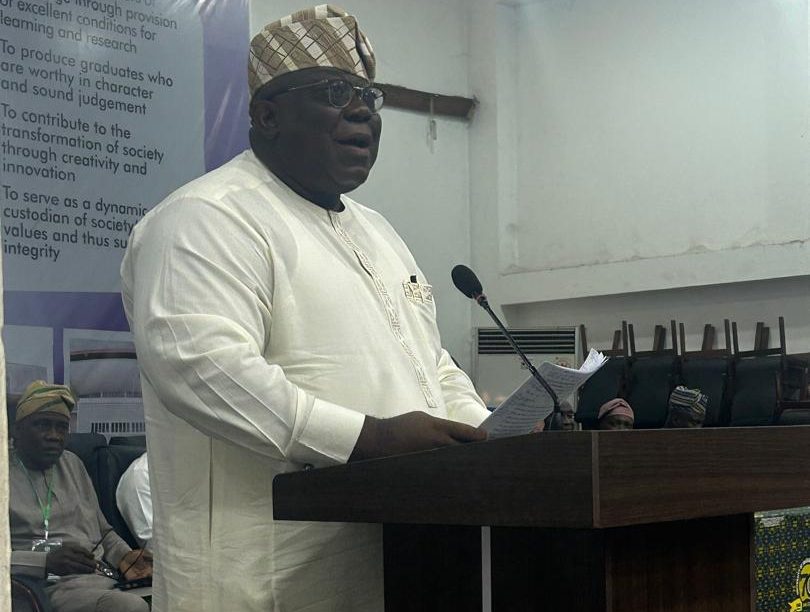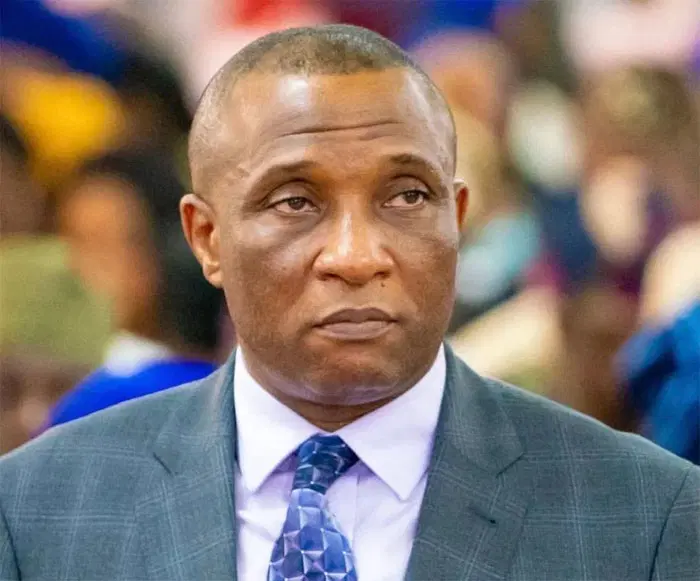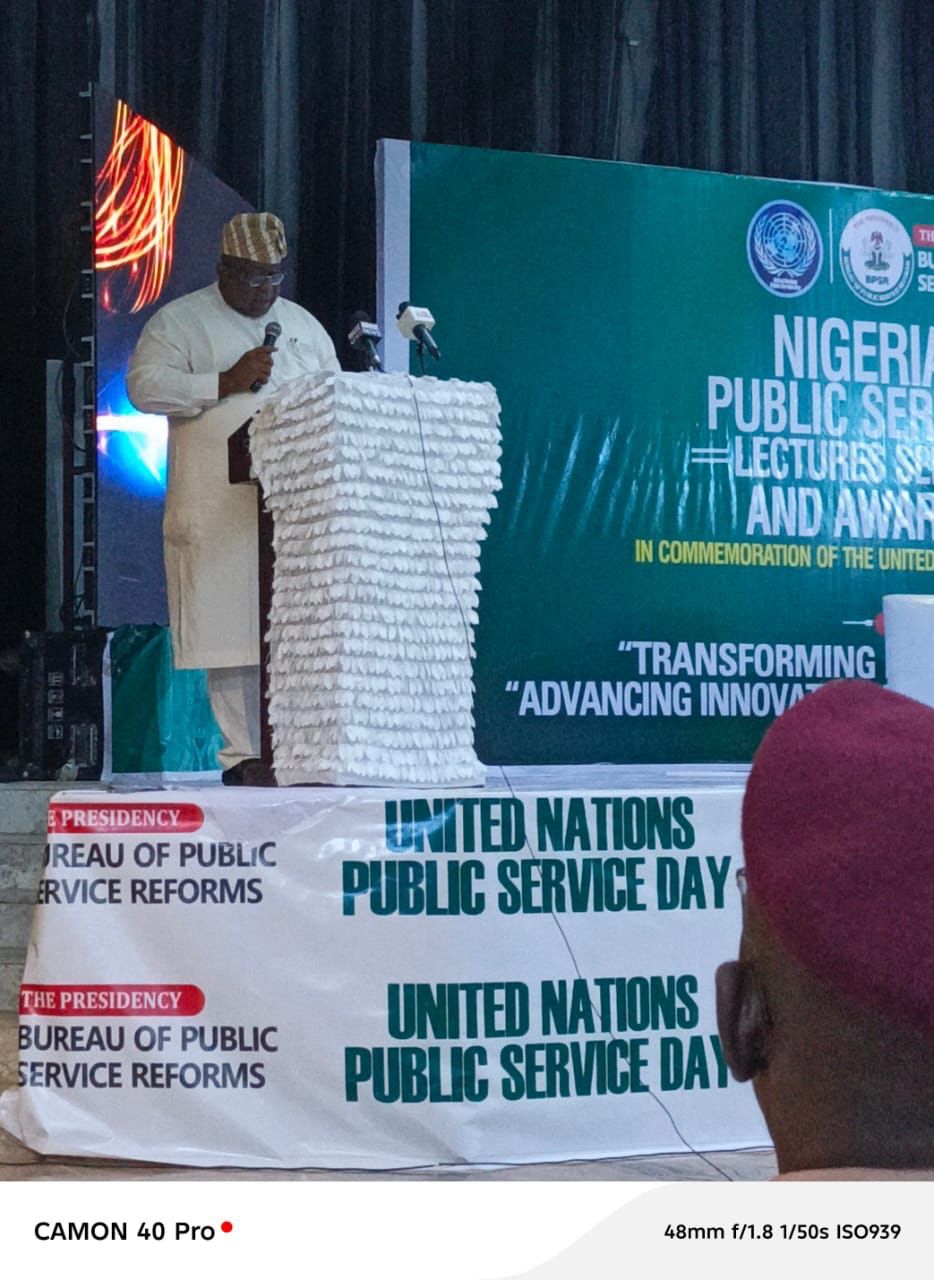
Prof. Tunji Olaopa making his presentation as guest speaker at Nigeria Public Service Lecture marking the United Nations Public Service Day organised by the Bureau of Public Service Reforms (BPSR) in Abuja on June 23, 2026.
By Tunji Olaopa
In its many centuries of historical evolution, from the ancient Egyptian and Roman period all through the French and Prussian ramifications to the British iteration of its essence, we can say without any form of exaggeration that the public service has never known the same type of challenging reality that it is currently facing in the twenty-first century. While it is true that the public service has weathered all the possible challenges it has ever encountered, from wars to famines and droughts, as well as economic recessions of all kinds, it now confronts all across the world all these challenges in even more severe and complicated forms.
Today, the world is in a polycrisis. This simply means not only that the world is confronted with unimaginable conflicts, problems and all sorts of predicaments, or that these crises and challenges are manifesting at a degree never before seen in any century. A polycrisis implies that these conflicts, crises and challenges are connected in some terribly complicated and complex ways that spell serious headache for governments, public administrators and public managers. The challenge posed by climate change, for example, is not just a challenge about the inclemency of the climate alone, but how that problem aggravates agriculture, ethnic conflict, and geopolitical and geoeconomic crises everywhere across the world. Cybersecurity challenges instigate terrorism that cripples national government and throws the world into governance crises. And that is how every other conflict and crisis make other conflict and crisis more troubling.At the heart of all these problems, challenges, crises and predicaments of the world lies the public service that every government must depend on to confront and engage with these challenges that policies must undermine on behalf of the citizens. In 2001—September 11—the United States experienced one of the largest terrorist attacks in modern human history, and according to a commentator, a government system that “had defeated the Nazis, the Japanese and the Soviet Union was no match for a handful of terrorists.” When the World Trade Centre came tumbling down in a shower of bricks, and steels and bones, it was the American public service that shouldered the burden of what it did not expect and on that horrible scale. When the coronavirus hit the globe from 2019 to 2021, it was the public services all over the world that were at the receiving end of its most brutal and traumatic charges—hospital workers, doctors, nurses, armed forces, law enforcement officers, etc. The public servants withstood the pandemic at its most cruel points, and often without the required equipment. It was worse for every state, especially those touted as the very embodiment of infrastructural development, whose sophisticated healthcare facilities failed woefully to contain the onslaught of the ravaging virus. No government or policies or public service was prepared for the pandemic or the other crises from the Internet bubble collapse of 2000 to the US-Iran conflict of 2026.