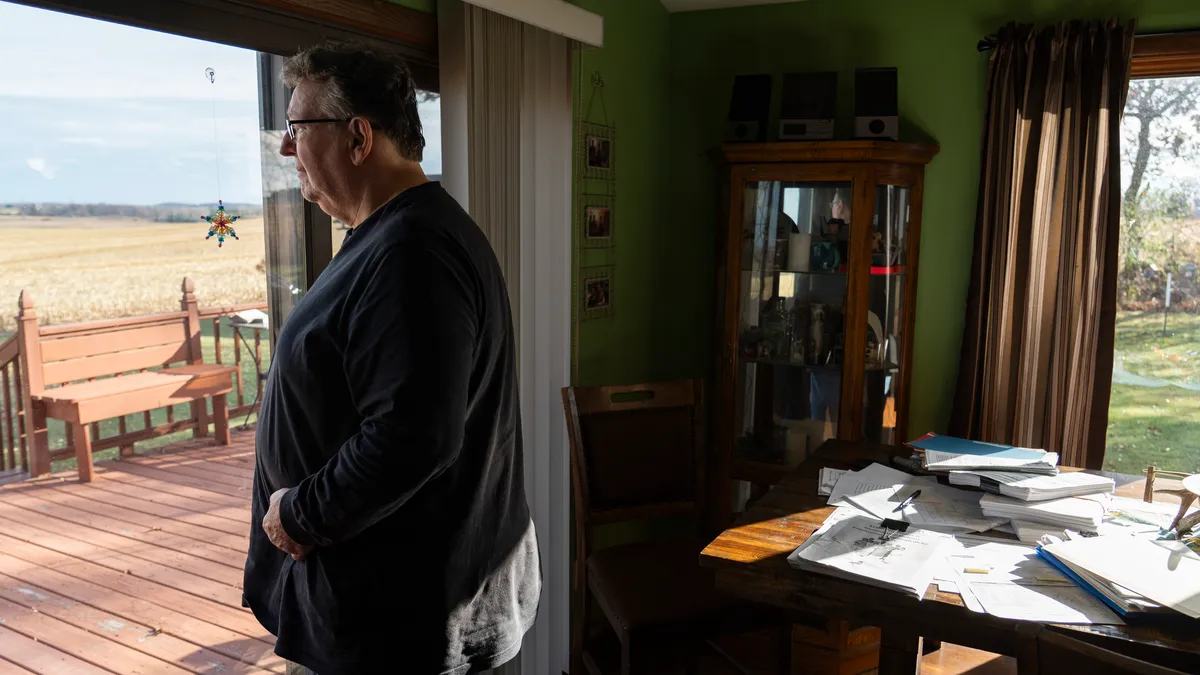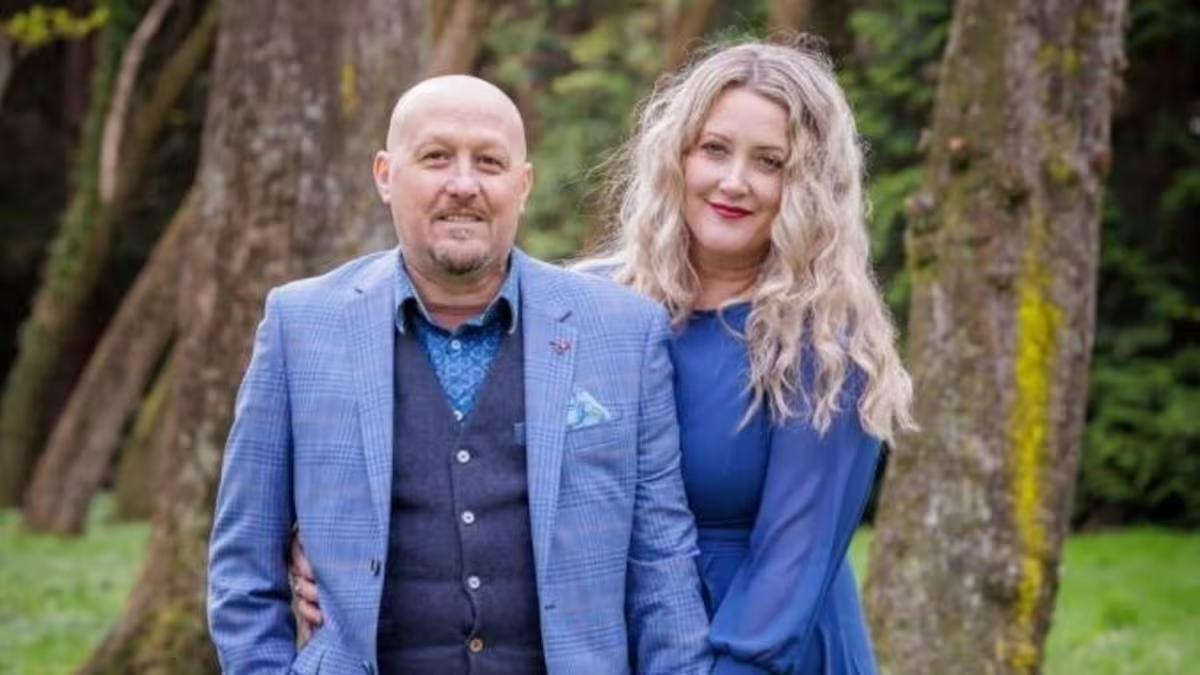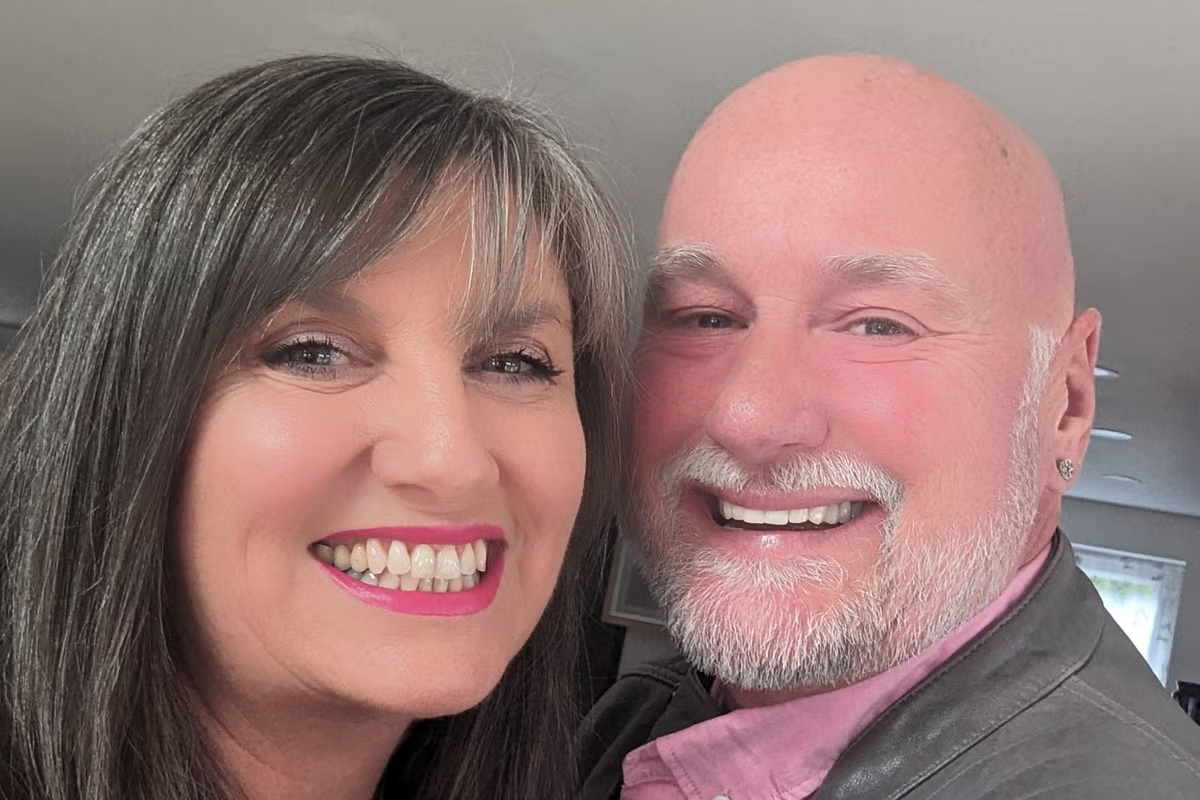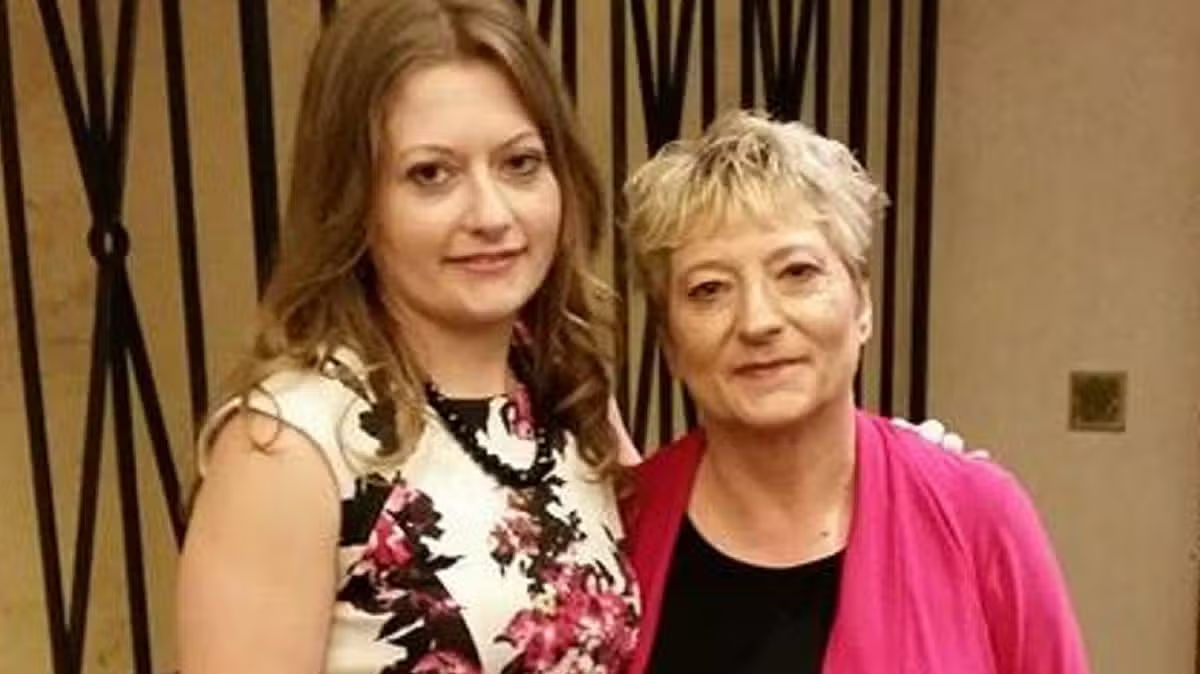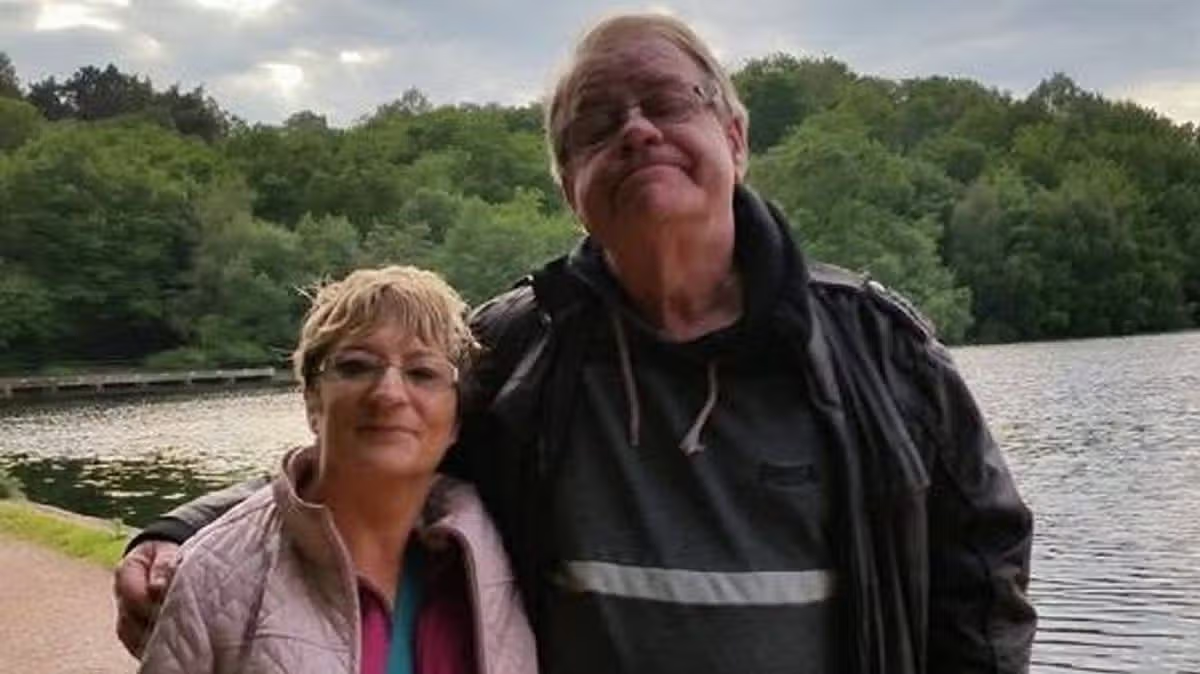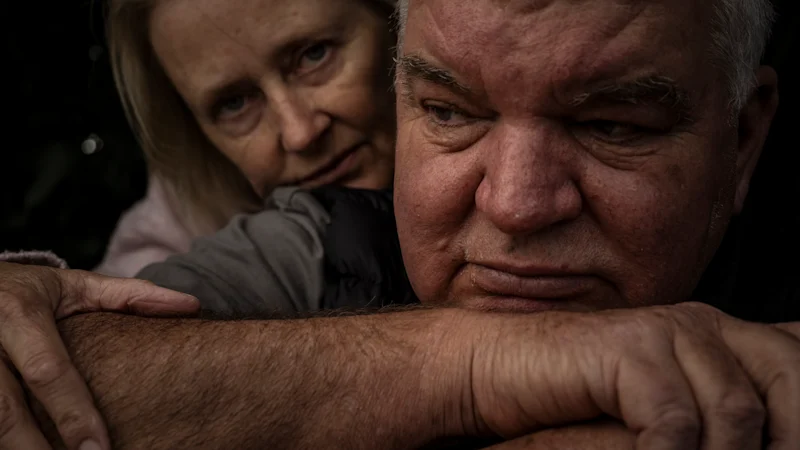
Ric Perna spent more than a decade working as a maintenance manager for a company that manufactured machines to diagnose cancer and save lives.The 64-year-old did not realise it at the time, but a toxic chemical known as xylene was floating through the warehouse.Ric Perna, pictured with his wife Stephanie Thomas, was diagnosed with multiple myeloma after being exposed to toxic chemicals at work.Chris HopkinsFor years, his employer failed to provide him with personal protective equipment to shield him from the colourless, sweet-smelling solvent being absorbed into his eyes and skin.“For the first decade it was just open slather because they didn’t know the safety regulations,” he said. “When they finally caught up, it was too late for me.”On New Year’s Eve four years ago, after months of agonising bone pain and crushing fatigue, Perna was diagnosed with multiple myeloma, a rare form of cancer, which had invaded his blood and bones. He believes xylene is to blame.Another devastating blow came when Perna received a one-off impairment payout from an authorised insurer for WorkSafe of $78,000, despite a terminal diagnosis rendering him unable to work.“You’re better off with a sore back,” Perna said.“I’ve got a friend who was compensated almost a million dollars for having a bad neck at work. I’ve got terminal cancer. I’ve been told it is going to kill me. We’ve got jack.”Associate at Maurice Blackburn Lawyers Ross Sottile Chris HopkinsGrowing global research suggests when xylene is mixed with other chemicals, it could increase the risk of blood cancers.Perna’s lawyer, Ross Sottile, an associate at Maurice Blackburn’s dust and occupational diseases team, said terminally ill Victorians who developed deadly work-related cancers after being exposed to poisonous chemicals or failed safety standards were increasingly being left with “grossly inadequate” lump-sum payouts.Medical guidelines already exist for occupational respiratory illnesses like severe asthma and infectious diseases. However, when it came workplace-related cancers, the system was failing, Sottile said.Although international guidelines exist for compensation for various illnesses and injuries that can result from work, there is no adequate guide on how to measure the severity of cancer or the impact on the worker’s life, despite its devastating and often fatal consequences.“The absence of dedicated guidance creates inconsistent and unfair outcomes for some of the most vulnerable workers,” Sottile said.“This issue has persisted for years without any meaningful reform.”As legal claims and awareness about carcinogenic workplace conditions soar, Sottile has fought for compensation for countless workers who have been left with blood, kidney, prostate, skin, and other forms of the disease while on the job.Many have been given small one-off impairment payments despite their terminal illness.Another of Sottile’s clients has stage four metastatic melanoma following years of being inadequately protected by his workplace in his role as a carpenter.Despite being gravely ill with no prospect of a cure, he was assessed at 15 per cent impairment, resulting in a one-off impairment payout of $35,000.Sottile said the framework failed to capture the gravity of terminal conditions, noting that in this client’s case the medical assessor attributed a 15 per cent impairment rating to some scarring on his body.“To put that into context, someone with a back fusion or partial hearing loss gets about the same amount of money as this man even though their condition won’t kill them,” Sottile said.The man’s case is currently being challenged at a medical panel. He has been forced to spend his final months fighting for fairer compensation.Under Victoria’s no-fault system, workers with an accepted compensation claim can lodge a lump-sum application for permanent injury without needing to prove employer negligence.These single payments are strictly designated for pain, suffering, or permanent impairment, and are separate to other benefits they are entitled to receive such as ongoing medical bills or loss of weekly earnings.Seriously ill workers are assessed under global guidelines set out in the American Medical Association (AMA4), which are used across Australia and the world to determine the severity of permanent injuries.But Sottile argued the system was skewed against those who developed cancer at work.“If a dying person’s total pain and suffering for a terminal condition that has been linked back to their workplace is valued at $35,000 or $78,000, that is just incredibly poor,” Sottile said.“Weekly drip-feed payments for lost earnings don’t mean much when you are at the end of your life.”Ric Perna’s life in the High Country was uprooted so he could be closer to medical support. Chris HopkinsIn Perna’s case, an independent medical assessor identified his impairment range at between 15 per cent and 30 per cent but exercised clinical discretion to assess him at 80 per cent, noting the disease will inevitably progress.A WorkSafe authorised insurer rejected the 80 per cent assessment, which would have resulted in the father-of-three being given a payment of more than $700,000. Instead, a lower impairment figure was applied, a decision that reduced his payout by hundreds of thousands of dollars.Perna, who uprooted his life at Lake Eildon in Victoria’s High Country and relocated to the coastal township of St Leonards to be closer to a hospital with specialised treatment, said the decision was “another kick in the guts”.“It is bullshit,” he said. “It’s not 30 per cent cancer ... it is 100 per cent cancer, and it’s going to kill me in the end. I just thought, ‘how can they do this?’”His wife, Stephanie Thomas, said the couple spent thousands of dollars relocating.Her wages have also taken a hit as she cares for Perna, and she said it was heartbreaking seeing her husband so ill.“One minute your life is just ticking along, you’ve got your jobs, everything’s fine, and then you suddenly you’re told that there’s terminal cancer,” she said. “It just flicks a switch. Everything turns upside down.”Some days, Perna is too sick to move from the couch. His feet are often numb, leaving him unable to walk. He has developed diabetes as a result of his treatment and weeks are a blur of chemotherapy and hospital visits.“I need to get my wife to put my shoes and socks on and sometimes to help me in the shower,” Perna said, his voice cracking with emotion. “People don’t see any of that.”Every three months, Perna has to submit a form to an insurance company, in which his doctor outlines he is still too sick to work.The couple intend to fight for more compensation.“We feel like a thorn in their side,” Thomas said. “It is like Ric has to be on death’s door before they are going to consider even giving him decent compensation.”The couple do not want anyone else to go through what they have, and like Sottile’s other client, are demanding urgent reform and the development of dedicated guidelines for work-related cancers.“Both these men are facing terminal diagnoses,” Sottile said.“Yet the compensation awarded to them does not come close to reflecting the seriousness of their illnesses or the impact on their lives. The current system is failing them and so many others.”He said lung cancer was the only exception, given its undeniable link to workplace hazards like asbestos.However, new guidance has been drawn up for some serious conditions when they emerge such as occupational asthma.Sottile said occupational cancer guidelines should ensure all cases – particularly when the prognosis is terminal – are assessed in a way that considers disease severity, and inevitable decline as it progresses.Victorian workers entitled to compensation also have a right to apply for damages, but they must establish the legal fault of another party.But Sottile said that for many workers who are dying, the stress of suing their employer was overwhelming.In a statement, a WorkSafe Victoria spokeswoman said the government regulator for workplace health and safety was committed to regularly engaging with stakeholders to ensure the scheme meets the needs of injured workers.Make the most of your health, relationships, fitness and nutrition with our Live Well newsletter. Get it in your inbox every Monday.
Ric has terminal cancer. WorkSafe says he’s not sick enough for a fair payout
Ric Perna spent years at a factory making cancer-detection machines, unaware that a toxic workplace chemical was causing a terminal blood cancer to develop in his own body.
1,313 words~6 min read