Invisible peacebuilders: How ‘diplomacy works’ to prevent conflict
Many of the United Nations' biggest successes are the crises that never make the headlines.Around the world, special political missions work quietly to ease tensions, broker agreements and support fragile political transitions. Their tools are negotiation, mediation and diplomacy.Unlike the perhaps more visible peacekeeping missions, they have no armoured vehicles or armed troops.At the launch of the first-ever comprehensive overview of these missions, Rosemary DiCarlo, UN Under-Secretary-General for Political and Peacebuilding Affairs, described their record as “sometimes modest, sometimes historic,” adding that it points to “one enduring truth: diplomacy works.” That lesson, she said, is especially relevant today.The review covers the period from 1948 to 2025 and shows how the Organization’s political role has evolved alongside a changing world.From Palestine to the present dayThe first such mission was established in May 1948 almost immediately after the United Nations was created.
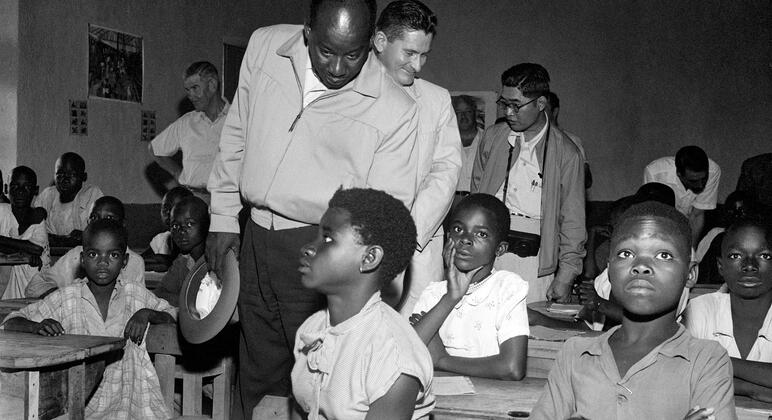
UN Photo
Palestinians received support from the UN after the Second World War.
Swedish diplomat Count Folke Bernadotte was appointed as the UN Mediator in Palestine, the first time the UN deployed a special envoy to help resolve an armed conflict.Today, special political missions perform a wide range of functions. They are civilian missions mandated to:Prevent conflictSupport peace processesHelp build sustainable peace Some facilitate peace negotiations, others monitor ceasefire agreements, support border demarcation, investigate serious violations, or assist political reform processes.According to Rosemary DiCarlo, the defining feature of special political missions is their diversity.“They have taken the form of envoys of the Secretary-General, of fact finding and investigative missions, of regional offices, of panels of experts helping the Security Council monitor sanctions regimes, and of missions accompanying complex political transitions,” she said.“Flexibility has always been their strength. The same instrument that helped broker a ceasefire can also demarcate a border or support the dismantling of a chemical weapons program. Few multilateral instruments are as adaptable,” she explained.Helping countries become statesOne of the most remarkable early examples was the UN’s role in Libya’s path to independence.By the late 1940s, the country, which had been an Italian colony from 1911 to 1942 and before that part of the Ottoman Empire, was divided and operated under different administrative systems.