Freedom is not preserved by nostalgia. It's preserved by stewardshipPhil KafarakisAs America marks the 250th anniversary of its independence, the celebration should be more than fireworks, parades, and familiar words about freedom.A milestone like this asks something deeper of us. It invites us to consider what the American experiment has made possible, why people have crossed oceans to take part in it, and what responsibility each generation has to preserve it.For me, that reflection is not theoretical. It begins with my family.Long before I understood America through business, leadership, institutions, or public life, I understood it through the people who made my own life here possible: a grandfather who came to this country seeking opportunity and returned to Greece when duty called; a grand uncle who stayed in America, built a life through work and enterprise, and became the bridge that brought my family here; and a father who crossed an ocean believing that his sons could build futures through education, faith, work, and community.Their story is why I have come to believe that freedom is not simply an inheritance. It is a responsibility.My family’s American story did not begin when I arrived in this country as a five-year-old boy in 1963. It began more than fifty years earlier, on April 4, 1912, when my maternal grandfather, Filippos Karidis (who I’m named after), came to the United States with his brothers from Lefkada, Greece.They were received by distant unknown relatives and made their way to Kensington, Illinois, a railroad community on Chicago’s South Side, historically tied to Calumet Junction and the industrial economy that helped shape the region. For a young Greek immigrant, America must have looked like opportunity itself — railroads, factories, work, mobility, and the possibility of building a different life.But my grandfather’s American journey did not follow a straight line from arrival to assimilation. Family history holds that he returned to Greece as the Balkan Wars pulled his homeland into conflict with the Ottoman Empire. My grandfather had come to America seeking opportunity, but he returned home out of obligation.MORE FOR YOUThat tension — opportunity and obligation — is where my understanding of freedom begins.One of his brothers, Panos Karidis, stayed in America. In many ways, he became the bridge between the life my family left behind and the life we would one day build here.Panos was part of a generation of Greek immigrants who survived through work, friendship, instinct, and community. He came with other islander friends from Lefkada. They moved through networks of relatives and fellow immigrants, first in the industrial Midwest and later in Washington, D.C. They found work wherever there was a chance to earn, build, and belong.In Washington, Panos and others became part of a Greek-American community that helped shape the city’s restaurant, hospitality, produce, vending, and small business economy. Family stories place him among the so-called “pushcart Greeks,” selling ice cream from carts and bicycles near the National Mall, the monuments, and the museums. There is something deeply American in that image: immigrants from a small Greek island making a living in the shadow of the very monuments that symbolize liberty, democracy, and national purpose.Panos never married. He lived simply. He did not want to be a burden to anyone. But he was far from alone, and he did not live only for himself.When his brother, my grandfather died in 1945, Panos became something more than an uncle. He became a provider, steward, and caretaker for my widowed grandmother and her three daughters, including my mother, Maria. For years, as the story has been passed down in our family, he sent American dollars back to Greece in flour sacks.That image has stayed with me.It is one thing to speak about freedom in grand language. It is another to understand what freedom made possible for someone like Panos: honest work, earned money, self-reliance, family duty, and the power to keep hope alive for people an ocean away.My mother was the youngest of the three daughters. Panos saw her intelligence and ambition. She had trained as a nurse and wanted a larger life. He wanted her to come to America, to be educated, and to have the opportunities he believed this country could provide.But life does not always follow the plan others set for us. My mother met my father, fell in love, and married him in 1955. My father came from a large family from Corfu and had served as a policeman in Lefkada. Panos was not thrilled. He believed my mother could have done better than marrying a ordinary beat cop.Yet my father had his own form of nobility.He was hardworking, cautious, deeply committed to his family, and quietly ambitious for his children. He moved with my mother to Athens, where I was born in 1958, and my brother followed two years later. He resigned from the police force given the unsettling political environment in Greece at the time, and worked as a painting contractor and laborer. In those years, work often meant standing in public places with paintbrushes, tools, and hope, waiting to be chosen by someone who needed a job done.My father was not a political man. He was not looking for ideology. He was looking for stability, dignity, and opportunity. He had heard about America and was well aware of the family connection. He had read about its promise. He believed it could offer his children a future he could not guarantee in Greece.With Panos’s help, lawyers and friends in the Greek-American community began the process of bringing our family to the United States. The early attempts did not work. The path was complicated, and the rules were narrow. But Panos kept looking for a lawful way to open the door.Eventually, through persistence, sponsorship, legal guidance, and the practical help of Panos’s network, an opportunity emerged through my father’s skills as a painter and craftsman. The details, as they have been passed down in our family, are colorful and deeply human. What matters most is that Panos refused to quit. He leveraged every relationship, every bit of practical knowledge, and every ounce of persistence he had to help our family reach America.With both extended families gathered at Athen’s Piraeus harbour, we where given a tearful goodbye with hearftfelt prayers and cheerful optimisum to begin our American journey. In November 1963, my family arrived in New York Harbor. By then, Ellis Island was no longer the gateway it had once been. We arrived at the piers on Manhattan’s West Side and waited to be cleared.The Kafarakis Family send-off to America (November 1963 - Piraeus Port - Athens, Greece). Menelaos (center),Maria (to his left), Phil (third from left in first row) & Spiro (second from left n first row) departing for AmericaMenelaos Kafarakis Family ArchivesBut another memory from that voyage remains vivid. My father had been filled with joy on the ship. He played music and looked forward to America with hope. Then came the news that President John F. Kennedy had been assassinated. My father was told to turn the music off out of respect. Kennedy was a president he admired and had read about. Even before setting foot in America, my father understood that the country he was entering was not just a place of opportunity. It was a nation with symbols, grief, ideals, and shared obligations.When we finally arrived, Panos was there.I was five years old, but I still remember him waving, yelling, and celebrating our arrival with the joy of a man who had spent decades making that moment possible. He was large, vivacious, charismatic, happy-go-lucky, loving, and full of life. To me, he was not simply my grand uncle. He was my grandfather figure in America.Panos Karidis (1945); Celebrating Franklin D. Roosevelt's reelection outside his flower shop by handing carnations to Washinton D.C. patronsMenelaos Kafarakis Family ArchivesWe got into his car with one of his friends and headed to the Washington, D.C. area, where our American journey began.Panos helped introduce us to the Greek-American community that would become central to our lives. Saint Constantine and Helen Greek Orthodox Church in Washington, D.C., became one of our first anchors. Through the church, Greek school, family friends, community societies, and the network of immigrants who had helped one another survive and thrive, we began to assimilate into America without losing the heritage that had shaped us.This is not the kind of personal history I often write about. Most of my work focuses on business, markets, food, leadership, and the forces reshaping American enterprise. But this anniversary feels different. It is a moment to remember that the American story is not only told through institutions and ideals. It is also told through families, workers, immigrants, entrepreneurs, churches, communities, and quiet acts of sacrifice that rarely make history books but shape the nation just the same.It is also where many of my own leadership principles began.Over the years, I have come to describe my leadership philosophy through a handful of principles: “skin in the game,” “courage to challenge,” “share the love,” “walk the walk,” “listen to what is not being said,” and the responsibility to convene people around a larger purpose.I did not learn those principles first in a boardroom.I saw their earliest expression in my family. Later in my career, mentors, bosses, colleagues, and role models gave me the language for them and helped me apply them in business, associations, and leadership roles. But the foundation was laid much earlier — by immigrants, workers, parents, church communities, and family members who understood that freedom only has meaning when it is converted into responsibility.I saw “skin in the game” in a grandfather who returned to serve his homeland and in a father who stood with tools in hand, waiting for work so his sons could one day stand somewhere else.I saw “courage to challenge” in Panos, who refused to accept that the first closed door was the final answer for our family.I saw “share the love” in the American dollars he sent back across the ocean in flour sacks, turning his opportunity into a lifeline for others.I saw “walk the walk” in my father, who never confused ambition with shortcuts and who measured success by education, faith, home, community, and the dignity of work.I learned to “listen to what is not being said” in the quiet sacrifices of people who did not always have the language to explain their fears, but showed their hopes through what they endured.And I saw the power of convening in the Greek-American community that received us — not through formal programs or slogans, but through churches, businesses, friendships, family networks, and shared responsibility.Those lessons followed me throughout my career.During my father’s fight with lung cancer, and upon his passing, I came across a document in the Ellis Island library that immediately brought me back to him.My Creed - An Immigrant's Promise (attributed to Dean Alfange) Ellis Island LibraryMenelaos Kafarakis Family ArchivesIt was a version of “An American’s Creed” — a statement of citizenship rooted in opportunity, risk, dignity, self-reliance, and responsibility. Its language about seeking opportunity rather than security, taking calculated risks, building, falling, succeeding, and refusing to trade dignity for dependence captured, almost perfectly, how my father thought about America.He may never have quoted those words directly, but he lived them.That creed helped me better understand what was driving him all along. His American dream was never about comfort alone. It was about freedom joined to effort, dignity joined to work, and citizenship joined to responsibility.Panos remained a free spirit. He worked in produce, flowers, vending, hospitality, and supply chain efforts tied to restaurants and food businesses. One of my favorite memories is of him selling large peaches on the streets of Washington, D.C., and marketing them as “moon peaches” after the astronauts landed on the moon. That was Panos: practical, opportunistic, creative, and just theatrical enough to turn a peach into a story.He drove a blue Chevy four-door sedan with a piece of tape on the dashboard that said, in Greek, “be careful.” It was both warning and philosophy. Take chances, but not foolish ones. Move forward, but pay attention.In time, Panos came to admire my father. Their views of opportunity were different. Panos was entrepreneurial in the old immigrant sense — a hustler, a dealmaker, a man always looking for the next angle. My father was more cautious. He did not want to get too far over his skis. He wanted steady work, a home, his faith, education for his sons, and a respected place in the community.Panos pushed him to buy property, invest, scale up, do more. My father chose a different path. He systematically built his painting contracting business, worked as a contractor and subcontractor, bought a home in 1968, served on parish councils and Greek-American societies, helped immigrant families get acclamated and found them work while being a proud Greek-American who loved the United States and never forgot where he came from.Most of all, he wanted his sons educated.That was his American dream.Not fame. Not fortune. Not status for its own sake. Education. Professional opportunity. Family stability. Community respect. Faith. Work. Dignity.Panos lived long enough to see that dream taking shape. He saw my brother and me attend Greek school and private schools. He lived me as a junior in high school at an all-boys Catholic school. He saw my father and mother build a life that had once seemed impossible.Years later, when I graduated from college, my father bought me my college ring. He was proud of the degree, but he was especially taken by the business emblem on the ring. To him, it represented something larger than a credential. It represented arrival. It represented the fulfillment of a dream that had begun with sacrifice, uncertainty, and a journey across the ocean.I wore that ring for many years as I began my professional career. Eventually, I gave it to my wife since we shared the same family prinicples that were instilled in us growing up (her father’s amazing Greek imigrant story is something for another day). But for me, it has always represented more than college. It represents my father’s belief that America had given his children the chance to become something he had imagined, labored for, and prayed into being.My brother followed a more entrepreneurial path and has done well. I became more of a corporate and institutional leader. In our different ways, we both carried forward the inheritance we were given.Freedom Is An Inheritance. Stewardship Is A Choice.That is why I think about freedom differently.Freedom is not only a political idea. It is not only something written into founding documents or celebrated once a year with fireworks. Freedom is the chance to work. To worship. To learn. To build. To feed your family. To start over. To belong. To serve. To become American without erasing the memory of where you came from.But freedom is also not self-sustaining.The American experiment has always been imperfect. That is not an argument against it. It is the very reason each generation must renew it. Its genius is not that it ever promised perfection. Its genius is that it created a system in which people could strive, correct, argue, improve, contribute, and hand something better to the next generation.That lesson has shaped my life and career. I have spent decades in the food industry, a sector built by farmers, laborers, manufacturers, truckers, distributors, restaurant owners, entrepreneurs, immigrants, family businesses, corporate leaders, and community institutions. Few industries better reflect the American experiment. Food is where cultures meet. It is where work becomes livelihood. It is where enterprise begins. It is where families build their first foothold and communities gather around shared tables.I did not always understand that my own family’s story was part of that larger story. But I do now.The American experiment is not preserved only in speeches or monuments. It is preserved in the daily choices of people who work hard, honor family, build businesses, educate children, serve communities, welcome newcomers, respect institutions, and refuse to take freedom for granted.That is not just a civic lesson. It is a leadership lesson.In companies, communities, industries, and institutions, leaders are stewards of the conditions that allow people to work, build, belong, and become. We preserve the promise of America not only by defending ideals, but by creating opportunity, honoring work, strengthening trust, rewarding responsibility, and helping the next generation imagine a future larger than the one they inherited.As I think about this anniversary, I also think about my own children and grandchildren.One day, I hope they understand that the American dream they inherited did not arrive fully formed. It was carried forward by people who worked, sacrificed, served, prayed, struggled, adapted, and believed. It was protected by people who understood that freedom is never merely personal. It is generational.My grandfather Filippos came to America and returned home when duty called. My grand uncle Panos stayed, worked, sacrificed, and built the bridge that brought us here. My father came to America determined that his sons would be educated and that his family would live with dignity. Each of them understood freedom in a different way. Together, they taught me that freedom is both inheritance and responsibility.The American dream is never finished. It is handed from one generation to the next, not as a possession to be consumed, but as a responsibility to be renewed.My hope is that my children and grandchildren inherit more than the benefits of freedom. I hope they inherit the obligation to protect it, practice it, and extend it to others.That is also the work of leadership.Freedom is not preserved by nostalgia. It is preserved by stewardship. Happy 250th Anniversary America on this 4th of July!
America At 250: The Leadership Responsibility Of Preserving Freedom
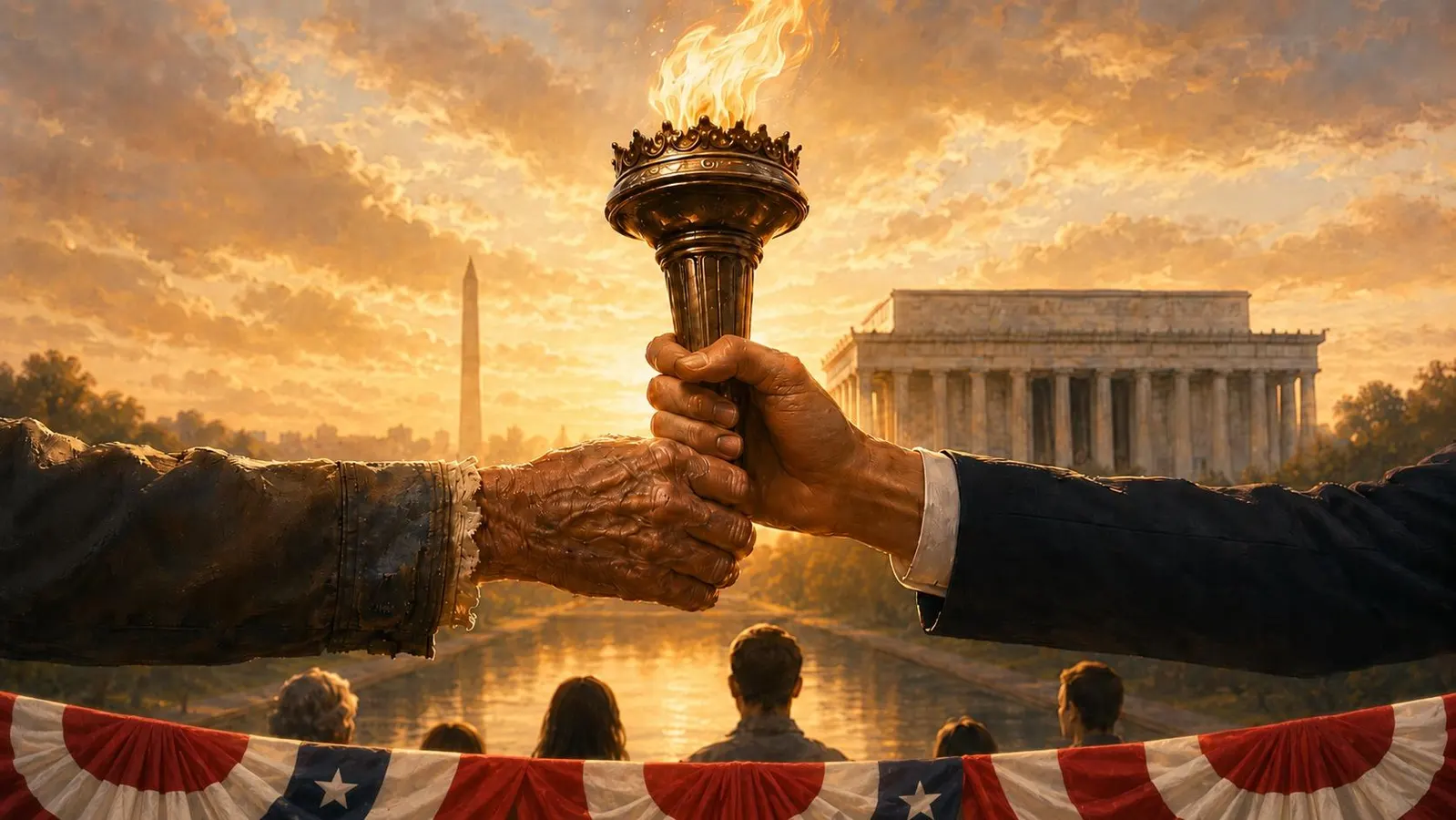
The American dream is never finished. It is handed from one generation to the next, not as a possession to be consumed, but as a responsibility to be renewed.
2,947 words~13 min read