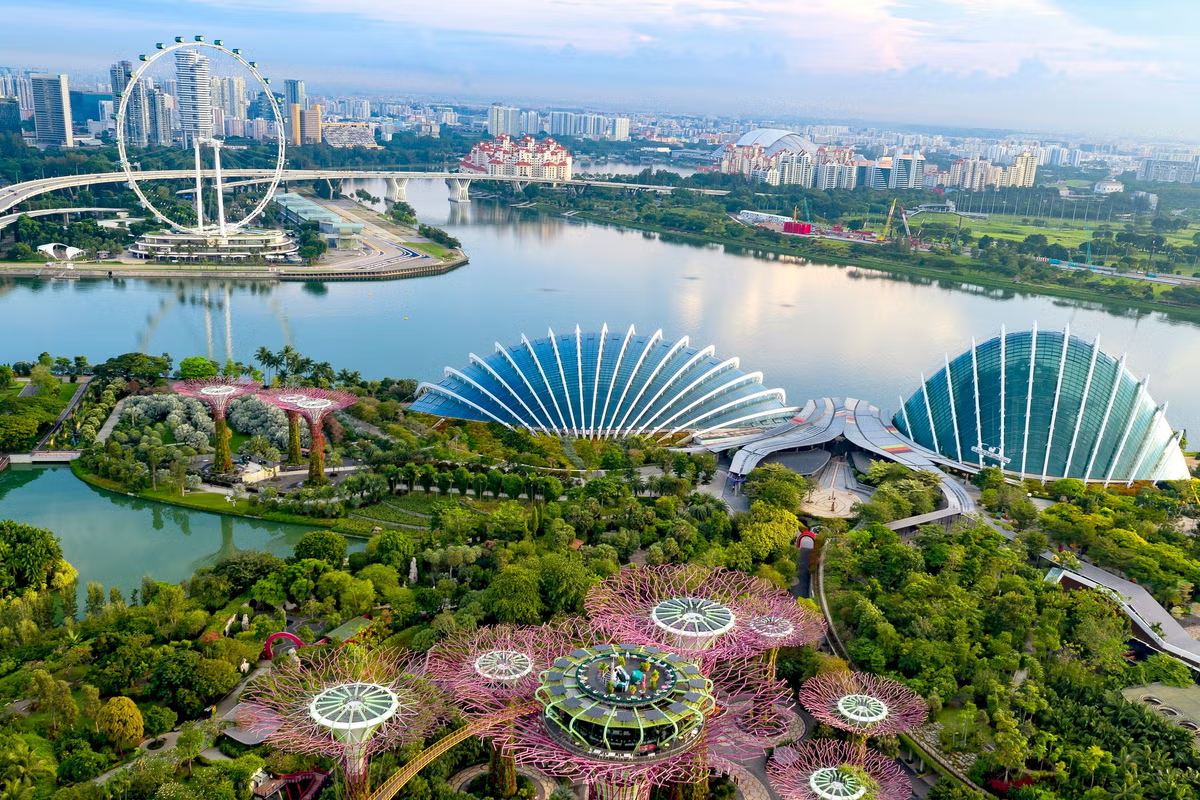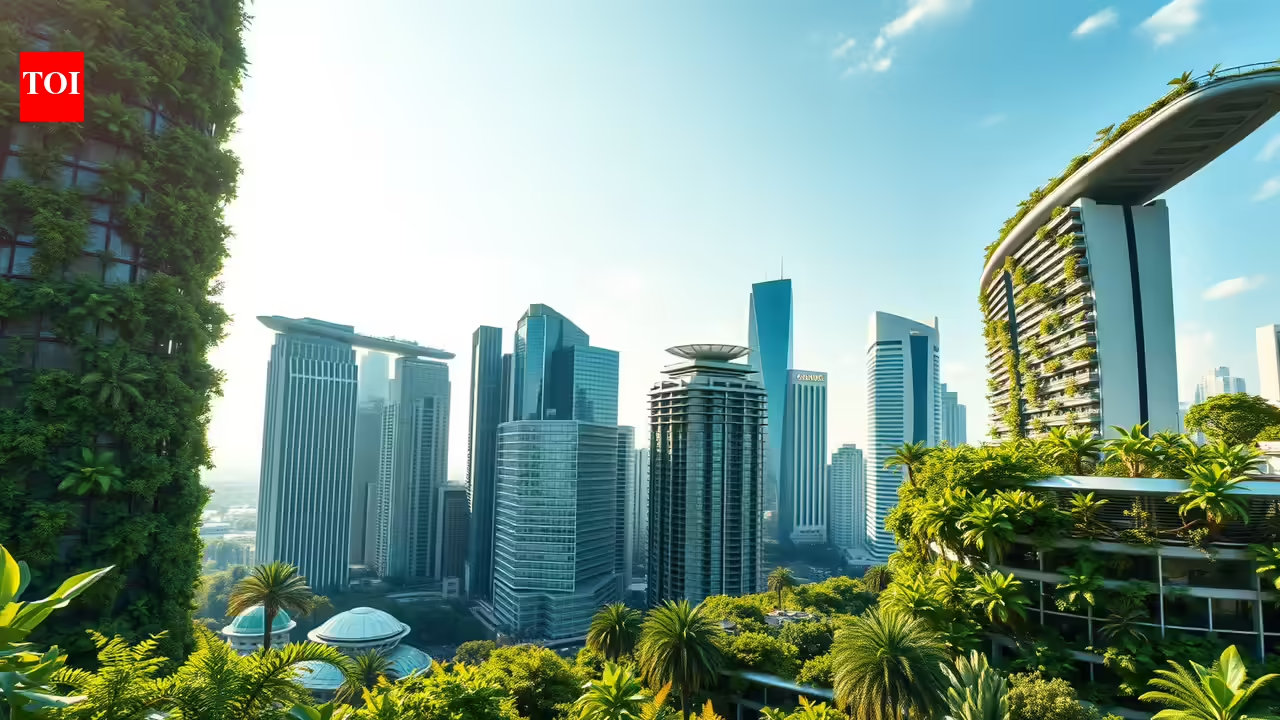
Land is one of the scarcest resources in Singapore, a small island nation packed with more than five million people, yet walk through its business district and you will see trees sprouting from car park facades, gardens wrapped around office towers and entire walls dressed in green. This is not accidental landscaping, it is the result of a deliberate, decades long government push known as skyrise greenery, a strategy of growing plants on rooftops and vertical walls instead of only at ground level. What began as a scattered set of experiments in the 1990s has grown into one of the most ambitious urban greening programmes anywhere in the world, and it offers a working example of how a dense, land starved city can still keep nature close at hand.How Singapore built a garden city in the skyThe idea of skyrise greening in Singapore traces back to the 1990s and picked up real momentum through the 2000s as planners looked for ways to add greenery without eating into the little developable land the country had left. According to the Urban Redevelopment Authority's own account of the movement, the country introduced its Landscaping for Urban Spaces and High Rises programme in 2009, a scheme that essentially asks developers to replace any greenery lost during construction by finding new vertical and horizontal spaces on the building itself to grow plants. The approach fits neatly into what officials often describe as Singapore's identity as a garden city, only stretched upward into three dimensions instead of staying confined to parks and street-level planting.The scheme that pays building owners to go greenAlongside planning rules, Singapore also runs a direct funding programme to make going green financially easier for existing building owners. Introduced in 2009 by the National Parks Board, the Skyrise Greenery Incentive Scheme covers up to half the installation cost of rooftop or vertical greenery on existing buildings, with owners able to claim funding capped at two hundred dollars per square metre for rooftop gardens and five hundred dollars per square metre for green walls. More than two hundred buildings across the country have used this scheme so far, ranging from edible community rooftop gardens at schools to lush green walls climbing the sides of office towers, and any project that receives funding has to stay in place for at least five years, ensuring the greenery is not simply removed once the incentive money has been collected.Why growing plants upward actually helps with heatSingapore sits close to the equator and deals with intense heat and humidity year round, which makes cooling buildings one of the highest ongoing costs for property owners across the city. Green roofs and walls help by acting as a kind of natural insulation layer, absorbing sunlight before it reaches a building's concrete surface and slowing down how quickly heat transfers into the structure below. Research on rooftop gardens in Singapore has found that installing greenery on a roof can meaningfully cut peak heat transfer into a building, translating into real savings on the energy needed for air conditioning, while vertical green walls have been shown to reduce surface temperatures on building facades by more than ten degrees Celsius in some measured cases. For a city where cooling costs are a constant concern, this cooling effect alone has been enough to convince many private developers to take up greenery voluntarily rather than only because regulations required it.Turning skyscrapers into homes for wildlifeSkyrise greenery in Singapore is not just about temperature control; it has also become a genuine habitat for wildlife in a city that might otherwise offer very little space for plants and animals to thrive. One well known example is the Tree House condominium, completed in 2013 and once recognised by Guinness World Records for having the largest vertical garden on any building in the world. A biodiversity survey carried out at the site before construction found close to a hundred animal species living there, a dozen of which were considered threatened, and the building's design was shaped specifically to preserve habitat for as many of these species as possible even after construction was complete. Elsewhere in the city, vertical gardens at sites like the Ocean Financial Centre have been designed with striking visual patterns, using different plant species to trace out maps of Singapore and the wider Southeast Asian region across the building's car park facade.What comes next for Singapore's green skylineSingapore's ambitions for skyrise greenery are still expanding rather than slowing down. Under the country's broader Green Plan, officials have set a target of growing the city's total skyrise greenery footprint from around 133 hectares to 200 hectares by 2030, according to a written parliamentary answer from the Ministry of National Development. Newer versions of the incentive scheme have also started encouraging the use of native plant species and more experimental designs, treating building facades almost like a canvas for landscaping rather than a purely functional surface. For other dense cities around the world grappling with the same shortage of ground level space, Singapore's decades of experimenting with rooftops, walls and car park facades offers a fairly clear template, greenery does not need flat land to grow, it just needs a city willing to build upward with nature in mind from the start.
Why Singapore’s skyscrapers are covered with gardens instead of bare concrete
Land is one of the scarcest resources in Singapore, a small island nation packed with more than five million people, yet walk through its business district and you will see trees sprouting from car park facades, gardens wrapped around office towers and entire walls dressed in green. This is not accidental landscaping, it is the result of a deliberate, decades long government push known as skyrise greenery, a strategy of growing plants on rooftops and vertical walls instead of only at ground level.
874 words~4 min read