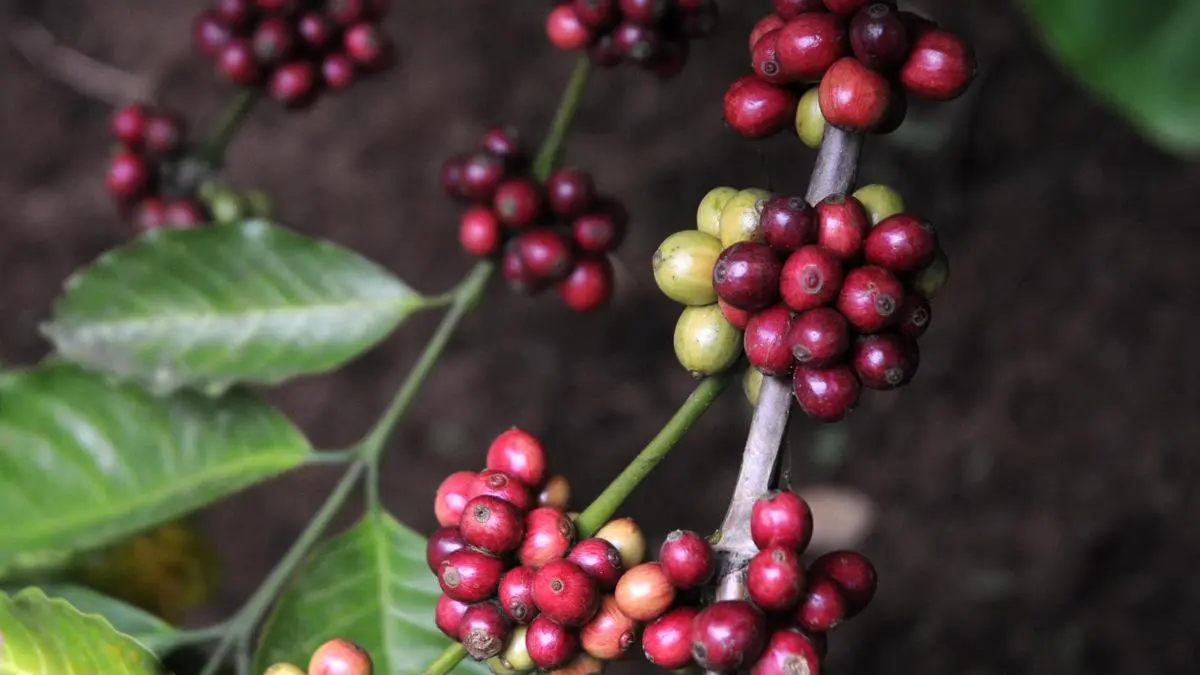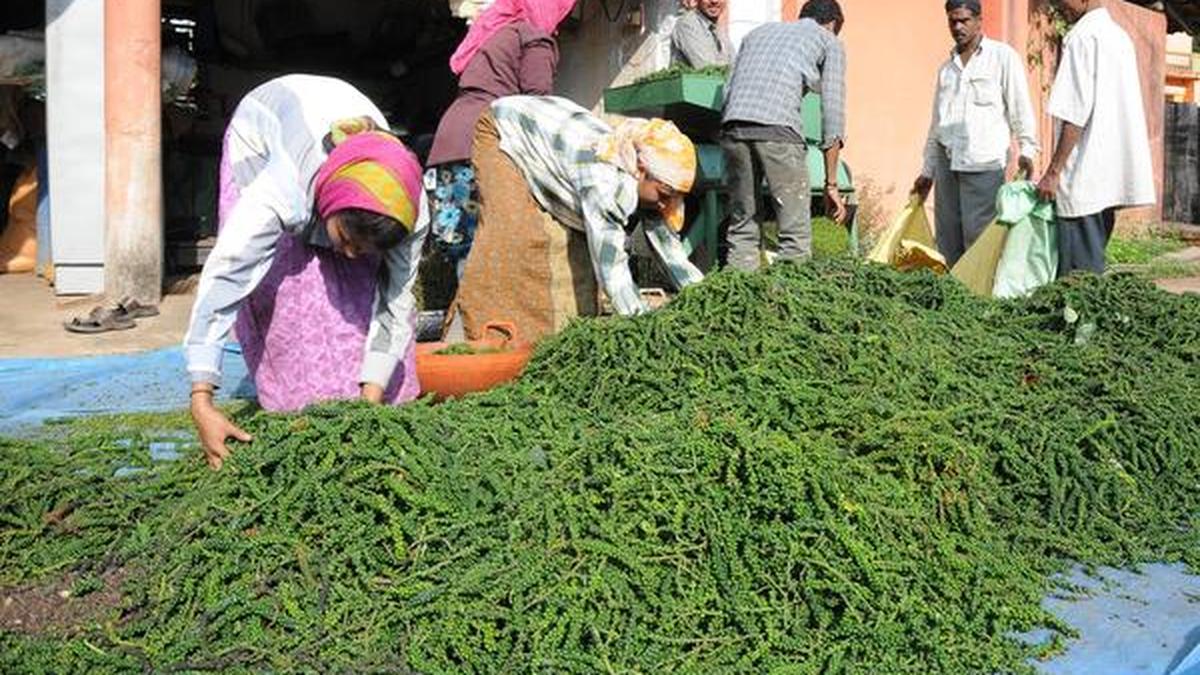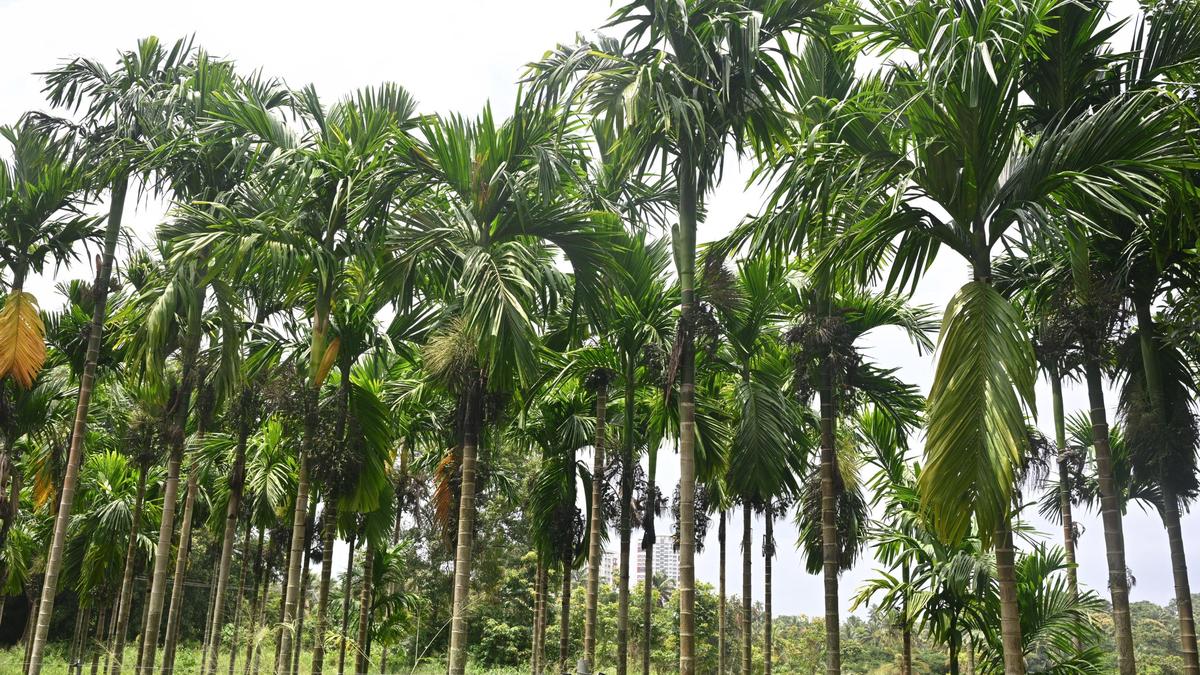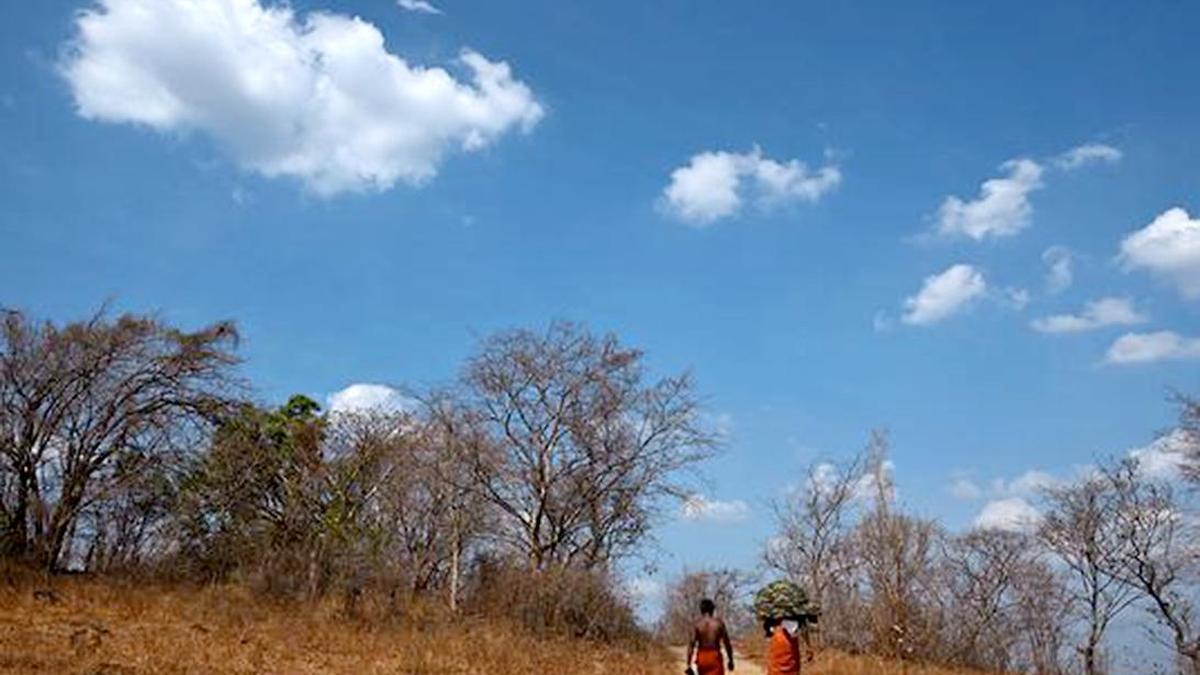
"Pepper vines normally begin producing spikes after the summer showers, with spike development continuing into the onset of the monsoon before berries develop. This year, poor rainfall has disrupted the process." A view from a plantation in Wayanad on Saturday.
| Photo Credit: SPECIAL ARRANGEMENT
Rows of Robusta coffee plants, pepper vines winding around trees and fruit-laden exotic plants lend a picture-postcard charm to Baby John’s 6.5-acre plantation at Ambalavayal in Wayanad, Kerala. But beneath the lush green canopy, the signs of a faltering monsoon are unmistakable. Pepper spikes have emerged but remain underdeveloped, coffee berries are developing unevenly, and the veteran farmer fears the poor southwest monsoon could significantly reduce this season’s harvest.Farmers share the concern in large parts of Wayanad, where a rainfall deficit has adversely affected agriculture. The district received only 270.23 mm of rain in June, the lowest for the month in the past five years, according to the Hume Centre for Ecology and Wildlife Biology. Experts attributed the rainfall deficit to the delayed onset and weakening of the southwest monsoon, influenced by climate change and El Niño
Wayanad district rainfall received from June 1, 2026 to June 30, 2026 (left). June rainfall in Wayanad from 2022 to 2026 (right). (Credit: Hume Centre for Ecology and Wildlife Biology)