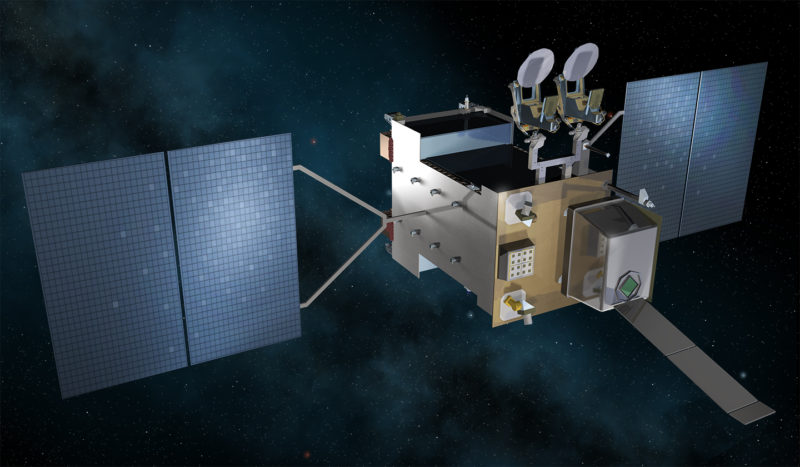
Lockheed Martin Next Gen OPIR GEO (NGG) satellite
WASHINGTON — The U.S. Space Force has earned a reputation inside the Pentagon for moving faster than traditional military acquisition programs. But a new government watchdog report suggests some space procurements continue to confront many of the same problems that have plagued defense acquisitions for decades.
The Government Accountability Office’s annual assessment of major defense acquisition programs, released July 2, found the Space Force making progress on several high-profile satellite efforts while continuing to wrestle with slow development timelines, cost growth and workforce shortages that threaten the pace of future national security launches.
The report’s broader conclusion extends beyond space: despite years of acquisition reforms and the introduction of rapid procurement pathways, the Pentagon is still taking too long to field major weapon systems because programs often begin development with immature technologies and continue to rely on outdated acquisition practices.
GAO reviewed more than 100 of the Defense Department’s largest acquisition programs, including 13 Space Force procurements spanning missile-warning satellites, military satellite communications, national security launch and the Space Development Agency’s proliferated low Earth orbit constellation. The agency noted that the Pentagon has embraced digital engineering in principle more than in practice. Across multiple programs, GAO found digital twins remain largely absent, digital threads only partially implemented and other modern engineering practices insufficiently adopted to support rapid acquisition.