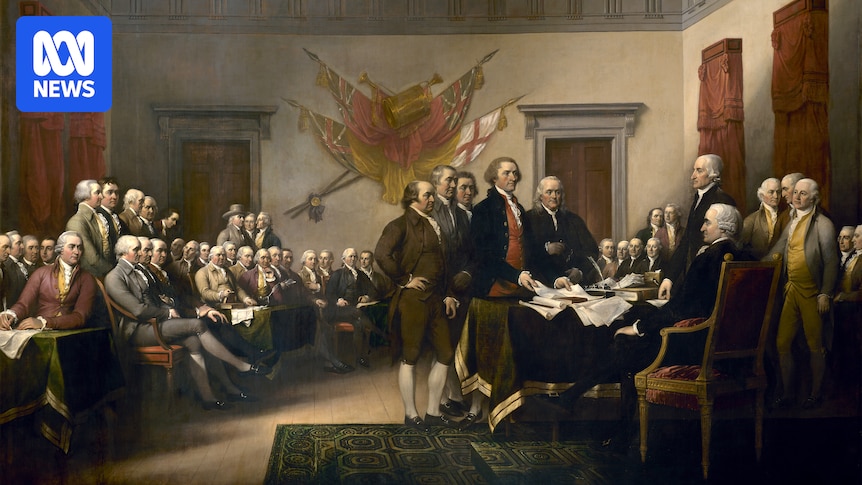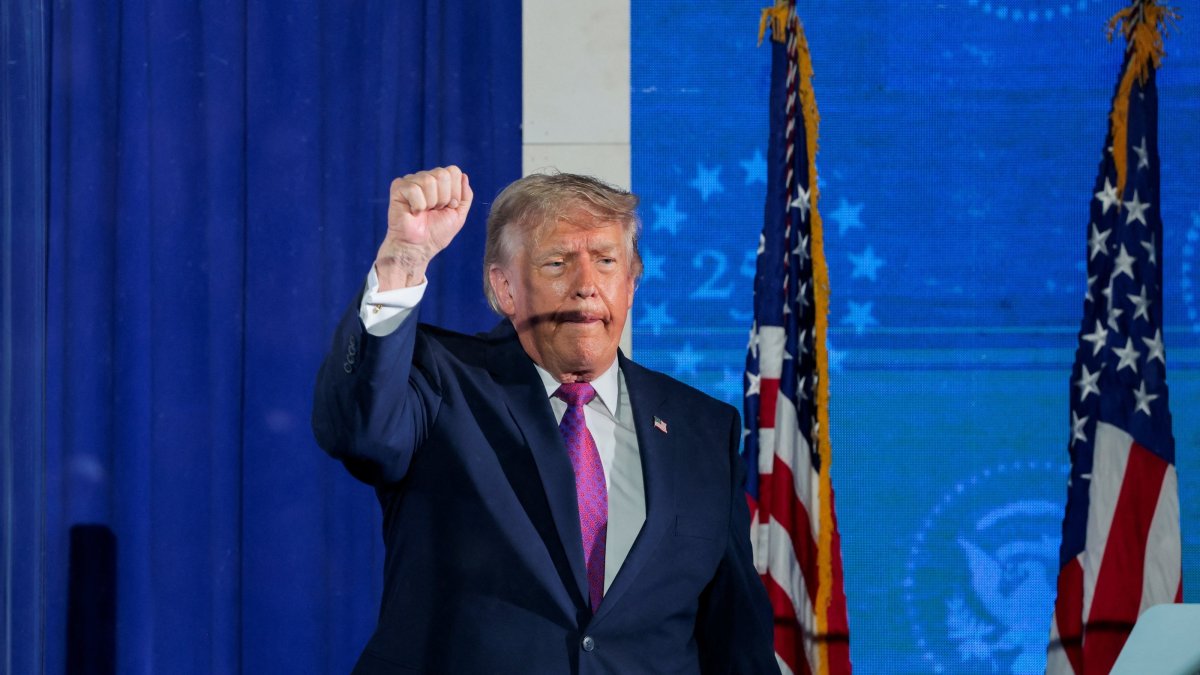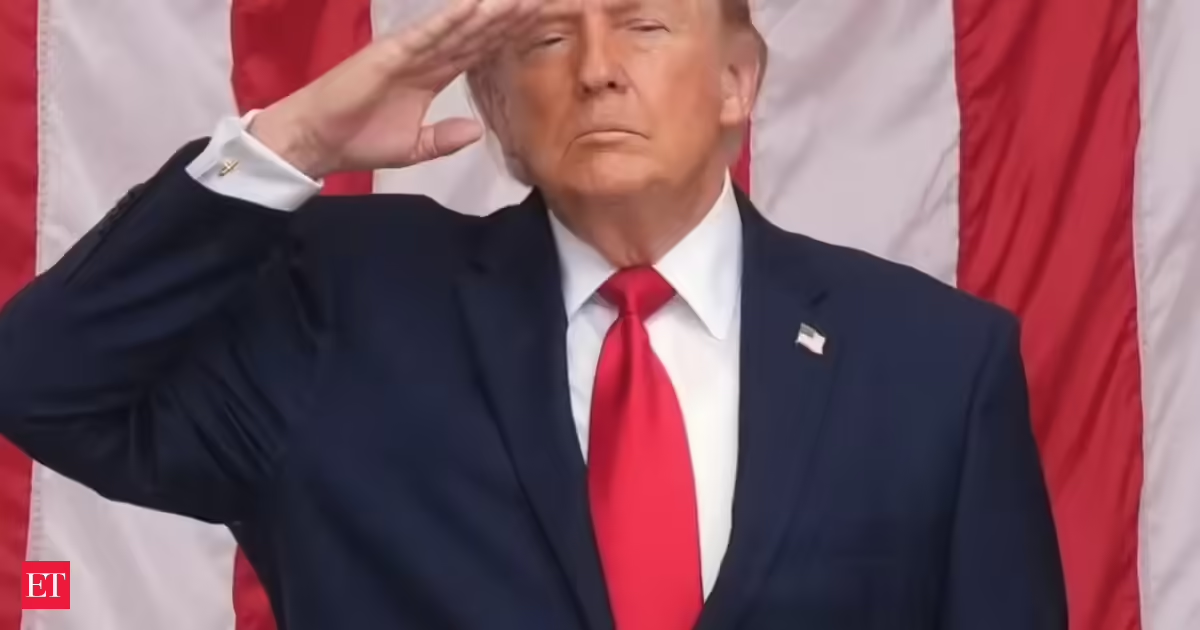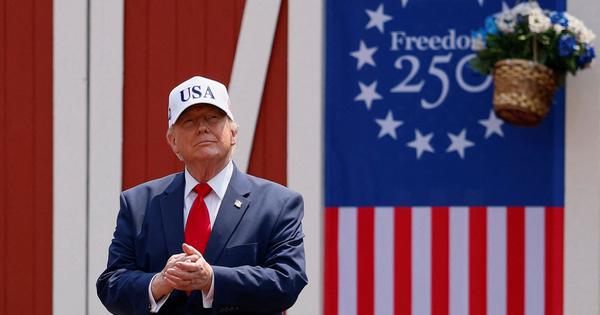
On July 4, as the United States marks 250 years of independence, the words of one its founding fathers come to mind. “An elective despotism was not the government we fought for,” writes Thomas Jefferson in Notes on the State of Virginia. Jefferson was among the authors of the US Declaration of Independence.For Jefferson and the other founders of the United States, the survival of a free state depended upon its ability to insulate the public treasury and the rule of law from the influence of concentrated wealth.When the executive starts behaving like a corporation, it begins to erode the foundation of a democracy – rather than serve its citizens, the government begins to exploit them, perhaps even underserve them.Jefferson’s warning against the emergence of an “elective despotism” was an early recognition of the danger posed by the concentration of political power. Two-and-a-half centuries later, in an America led by President Donald Trump, Jefferson’s words ring true.Can the institutional foundations of the American republic possess the resilience to withstand an elective despotism?A 1776 copy of the US Declaration of Independence. Credit: Reuters.When in Rome: buying political powerIn this context, an incident from ancient Rome, 2,000 years ago, is worth revisiting: the imperial auction of March 28, 193 - before common era, BCE.After the assassination of the reform-minded Emperor Pertinax by the Praetorian Guard, the elite soldiers barricaded themselves inside their fortified camp. There, they announced that the title of “Augustus”, for Roman emperors, would be awarded to whoever offered the largest financial bonus to the troops.What followed was a brazen commercial auction for sovereign power. Inside the camp, the urban prefect Sulpicianus bid aggressively. Outside the walls, the wealthy senator Didius Julianus shouted his counter-offers through the ramparts. Julianus secured the empire by promising a large sum of 25,000 sesterces per soldier, forcing a terrified Senate to approve his plutocratic ascension.Trump’ has similarly taken a commercial approach to sovereign authority. He has treated the mechanisms of state power, international alliances and domestic judicial appointments as assets to be leveraged to his advantage and business interests.For instance, a US Congressional committee, in an investigative report, has alleged that Trump hijacked the 250th US Independence Day celebrations to further his religious and political agenda and his business ventures.Trump and his operatives “proceeded to deceive donors, solicit foreign money, sell access to the President, award no-bid contracts to Trump loyalists, harvest Americans’ personal data, and push a white-washed, Christian nationalist version of history”, said committee member and Democrat politician Jared Huffman.A portrait of Thomas Jefferson is seen in the background as Donald Trump speaks during an Oval Office in September 2019. Credit: AFP.Similarly, Democrats in the US House of Representatives maintain a “Trump family digital grift wealth tracker” which, they say, is an account of “every cent” that Trump and his family have made using the White House.Such a commercialised exercise of power accelerates a transition toward a historical archetype: the rise of Caesarism. In the final, chaotic decades of the Roman Republic, charismatic commanders like Julius Caesar came to power by exploiting a widening chasm between an unyielding senatorial elite and an increasingly marginalised populist base.Caesarism breaks institutional guardrails and replaces legal and constitutional procedures with a direct, unmediated bond between the populist leader and his followers. Trump’s supporters similarly cheer his complete disregard of constitutional norms, his disruptive rhetoric and defiance of the judiciary as necessary acts of popular liberation.Under Trump, the US is dangerously close to Jefferson’s fears of “elective despotism” and his leverage of political power contradicts the ideals of America’s founders that inform the US presidency.George Washington, the first US president, was inspired by Lucius Quinctius Cincinnatus. In 458 BCE, the Roman Senate called Cincinnatus from his farm and granted him absolute dictatorial authority. After defeating the enemy in 16 days, Cincinnatus immediately resigned and returned to his plough.Washington chose to emulate Cincinnatus when he resigned as commander of the Continental Army in 1783, and again when he voluntarily declined a third presidential term in 1796. He demonstrated that the survival of a republic requires its leaders to accept their own political mortality. Trump represents an abandonment of the Cincinnatus ideal and the pursuit of Caesarism.Plutocracy meets populismThomas F Madden’s The Fall of Republics: A History from Ancient Carthage to the American Constitution contends that free republics are forged and strengthened by external adversity, but weakened by prolonged internal prosperity and material security. When a republic achieves geopolitical dominance and accumulates immense wealth, its civic fabric begins to fray.Politics is no longer a collective endeavor that requires mutual sacrifice. Instead, citizens start treating the state as an arena to secure private economic advantages. This transition paves way for a plutocracy that seeks total political and material dominance over domestic opponents.The modern United States has reached this stage with its historic wealth inequality, and the weaponisation of key institutions of political accountability. Trump is the most visible symptom of the decline of the republic.He thrives because the republic has already been weakened by decades of polarisation and institutional erosion. When the citizens have little faith in judiciary, the integrity of elections, and the fairness of economic systems, the plutocratic champion who promises change is irresistible.As America celebrates its 250th independence day, Americans must wonder if their constitutional machinery can survive this potent convergence of plutocracy and populism.America’s founders designed a system of checks and balances under the assumption that future leaders would possess a basic, shared commitment to the preservation of the constitutional order.But when the leader of a free nation reduces its constitutional offices to commodities and its laws into flexible instruments of personal power, its transition from a republic to an imperium is inevitable.Faisal CK is a political philosopher and constitutional lawyer.
America at 250: With Trump at the helm, can the US weather the fears of its founders?
The presidency has been reduced to leverage for business and personal gain, hollowing out the ideals on which the country was founded.
969 words~4 min read