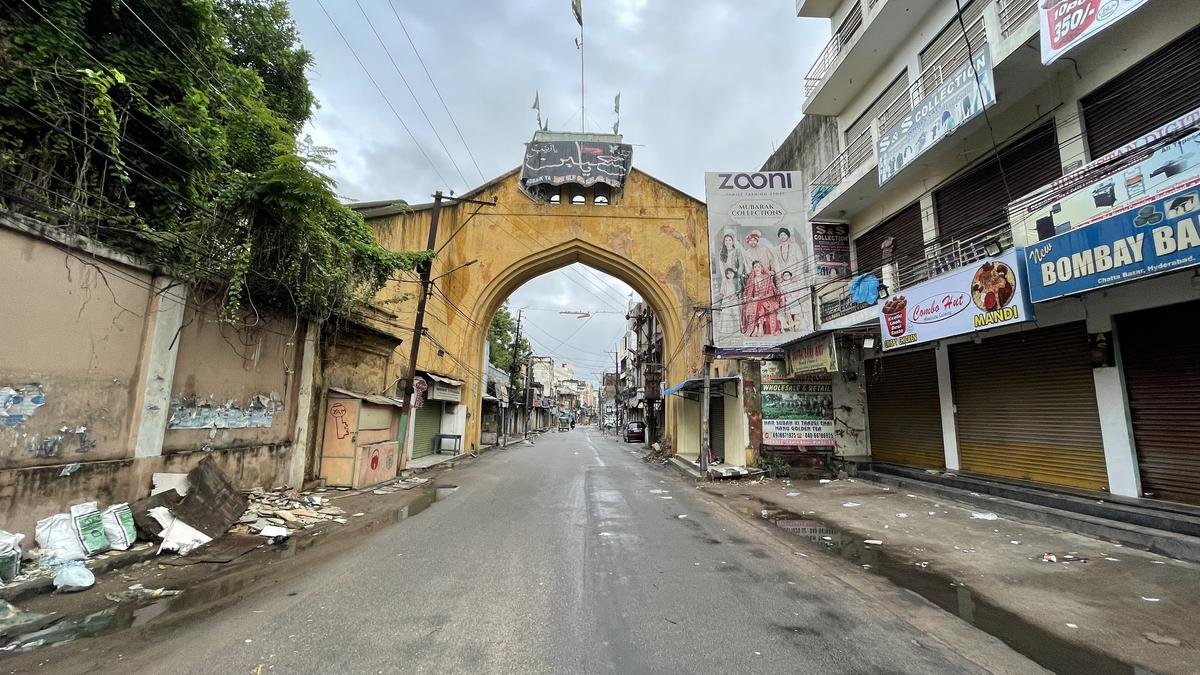
The Telangana government has unveiled an ambitious plan to restore eight historic arches, or kamaans, in Hyderabad’s Old City, sanctioning ₹11.86 crore for the conservation of the centuries-old gateways that once served as entrances to the walled city during the Qutb Shahi and Asaf Jahi periods.The government has accorded administrative sanction for the comprehensive restoration project.A government order (GO No. 652) issued by the metropolitan area and urban development department on Thursday sanctioned the funds for the restoration and renovation project.“The initiative marks a significant step towards preserving Hyderabad’s architectural legacy while addressing growing concerns over the deteriorating condition of these centuries-old structures,” an official familiar with the matter said.The government has accorded administrative sanction for the comprehensive restoration project. Although the previous government had allocated ₹2 crore in 2023 for minor repairs to six kamaans, detailed assessments later found the amount inadequate as the structures had suffered extensive deterioration over the years, requiring full-scale restoration to ensure structural stability and public safety.According to the government order, the restoration work will be undertaken by the Quli Qutb Shah Urban Development Authority (QQSUDA), with funding from the Hyderabad Metropolitan Development Authority (HMDA). The government has also authorised QQSUDA to appoint consultants to prepare detailed project reports, cost estimates and other technical documentation, besides inviting separate tenders for each restoration project.According to QQSUDA, the eight historic kamaans, built during the Qutb Shahi and Asaf Jahi periods, once served as grand entrances to palaces, neighbourhoods and important city precincts.“These ornamental gateways are among the surviving architectural symbols of Hyderabad’s rich cultural past and reflect the distinctive urban planning and architectural traditions of the erstwhile rulers,” an official said.Officials said decades of neglect, weathering and environmental exposure have left many of the structures in a fragile condition. The damage becomes particularly severe during the monsoon, when plaster and other structural elements detach from the arches, posing a threat to residents, pedestrians and motorists passing through these busy localities.“The government said preserving the kamaans is not only essential for safeguarding Hyderabad’s heritage but also necessary to eliminate potential safety hazards,” the GO said.The project covers the Rani Gunj Kamaan ( ₹63 lakh), Sheik Faiz Kamaan ( ₹82 lakh), Chatta Bazaar Kamaan ( ₹1.40 crore), Diwan Deodi Kamaan-I ( ₹2 crore), Diwan Deodi Kamaan-II ( ₹2.38 crore), Dabeerpura Kamaan ( ₹1.14 crore), Hussaini Alam Kamaan ( ₹55 lakh) and Hashmatgunj Kamaan ( ₹2.94 crore), which has received the highest allocation because of the scale of restoration required.Officials said tentative estimates have already been prepared, while detailed technical studies will determine the exact scope of conservation work required for each monument. The restoration will focus on strengthening the structures, repairing damaged masonry and plaster, conserving original architectural features and ensuring the gateways retain their historic character.Noted Hyderabad conservationist Mohammad Safiullah said the walled city originally had 13 gates, along with gateways and seven windows.“During the Asaf Jahi period, every gate was guarded by armed security guards, who used to report to Kotwal about the movement of people through the gates and he, in turn, would report the same to the ruler,” he said.Safiullah said all the gateways were shut at dusk.“Since there was no electricity those days, the city would plunge into darkness, except rich and affluent, who had lamps in their houses,” he said.He said most of the gates and arches suffered major damage during the 1908 floods in the Musi River. In 1954, after the municipality was formed, some gates were demolished because of poor maintenance.“They had no thought of their heritage value. Subsequently, some of the gates and walls were demolished during the road widening. So, only three gates and eight gateways remain now, which are being preserved,” Safiullah added.
₹11.86 crore sanctioned to restore Hyderabad’s kamaans
The Telangana government has unveiled an ambitious plan to restore eight historic arches, or kamaans, in Hyderabad’s Old City, sanctioning ₹11 | India News
616 words~3 min read