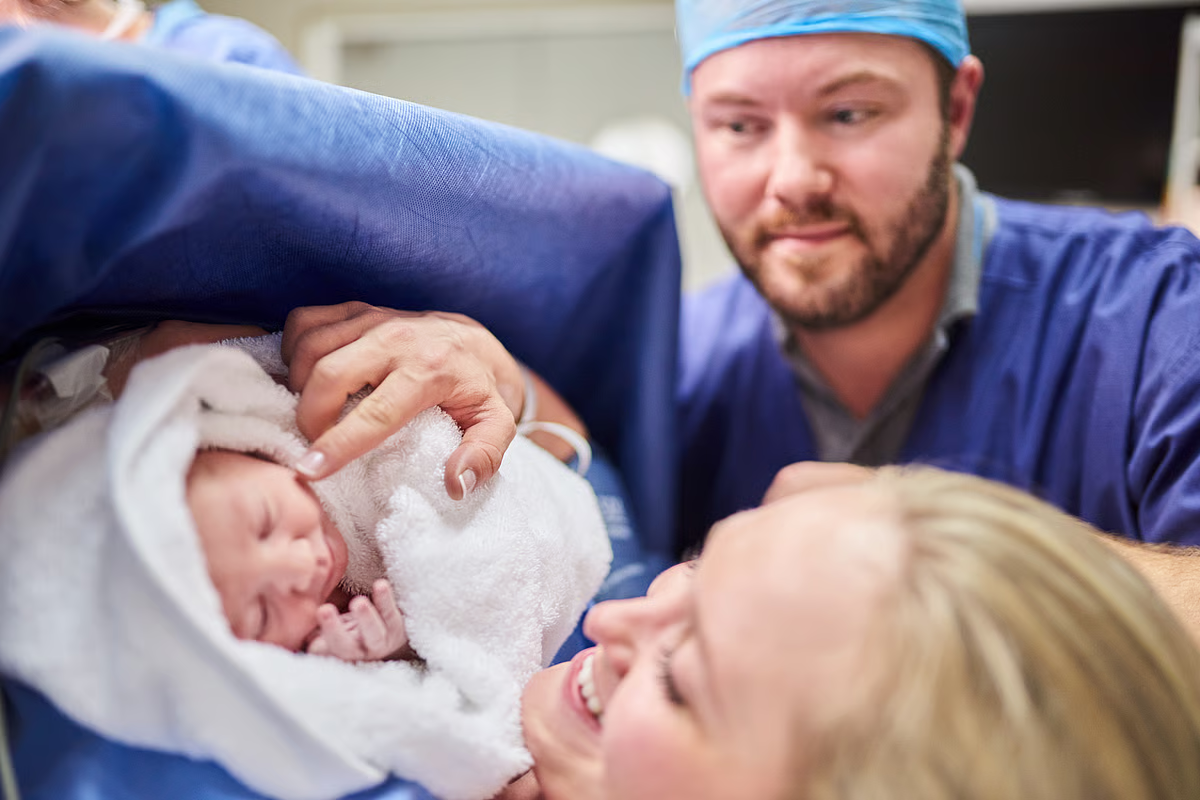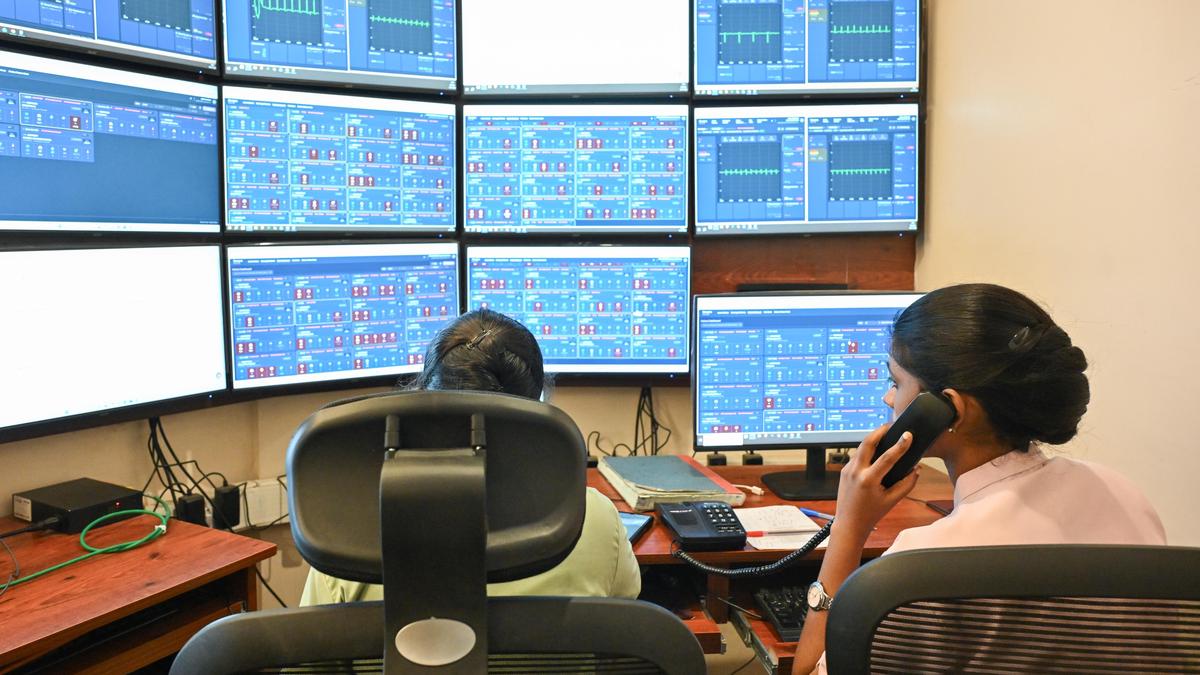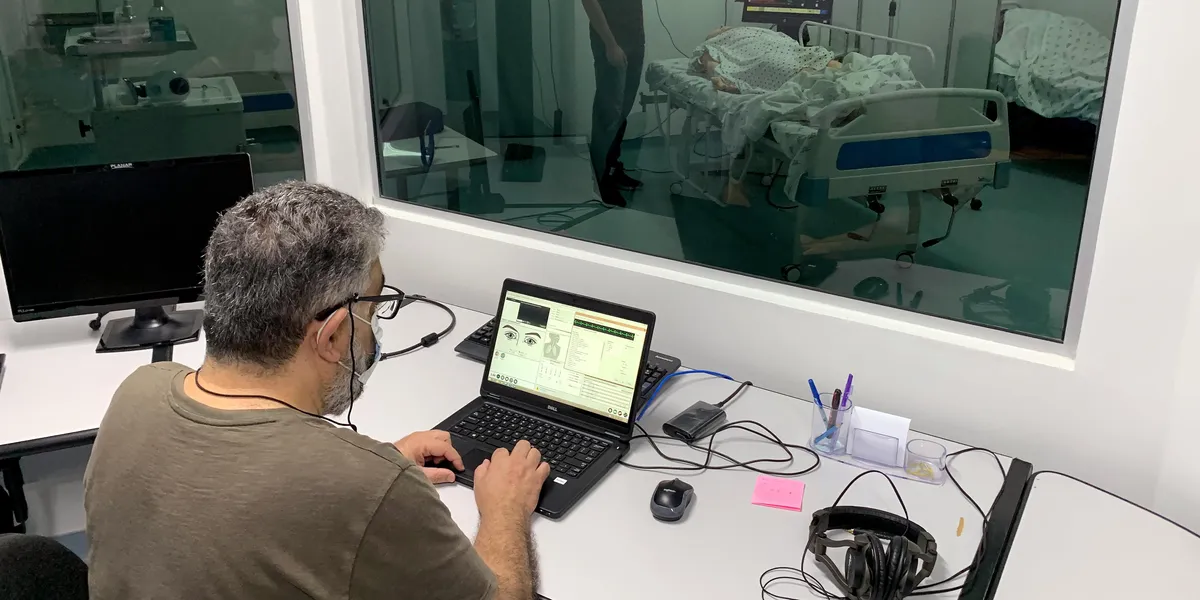
In a country as vast and diverse as India, access to quality maternal healthcare often depends on geography. While urban centres boast state-of-the-art hospitals and specialists, large parts of rural and semi-urban India still rely on general physicians for critical pregnancy care. This disparity has long posed a serious challenge: how can high-risk pregnancies be monitored effectively when specialist gynaecologists are not always available?Aditya Kulkarni, founder of CareNX Innovations (HT)Pune-based CareNX Innovations believes it has found an answer—by combining medical-grade hardware with intelligent software to make fetal monitoring accessible, scalable, and reliable across all levels of healthcare.Founded by Aditya Kulkarni, CareNX Innovations, founded in 2015, is building an AI-enabled fetal monitoring ecosystem that has already impacted over one million pregnancies. Says Aditya, “Maternal healthcare is not just about access to doctors—it’s about access to the right expertise at the right time. Our country has over 100,000 practising gynaecologists, and yet the point of care for expectant mothers in smaller towns and villages is often the general practitioner, who number more than one million. In many parts of India, that expertise is simply not available when it’s needed the most.”Bridging a critical clinical gapFetal monitoring, particularly through cardiotocography (CTG), is a crucial tool in assessing fetal well-being during pregnancy. However, interpreting CTG data requires specialised training, typically possessed by gynaecologists and obstetricians.This creates a bottleneck in care delivery. In settings where specialists are unavailable, delays in identifying fetal distress can lead to severe complications, including preventable neonatal morbidity and mortality.“The question we started with was simple,” Kulkarni recalls. “Can we make fetal monitoring so intuitive and reliable that even a non-specialist doctor can use it with confidence?”That question became the foundation for CareNX.From idea to innovationCareNX began as a research-driven initiative focused on simplifying fetal monitoring without compromising clinical accuracy. The team developed a combined solution—a telemetric CTG device integrated with intelligent decision-support software.The hardware captures fetal heart rate and uterine contractions, while the software analyses patterns in real time, assisting clinicians in interpreting the data.Early iterations of the product relied on decision-tree-based algorithms, allowing for faster validation in clinical environments. These prototypes were deployed in hospitals where gynaecologists closely evaluated their accuracy and usefulness.“We didn’t want to build something in isolation,” says Kulkarni. “Every version of our product was tested, challenged, and refined in real clinical settings. That feedback loop was critical.”The validation phase proved promising. Doctors found that the system not only improved efficiency but also supported more consistent clinical decisions, especially in high-volume environments.Scaling with purposeWhat began as a prototype has now evolved into a widely deployed clinical solution. CareNX’s platform is currently used by more than 2,500 gynaecologists and maternity centres across India.The numbers tell a compelling story: Over 1 million pregnancies have been screened, a more than 30% reduction in Neonatal Intensive Care Unit (NICU) admissions in deployed settings, and presence across 500+ private hospitals, with international deployments in Afghanistan, Bangladesh, and Nigeria.Importantly, the solution is not confined to metro cities. It is actively being used in tier two and tier three regions, where access to specialists is limited but the need is greatest.“Our goal was never just adoption—it was impact,” Kulkarni explains. “When we see fewer NICU admissions and better pregnancy outcomes, that’s when we know we’re solving a real problem.”Building a clinically reliable systemDeveloping a medical device that clinicians can trust is no small feat. For CareNX, it required years of interdisciplinary collaboration across artificial intelligence, biomedical engineering, and obstetrics. Significant investments were made in designing robust telemetric CTG hardware, conducting multi-centre clinical validation studies, building software capable of real-time analysis and interpretation, navigating regulatory pathways, including Central Drugs Standard Control Organisation (CDSCO) Class C certification.Unlike many health-tech startups that focus solely on software, CareNX took a full-stack approach—ensuring tight integration between hardware and intelligence. “In healthcare, reliability is everything,” says Kulkarni. “You cannot afford ambiguity. Every signal, every interpretation has to be clinically meaningful.”The company’s journey has been supported by a mix of founder-led investments, early-stage grants, and institutional backing. Notably, CareNX has collaborated with global organisations such as the UNICEF Venture Fund, which focuses on scalable technologies for social impact.Rethinking go-to-market in healthcareCareNX’s growth strategy reflects a deep understanding of healthcare ecosystems. Rather than positioning itself as a standalone product, the company operates as a clinical service platform.Its go-to-market model includes: direct deployments in hospitals and diagnostic centres, partnerships with state governments and public health systems, training programmes for general physicians, remote connectivity enabling gynaecologist consultations.The hybrid approach ensures that the technology is not just adopted but also integrated into existing workflows.“Technology alone doesn’t change outcomes—adoption does,” Kulkarni notes. “We spend as much time on training and integration as we do on product development.”Standing out in a crowded spaceThe fetal monitoring market is not new. Traditional CTG machines have been used for decades in hospital settings. However, these systems often require specialist interpretation and are not designed for decentralised use.On the other end of the spectrum, low-cost monitoring devices exist but lack the analytical capabilities needed for reliable decision-making.CareNX positions itself uniquely between these two extremes. Its differentiation lies incombining medical-grade hardware with intelligent software, enabling general physicians to conduct screenings, providing real-time connectivity to specialists and demonstrating large-scale clinical impact“We’re not just building a device—we’re building a bridge,” says Kulkarni. “A bridge between diagnostic capability and specialist expertise.”Global recognition and credibilityCareNX’s work has not gone unnoticed. The startup has received recognition from leading global platforms, including the AI for Social Impact Award at MIT Solve.It has also been supported by organisations such as Google and Cisco, and is part of innovation ecosystems linked to MIT. In India, the company is incubated at IIT Bombay and is a member of Microsoft’s Founders Hub.“These recognitions validate our approach, but more importantly, they open doors to global collaboration,” Kulkarni says.The road ahead: AI at scaleWith a strong foundation in place, CareNX is now focusing on the next phase of its journey—advancing AI capabilities in maternal healthcare. The company is working on developing supervised machine learning models trained on large-scale clinical datasets. These models aim to further improve the accuracy and predictive capabilities of fetal monitoring.Future plans include expanding across South Asia and Africa, building open-source tools for maternal health AI and increasing accessibility for general physicians in underserved regions.“We are just scratching the surface of what AI can do in maternal health,” Kulkarni says. “The more data we have, the better we can predict and prevent complications.”As India continues to strengthen its healthcare infrastructure, solutions like CareNX could play a pivotal role in ensuring that quality care reaches every corner of the country—and beyond.Because in the end, innovation in healthcare is not just about technology. It is about outcomes. It is about equity. And most importantly, it is about saving lives.
Startup Mantra: AI is transforming last-mile fetal monitoring
CareNX Innovations combines medical-grade hardware with intelligent software to make fetal monitoring accessible, scalable, and reliable
1,127 words~5 min read