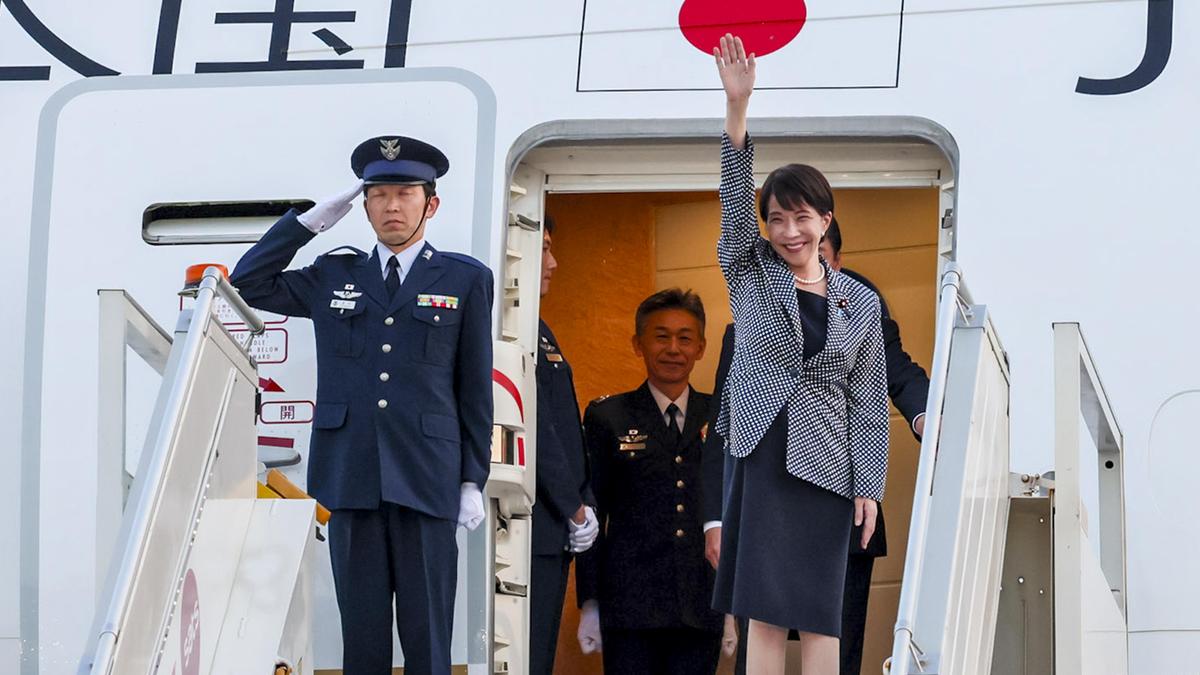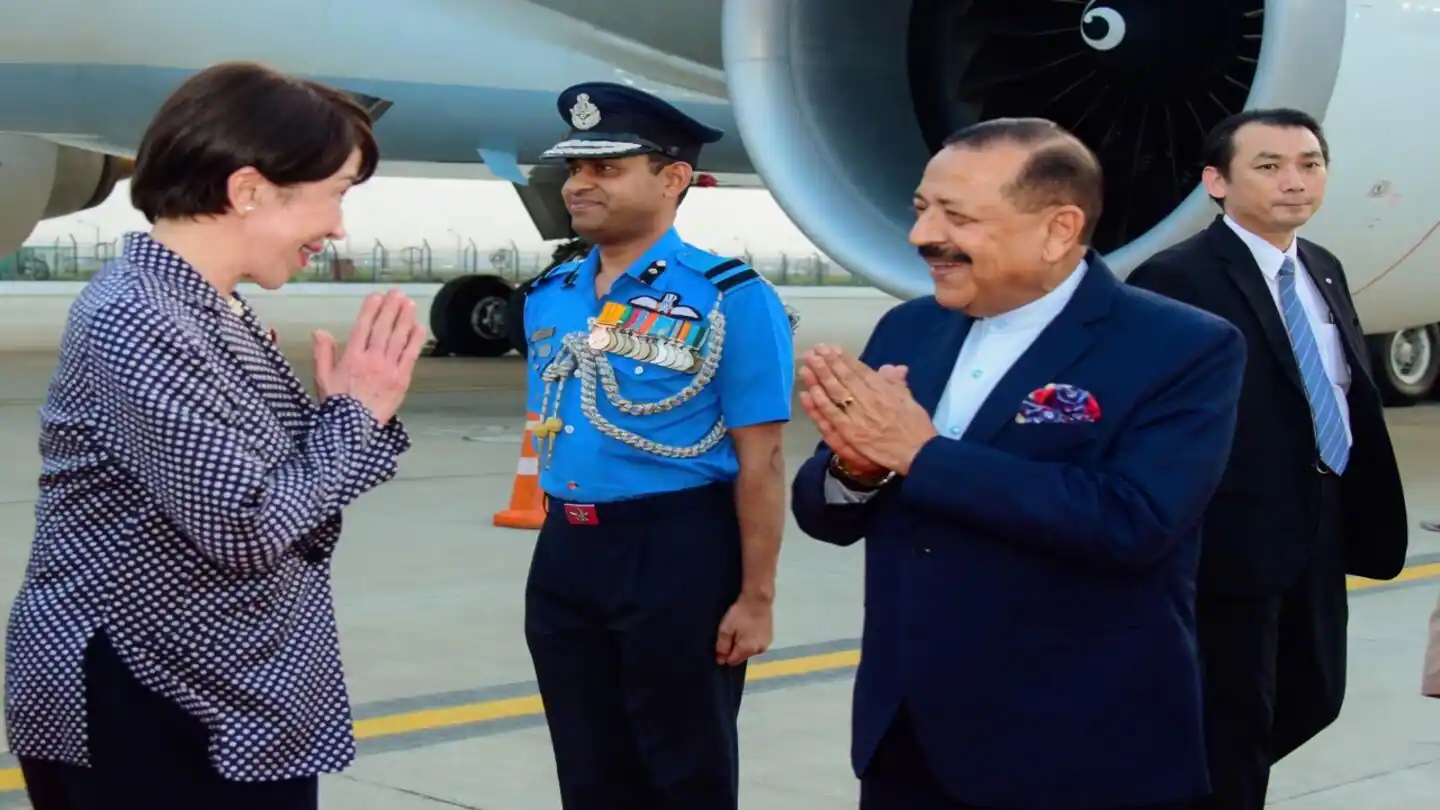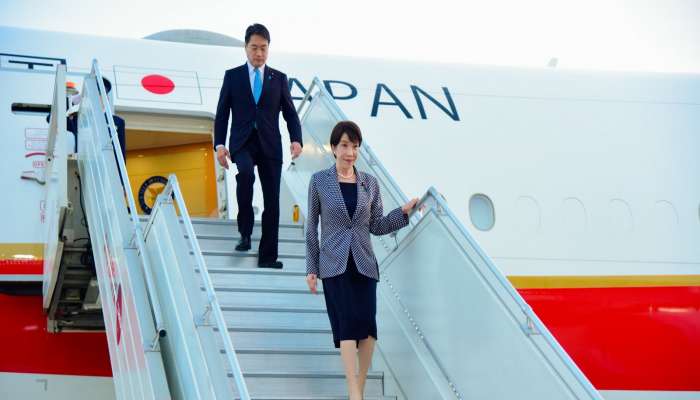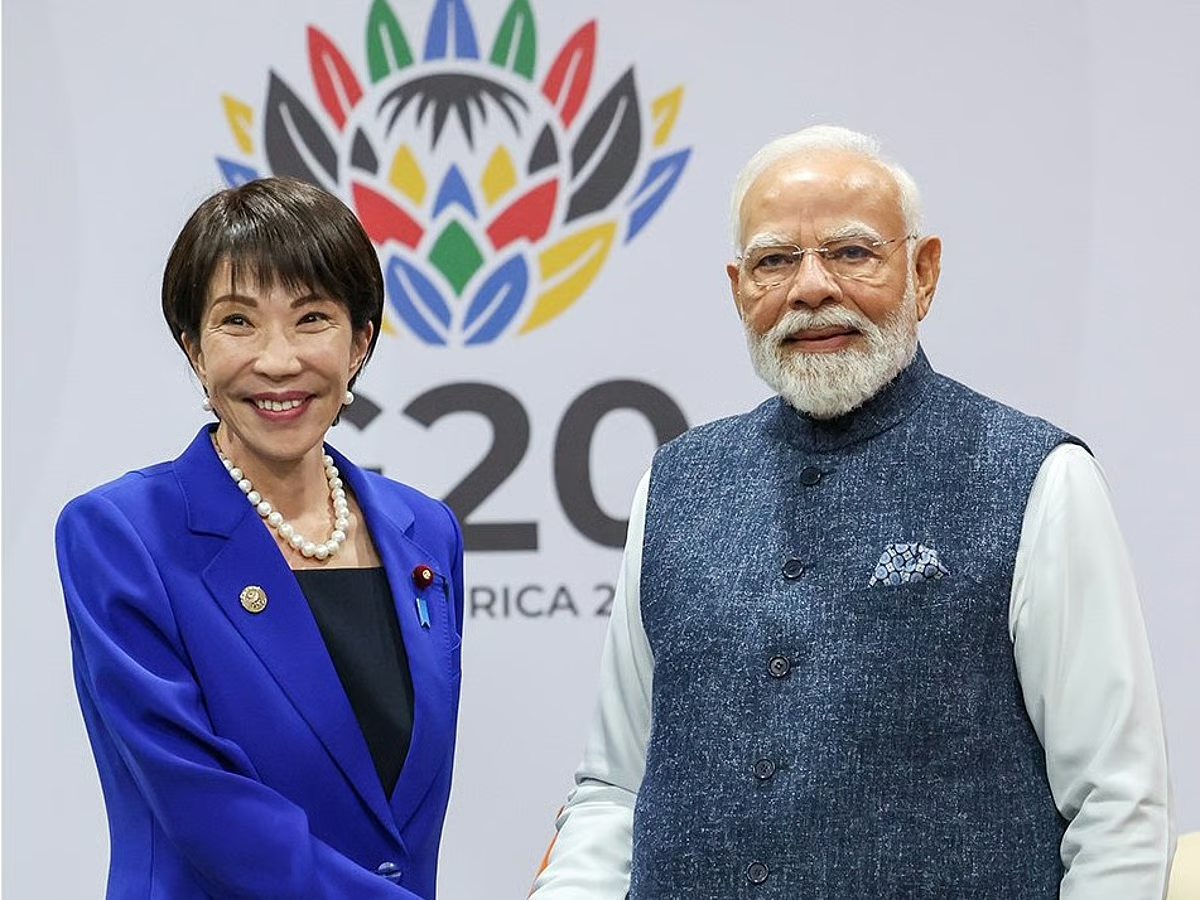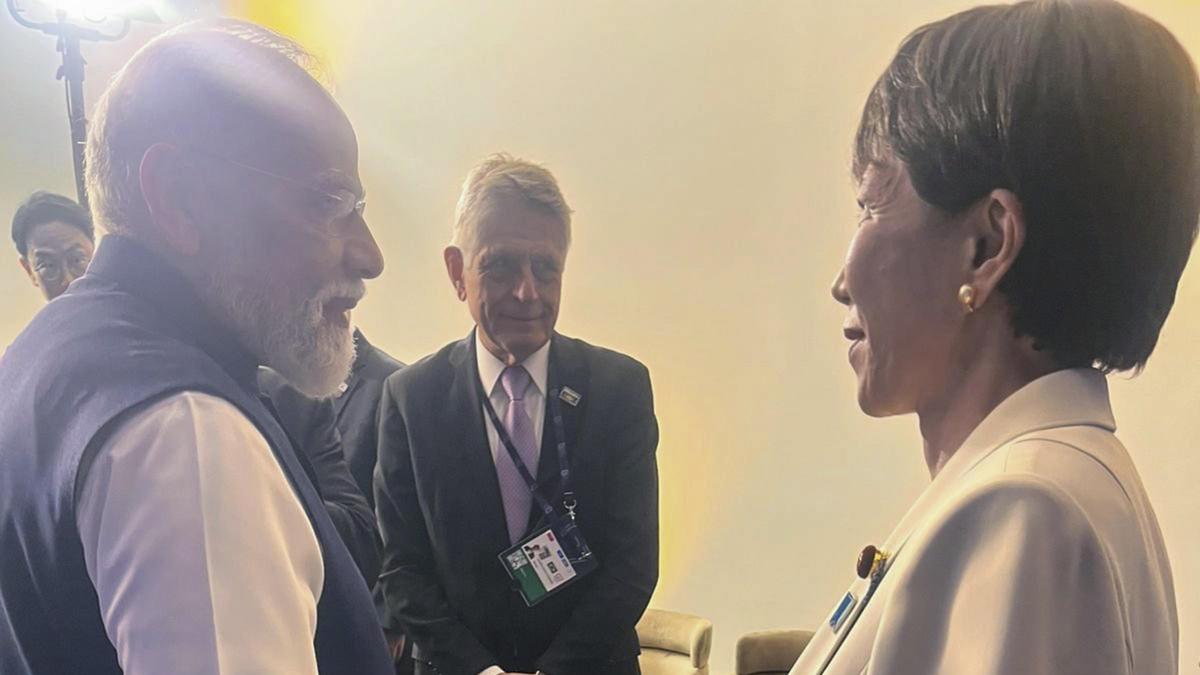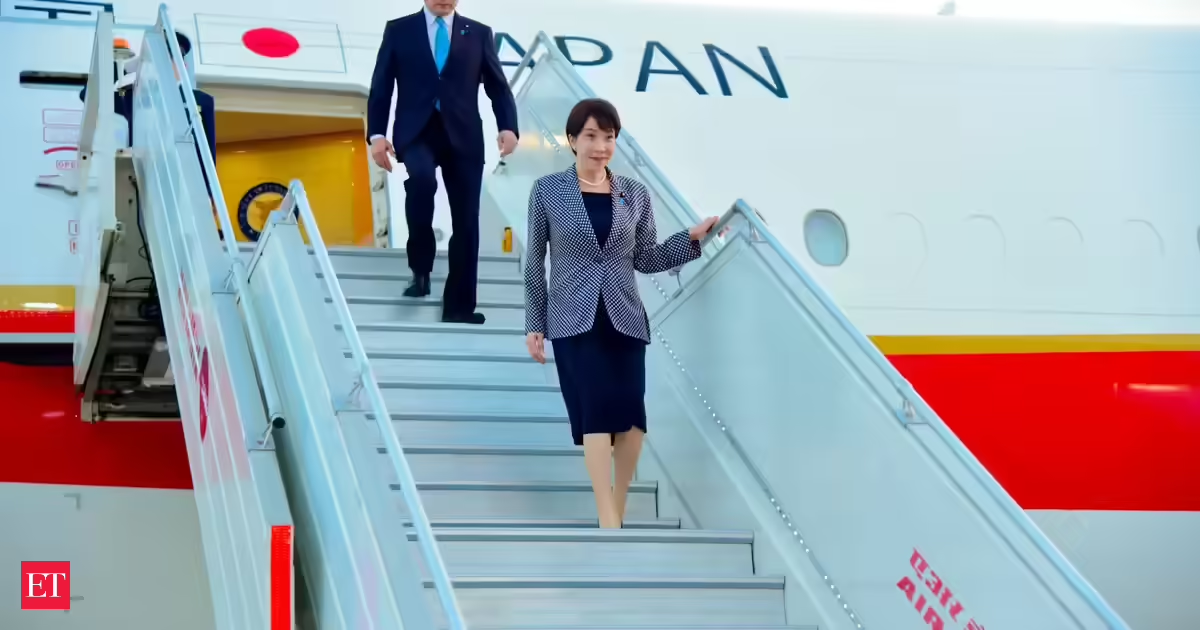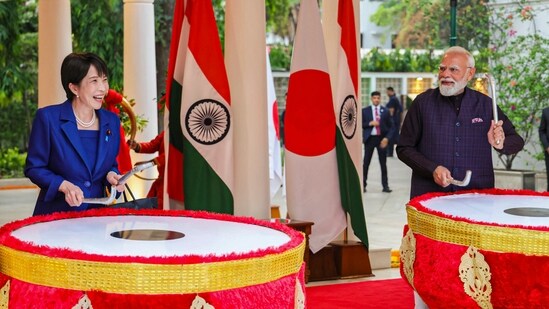
Japanese Prime Minister (PM) Sanae Takaichi’s visit to India for the 16th India-Japan Bilateral Summit on July 1-3 took place at a consequential moment. While this was Takaichi’s first official visit to India and her first appearance at the Summit, PM Narendra Modi has featured in nine of the 16 held since 2006.**EDS: THIRD PARTY IMAGE** In this image posted on July 3, 2026, Prime Minister Narendra Modi and Japanese Prime Minister Sanae Takaichi play traditional drums before an informal dinner hosted at the Prime Minister's official residence, in New Delhi. (@PressSec_JP)Many of the outcomes bear Modi’s personal imprimatur, with corresponding commitments from his Japanese counterparts, both during the term of the late PM Shinzo Abe — who had a personal friendship with PM Modi — as well as those of his successors playing an equally important role.Today, a broad consensus in the political and economic firmament in Japan for deeper ties with India is echoed by a similar sentiment in India too.Also Read | India, Japan deepen defence, AI, energy ties; finalise economic roadmapTakaichi’s visit took place against the backdrop of prolonged conflicts and uncertainty over critical supply chains, including energy. The summit was more than mere diplomatic symbolism. It provided an opportunity to reposition one of Asia’s most important strategic partnerships amidst rapid flux across the Indo-Pacific.The outcomes of the summit bear the stamp of both continuity and change. Takaichi’s visit has given fresh impetus to the Joint Vision for the Next Decade, adopted during Modi’s visit to Tokyo in August 2025.The outcomes clearly operationalise several key pillars of the Joint Vision, among which are the Economic Security Initiative, the India–Japan AI Initiative, the Next-Generation Mobility Partnership, the Joint Declaration on Security Cooperation, and the first defence co-development project.Among the new elements is the economic security initiative covering supply chain resilience, strategic industries, an investment screening dialogue, and critical infrastructure. The first defence co-development project stands out – the two sides have agreed to jointly develop defence equipment, beginning with naval communications/radio antenna systems. The joint declaration on security cooperation concluded in 2025 has shifted gear towards deepening defence-industrial cooperation in particular.Also Read | Chips over subs: Why Sanae Takaichi's India visit is about economics firstMore importantly, the advances in this sector are undoubtedly propelled by the recent revision of the three principles on arms transfers by the Takaichi administration, which allows Japan to transfer defence technology and equipment, including lethal systems, to 17 partner countries. The list includes the US and key western powers, but also Vietnam and the Philippines, both caught in the vortex of the South China Sea conflict.Interestingly, Tokyo concluded the enabling framework agreement with Bangladesh in February this year — ratified in May — after the new government came to power in Dhaka, the latter’s proximity to Beijing notwithstanding.Building a robust indigenous defence manufacturing ecosystem is a top priority for India. Japan boasts the technological strengths that India seeks: semiconductors, advanced shipbuilding, metallurgy, heavy engineering, precision manufacturing and sophisticated industrial management.Equally significant is the new AI initiative, which has acquired urgency as the world grapples with the risk of descending into mutually exclusive AI camps reminiscent of Cold War competition. Beyond the AI dialogue already in place, India and Japan can now collaborate on advancing a global regulatory framework rooted in “people, planet, and progress”. As for cooperation on critical minerals, the thrust clearly is on semi-conductors. During Modi’s visit to Japan in August 2025, he visited Tokyo Electron Miyagi Ltd. in Sendai.Today, Japanese companies such as Renesas Electronics are participating in India’s semiconductor ecosystem — in chip design, OSAT (assembly and testing), semiconductor equipment, materials, and R&D.The expanded clean energy partnership opens up myriad possibilities in green hydrogen, ammonia, biogas, biofuels, and energy resilience. The vulnerability of maritime energy routes, from the Strait of Hormuz to the South China Sea, has reinforced the case for cooperation in hydrogen, ammonia, and other clean-energy technologies.The next generation mobility partnership framework has added substance beyond high-speed rail to electric vehicles, logistics, ports, shipping, aviation and advanced mobility manufacturing.Takaichi rode to power on a strong nationalist mandate and is exploring the furthest dimensions of the Abe-era reforms without hesitation, pushing for greater self-reliance in defence and security matters. The China challenge provides as much impulse for change as does US policy vacillation.The 16th Summit has succeeded in reaffirming and giving a fillip to the Special Strategic and Global partnership. Its significance lies less in the number of agreements signed than in the direction they reveal.India and Japan are no longer merely expanding bilateral cooperation. They are building the institutional architecture of an Indo-Pacific partnership centred on economic security, trusted technology and defence industrial resilience.Sujan Chinoy, a former ambassador of India to Japan, is the director general of the Manohar Parrikar Institute for Defence Studies and Analyses. The views expressed are personal
Sanae Takaichi’s visit heralds a new India-Japan era
The summit provided an opportunity to reposition one of Asia’s most important strategic partnerships amidst rapid flux across the Indo-Pacific
805 words~4 min read