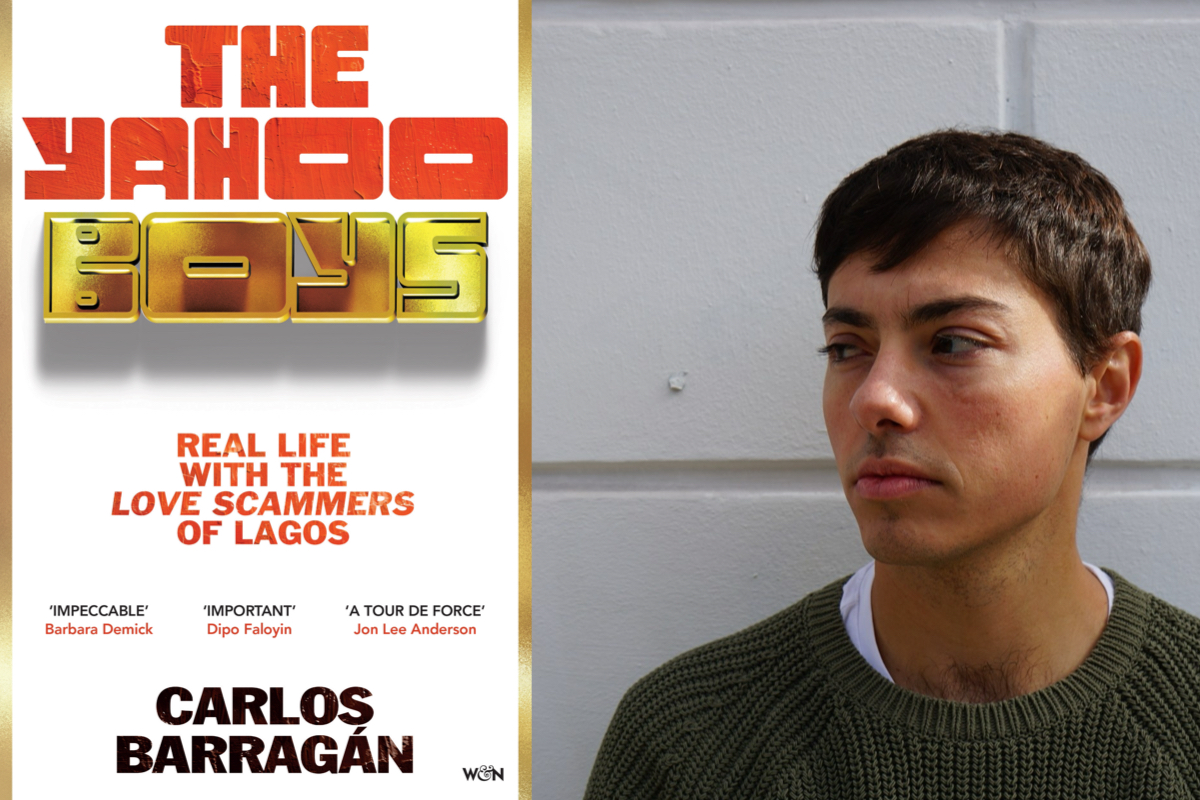
When the Spanish journalist Carlos Barragan announced recently on LinkedIn that The Yahoo Boys, his book about the online scammers of Lagos, had just been released, the comment section beneath his post was animated. There was praise for this first book by a young journalist, but also curiosity from some Nigerian commenters about his motives, as well as defensive queries about why, of all the subjects under the Nigerian sun, Barragan had chosen to write about the already globally notorious Yahoo boys. It was evident that most, if not all of the interlocutors had not yet read the book, but their preemptive reviews implied that Barragan may have produced yet another jaundiced Western portrait of Nigeria,. The current reviewer, already in possession of a then-unread copy of The Yahoo Boys, chimed in with the observation that no one could hope to police a journalist:s choice of reportage.
The Yahoo Boys follows several current and former online scammers around the Lagos neighbourhood of Ikotun. His subtitle, Love, Deception, and the Real Lives of Nigeria’s Romance Scammers telegraphs his narrow focus, since to encompass all the niches of the Nigerian scam world would have required a baggy monster of a book. Barragan was granted a confessional, forensic degree of access to the social media chat histories of some of his interviewees, and he incldes lengthy passages of dialogue between the scammers and their victims, dialogue that is by turns transactional, sentimental, comic, and moving. Barragan charts the difficult childhoods of his subjects, and their struggles with education; their initiations, as if by sheer osmosis, into the world of online scams: and the debauched lifestyles they lead while financed by a fitful stream of gift cards and cryptocurrency transfers from unwitting “magas” or marks in Europe, America, and Australia. It is a vignette on globalisation, and the intertwining of cybercrime, technology, and ecommerce, and Barragan tells it deftly. He connects the dots to illustrate how gift cards inveigled from an hapless grandfather in America end up being sold by a Nigerian scammer to a Chinese internet vendor.. Yet the very technology that enables scammers to prowl online under colourful aliases also enables their exposure. When the Irishwoman Theresa contacts Amazon to confirm that her gift card has been redeemed by Cody Rhodes in Florida, she is nonplussed to be told that her card was redeemed two minutes after she sent it by an IP address in Lagos, Nigeria.