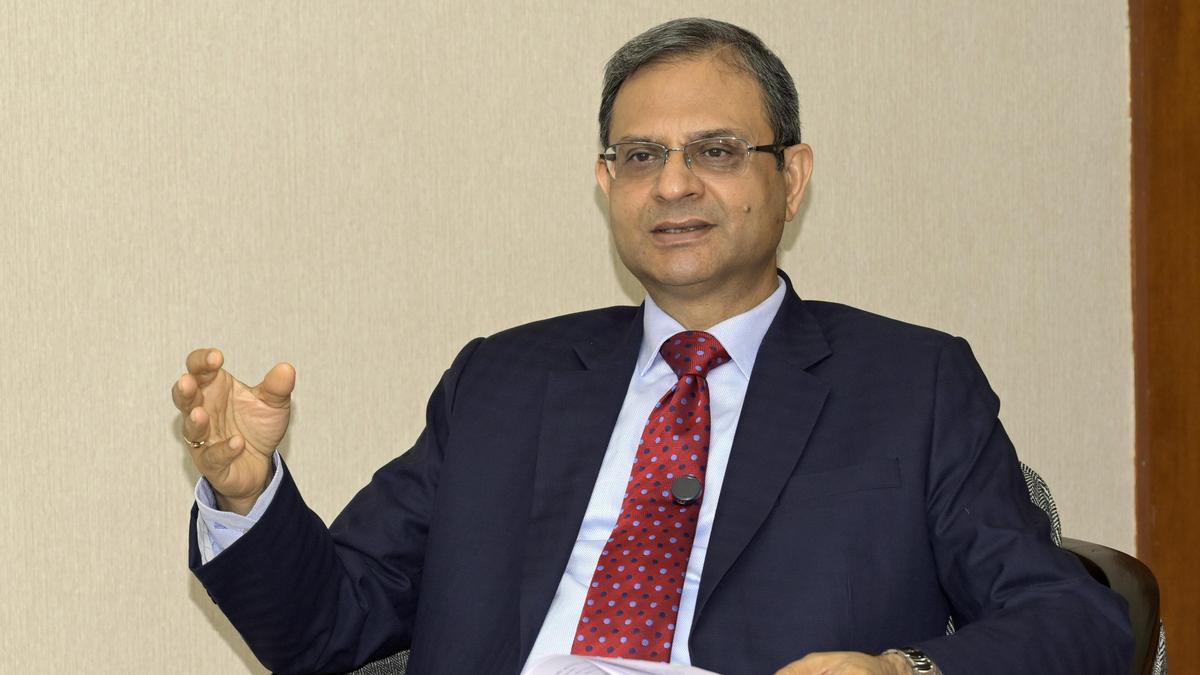
The RBI’s latest measures are designed to replenish forex reserves without imposing distortions on the market.
| Photo Credit:
bluebay2014
India’s central bank has repeatedly demonstrated an ability to craft innovative responses to major macroeconomic challenges. From the East Asian currency crisis of 1997, the sanctions following the Pokhran nuclear tests to the Global Financial Crisis (2008), the taper tantrum of 2013 and the Covid-19 disruption, the Reserve Bank of India has earned global respect for its policy agility. Nobel laureate Joseph Stiglitz once observed that had the US been led by a central banker like Dr YV Reddy during the 2008 crisis, its economy would have fared much better.The RBI’s latest initiative on FCNR(B) deposits and external commercial borrowings (ECBs) belongs in that tradition. By absorbing the entire swap cost on incremental FCNR(B) deposits and extending partial support for ECB-related swaps, the RBI has introduced a market-friendly mechanism that simultaneously benefits banks, non-resident Indians and the country’s external sector.The backdrop is important. India’s foreign exchange reserves had declined from around $720 billion to about $680 billion in recent months. Persistent foreign portfolio outflows, geopolitical tensions in West Asia and higher crude oil prices following the Israel-Iran conflict placed the rupee under pressure. The RBI intervened in the foreign exchange market by selling dollars to contain excessive volatility. It did not defend any particular exchange rate.The latest measures are designed to replenish reserves without imposing distortions on the market. It is expected that inflows will aggregate to $60-70 billion through FCNR(B) deposits and ECBs, substantially strengthening India’s external buffers.Incentive structureThe real significance of the scheme lies in the incentive structure. Currency swaps (sell-buy, involving a premium payment) are an expensive component of FCNR(B) mobilisation. Banks convert dollars to rupee to lend but want dollars back at the end of the period to return the deposit to NRIs.By absorbing this cost entirely, the RBI has now enabled banks to offer significantly more attractive returns to depositors while preserving their own margins. The concessional swap window has similarly lowered the effective cost of overseas borrowings by Indian financial institutions and public sector enterprises.Indian banks have responded with commendable speed. The State Bank of India quickly launched a “leveraged FCNR(B) deposit product” under which a qualifying deposit of $100,000 can facilitate additional overseas borrowings up to nine times, enabling investors to earn returns of up to 11.25 per cent over five years. Theoretically, the leveraging can be infinite but availability of dollar funds with a counterparty foreign bank is a limitation as also bank exposure limits. Other large banks like ICICI and HDFC are reportedly working on similar products.The economics are compelling. Banks gain access to much-needed foreign currency deposits at a time when credit growth has consistently outpaced deposit growth. NRIs receive substantially higher returns without materially increasing their risk. Most importantly, the country strengthens its foreign exchange reserves at a time when global uncertainty remains elevated.Equally significant is what this episode says about India’s institutional maturity. Every external shock presents a different challenge, and there are rarely textbook solutions to fast-changing geopolitical and geo-economic developments. The RBI’s response demonstrates an ability not merely to react but to innovate. Commercial banks led by SBI have shown that they can quickly translate regulatory flexibility into products that benefit customers and the economy alike.But the larger lesson is beyond FCNR(B) deposits. India’s financial institutions have increasingly developed the confidence to design solutions suited to Indian realities rather than merely replicate international practice. As the centre of gravity of the global economy gradually but inevitably shifts eastward, such institutional capability will become an increasingly important strategic ability. If institutional credibility is a nation’s greatest economic asset, RBI and banks have, for now, validated this potential in substantial measure.The writer is a commentator on banking and financePublished on July 4, 2026