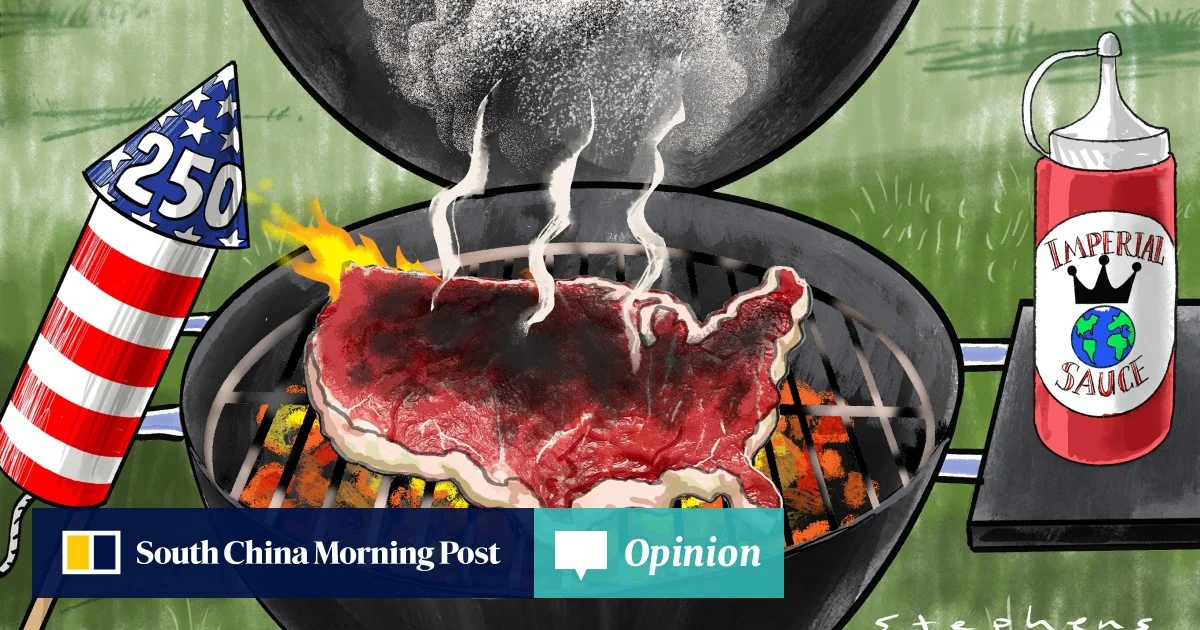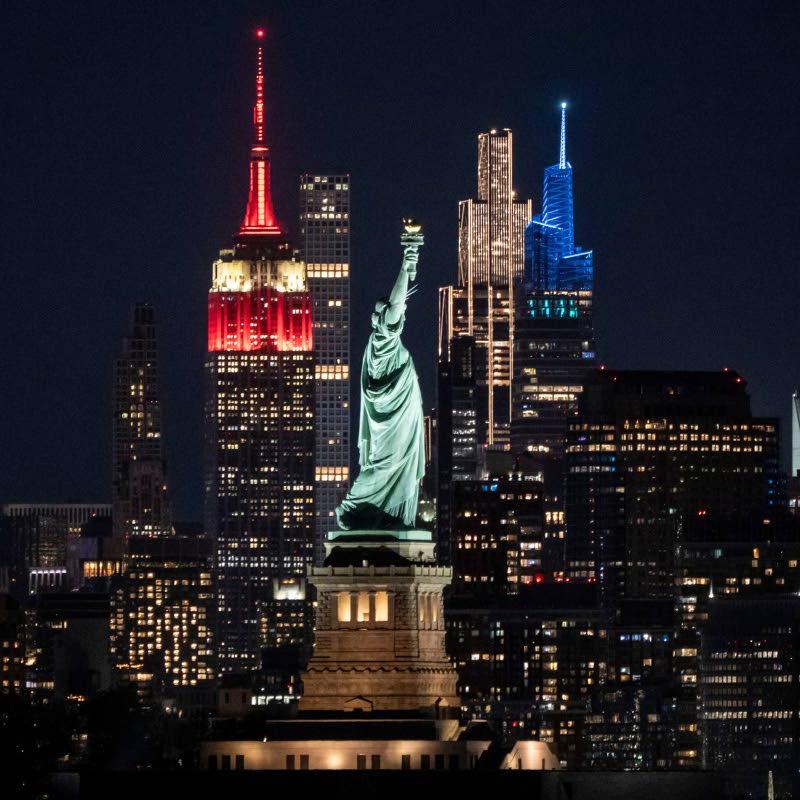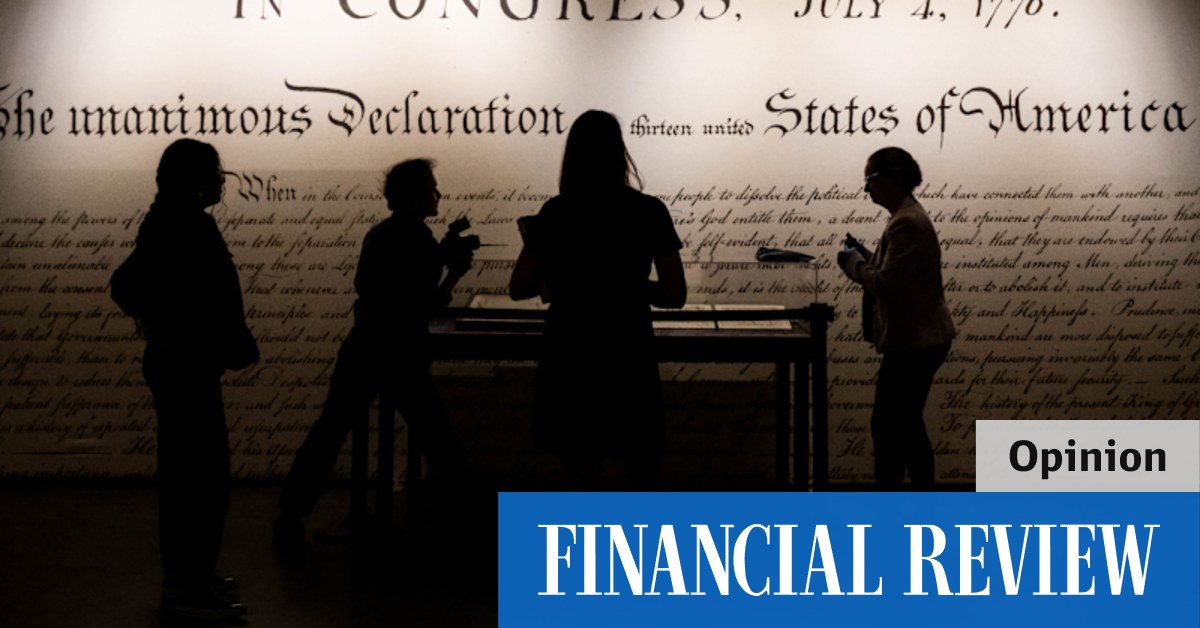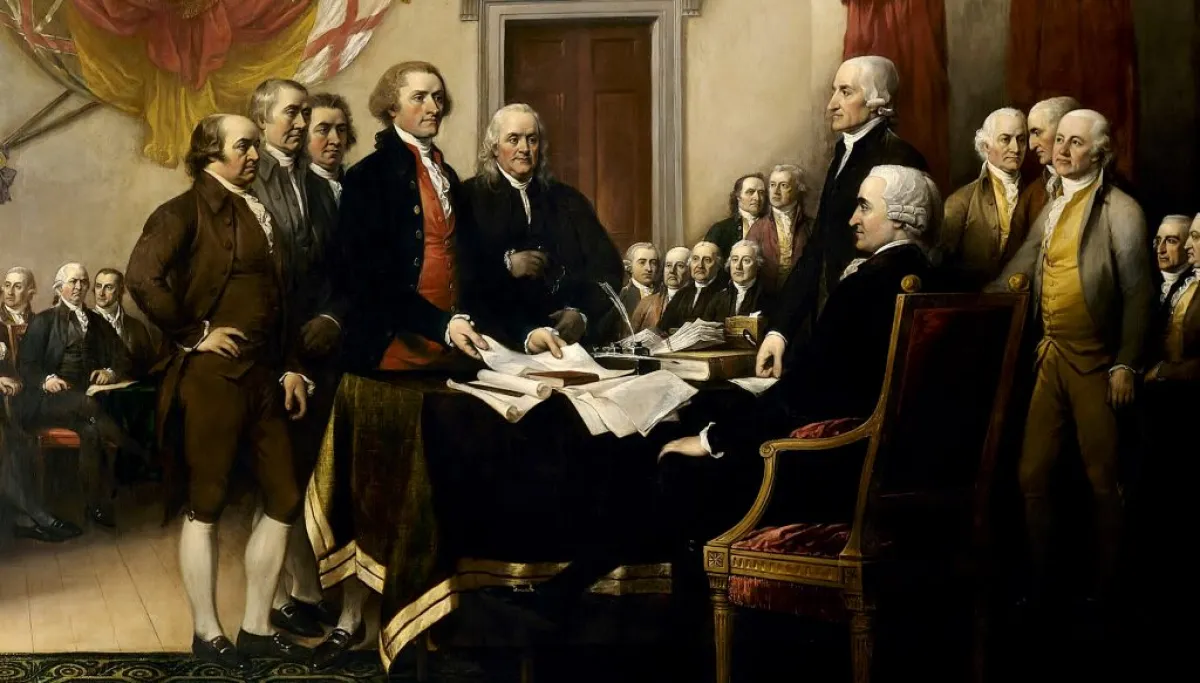
Two hundred and fifty years ago this weekend, 13 American colonies declared themselves independent of the British crown, setting in motion an experiment in self-government that would go on to remake the modern world. The document they signed announced truths held to be self-evident: that all men are created equal, endowed with unalienable rights to life, liberty and the pursuit of happiness. It was a radical claim that would inspire many other democratic movements.It was also, from the outset, a contradictory one. The republic built on those words entrenched race-based chattel slavery for nearly a century after independence and denied full equality to many of its citizens for a century more. It drove native peoples from their land. It is the country of both Plymouth Rock and Las Vegas, of puritan self-denial and unapologetic excess, of rugged individualism and corporate conformity. It was founded by men wary of foreign entanglement, yet it has spent the past 80 years as the organising power of the international order, its culture, products and its habits reshaping societies far beyond its borders. It has offered refuge to millions fleeing tyranny and poverty who yearned to share in its freedom and prosperity, yet has been riven by periodic outbreaks of racially-tinged unease over immigration.These tensions have not resolved with time. They have simply taken on new forms in the dynamic, ever-changing American story. The US economy is, by most conventional measures, thriving, yet the country is gripped by a sense of malaise. The middle class has been hollowed out and social mobility has stalled, feeding a politics more polarised than at any point in living memory. A new gilded age of concentrated wealth now presses against the democratic institutions meant to hold it in check: a hyper-politicised judiciary; a Congress unable to legislate; an executive inclined to rule by fiat; a centuries-old constitution nearly impossible to modernise. The rest of the world watches all this uneasily, not least because it is filtered through the erratic persona of the current president, who is not so much the cause of America’s current roiling contradictions as their most visible embodiment.America’s founders looked to the Roman republic as both inspiration and cautionary warning. That republic endured for close to 500 years before it collapsed under the weight of its own institutional decay. Whether its American successor matches that longevity remains, on its 250th birthday, a genuinely open question. But history suggests that the US is endowed with an extraordinary capacity for renewal and revival. The future of this remarkable political experiment will depend on whether that capacity can be summoned once again.
The Irish Times view on the US semiquincentennial: an uneasy giant
Its economy is thriving yet the country is gripped by a sense of malaise
433 words~2 min read