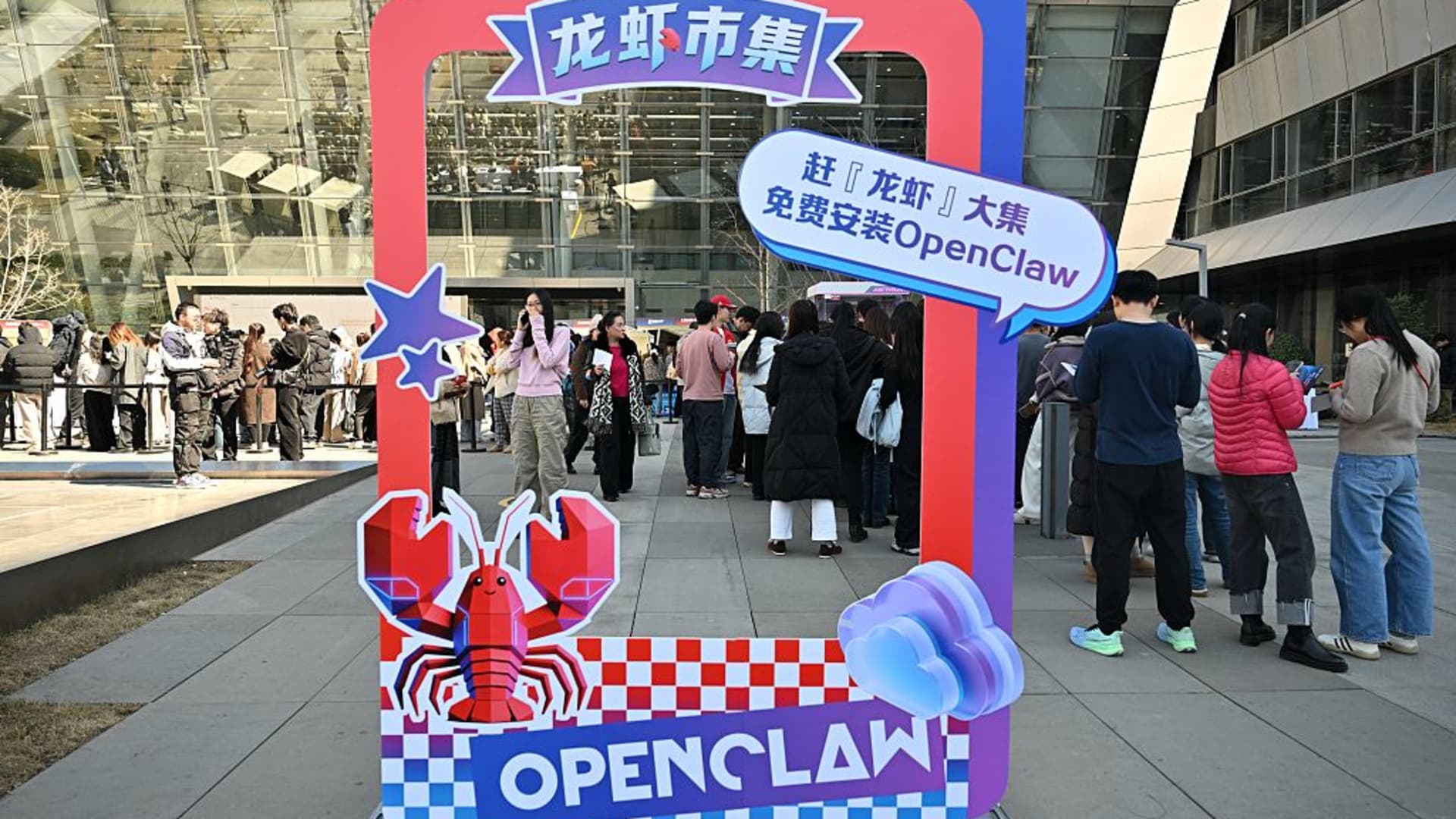
1. OpenClaw, an open-source AI agent created by Austrian programmer Peter Steinberger, has experienced a rapid surge in popularity in China within weeks, with widespread sharing of demos, tutorials, and use cases across social media platforms. This agent operates on local hardware and automates various tasks like document management, email summarization, and research, leading to high levels of experimentation and interest in its integration into consumer applications [para. 1][para. 2].2. The swift uptake of OpenClaw has attracted major Chinese technology companies, notably Tencent, which have introduced cloud-based installation services and infrastructure to facilitate adoption. These efforts have increased demand for both cloud infrastructure and paid AI model tokens, vital for executing OpenClaw’s functions [para. 3].3. The surge in popularity is largely driven by advancements made by Chinese large language model (LLM) developers. Their models enable OpenClaw to interpret complex instructions and automate multifaceted workflows, fueling the development of broader software ecosystems around the AI agent. This trend has the potential to extend AI agent integration into IoT devices and common consumer electronics [para. 4].4. Despite the enthusiasm, there are mounting concerns about security and privacy due to OpenClaw’s deep system-level access. Industry participants and Chinese regulators have already issued early warnings regarding possible misuse, emphasizing the risks tied to the agent's capabilities [para. 5].5. Large language models are central to OpenClaw’s functionality, processing user input into actionable steps. Cloud vendors, such as Tencent Cloud, set up infrastructure that allows LLM providers to consume tokens for planning and executing complex reasoning tasks [para. 6][para. 7][para. 8]. Chinese-developed models have enabled rapid domestic adoption and are being upgraded to match Western counterparts in areas like coding, image, and video understanding [para. 9].6. The use of “distillation” tactics has brought scrutiny to some Chinese firms. For example, in February, U.S.-based Anthropic PBC accused companies such as DeepSeek, MiniMax, and Moonshot AI of misusing its Claude model to generate over 16 million outputs for training local models. Despite this, cost and token usage differences make Chinese models highly attractive for local OpenClaw applications: processing two tasks with a Chinese model costs approximately 1 yuan (14 cents), compared to $9 using an overseas model, particularly during periods of high activity such as the Lunar New Year [para. 10][para. 11][para. 12][para. 13].7. In response to OpenClaw’s spread, cloud providers like Tencent Cloud, Alibaba Cloud, and Baidu AI Cloud have eased installation barriers through web-based and mobile services. For instance, Alibaba's JVS Claw app allows smartphone users with no coding skills to utilize AI agents, and company offerings often prioritize security by isolating OpenClaw in the cloud rather than running it on local devices [para. 14-19].8. Major tech firms are also weaving OpenClaw into popular consumer apps. ByteDance’s Feishu app and Tencent’s QQ and WeChat Work have incorporated OpenClaw-driven features for automating office workflows. Tencent debuted QClaw for WeChat, letting users control OpenClaw within chat interfaces. These integrations lower usage barriers and further expand OpenClaw’s reach [para. 20-23].9. The craze for OpenClaw has spurred Chinese tech giants to develop AI agent-centric software ecosystems. Xiaomi, Honor, and Huawei launched products in March 2026 incorporating in-house LLMs and multiple smart functions on smartphones, PCs, and IoT devices. Industry experts predict the next wave will combine AI agents with smart home appliances and wearables, enabling devices to proactively sense and serve user needs [para. 24-28].10. On the regulatory front, OpenClaw’s privilege level—its ability to access files, control apps, and manage sensitive data—raises cybersecurity, privacy, and financial risks. Poor permission settings or malicious skill packages could expose users to data breaches, ransomware, or accidental deletions. While cloud-based deployments mitigate some risks, experts emphasize that robust virtual isolation and rigorous oversight remain essential safeguards. Chinese regulators, including MIIT’s National Vulnerability Database, have issued guidelines urging best practices around updates, limited exposure, and careful vetting of skill libraries to prevent abuse [para. 29-36].AI generated, for reference only
In Depth: OpenClaw Craze Fuels Fresh AI Ambitions, Fears in China
As companies rush to embed the globally viral AI agent across apps, devices and cloud services, regulators warn that broad system access and weak oversight could expose users to data and cybersecurity risks
644 words~3 min read