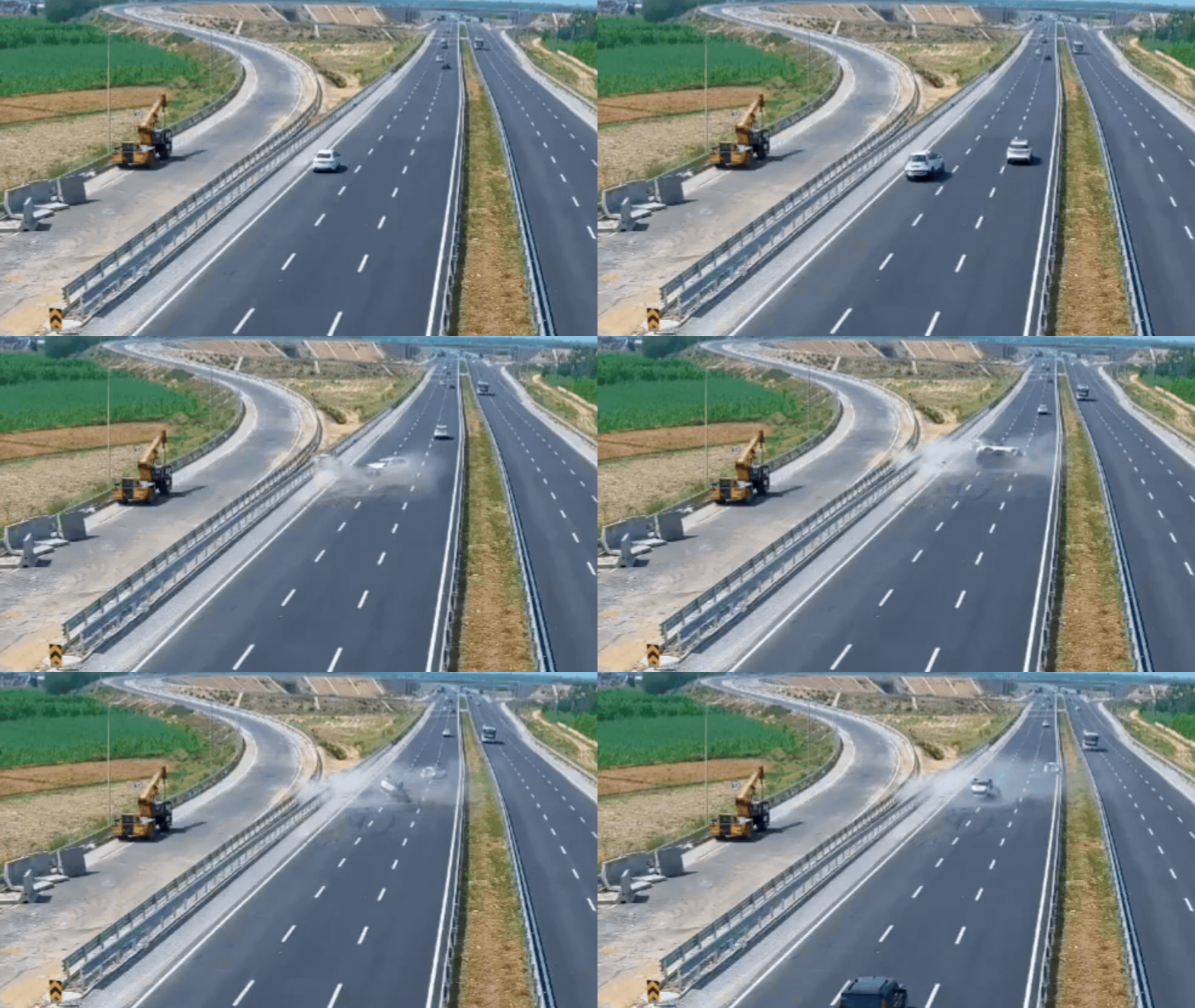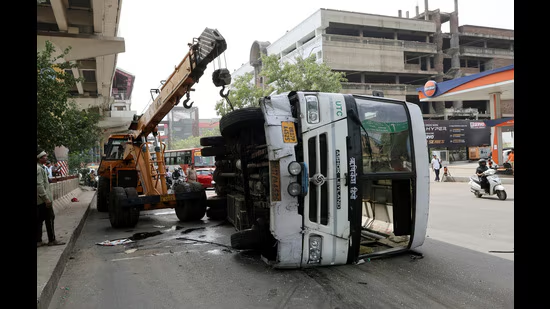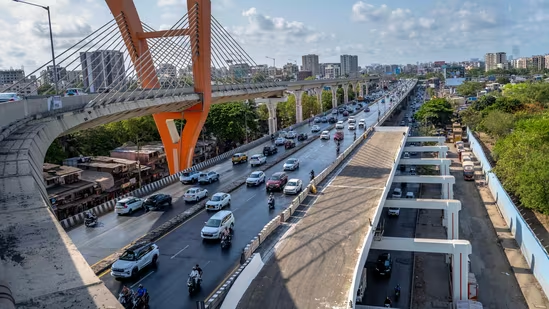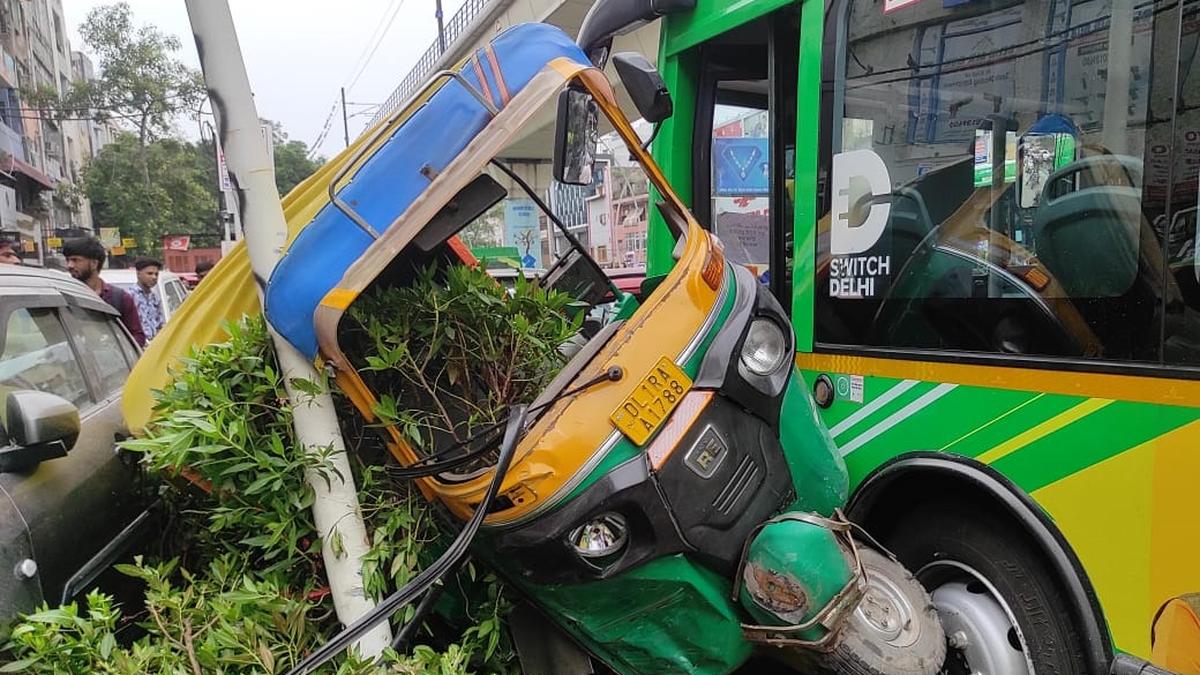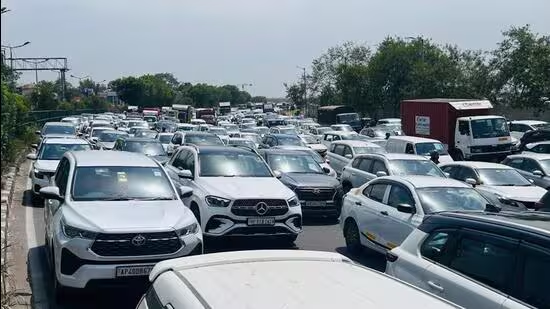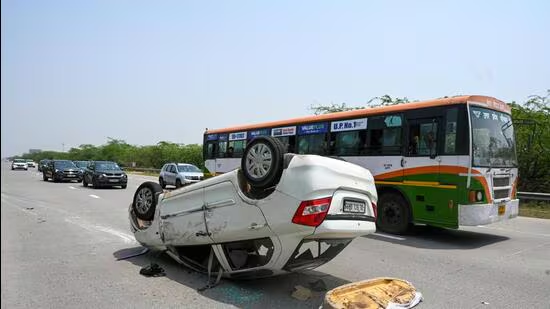
On Friday morning, CCTV footage from the Delhi-Dehradun Expressway near Saharanpur in Uttar Pradesh were played in news screens across the country showing a car illegally reversing on the access-controlled highway when it was rammed from behind by an SUV. The impact was so severe that the car ricocheted off the median and was flung across multiple lanes. Four people died. The SUV too overturned after the collision.A vehicle overturned on the Yamuna Expressway last week, leaving four people injured in Greater Noida. (Sunil Ghosh/HT Photo)Then on Tuesday morning, four more people were killed and 27 injured after a bus crashed into a container truck on the Yamuna Expressway near Mathura.The incidents, though isolated, are united by circumstance. The crashes again underscored an uncomfortable truth about India’s highways and expressways: when crashes happen on high-speed roads, they are often far deadlier.And this pattern plays out very clearly in Delhi as well.Nearly one in every five people killed in road crashes in the national capital last year died on one of the highways or expressways passing through the city, despite these roads accounting for barely half a per cent of Delhi’s total road network.Delhi Traffic Police data shows that eight national highways and expressways recorded 288 deaths out of the city’s total 1,617 road fatalities in 2025 – around 18% of all lives lost in traffic crashes.The figures reveal the disproportionate burden carried by the city’s fastest roads. Overall, Delhi reported 5,689 road crashes – fatal and non-fatal – in 2025. Of these, 708 crashes occurred on national highways and expressways.These figures are hardly an aberration. Between 2021 and 2025, the eight high-speed corridors passing through Delhi witnessed 3,427 crashes that claimed 1,161 lives, according to traffic police data. During the same period, the rest of the city’s road network recorded 24,125 crashes resulting in 6,164 deaths.In other words, highways accounted for a sharply disproportionate share of fatalities despite occupying only a tiny fraction of Delhi’s roads.The Capital’s highway network includes NH-44 connecting north Delhi to Sonipat, NH-48 linking Delhi with Gurugram and Jaipur, NH-2 connecting the city to Faridabad and Agra, NH-9 linking east Delhi to Ghaziabad, NH-10 connecting west Delhi to Bahadurgarh and Rohtak, and NH-58 running towards Ghaziabad through the Apsara border.The newer additions include the Dwarka Expressway and the Urban Extension Road-II (UER-II), also dubbed Delhi’s “Third Ring Road”, designed to decongest arterial roads and improve regional connectivity.Delhi’s total road network stretches nearly 32,000 kilometres when interior roads are included. Of this, only around 157 kilometres comprise national highways and expressways maintained by various agencies. That translates to just about 0.5% of the city’s road length.Yet these corridors account for nearly a fifth of all road deaths.Among them, NH-44 — the historic GT Karnal Road corridor connecting Delhi with Haryana — emerged as the deadliest. The highway recorded 213 crashes in 2025, killing 101 people and injuring another 180. The corridor has consistently topped Delhi’s highway fatality charts, recording 77 deaths in 2024 and 82 in 2023.“Movement of heavy vehicles like trucks and buses, especially during night hours, wider carriageways, high speed, illegal road crossings due to inadequate underpasses and foot overbridges, and high traffic density are the key reasons for the large number of crashes on the Delhi stretch of NH-44,” said a senior traffic police officer requesting anonymity.The officer said installation of speed violation detection cameras at strategic locations is among the next interventions planned for the corridor.NH-10, connecting Delhi to Rohtak, recorded the second-highest toll, with 145 crashes claiming 65 lives and injuring 111 people in 2025.Mathura Road, or NH-2, recorded 33 deaths in 98 crashes, while NH-48, the Delhi-Gurugram corridor, accounted for 31 fatalities in 86 accidents.Traffic police officials said the severity of crashes on highways is often linked to the simple physics of speed.At urban speeds of 30 to 40 kilometres per hour, collisions may result in injuries. At highway speeds of 80 kilometres per hour or more, crashes frequently become fatal.Heavy vehicle movement further compounds the danger.The challenge, however, extends beyond speed alone. Many of Delhi’s highways were designed as access-controlled corridors intended for uninterrupted movement of long-distance traffic. But within the city, they increasingly function as ordinary urban roads carrying local traffic, pedestrians, cyclists, buses, trucks and slow-moving vehicles simultaneously.“These highways and expressways are supposed to be access-controlled, but within Delhi they operate like ordinary city roads,” said another traffic police officer involved in crash analysis. “Vehicles enter and exit through unauthorised openings, pedestrians cross at grade, and slow-moving traffic shares space with trucks travelling at highway speeds.”Road safety experts said the problem lies not merely in driver behaviour but in the way high-speed corridors intersect with urban life.“The busy intersections along NH-44 have high pedestrian volumes. These sections within the city also carry e-rickshaws, autos, two-wheelers, intercity buses and trucks. Such mixing of low-speed and high-speed traffic causes crashes,” said S Velmurugan, chief scientist and head of the traffic engineering and safety division at the Central Road Research Institute. “In many places, safer and more convenient pedestrian crossings are needed.”Velmurugan pointed to stretches of Mathura Road near Badarpur as another example of infrastructure gaps translating into dangerous driving behaviour.“Near Badarpur and some other stretches, there are no service roads. This forces several vehicles, especially two- and three-wheelers, to take wrong turns or move against traffic, which becomes a major cause of crashes,” he said.The dangers get compounded pronounced after sunset. According to the Delhi Road Crash Report 2022 – the latest year for which detailed temporal analysis is available – 806 of the 1,428 people killed in road accidents that year died during nighttime hours, accounting for 56.4% of all fatalities. In comparison, 622 deaths occurred during daytime hours.The trend was similar in 2021, when 645 people died in crashes at night compared with 561 during the day. The figures, experts stressed, are striking because daytime traffic volumes are substantially higher.Experts said lower traffic volumes at night, particularly on highways, encourage speeding, while inadequate lighting and limited enforcement further increase risks.Urban mobility expert and Raahgiri Foundation co-founder Sarika Panda Bhatt said Delhi’s road design philosophy continues to prioritise speed and vehicle movement over vulnerable road users.“There’s no lack of funds or space in most parts of Delhi along highways, but planners need to understand that when these high-speed corridors cross city stretches, dedicated infrastructure needs to be created for pedestrians and cyclists too,” she said. “Roads are widened for cars and flyovers are built for speed, but pedestrians and cyclists are often ignored.”The consequences of that imbalance are visible in the city’s crash statistics every year.“Driving on congested roads in Delhi is completely different from driving on highways and expressways where speed limits are higher and certain important road safety rules are applicable. But the drivers’ behaviour hardly changes on such high-speed corridors. Using mobile phones while driving, not wearing seat belts, driving on the wrong carriageway, stopping or reversing vehicles, not maintaining sufficient distance from vehicles moving ahead, and lane changing using wrong lanes are some of the common reasons that led to serious road crashes on highways and expressways,” said retired Indian Police Service (IPS) officer, Muktesh Chander, who earlier served as a Delhi Traffic Police chief.With inputs from Snehil Sinha
Delhi’s highways claim a disproportionate toll
Recent fatal crashes on Delhi's highways highlight the danger of high-speed roads, accounting for 18% of the city's road deaths despite being only 0.5% of its roads. | Latest News Delhi
1,204 words~5 min read