Selecting the right abstraction layer is not a new problem in software. It's common to have some experimental restructuring to find the right balance between being abstract enough to consolidate all the duplication that belongs together and going too far, making users jump through hoops to use your overly abstracted MiddlewareManagerAbstractFactoryProvider. There are entire books and undergraduate courses on exactly this problem: what level of abstraction is enough?
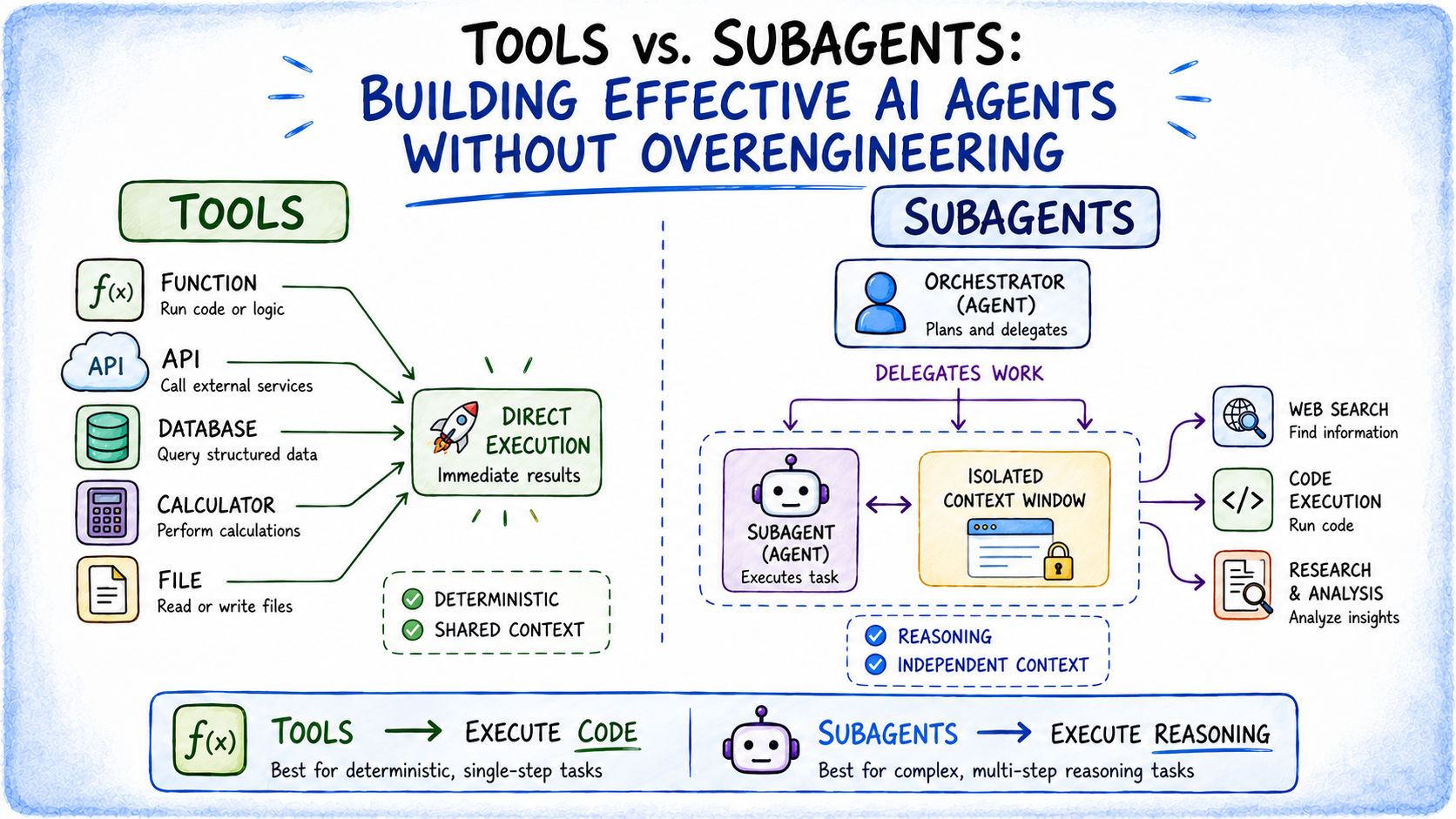
We now have a similar analog in the space of how we help our AI agents perform tasks. Do we need an MCP for that capability? A skill? Will a simple CLI tool work? The answer depends on a few questions.
Note: For more context, check out Nikita Kothari's AIE World's Fair talk from Thursday, "MCPs, CLIs, and Skills: Choosing the Right Tooling Layer for Agentic Development."
All the MCPs: The Super-Agent Approach
One option would be to load every possible MCP you might ever need access to at startup. This has the benefit of discoverability. If you're not sure what the agent might need to do and you want it to be as unattended as possible, giving access to all of those tool descriptions allows it to be flexible and combine sources and tools as needed. It also allows it to branch out and parallelize, gathering data from multiple sources at the same time.