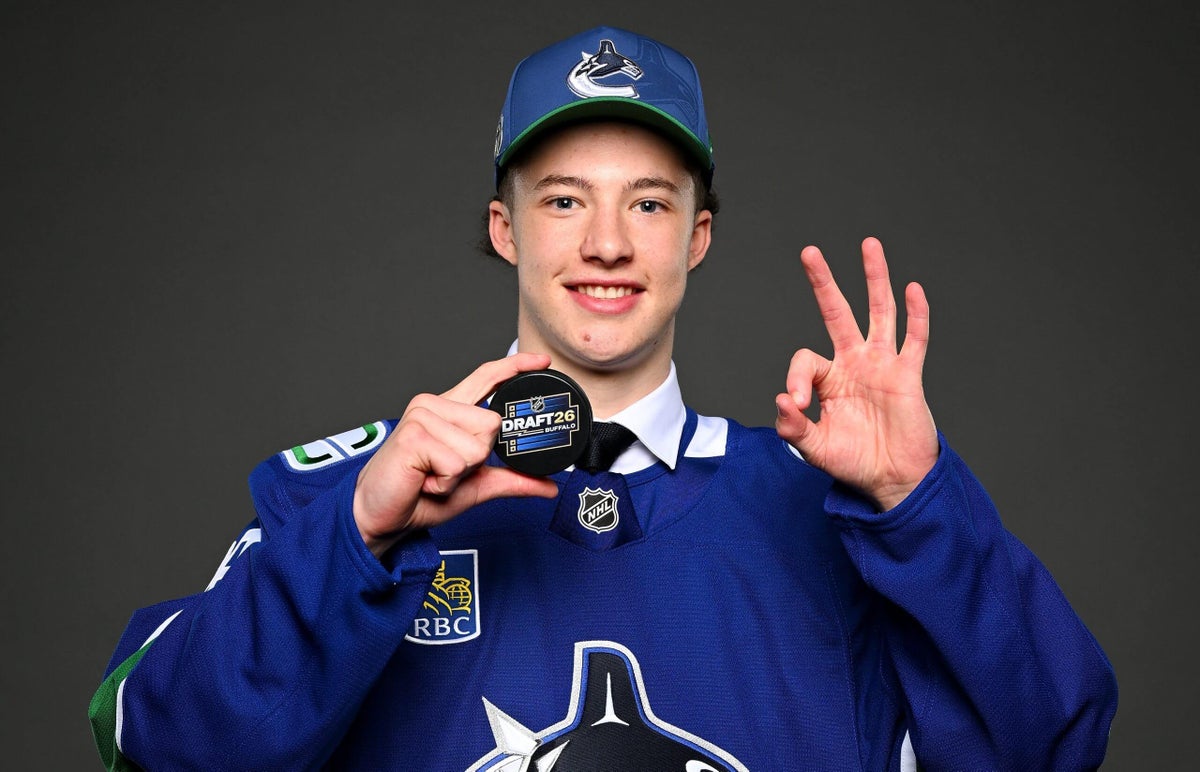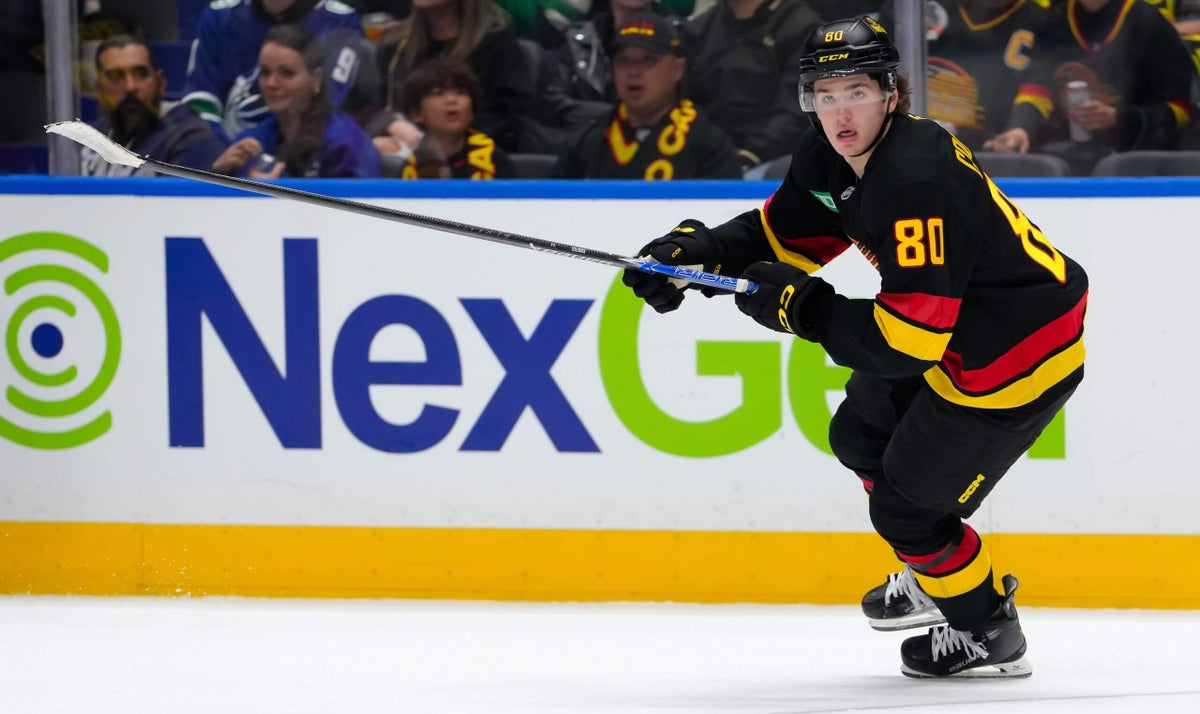
ABBOTSFORD, B.C. — As you’d expect given that co-presidents Henrik and Daniel Sedin and general manager Ryan Johnson have their managerial roots in player development, Vancouver Canucks development camp had a different look and feel in comparison with years past.It also had a new location, at the Rogers Forum, where the Abbotsford Canucks play.There are downsides, of course, to this approach. For example, Niklas Aaram-Olsen, the Norwegian sharpshooter selected in the second round of the 2026 NHL Draft, had never been to Vancouver previously. He told The Athletic on Thursday that he wouldn’t really have a chance to see the city and what it has to offer before departing back home to Oslo to prepare for his first collegiate season at Boston University this August.The upside, however, is that the facility is entirely controlled by the Canucks, and it’s fit for professional players. The Canucks also tweaked the content of development camp. There was a pronounced emphasis on the professional standards expected of players, and matching much of what the twins and Johnson have told fans publicly, those expectations extended from on-ice instruction and play to working out in the gym to interacting with the community and participating in good works.On Tuesday, following the first on-ice session of development camp, Canucks prospects went to volunteer at a Fraser Valley food bank, as the club’s cultural rebuild continues, too.Winners and losers from the 2026 NHL DraftScott WheelerDevelopment camp trendsOn Tuesday, the Canucks held a for-fun skills-based practice. On Thursday, the club held a five-game three-on-three tournament.In general, we should be very careful not to draw much of any evaluative significance from this environment, especially because development camps across the NHL are becoming smaller and more intimate with every passing year. The Canucks’ approach is very much in line with these wider trends.The practice pace is casual, focused entirely on puck touches and fun-looking drills. From what we witnessed on Tuesday and Thursday, there are zero battle drills or anything approximating a real scrimmage or training camp-like environment. There is a coach for every player and a half, and most of the drills look legitimately fun. There are no hidden bag skates.The days of teams scrambling after the draft to swell their development camp ranks with invite players are over. Nobody in the NHL, and certainly not the Canucks, is bringing 40 players or more to a development camp, then hosting it like a mini training camp concluding with a significant, competitive scrimmage.At Canucks development camp this week, for example, there were three goaltenders total. There were only five defenders.What matters at an NHL development camp these days mostly occurs away from the observation of the media. As one Eastern Conference NHL staffer told me of their club’s approach this week, the focus of development camp is increasingly on the educational content off the ice. The on-ice sessions are more like a treat to keep the participants engaged in the overall syllabus.There is always something to learn and evaluate, of course, but we should heavily qualify any player takes or observations with the reality that it’s early July, the hockey environment is casual, and the evaluative side of development camp has been toned down heavily, both by the Canucks and across the NHL.The three-on-three tournament and the Novotný showAdam Novotný spent almost the entirety of his first draft-eligible season as an 18-year-old in the OHL. At this age and stage, every little bit of maturity matters. For context, Novotný is almost six full months older than fellow 2026 first-round pick Caleb Malhotra.The wide-bodied Czech forward was the standout at the three-on-three tournament, scoring at will and creating glitzy and impressive scoring chances.Now, once again, it’s early July, and it was a three-on-three tournament pitting three teams splitting five total defenders against one another. Games lasted for eight minutes, with a running clock. There was a round robin, then a semifinal and a final. This was an environment for offence, and most of Vancouver’s top prospects had some incredible moments, so let’s take all of this with a grain of salt.Malhotra scored a pair of goals in his team’s four games, including a goal on a brilliant wrist shot. Aaram-Olsen had a stunner finish, sending a water bottle to the emergency room. And Braeden Cootes controlled games at a different level than anyone else on the ice sheet, challenging checkers one-on-one and beating them regularly, including on one impressive sequence where he willed himself past a pair of checkers to create a breakaway, scored, and then manufactured a second consecutive breakaway off the ensuing faceoff (which the goaltender stopped).
What I’m seeing at Canucks development camp: Braeden Cootes, Adam Novotný and more
Vancouver Canucks development camp had a different look and feel in comparison with years past.
1,978 words~9 min read