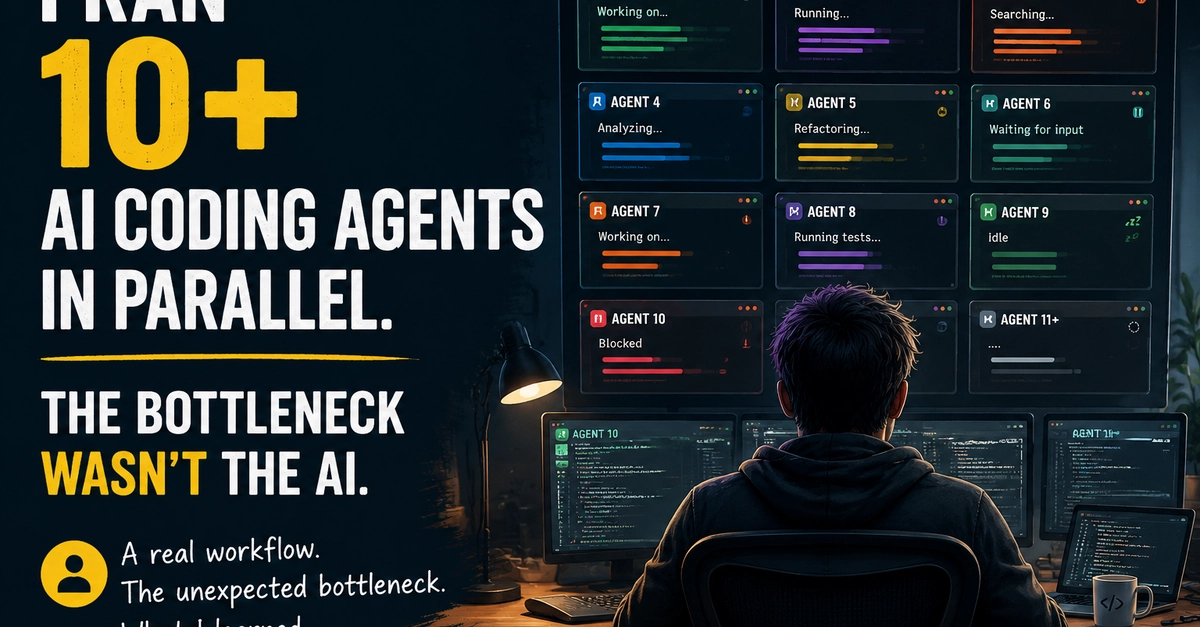
Three months ago, I had a single agent handling document classification, tagging, and summary generation for a client workflow. It worked fine with 50 documents a day. Then volume hit 500. The agent started taking 40 minutes per batch. Throughput didn't scale — it imploded.
The fix wasn't a bigger model. It was splitting the agent into three specialized roles running in parallel. Throughput went from 40 minutes to 4. The model never changed. The architecture did.
This is the part of AI agent development nobody talks about enough: agent orchestration architecture. The gap between "it works" and "it scales" is almost always an architectural problem, not a model problem.
The Sequential Trap
When developers first build agent systems, they almost always start with one agent doing everything in sequence: