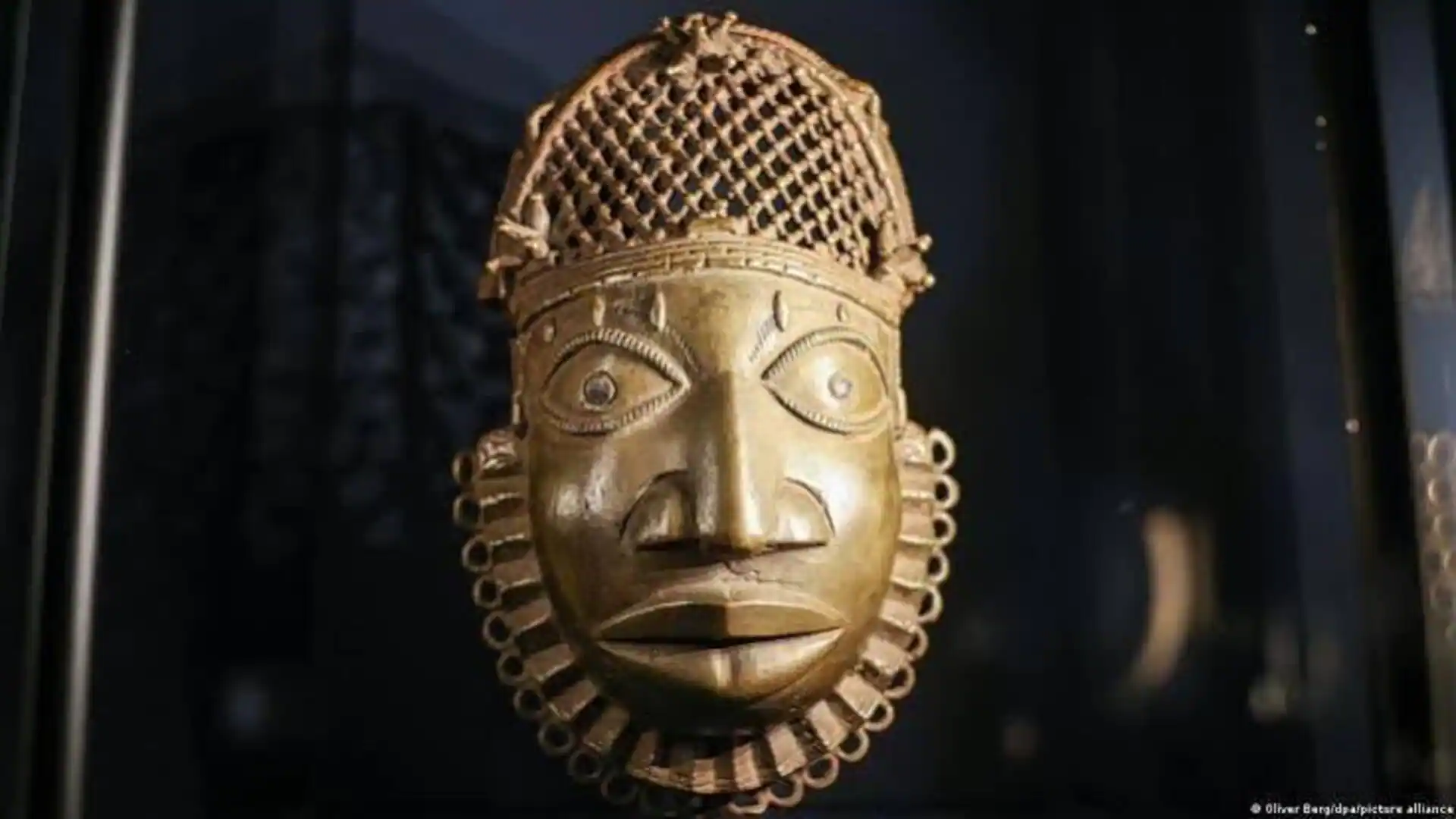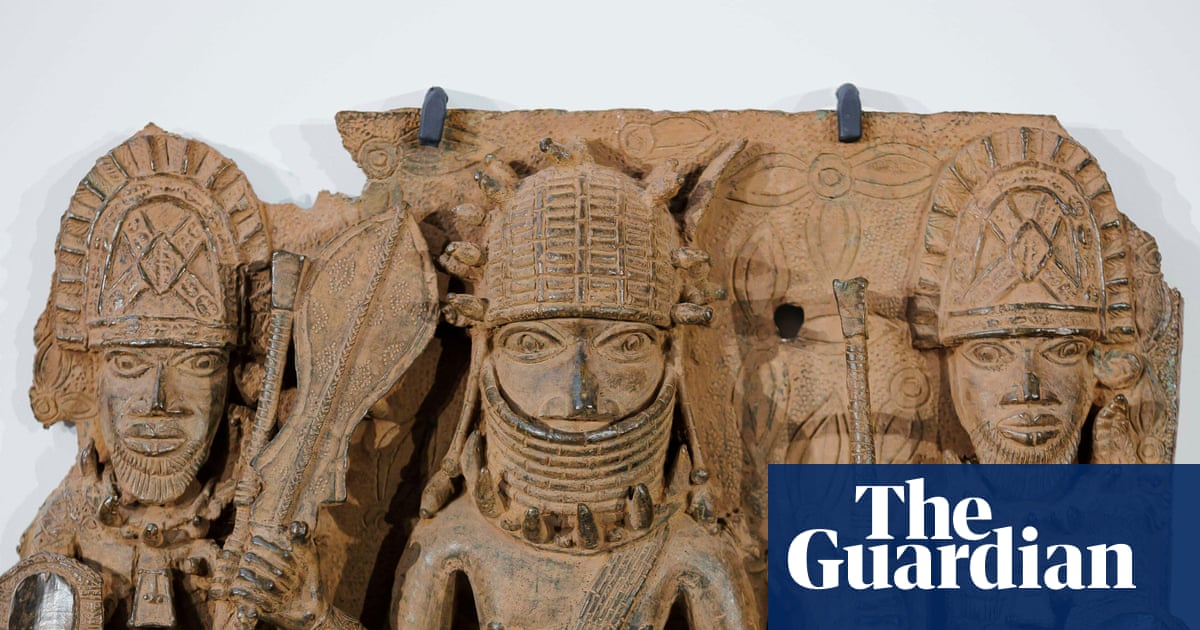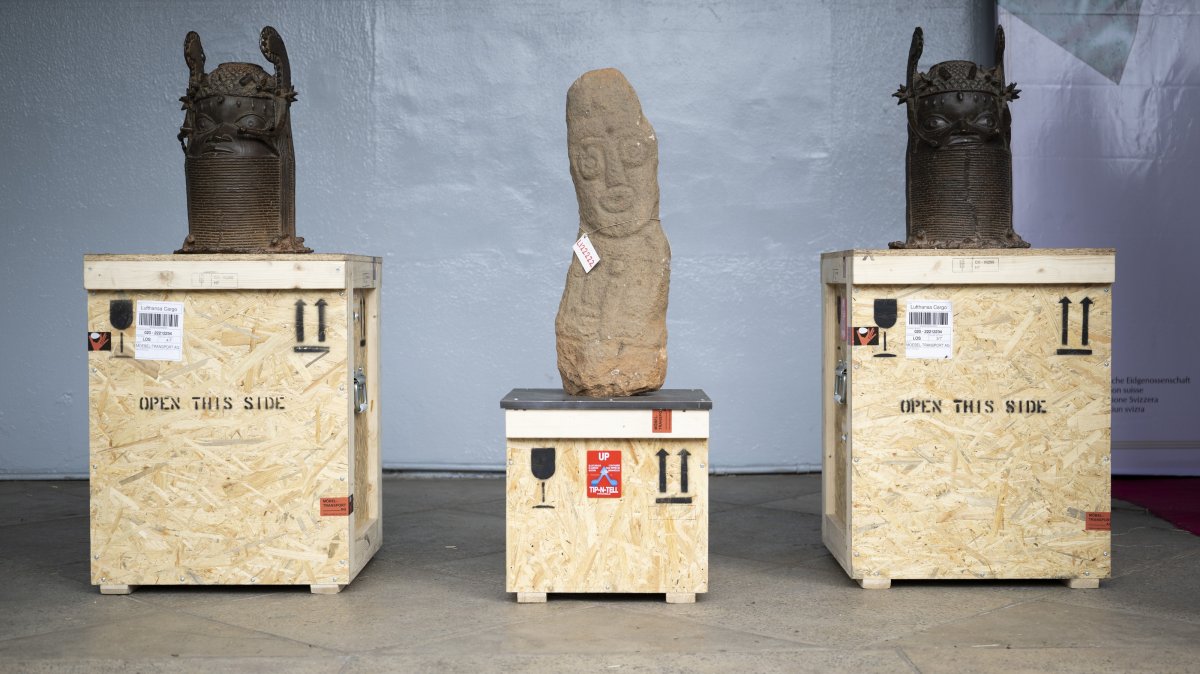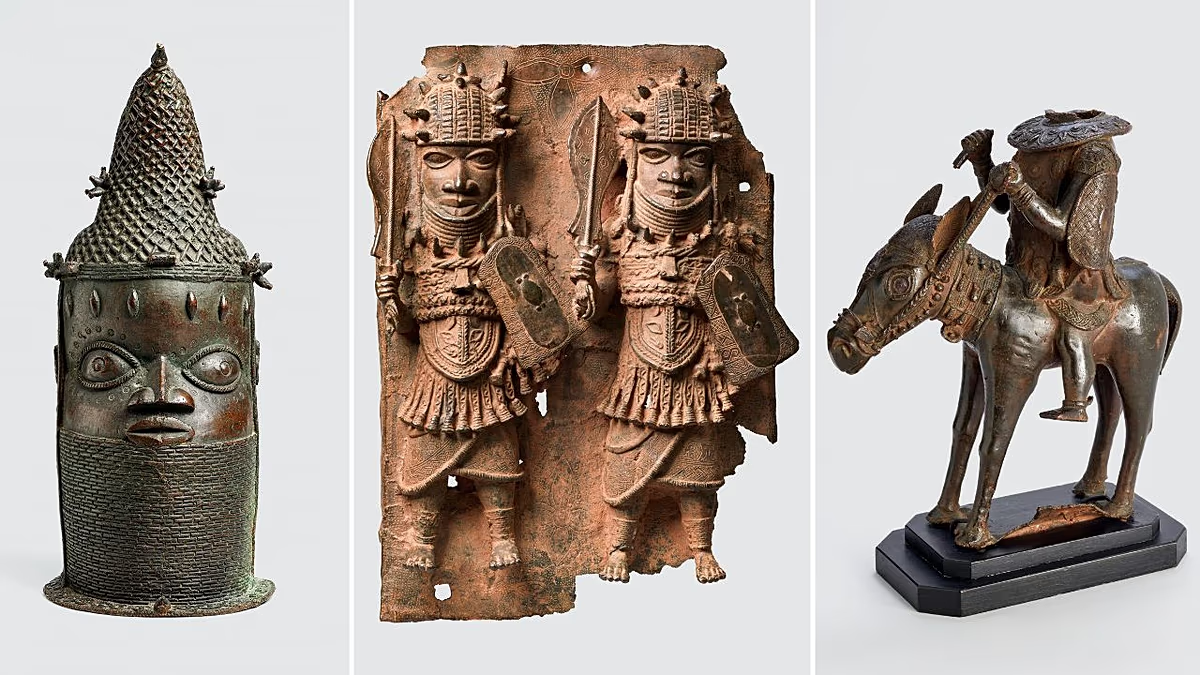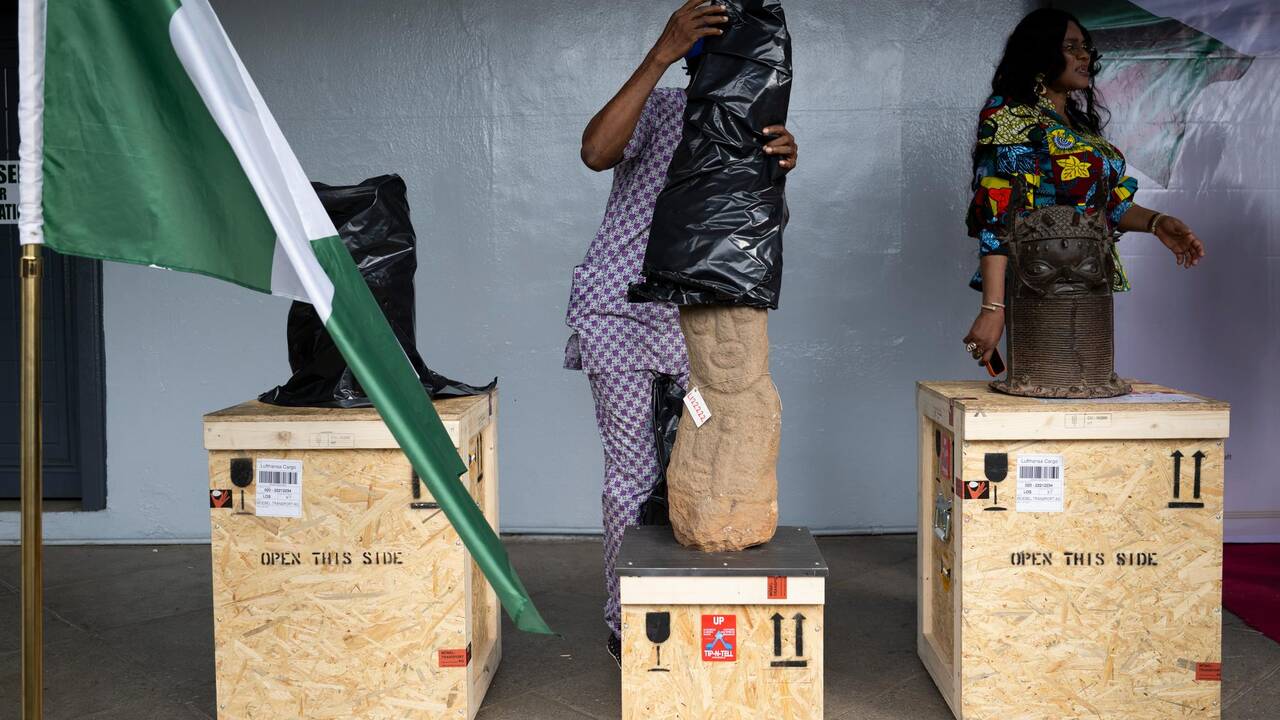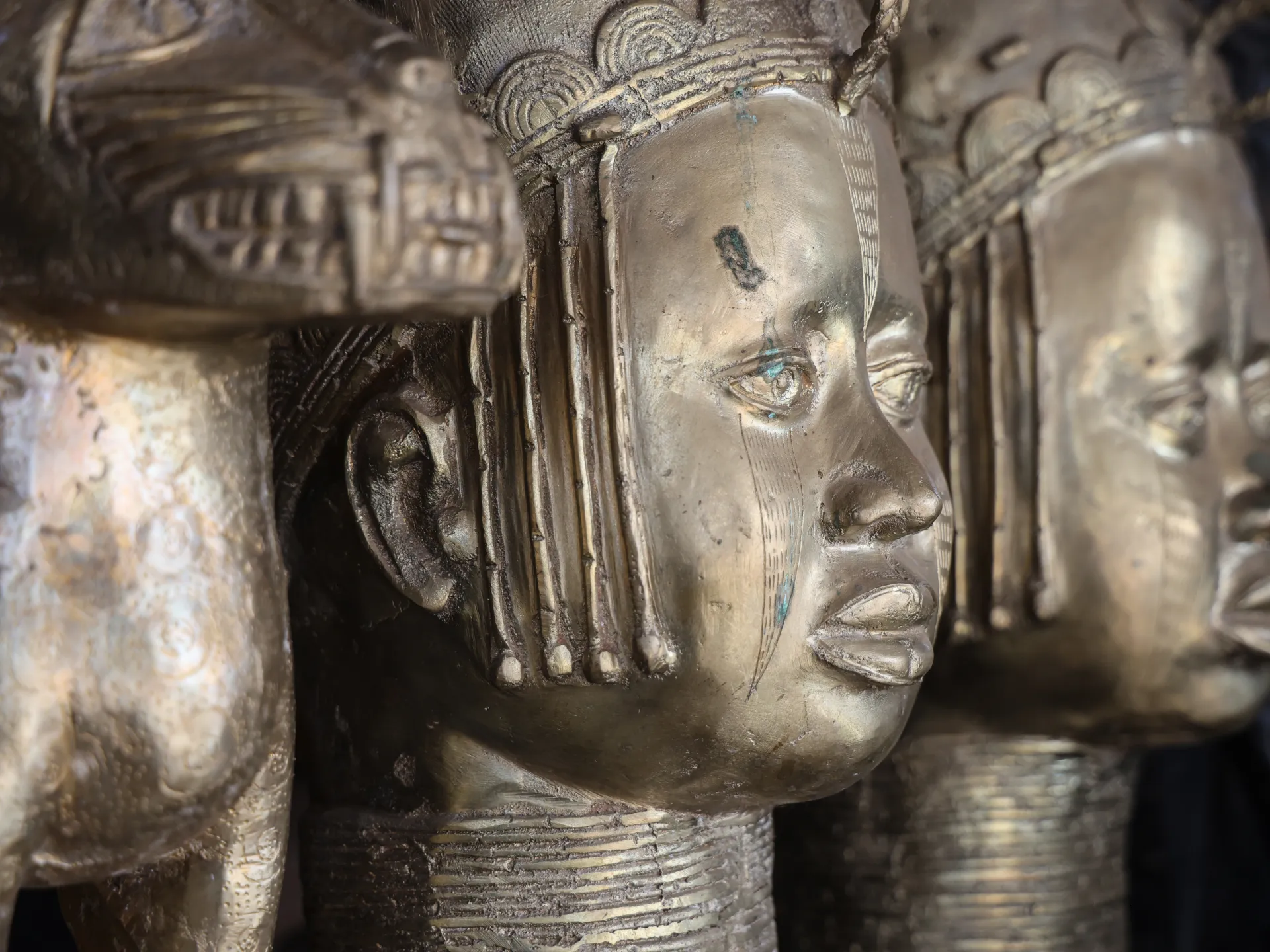
Nigeria's bronze legacyBehind the global restitution story, master artisans are fighting to keep a centuries-old craft alive.Bronze portrait heads are displayed in Benin City. Once created for the Royal Court, the Benin Bronzes have become symbols of one of Africa's most prominent restitution campaigns [Orji Sunday/Al Jazeera]Bronze portrait heads are displayed in Benin City. Once created for the Royal Court, the Benin Bronzes have become symbols of one of Africa's most prominent restitution campaigns [Orji Sunday/Al Jazeera]Published On 3 Jul 2026Benin City, Nigeria — In the back yard of a neighbourhood drinking bar, the clang of metal carries from a small bronze foundry. Swirling smoke rises from smouldering charcoal. A small crucible, half-full with molten bronze, sits atop orange-brown embers.Two workmen pour the liquid bronze into clay moulds buried in the sand using long metal tongs. “We are moulding the statue of a man, organ by organ,” says one of the workmen, nicknamed Double Chief. “When all the organs are cast, we will join them together to form the full stature of the man.”They perfect the facial features of a replica model. Slowly, with a metal blade, he brings the image to life, starting with the eyeballs. Then, he glazes over the nose, ears and lips.A crate of beer sits in a corner in the workshop, brought over from the bar. Between work, the men exchange jokes and tease one another, pausing only briefly before returning to the hot metal. Around them, bottles, their contents sipped to the last drop, and scattered tools bear witness to long days in the forge.The scene reflects a craft deeply woven into everyday life on Igun Street, in the southern Nigerian city of Benin, the historic home of the Benin bronze-casting tradition. The men working in foundries like this one are heirs to that tradition.Known as Double Chief, an artisan refines a bronze sculpture in his workshop on Igun Street, where each piece passes through multiple stages before its final polish [Orji Sunday/Al Jazeera]Known as Double Chief, an artisan refines a bronze sculpture in his workshop on Igun Street, where each piece passes through multiple stages before its final polish [Orji Sunday/Al Jazeera]The Benin Bronzes are a broad term used for the carved ivory, wooden works, metal sculptures and plaques looted by British troops during the Punitive Expedition in 1897.Scholars estimate that more than 5,000 artefacts were stolen, some of which were gifted to Queen Victoria, others sold in auctions, held in private galleries or donated to museums across Europe and elsewhere.The call to return the art, which began in the 1930s, intensified in the recent decade, inspired by growing pressure, repatriation activism and the relentless effort of the Benin Dialogue Group, a multilateral stakeholders' group.As momentum built at the peak of the homecoming of these arts, Igun Street unexpectedly found itself in the global spotlight. Diplomats, state officials, museum curators and researchers began arriving in numbers local artisans say they had never witnessed before.A crucible of molten bronze rests above charcoal embers before artisans pour the metal into clay moulds using long iron tongs [Orji Sunday/Al Jazeera]This noon, Double Chief's voice brims with pride as he points to a recently completed sculpture resting on a wooden bench. The bronze figure, a man in a suit and tie, had received its final polish only that morning after months of work.Yet for many bronze casters, the attention has done little to solve underlying concerns."We are struggling to keep the industry alive," says Oriakhi Osazee, who sits on a wooden stool at the entrance of a store in Igun. A sculptor whose mediums are clay, fibre, brass and bronze, Osazee has been in the craft for more than 35 years. He speaks with depth and conviction, drawing from vivid dates and past events to reinforce his ideas.Efforts to recruit apprentices have stalled, he says. Young people, on whom the future of the craft depends, are increasingly leaving in search of what he calls "quick money" in other professions, cities and countries.When their ancestors began, he recalls, their craft extended beyond bronze casting. There were, among the Iguns, men who had a gift in ivory carving. Long before the global ban on ivory trade was made official, that layer of art, without heirs and hope of continuity, had died.For Agbonmwenre Alex, the subject of heirship within the craft is a matter of personal pain.Alex, who was taking a tour of his workshop, began learning the craft at the age of eight under the guidance of his father. He started with errands and light tasks before progressing to kneading clay pottery. Over time, he learned every stage of the casting process, from preparing moulds to the final polishing of finished works.Today, he is the only one of his father's seven sons who remains in the profession. But uncertainty now hangs over the next generation."I would like my sons to take after me," Alex says. "Unfortunately, I started exposing them to this craft so late. They literally see this work as outdated, archaic, and dying. The zeal, the love for the job, is dead."
‘If it dies, it’s on you’: Saving Nigeria’s Benin bronze casting
Behind the global restitution story, master artisans are fighting to keep a centuries-old craft alive.
3,963 words~18 min read