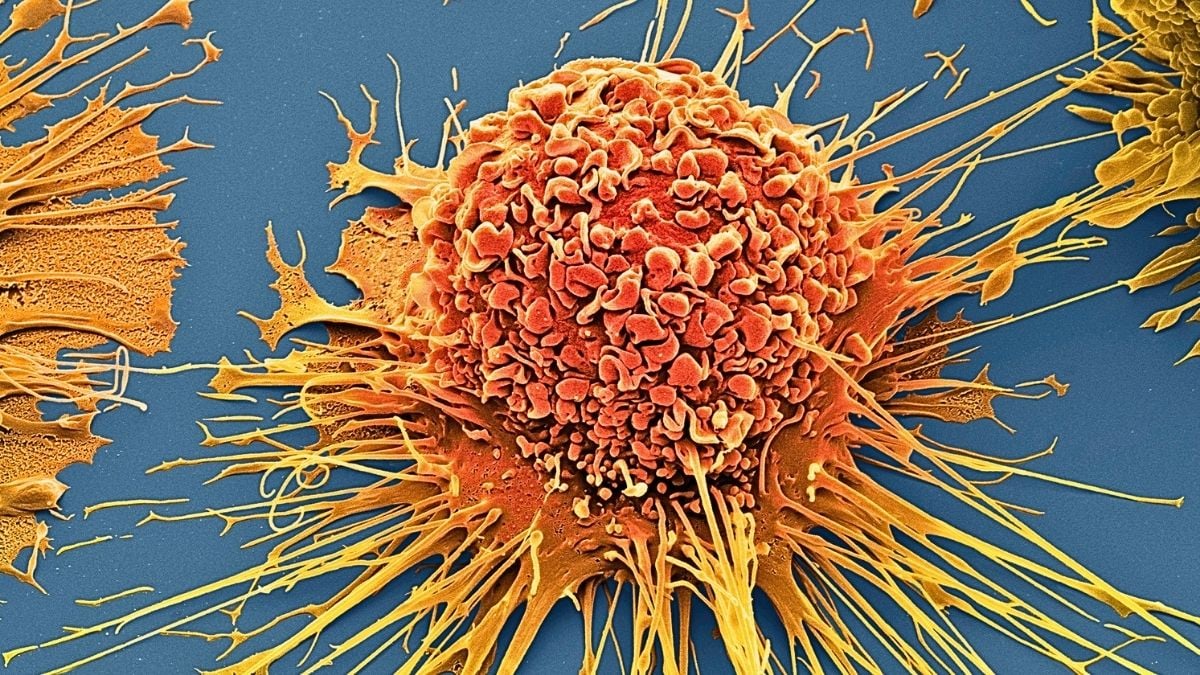
Researchers at the Indian Institute of Science have found that low-frequency ultrasound can selectively kill oral cancer cells while leaving healthy cells largely unharmed, a result that could point to a less invasive treatment option for one of India’s most common cancers, reports TOI.The study was carried out by IISc researchers in collaboration with clinicians from MS Ramaiah Medical College and Hospitals. It used tumour samples taken directly from patients, which gave the team a more realistic picture of oral cancer seen in Indian patients than standard lab-grown cancer cell lines.What the study foundThe researchers found that oral cancer cells were especially vulnerable to the moderate mechanical forces created by ultrasound.According to IISc, this may be linked to lower levels of Tropomyosin 2.1 in cancer cells. The protein helps normal cells sense and withstand mechanical stress. When ultrasound was applied, the cancer cells underwent selective death, while healthy oral epithelial cells were largely unaffected.That distinction is important because most current cancer treatments, including surgery, chemotherapy and radiotherapy, can also damage healthy tissue.Why it mattersOral cancer remains a major public health challenge in India, largely because of tobacco and arecanut use.Existing treatments can work, but they often bring strong side-effects because they are not always able to separate cancer cells from healthy ones. The IISc study suggests ultrasound may offer a way to target the tumour more precisely, using mechanical force rather than heat or drugs.Ajay Tijore, assistant professor in IISc’s department of bioengineering and the corresponding author of the study, said the key idea was to exploit the mechanical weakness of cancer cells. He said the approach uses moderate forces to damage cancer cells beyond their ability to recover.Effects beyond cell deathThe study also looked at how ultrasound affected cancer cell movement.Researchers found that it reduced the ability of cancer cells to migrate and invade nearby tissue. In a three-dimensional co-culture model that mimicked the tumour environment, ultrasound also disrupted the dense protective barrier around tumour cells, which can otherwise block medicines and immune cells from reaching the tumour.That could matter for treatment, because tumours often become harder to attack when they build strong protective structures around themselves.Consistent response across patientsOne of the more promising findings was the consistency of the response across samples from multiple patients.Rashmita Luha, a PhD student at IISc and the first author of the study, said the cancer cells from different patients and stages were highly vulnerable to ultrasound, while normal cells were much less affected.That kind of repeatable result is often what researchers look for when assessing whether an idea has real treatment potential.What comes nextThe team believes the findings could eventually lead to safer and more targeted therapies, especially because ultrasound is already widely used in medicine and is non-invasive.The next step is to test the method in more advanced preclinical models. The researchers also want to see whether ultrasound can work better when combined with existing treatments, particularly to improve drug delivery and overall outcomes.For now, the study does not mean a new treatment is ready for patients. But it does suggest that a common medical technology may have a new role to play in cancer care. If the results hold up in larger tests, the approach could also be explored for other accessible cancers such as breast and skin cancer.
Less invasive oral cancer treatment: New IISc Bengaluru study finds ultrasound selectively kills tumor cells while sparing healthy ones
New IISc Bengaluru study: Researchers at the Indian Institute of Science have found that low-frequency ultrasound can selectively kill oral cancer cells while leaving healthy cells largely unharmed. The study, conducted with clinicians at MS Ramaiah Medical College and Hospitals, could help pave the way for less invasive and more targeted treatments for one of Indias most common cancers.
549 words~2 min read