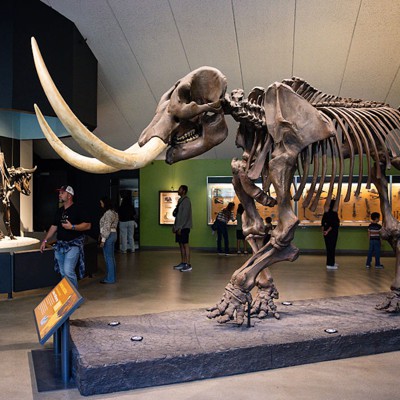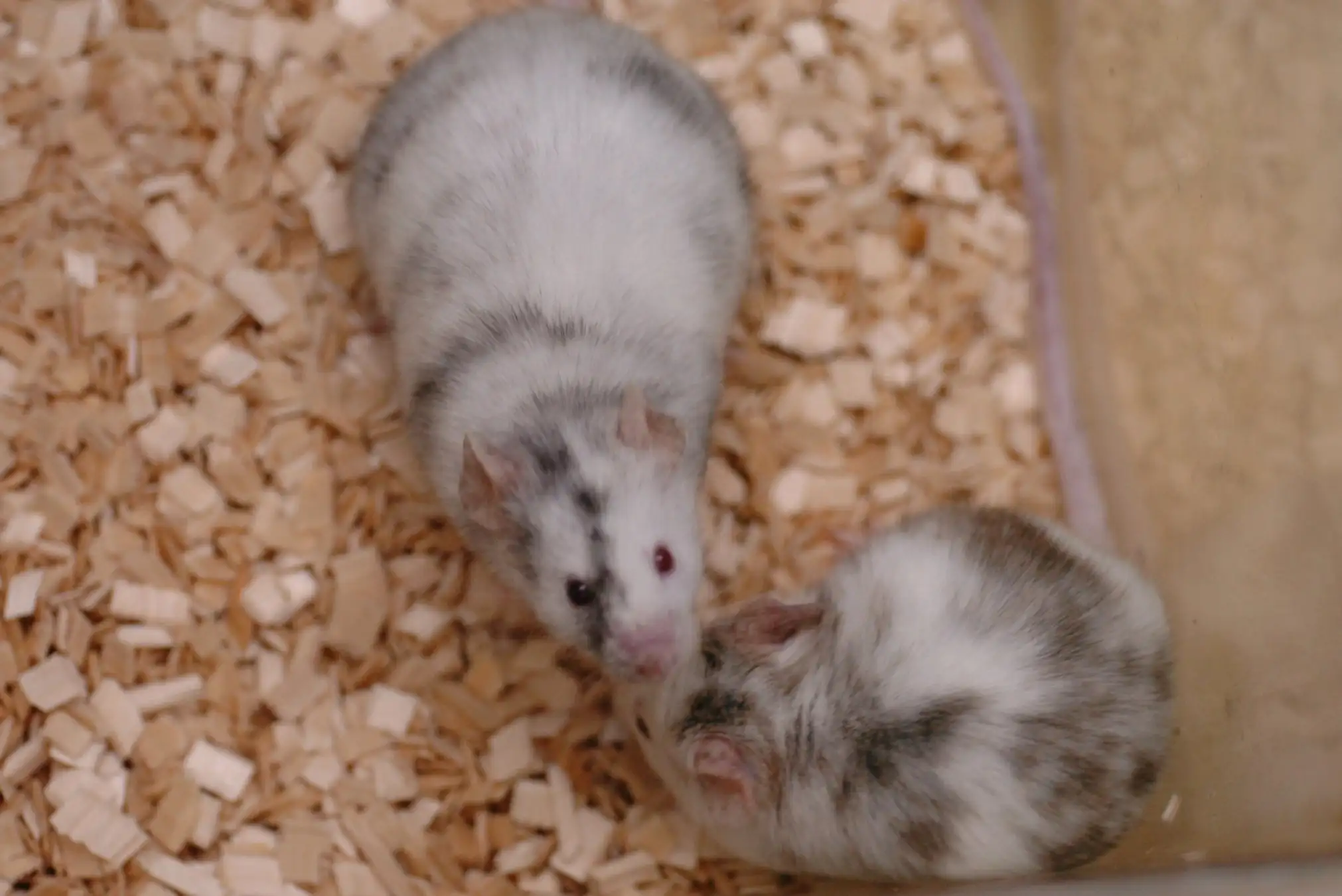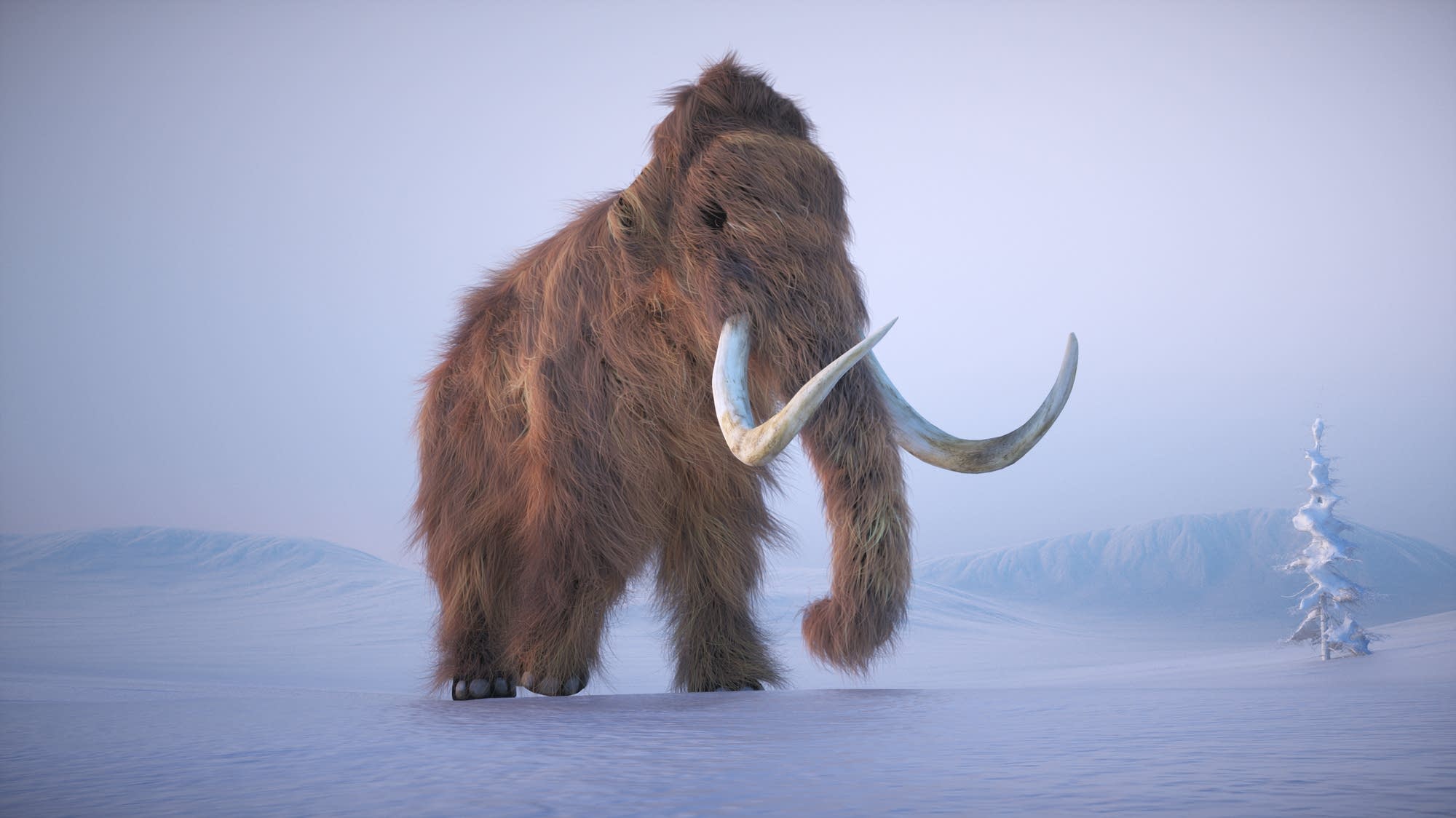
This story originally aired June 25, 2026 on the Marketplace podcast “How We Survive.”Inside a small glass cage, two mice, Chip and Dale, are running around. They’ve got a little wooden house to play in, a water bottle — pretty much your typical mouse habitat. But these are not typical mice; they’re kind of fluffy, with shaggy, golden hair.Ben Lamm, CEO of Colossal Biosciences, said they “are our woolly mice.” The company claims that by using tiny bits of woolly mammoth DNA, preserved over thousands of years, they can use gene editing to bring the giant creature back. But they have to start small. Hence, Chip and Dale are sort of a proof-of-concept.“We identified core genes in the mammoth genome that relate to hair thickness, color, density, how it grows, and whatnot, and we applied all of those into the mouse-equivalent of them,” Lamm explained.Eventually, the company plans to edit genes in an Asian elephant, the mammoth’s closest living relative, to create a modern-day mammoth.Jacquelyn Gill, a paleo-ecologist at the University of Maine studying ice age ecosystems and mammoths, said “the reality is that only mammoths get to decide what mammoths are. And they're not here to tell us anymore.”But Gill is deeply skeptical of breeding a genetically-modified elephant and calling it a mammoth. “There's this whole constellation of unanswered questions about viability. Can we actually make a mammoth-y elephant that's mammoth-y enough? Impact: will it do the things we think? And then ethics: is this an okay thing to do?” she added.Colossal Biosciences has been valued at more than $10 billion. Backers include In-Q-Tel, the investing arm of the CIA. Lamm said that investment could spur advances in human and animal healthcare and protecting endangered species. “I think it's unethical not to do what we're doing,” he added. “I don't think that that human-caused climate events are going to slow down. So, I do think it's important that we have mitigation strategies against that, which includes de-extinction tools.”The company is also working with Dubai’s Museum of the Future to create a biovault for endangered species — a place to store genetic material so no animal ever has to go the way of the mammoth.
Gene editing technology can help de-extinct some animals — but should it?
Amy Scott, host of the podcast "How We Survive," reports on a company that's working on de-extinction innovation to try and bring back, for example, the woolly mammoth or the dodo.
365 words~2 min read