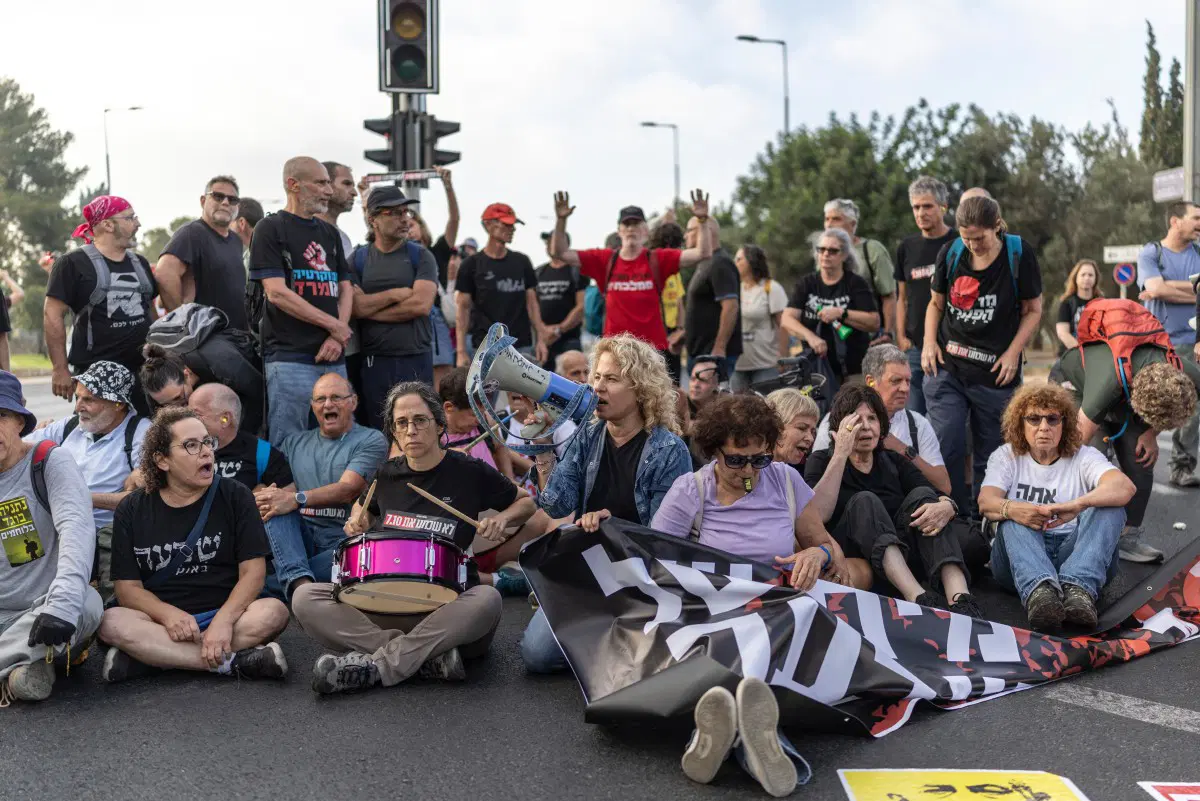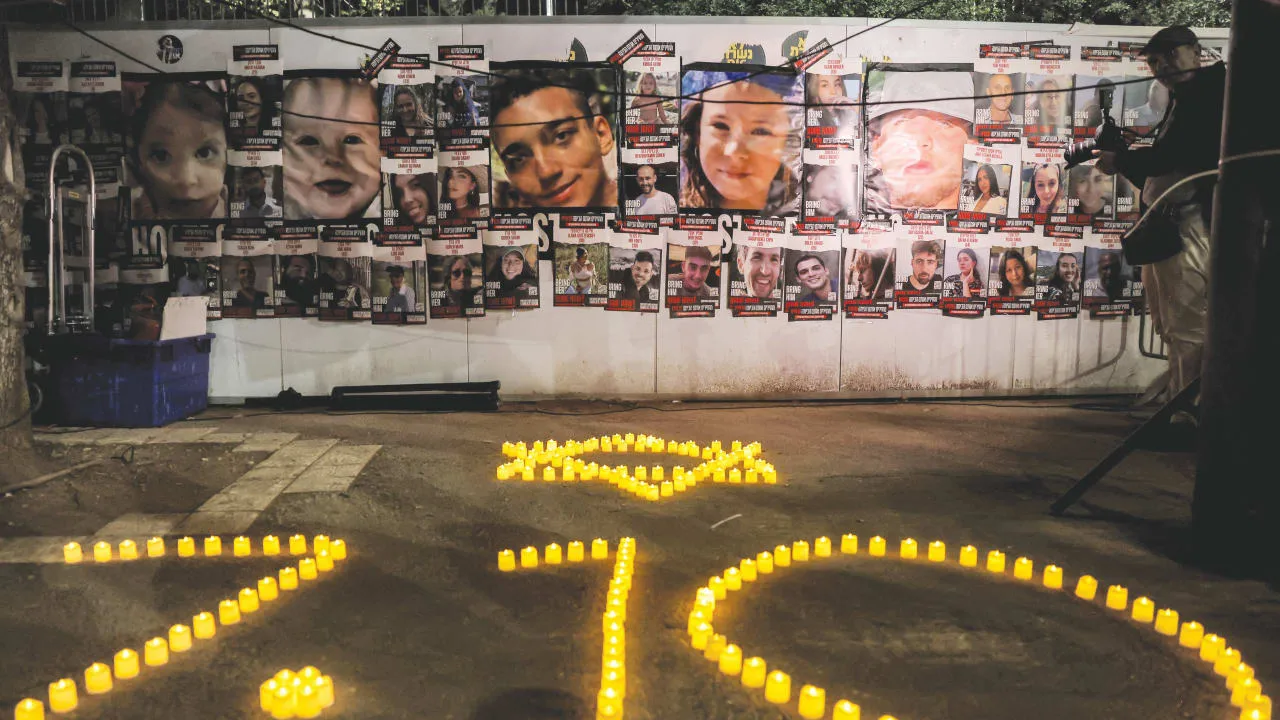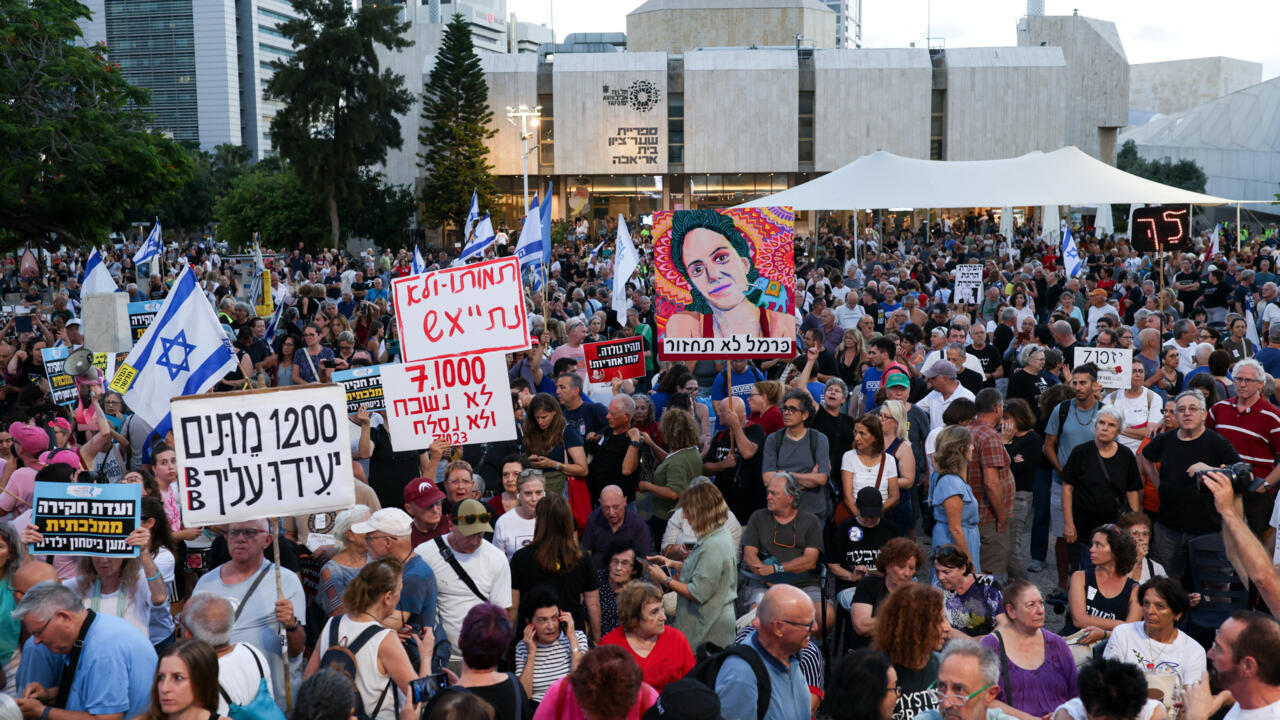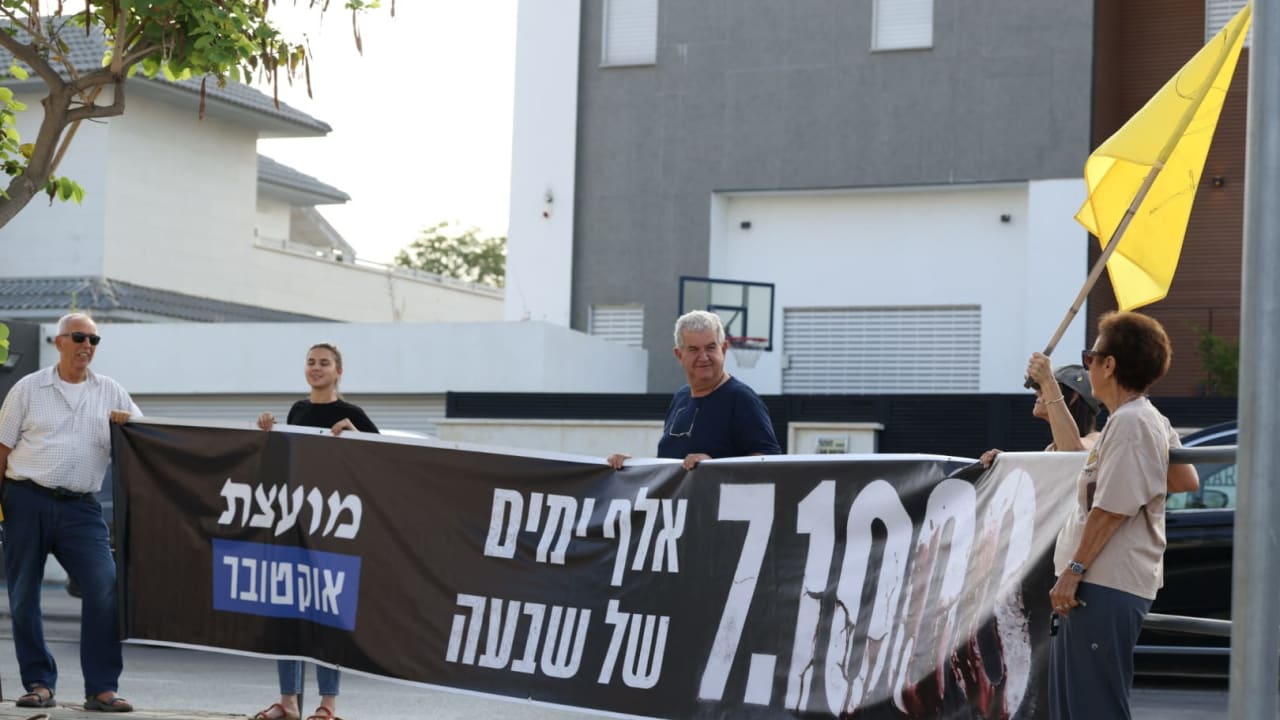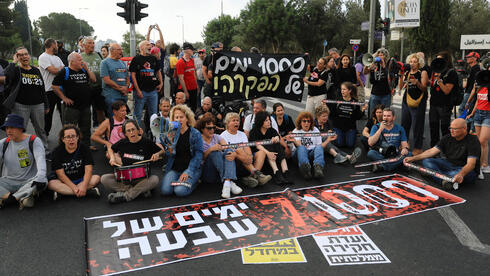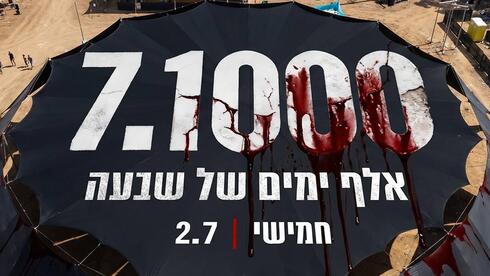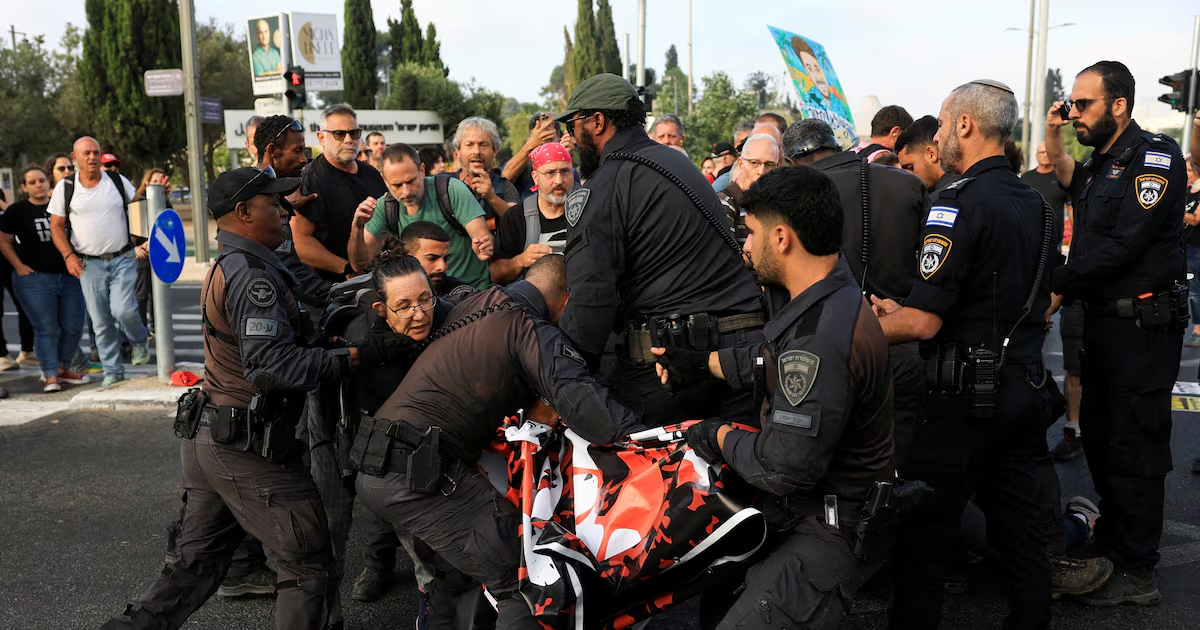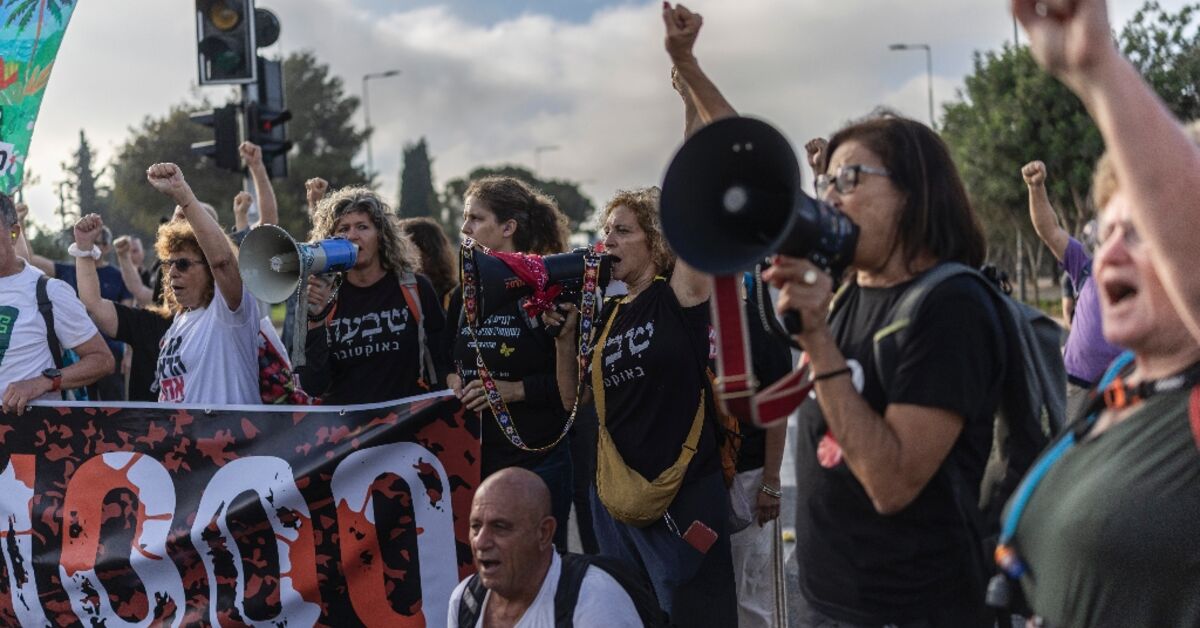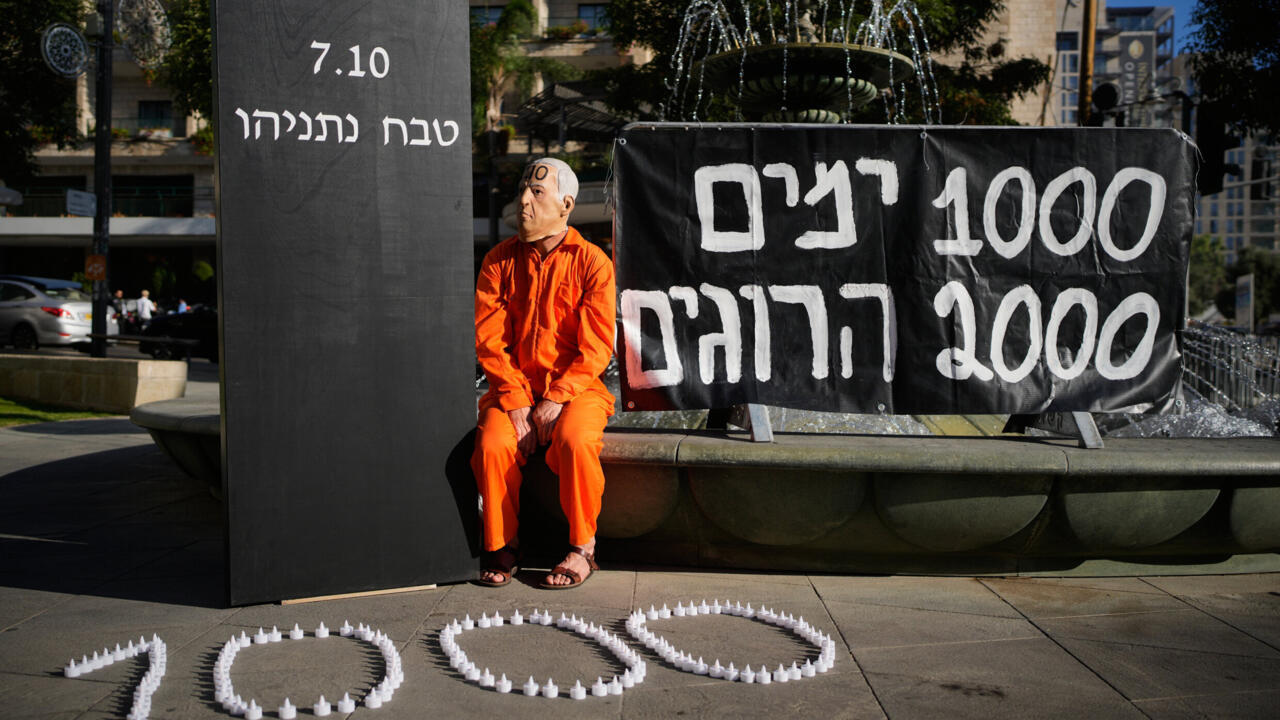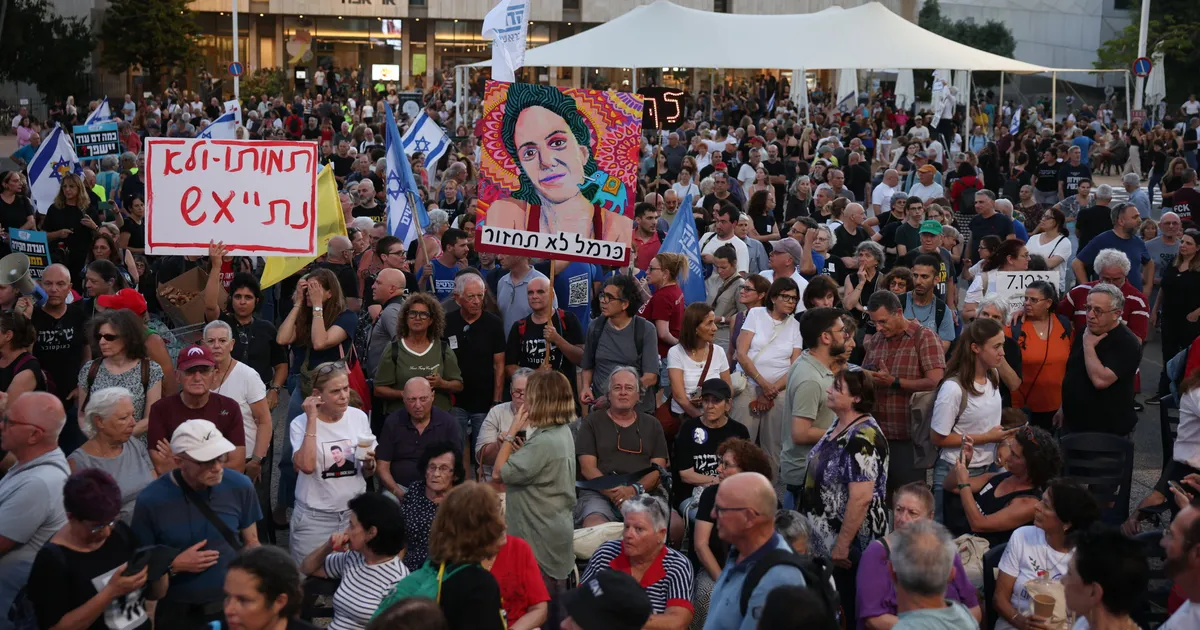
At protest marking 1,000 days of war, images that seemingly belonged to the past were displayed, but for the families of those killed and the hostages, October 2023 never ended. Meanwhile, members of the government continued to make cruel statementsAt noon, dozens of protesters stood near Tel Aviv's Kirya, the Defense Ministry complex, holding photos of the hostages killed on October 7. These images have been absent since October's cease-fire with Hamas. But on Thursday, 1,000 days after the massacre, protesters displayed them at several sites across the country. The regular crowd, those who attended the weekly protests for the hostages, stood with the families of the victims and survivors, calling together for a state commission of inquiry to investigate the failures of the government on the day of Hamas' attack, which left almost 1,200 dead and 251 hostages taken to the Gaza Strip. Among the protesters was Yifat Zailer, whose cousin Shiri Bibas was kidnapped and murdered along with her two sons. She held a small, homemade sign with photos of Shiri, her sons Kfir and Ariel, and her parents Margit and Yossi Silverman, who were also killed. The sign read, "A wonderful term" – a reference to Simcha Rothman's description of the government's term during which the massacre and the war occurred. Since October 7, the government and its head did everything they could to shirk responsibility, to thwart a thorough investigation into the failures that led to the massacre and to obscure the truth. These efforts peaked in recent days with a series of infuriating statements. Diaspora Affairs Minister Amichai Chikli said that his most searing memory from the evening of October 7 was the sight of a sign at the Kirya that read "Chief of Staff's Adviser on Gender Affairs." Finance Minister Bezalel Smotrich claimed that the hostages were released thanks to him. And finally, when Prime Minister Benjamin Netanyahu was asked how he had changed since October 7, he quipped: "I lost a little weight." In the big picture, the 1000th day since the massacre has no special meaning. But against the government's attempts to rewrite reality, this civic date carries great weight. The roads around the Gaza Strip were deserted in the morning, and military traffic on them had thinned. Civilian traffic also decreased, and the convoy of the October Council, the protest group calling for a state commission of inquiry that organized the protest events, was particularly small. The Re'im parking lot, which has become a memorial for victims of the Nova festival massacre. Credit: Eliahu HershkowitzThe Re'im parking lot, which has become a memorial for victims of the Nova festival massacre. Credit: Eliahu HershkowitzOn the concrete blocks and fences lining the infamous Route 232 – known in Israel as the "path of death" – fresh graffiti read "Hamas still controls Gaza" and "War of Revival my ass" – the latter referring to Netanyahu's rebranding of the war. Handwritten graffiti elsewhere cried out against Qatar, Turkey and a still-nuclear Iran. "After three years, we returned home to Kibbutz Sufa," said Nissan Kalderon, a massacre survivor and brother of Ofer Kalderon, who was abducted with his children to Gaza, as he stood at the top of the observation post hill. "As if nothing happened here. The enemy remains beyond the fence. Those responsible for the massacre still haven't taken responsibility. And the cover-up continues daily. I call on all residents of the country: Even if your views differ from mine, open your eyes. The next massacre could happen anywhere." A vigil marking 1,000 days since the October 7 massacre, outside the Kirya in Tel Aviv, Thursday. Credit: Moti MilrodA vigil marking 1,000 days since the October 7 massacre, outside the Kirya in Tel Aviv, Thursday. Credit: Moti MilrodAt the Kirya's Begin Gate, activists from the Women's Protest for the Return of the Hostages gathered in the morning. For them, October 2023 never ended. "We returned to the kibbutz, and we still don't know what caused the disaster on October 7 and how to prevent the next one," said Esther Buchshtab, mother of Yagev Buchshtab, who was killed in Hamas captivity. "The government, instead of investigating and preventing the next disaster, is busy with inappropriate legislation that doesn't care for all its citizens but rather preserves a corrupt, exploitative and extortionist coalition. We learned the hard way." "Today we understand that it's our responsibility to do everything to change the face of the country," she said. "In my grief and pain, I'm not seeking revenge. I'm seeking hope. Hope for my family, for the people around me, for Israeli society." Later, a group of about 50 protesters descended onto the Ayalon Highway. The police didn't take long to respond – aggressively. Within minutes, a police officer broke signpoles and confiscated megaphones. Chief Superintendent Avi Ofer, deputy commander of the Lev Tel Aviv police station, shouted to his officers, "I want more arrests," and police arrested eight for blocking the road. The eight were released in the evening. Protesters on the Ayalon Highway on Thursday. Credit: Moti MilrodProtesters on the Ayalon Highway on Thursday. Credit: Moti MilrodMeanwhile, women of the Mishmeret 101 protest movement returned to Begin Gate. "For me, the most severe terror is what I experience from those who were supposed to protect my family and me," said Ofri Bibas, Yarden's sister. "Statements by the prime minister and cabinet ministers, as heard again last week, aren't just outrageous. They're the worst kind of psychological terror." "Harm comes no longer from a video by a terrorist organization with clear intentions but precisely from those who, by virtue of their position, should do well by us all," she noted. "Only an independent and impartial state commission of inquiry can bring us the truth," Thousands attended the rally at Hostage Square, which has seen larger crowds. The July heat and the decrease in protests made it difficult to draw the public out of their homes. But the real test will be in October, before the elections, at the civic memorial ceremony, which will be held without crowd restrictions, and at a planned rally by the October Council. Demonstrators marching toward Hostage Square in Tel Aviv on Thursday. Credit: Moti MilrodDemonstrators marching toward Hostage Square in Tel Aviv on Thursday. Credit: Moti Milrod"I'm not here to mark the time passed since the massacre. I'm here to mark how long we've been abandoned since the massacre," said Shir Matthias, who lost her parents Shahar and Shlomi, on stage. "I'm here to point to a government that disgraces our dead. A government that ignores our suffering and makes jokes at our expense." The rally began with a video screening that showed clips from Netanyahu's interview on "Patriots" against a backdrop of images from October 7. "Do you want to know what hell is? I'll describe one day of hell to you," Netanyahu's voice echoed in the square. The crowd responded with boos. Netanyahu's ridiculous statement that he and his family had gone "through hell" brought back memories of the real path of hell that ran between the Sha'ar Hanegev junction and Kibbutz Re'im. The protest where Netanyahu's remarks on Channel 14 were shown, in Tel Aviv on Thursday. Credit: Moti MilrodThe protest where Netanyahu's remarks on Channel 14 were shown, in Tel Aviv on Thursday. Credit: Moti MilrodHe was so out of touch that Netanyahu didn't say a single word to mark the 1000th day of the massacre. Neither words of praise nor words of comfort. Instead, he settled for posting a video of himself visiting Lebanon on X and favorable Channel 14 polls. Government members also continued their callous behavior toward those who had lost everything. Instead of participating in a ceremony or at least marking the occasion on social media, Defense Minister Israel Katz chose to host a group of government supporters active on X in his office. MK Almog Cohen, who fought on October 7, said, "The radical left is campaigning today to mark 1,000 days since the October 7 massacre." He said he remembers every day that "on that morning, you stayed in your homes and didn't go out to help anyone." Heritage Minister Amichay Eliyahu joined the attack against the former IDF hostage chief, Maj. Gen. (res.) Nitzan Alon, who was dubbed "the hostages' bulletproof vest." Eliyahu said that Alon, who criticized those who sold the public illusions of absolute victory, "is to blame for people being abducted." He claimed: "People were murdered because of Nitzan Alon, because of the approach that put Hamas on the fence." Without a shred of shame, Eliyahu turned to Nitzan and his "gang" and demanded, "Go apologize."
1,000 days after Oct.7, Israeli public keeps stepping up while politicians don't
At protest marking 1,000 days of war, images that seemingly belonged to the past were displayed, but for the families of those killed and the hostages, October 2023 never ended. Meanwhile, members of the government continued to make cruel statements
1,438 words~7 min read