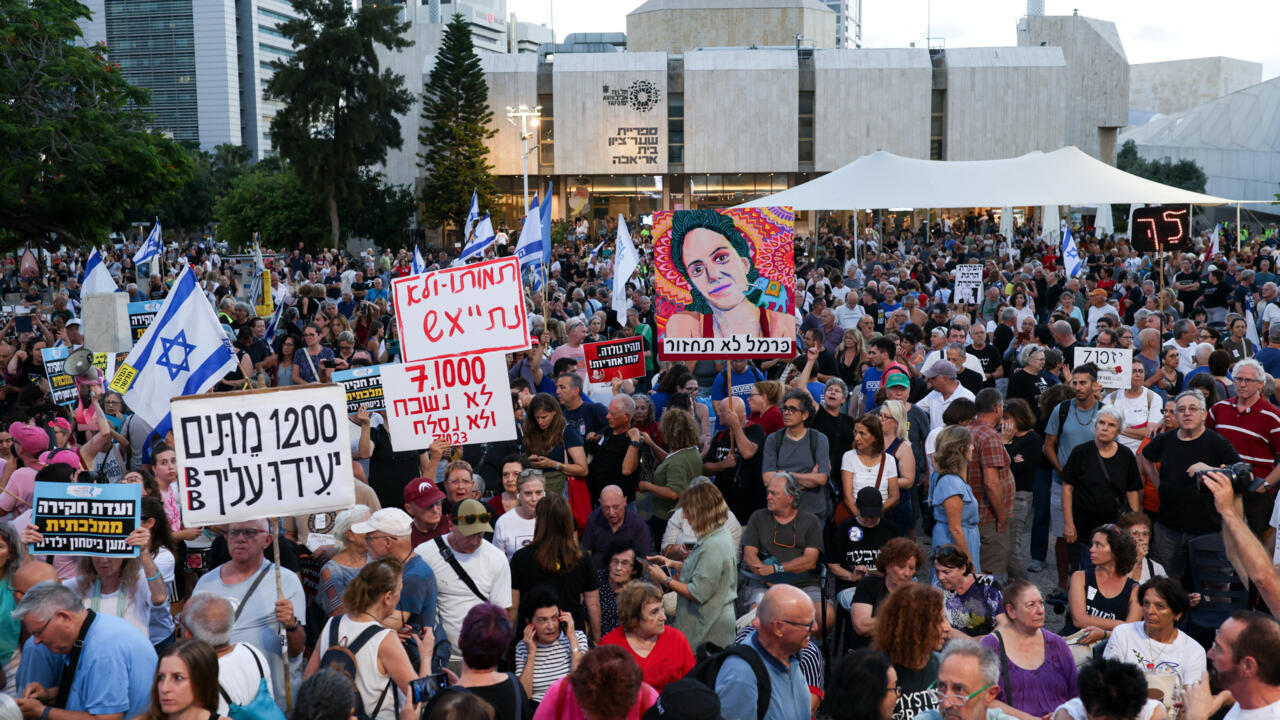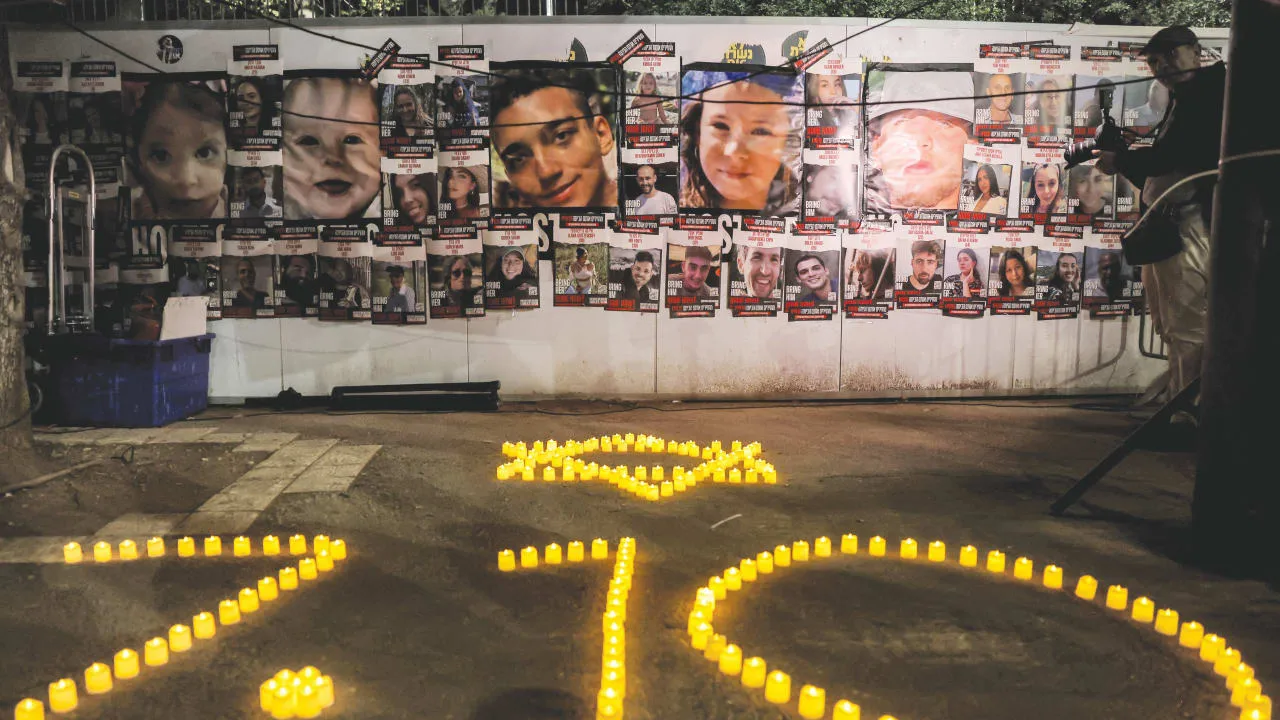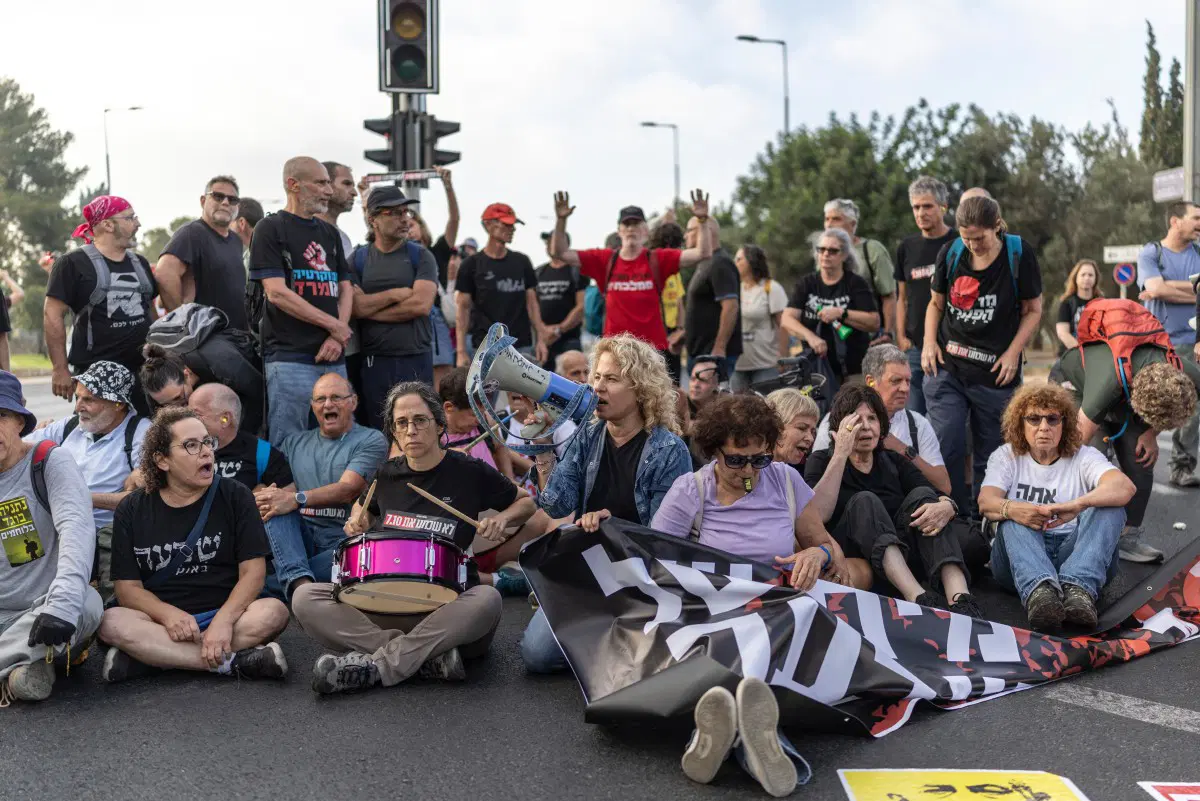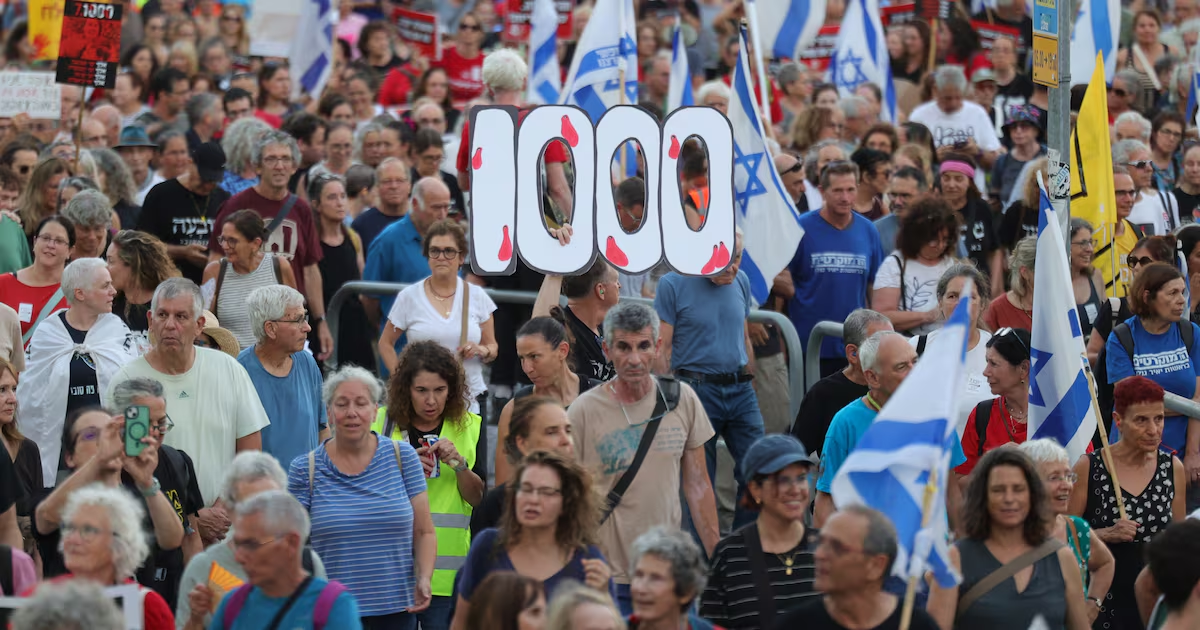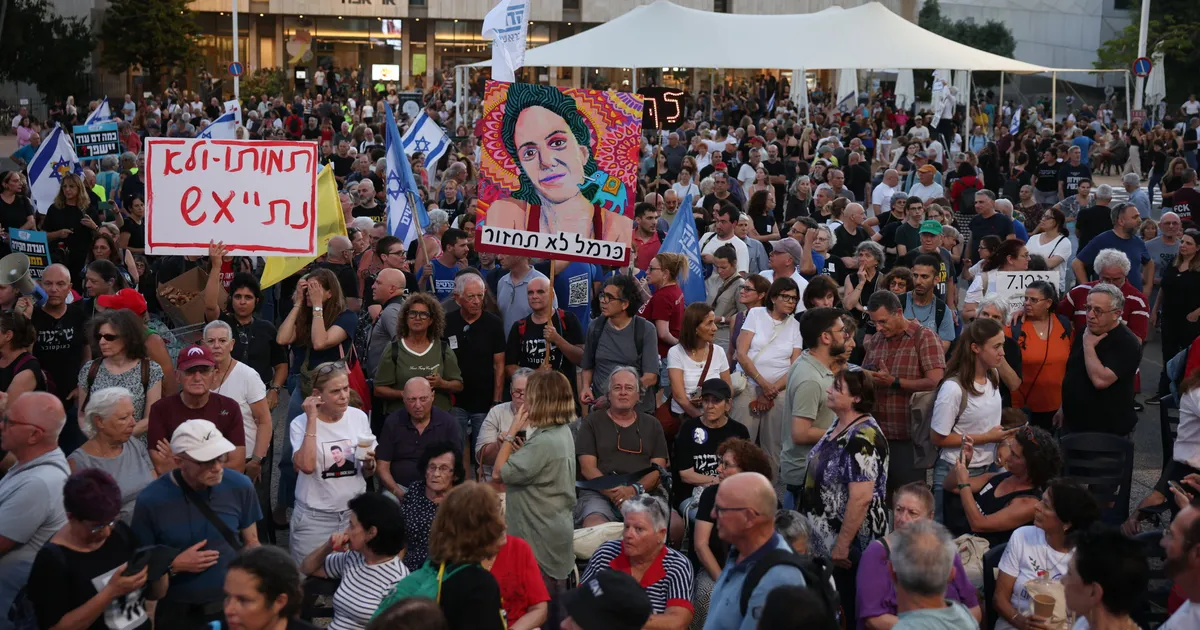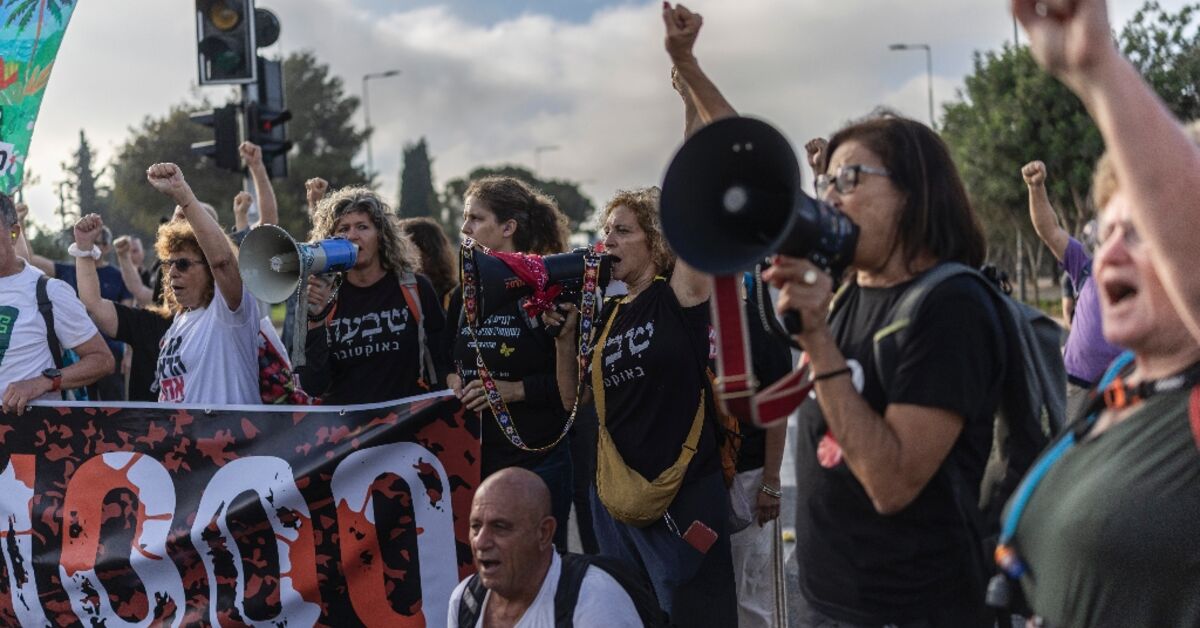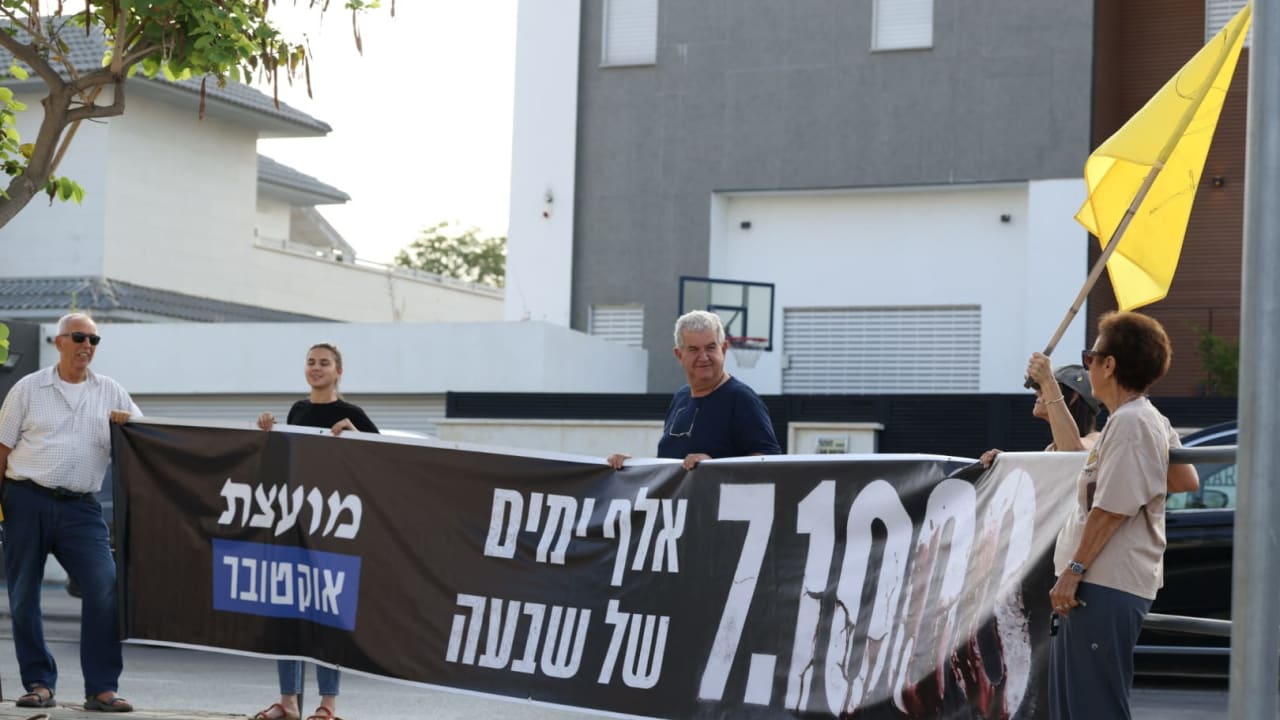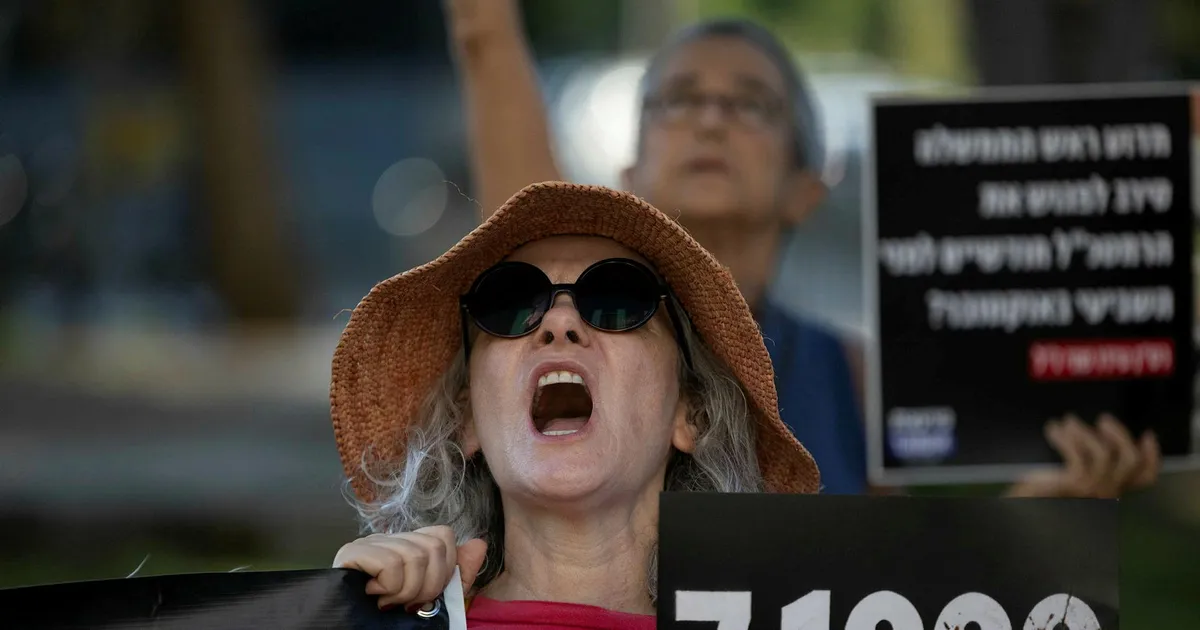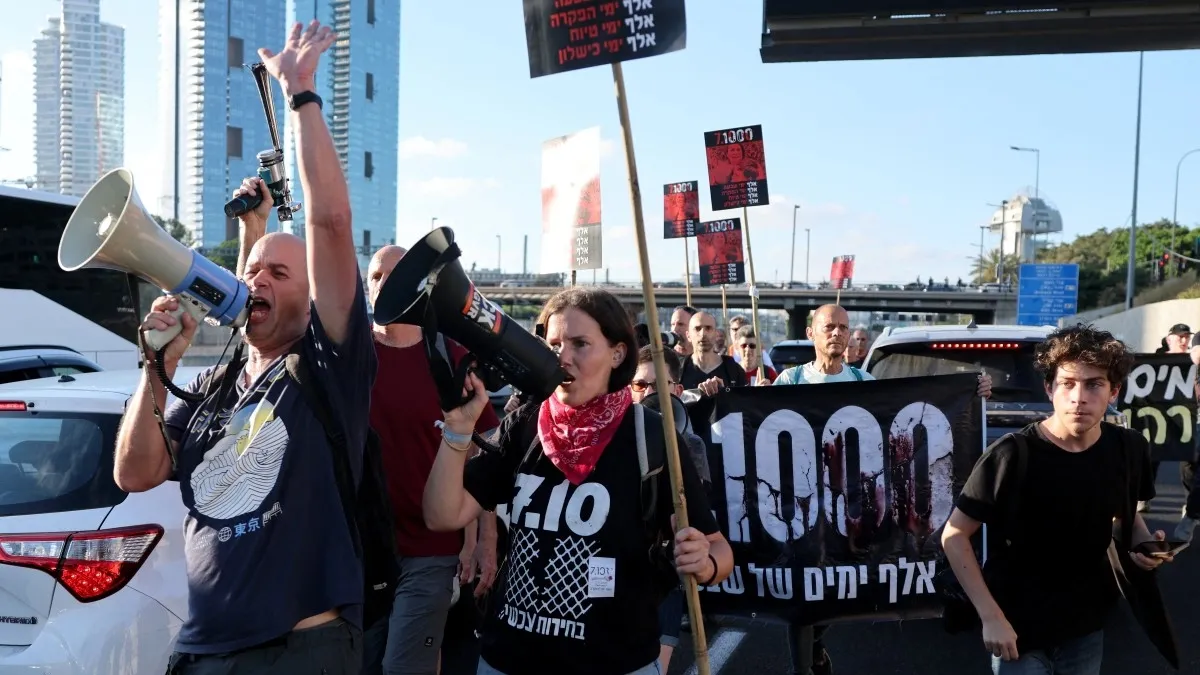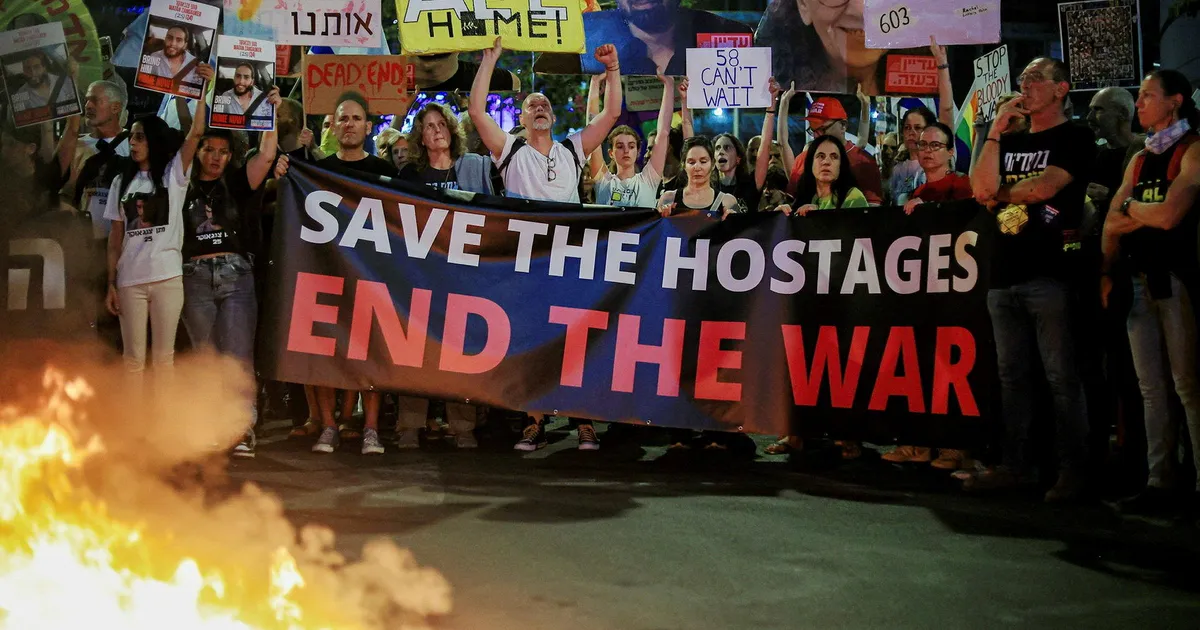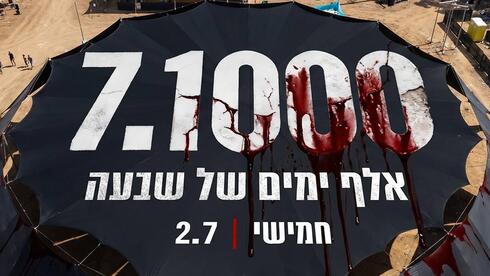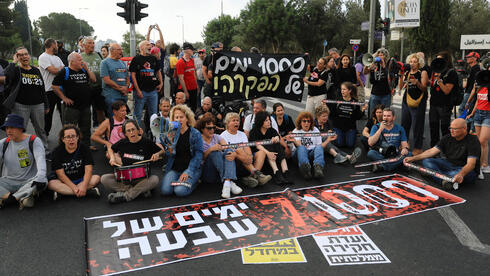
Families of victims, survivors and former hostages demand inquiry as memorials and demonstrations highlight grief and angerIsrael marked 1,000 days since the October 7 massacre on Thursday with memorials, protests and testimony from bereaved families, massacre survivors and former hostages, many of whom accused the government of abandoning citizens and refusing to take responsibility for the disaster.At 10 a.m., a moment of silence was held at Hostages Square in Tel Aviv in memory of those murdered and killed since the Hamas-led assault on southern Israel. Crowds stood in silence, after which an eight-minute video was released featuring survivors of the massacres in communities near the Gaza border and at the Nova music festival recounting, minute by minute, the horrors of that morning.GalleryIsrael marked 1,000 days since the October 7 massacre (Photo: October Council)“At 6:30, it all began, a crazy ‘red alert’ in the city,” said Karin Kleinberg from Sderot. Miriam Yehoshua from Nir Yitzhak recalled getting out of bed and running to the safe room. Sharon Weisberg, who survived the Nova festival, said the music stopped and the DJ told people to lie on the ground. “Guys, there are terrorists in Sderot. I hear bursts of gunfire,” said Ofir Maman. Baruch Cohen from Magen said “more than 40 terrorists began cutting the fences,” while Perach Philo from Be’eri recalled a message in a community group saying, “Where is the army? They’re murdering my mother.”At noon, the “1,000 Memories” exhibition opened at Beit Ariela Library in Tel Aviv, near Hostages Square. The exhibition displays dozens of personal items belonging to victims of the October 7 massacre, fallen soldiers and hostages.Among the items on display for the first time are the “prisoner cards” of captivity survivors Arbel Yehud, Ariel Cunio and Rom Braslavski. Other items include the bicycle of Ariel Bibas, the uniform of paramedic Amit Mann, and berets belonging to surveillance soldiers Noa Price and Roni Eshel.Protest in Paris Square in Jerusalem marking 1,000 days since the October 7 massacre (Photo: Yossi Ron)At Hostages Square, families also presented memorial installations, including the yellow container from the Nova festival and a display simulating a tunnel where hostages were held in Gaza. Bereaved families, massacre survivors and former hostages were scheduled to hold discussion circles at the site throughout the day.Across the country, protests were held at major intersections and outside government sites, including near the Prime Minister’s Residence in Jerusalem, where demonstrators gathered in Paris Square. A display at the site read: “1,000 days, 2,000 dead.”Esther Buchshtab, mother of Yagev Buchshtab, who was abducted and murdered in Hamas captivity, said the demand for a state commission of inquiry would not be abandoned.“One thousand days have passed since the abandonment began,” she said. “Military pressure did not save hostages, it harmed them. But the government continued on its path and failed to see the people who were there. We, who lived through the massacre and experience its devastation and loss every single day, will neither forget nor give up on the demand for a state commission of inquiry.”Installation for the ‘1,000th Day’ at Hostages Square (Photo: Moti Kimchi)Danny Elgarat, brother of Itzik Elgarat, who was murdered in Hamas captivity and whose body was returned to Israel, spoke at a rally outside IDF Headquarters in Tel Aviv.“For a thousand days I’ve heard over and over again people saying, ‘The hostages have returned.’ Not all of them have returned,” he said. “Those who came back alive returned. Those who were kidnapped alive, abandoned in captivity, murdered and brought back in a coffin did not return. My brother Itzik did not return. Itzik was kidnapped alive and could have come back alive, but he was abandoned to die. And what came back to us was not my brother. What came back was a body, and no one will ever be able to blur that truth.”Elgarat said the trauma of October 7 did not end that morning. “One thousand days since October 7, 2023. One thousand days since the October Holocaust. One thousand days since the skies fell on the State of Israel. Since children, parents, grandparents, soldiers and civilians woke up to a morning in which the state did not come. It did not come to protect. It did not come in time,” he said.At Re’im, families of victims gathered at the site of the Nova music festival massacre. Yoram Yehudai, whose son Ron was murdered at the festival, said the families had been unable to begin healing because they were still fighting for answers.Memorial ceremony at the Re’im parking lot (Photo: AP Photo/Leo Correa)“One thousand days in which the heart bleeds,” Yehudai told ynet. “There is no time for healing or rehabilitation because we have to fight for a state commission of inquiry, for the truth, for justice. I am here at the Nova parking lot, the pastoral place where my beloved son Ron lost his life, because he was abandoned.”Yehudai said many victims could have been saved. “No one had to die that day,” he said. “Every case here is a tragedy of its own. What happened with the children in the container, what happened with my son Ron, happened around noon. That was a lot of time to send forces and rescue civilians, children in distress inside the territory of the State of Israel. This tragedy gives me no rest. We were surprised in the morning, but by noon there was a lot that could have been done, and it was not done. That is abandonment. My Ron could have been alive today.”Asked about Prime Minister Benjamin Netanyahu’s recent remark about losing weight when asked what had changed since October 7, Yehudai called it “disgraceful.”“It is arrogance. It is contempt for the families and the citizens of the state,” he said. “Losing weight? Is that a joke? I have not laughed at jokes or told jokes for 1,000 days, and I expect the prime minister to act the same way. Instead of saying he takes responsibility for the massacre that happened on his watch and establishing a state commission of inquiry.”Protests in Tel Aviv (Photo: Ryan Preuss)Former hostage Omri Miran told Kan’s Reshet Bet that he did not see meaningful change in the country’s leadership. “On the national level, we don’t see any change in how things are being handled. We haven’t learned that lesson. Military officers tell me first and foremost, ‘We’re sorry, and we’re ashamed.’ I don’t see that from our leadership,” he said.Miran also criticized Finance Minister Bezalel Smotrich, who said this week that he should be thanked for the return of hostages. Smotrich “should stop talking nonsense,” Miran said, adding that the minister had boasted about blocking hostage deals. “It is possible that more hostages who could have been with us today were murdered there.”Elad Or, whose brother Dror Or was murdered on October 7 and whose body was taken to Gaza, said Smotrich’s comments were part of a broader campaign against hostage families.“It is such a huge lie,” he said. “It is part of the campaign the government decided to wage against us after it realized the public does care about the hostages and its citizens, and that the public is with us. For political reasons, the government launched a campaign against us, at our expense, trying to smear us, as if the disaster we’ve endured wasn’t enough.”Protests in Jerusalem (Photo: REUTERS/Ronen Zvulun)He added: “The only thing we can do on this day is tell the public the truth: what happened, and the scale of the disaster, the failure and the abandonment for which they have never taken responsibility.”The central demand at many of Thursday’s protests was the establishment of a state commission of inquiry, Israel’s most powerful investigative body, to examine the failures before, during and after October 7. The government has opposed such a commission, arguing that a panel appointed by the Supreme Court would be biased against it, and has sought instead to form a government-appointed commission. Critics say the government is trying to avoid independent scrutiny and appoint its own investigators.Protests were also held at Ami’ad Junction, Kabri Junction, HaOgen Junction and outside the home of Education Minister Yoav Kisch. At Ami’ad, Danny Miran, father of captivity survivor Omri Miran, said: “This was not a war of revival. This was a war of blood. Smotrich did not bring back hostages. Fifty more hostages could have returned alive.”The day’s events reflected the scale of the losses Israel has endured since October 7: civilians and soldiers, children and elderly people, first responders and security personnel killed in the Hamas massacre, in the war in Gaza, in fighting against Hezbollah in Lebanon, in terror attacks, in attacks by the Houthis in Yemen and militias in Iraq, and in missile barrages during wars with Iran.For the families, the 1,000th day was not only a memorial milestone, but another day in a continuing struggle for answers, accountability and recognition of what was lost.
Israel marks 1,000 days since October 7 with mourning, protest and calls for accountability
Families of victims, survivors and former hostages demand inquiry as memorials and demonstrations highlight grief and anger
1,484 words~7 min read