Penguin Random House
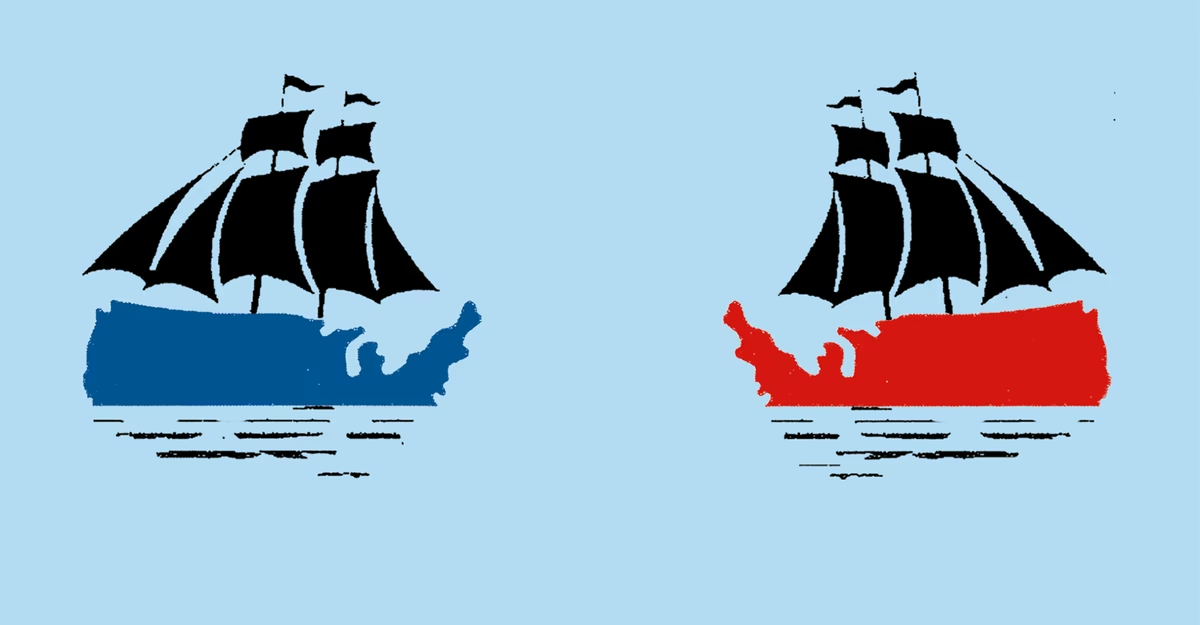
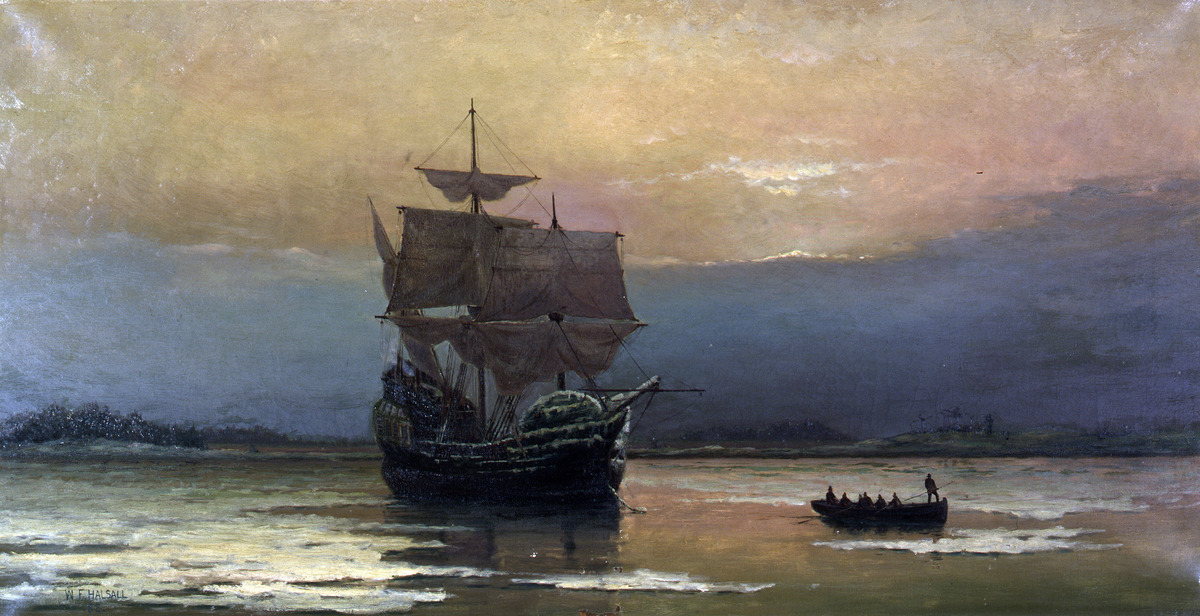
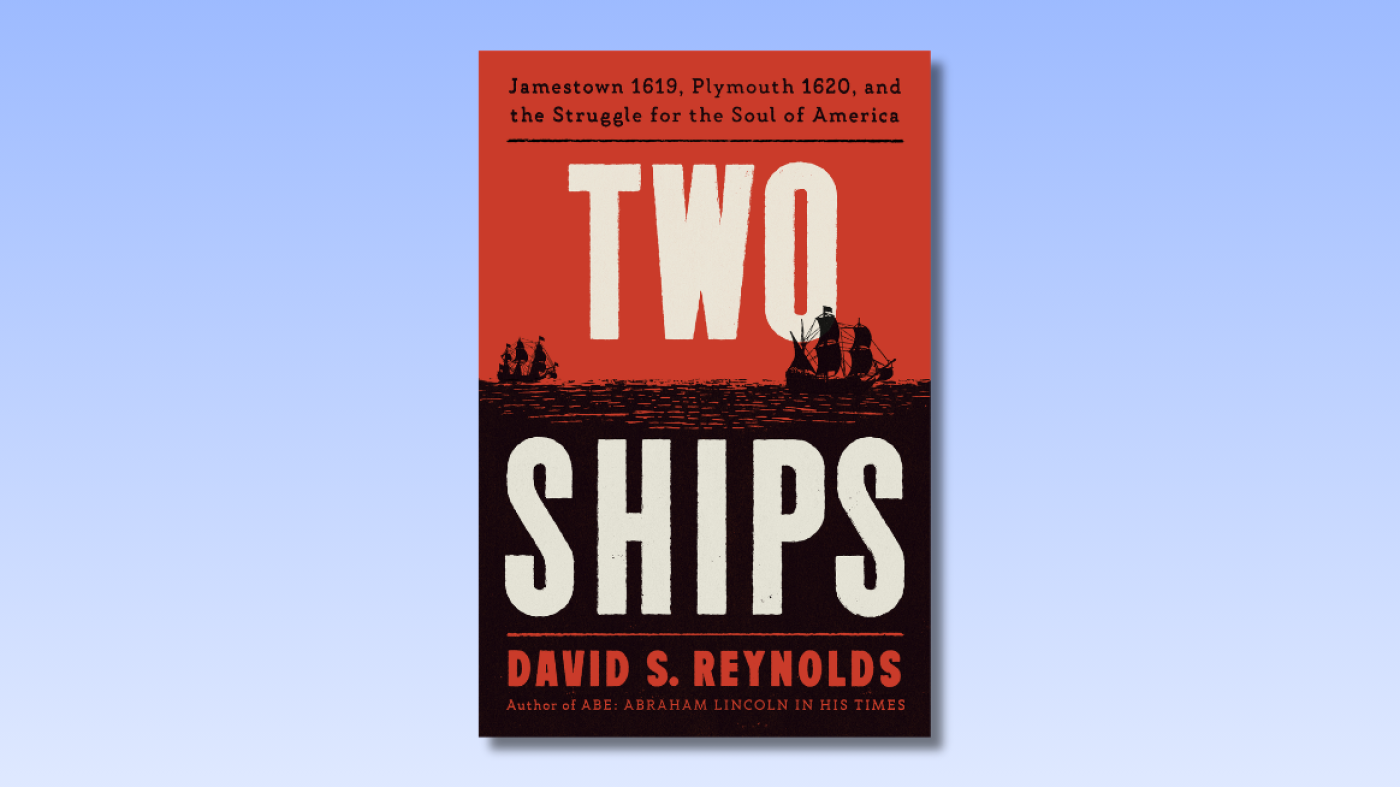
Just in time for a contentious 250th anniversary of the United States of America, historian David S. Reynolds' latest book, Two Ships, helps us realize that any country that couldn't agree on its own origin story is destined for divisive times. Two Ships is about the complicated, conjoined legacy of the landings of the Mayflower, which carried the Pilgrims to Plymouth, Mass., in 1620, and the White Lion, which arrived in Jamestown a year earlier, bringing the first enslaved Africans to Virginia. As Reynolds demonstrates, it's not so much the facts of these two voyages, as it is the meanings ascribed to them, that made them such a powerful metaphor for two conflicting visions of American identity.
To simplify, the Mayflower's passengers were separatist Puritans, dissenters to the reign of the English king, James I. As the United States developed, the Mayflower was credited with carrying the seeds of a radical democracy to the New World, one in which all men (in theory, at least) were equal before God. In contrast, the European settlers of Jamestown were Royalists, also known as Cavaliers. Loyal to the monarchy, they believed in a strict hierarchy.
But the meaning of the images of the two ships shifted depended on who was invoking them and when. Not surprisingly, the metaphor was deployed most vigorously during the Civil War. In abolitionist speeches and writings, the White Lion or the "Slave-Ship," as it was commonly called, was condemned for infecting America with the "plague-spot" of slavery. Reynolds says that Frederick Douglass resorted to the "two ships" metaphor frequently, while Lincoln avoided it, hoping to preserve a unified ship of state. Meanwhile, Southern descendants of Cavaliers invoked the Mayflower to emphasize the intolerance and "cruel, persecuting" character of the Puritans. In a comment that resonates for our own times, Reynolds says: It didn’t matter to the South that ... by the mid-nineteenth century, the North had become a kaleidoscope of religious denominations, ..., few of which resembled the faith of the Plymouth colonists. Distortion is intrinsic to cultural memory, especially when amplified by sectional or political bias. For Southerners, the Mayflower had brought Puritanism, which had yielded fanatical movements like abolitionism, now a dire threat to the Union.