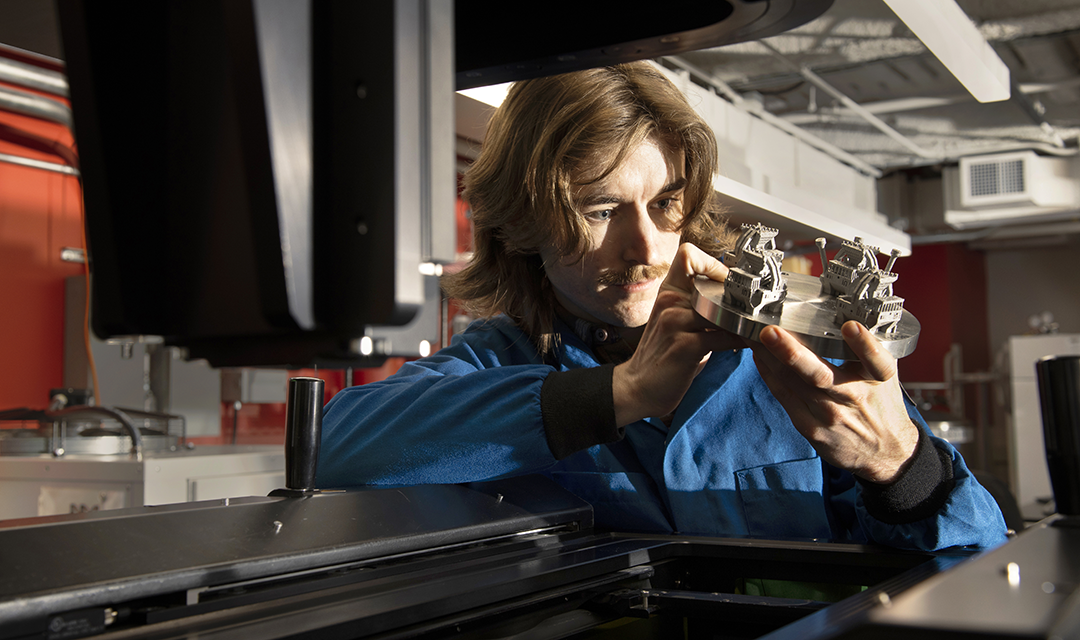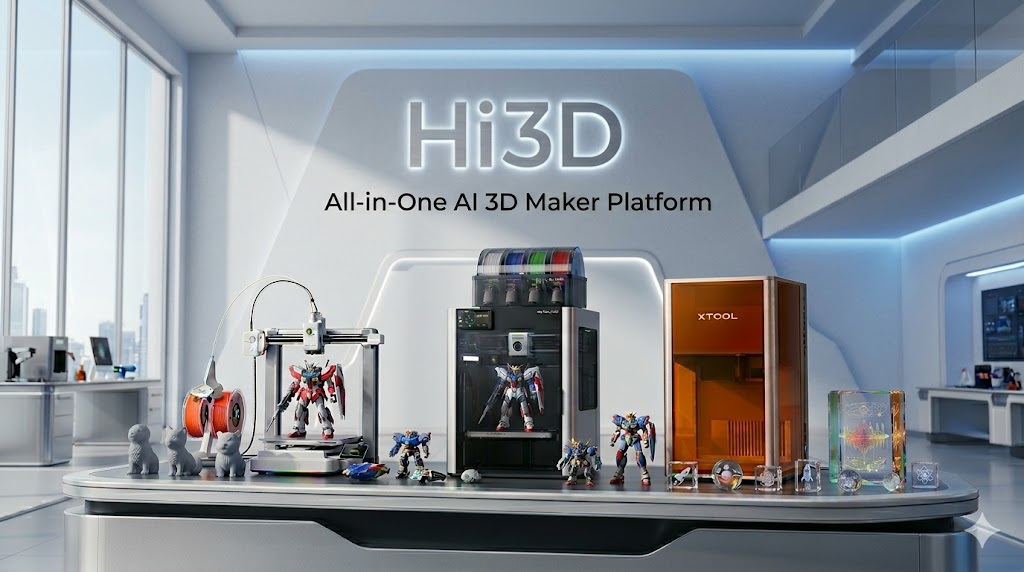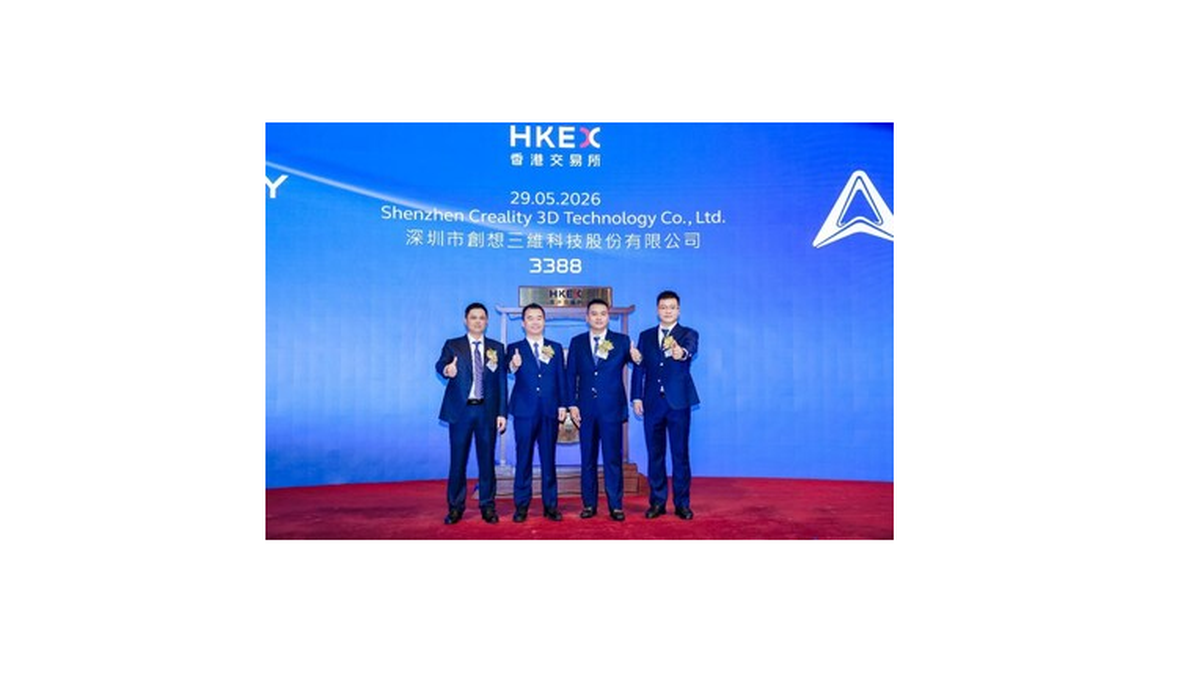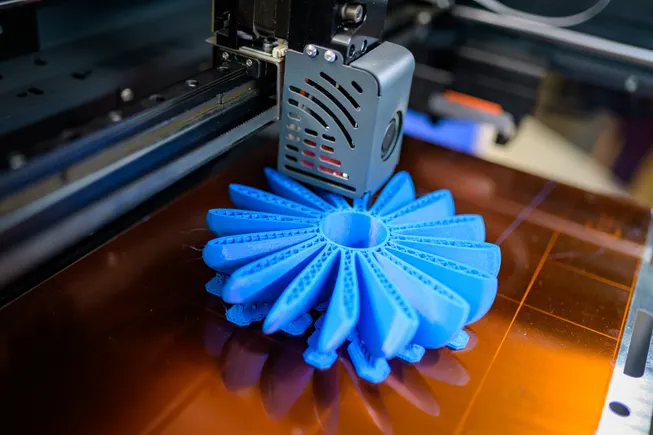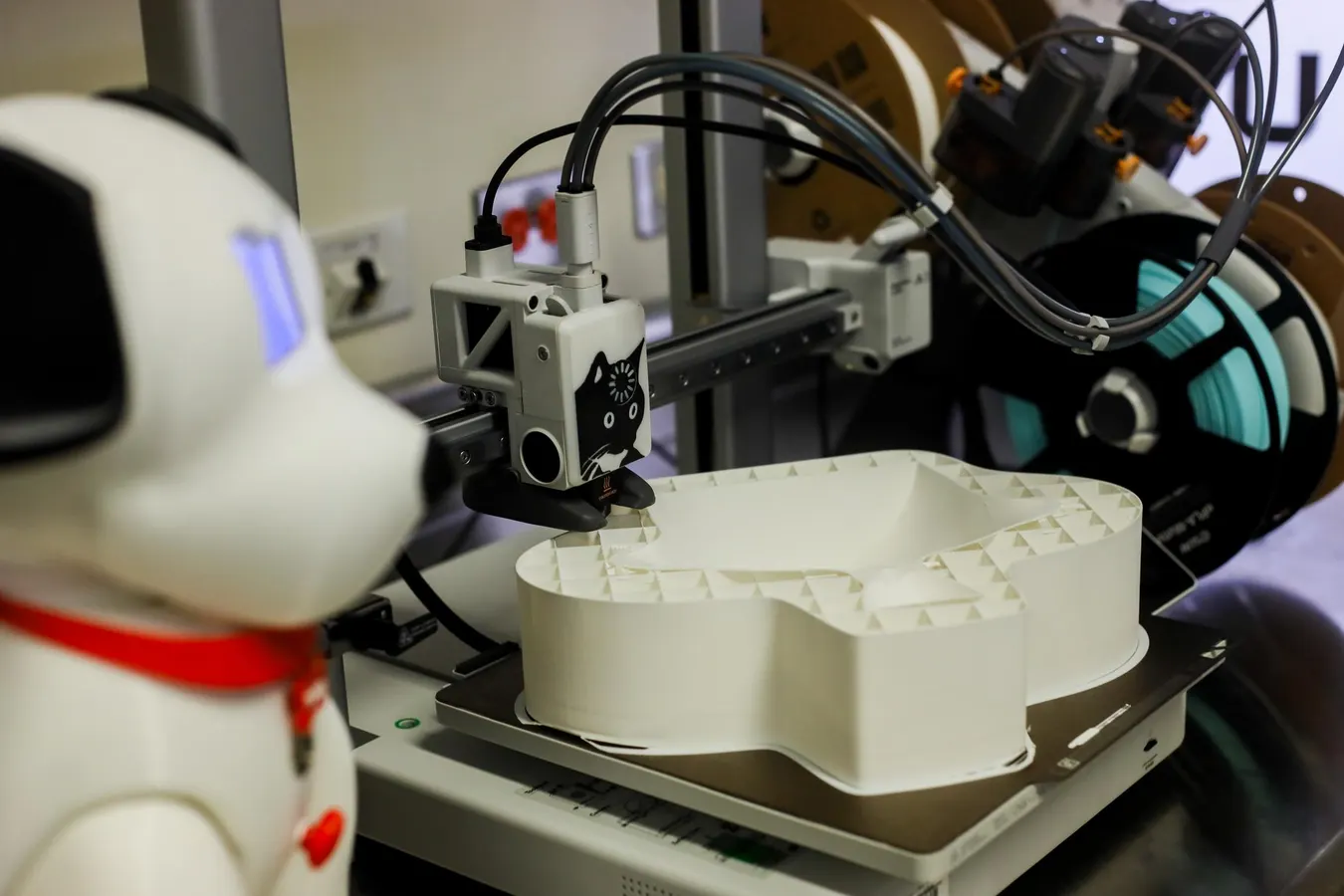
Creality's work on the TCT AsiaAuthor When AI makes 3D modeling as intuitive as conversation, the biggest opportunity in 3D printing may lie in the pipeline connecting ideas to real-world objects.This spring, the University of Colorado Anschutz School of Dental Medicine opened the world's first dental-school-based 3D Printing Hub. One of its flagship projects: a new generation of FDA-cleared dentures produced through multimaterial inkjet printing, manufactured in a single build within hours. No separate molding, no manual assembly steps, no days-long wait.Besides the efficiency, the more important story is what the workflow reveals.What has historically blocked dentists from turning their patient’s needs into a physical product is everything in between — CAD modeling and manufacturing coordination. Reduce that friction, specialists would stop being dependent on a separate class of technical intermediaries. They become makers in their own right.That is precisely what AI is aiming to do, reducing frictions between ideas and products; and restructuring how the entire 3D printing sector competes.The New Competitive Landscape of 3D PrinterFor decades, the value chain of the broad 3D printing industry operated in silos. Software companies developed design tools. Printer manufacturers competed on specifications. Materials companies created new polymers. Industry users explored applications. Each improved independently. But moving from concept to finished object still required stitching together multiple platforms, vendors and skill sets.MORE FOR YOUGenerative AI dismantles that constraint at the source. Instead of constructing geometry manually, users can now generate printable 3D models from a photograph, a sketch, or a plain-language description. The technical barrier at the beginning of the workflow collapses.The competitive question for the industry is therefore shifting. It is less about "Who builds the fastest printer?” But more about "Who can make the journey from an idea to a finished object as seamless as possible?"From Printer Makers to Creator EcosystemOne of the leading companies that makes this transition would be the Shenzhen-based Creality.Founded in 2014, Creality built its reputation on accessible desktop 3D printers. Its Ender series became a global benchmark for affordability and reliability, and the company has since shipped more than 6.7 million printers to over 140 countries — one of the world's largest consumer 3D printer brands.But following its Hong Kong IPO in 2026, Creality has been building toward something beyond hardware. The company now operates across five interconnected layers: printers, materials, cloud software, AI modeling tools, and digital manufacturing services.Creality printing shopAuthor The platform anchoring that ecosystem is Creality Cloud — an online hub where users discover printable models, manage print jobs, and share work with other makers. It now serves more than 5.7 million registered users worldwide. Critically, Creality reports that AI-powered creation tools have become a primary driver of user acquisition and retention on the platform, with more than 80,000 previously inactive users reactivated every month through AI-enabled workflows. These signal that AI is expanding participation, pulling in people who previously had no path into 3D printing.The AI Engine Behind 3D PrintingThe AI layer itself lives inside MakeNow, Creality's modeling platform, which currently offers two tools: CubeMe for personalized character creation and SignForge for custom signage — both designed explicitly for users with no CAD background.To power MakeNow, Creality formed a deep partnership with Tencent, integrating Tencent's Hunyuan 3D V2.5 foundation model into the platform.Hunyuan's architecture operates in two stages: a Diffusion Transformer generates high-resolution base geometry, capturing details as precise as fabric folds and facial features, while a diffusion-based painting engine applies photorealistic textures. The result, embedded inside CubeMe, allows a user to upload a single photo and receive a printable, stylized 3D figurine in roughly 5 minutes.Personalized figurines are the accessible entry point. The underlying capability runs far deeper. The same pipeline can help a surgeon model a patient-specific anatomical structure, an architect rapid-prototype a design concept, or a teacher create a classroom visual, all without touching professional CAD software.What this case study actually represents is the closing of a gap that has constrained the industry for years. An AI foundation model alone creates limited value without reliable printing hardware and a user base to reach. Yet, a hardware ecosystem stalls without powerful AI to lower the creation barrier. Together with Tencent’s generation capabilities combined with Creality’s 5.7 million-user cloud platform and global distribution, they form a loop that neither could complete independently.The Formula the Industry Is Converging OnReturn to the dental hub at CU Anschutz, this new trend in the 3D printing industry becomes clear.What makes it work is not any single technology. It is the integration of domain expertise, AI-assisted modeling, digital manufacturing, and clinical workflow under one roof. The specialist (the dentist) stays at the center. The technology serves the expertise rather than replacing it.That is the model spreading across industries. AI lowers the barrier to creation. 3D printing lowers the cost of production. And a connected ecosystem — software, cloud, hardware, application layer — closes the loop between the two.For the 3D printing industry, this convergence carries a clear strategic implication: manufacturers that remain purely in the hardware business face a ceiling. The companies that will define the next decade are those building the most coherent pipeline from imagination to object, and using AI to make that pipeline accessible to anyone with an idea worth making physical.Hardware will remain essential. But it is ultimately human creativity, amplified by AI, that will determine how far 3D printing can improve industries and everyday life.
AI Is Connecting The 3D Printing Industry To Build A Creator Ecosystem
AI is transforming 3D printing by making design as intuitive as conversation, shifting the industry's focus to seamless idea-to-object creation.
894 words~4 min read