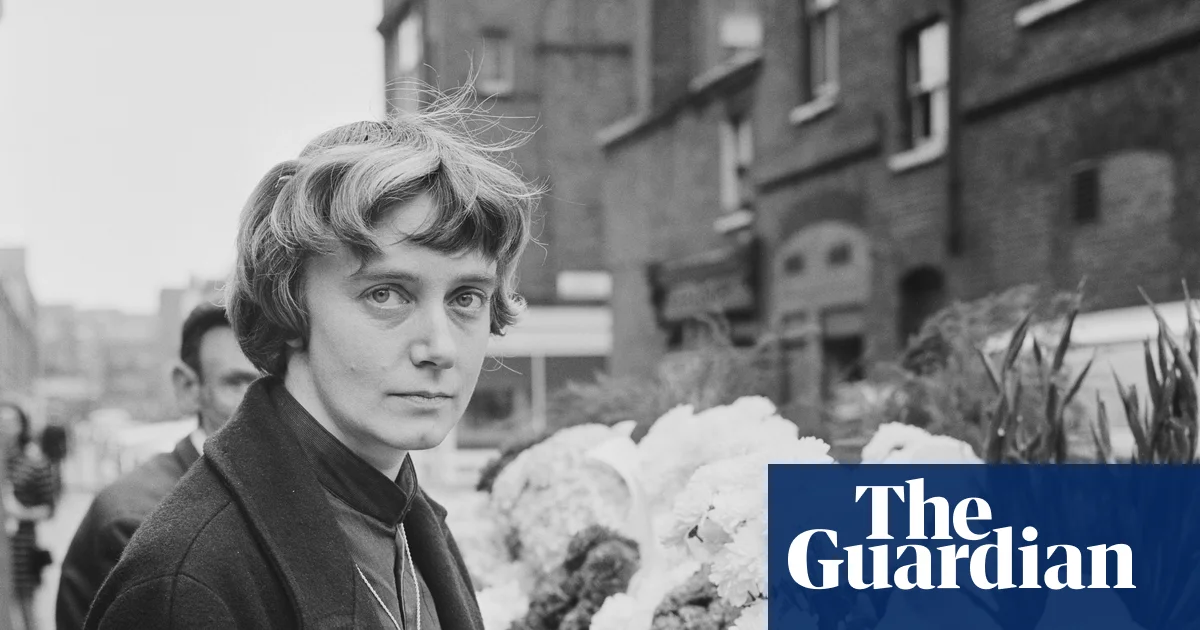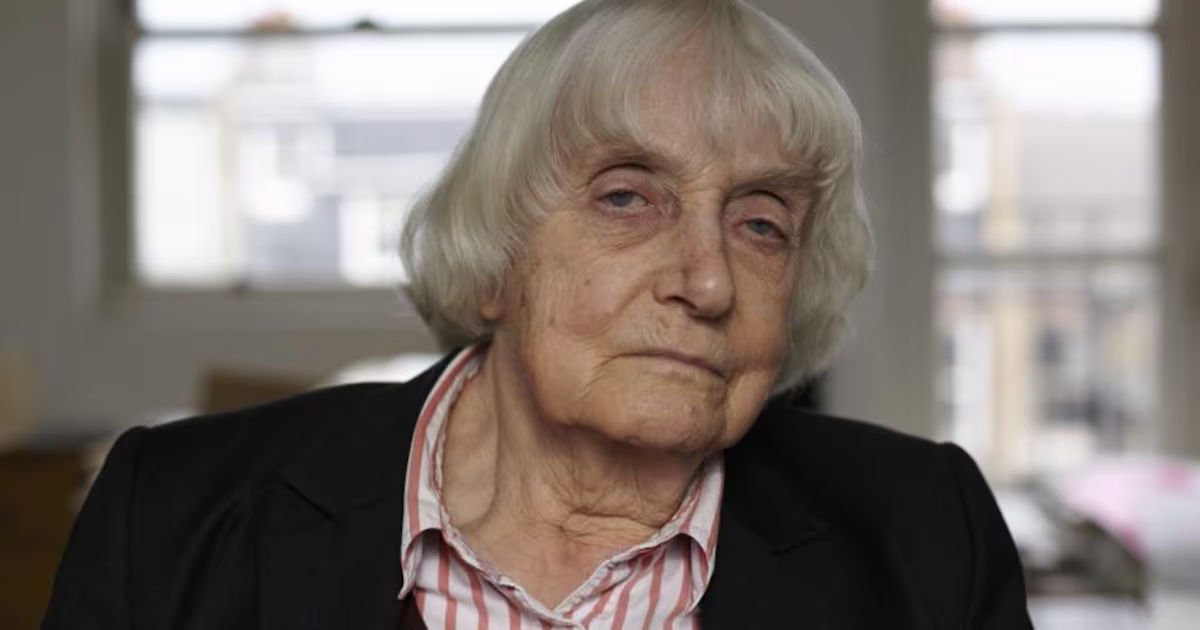
Her own prolific writings aside, Maureen Duffy (who died in May, aged 92) also indirectly bequeathed us one of the great euphemisms. It was a family heirloom, first uttered by her mother Grace about Maureen’s father, who had been a fleeting presence in their lives and left his daughter little except her Irish names. A Londoner living in 1930s West Sussex, Grace kept up appearances after his departure by buying a wedding ring in Woolworths and calling herself Mrs Duffy. And when a nosy neighbour asked one day where the husband was, as Maureen recalled many years later: “My mother looked straight at her and said, ‘We lost him with heart trouble,’ which in a way was true.”In the autobiographical novel That’s How It Was (1962), Duffy tried to find him again, via Grace’s memories and elsewhere. As a child, she extracted from her mother a brief profile of the absconded patriarch. “A dapper little man ... slim but tough, with fair hair and blue eyes like yours. Always very clean and well dressed and sang in that light tenor street-boy’s voice, like John McCormack. But, oh, he was the loveliest dancer and the most terrible liar I ever met.” He called Grace “alanah” but told her they couldn’t marry yet because he was in the army. “The army?” she asked him. “The army of Ireland. The IRA,” he clarified. “I’ve sworn not to marry for five years.” Sure enough, one night, Grace checked his coat pocket and found a gun. Soon after that he was gone. She thought she saw him once, years later, in a workman’s cafe among a group of Irish labourers, and “went all weak inside”.But they didn’t speak then, or ever again. “She never got over him and she never blamed him,” their daughter summed up, although Maureen herself then spent years looking for him, and finding him sometimes, if only in imagination. “I was haunted by my father; every fair-haired Irish labourer in his 40s I made him. I met him on buses, in cafes and when he said, ‘You must be my daughter,’ I answered: ‘I’m not your daughter. We’ve got on all right without you so far and we don’t need you now. You’re nothing to us.’ But the idea of him was still there.”[ Maureen Duffy: ‘Imagination, compassion, passion are what matters’Opens in new window ]Duffy was only 15 when she lost her mother too, not to any euphemistic heart problem this time but the real scourge of TB. Grace had done enough already, however, to instil in her an awareness of the value of education. So, after moving to London to live with relations, Duffy finished school and did a degree in English at King’s College en route to a career in literature. Although her early ambitions were in poetry, she wrote her first full-length play while in college and by the 1960s was working for television, earning enough from one screenplay advance to buy a houseboat.Another thing she earned, almost inevitably, was a ban in Ireland. That was for her second novel The Single Eye, which made the censor’s hit-list for 1966. By the same year, meanwhile, she was publishing her landmark lesbian fiction The Microcosm, the first in a series of works that made her a pioneer in writing about female homosexuality, her own and others.Maureen Duffy’s autobiographical novel That’s How It Was The Irish Times was impressed, while struggling a little with the subject matter. “One can scarcely quarrel with Miss Duffy’s tolerant sympathy for [gay women’s] plight though one may find oneself at odds with her ultimate conclusions,” wrote Ken Gray. “It is impossible, however, not to be dazzled by the skill and scope of her writing.”Many more novels and plays followed, as well as 11 collections of poetry. She also wrote several notable works of non-fiction, including The Erotic World of Faery (1972), excavating the half-hidden theme of sexuality in folklore. Irish and Welsh mythology were a particular fascination for Duffy. Her 1972 book describes, for example, the sexualisation of Cuchulain, as in a passage describing how he once scratched his head on a thornbush, whereupon: “Taller, thicker, more rigid, longer than mast of a great ship was the perpendicular jet of dusky blood which out of his scalp’s very central point shot upwards.”Cuchulain was himself a phallic symbol, Duffy argued, a theme constantly emphasised in folklore. “When he dies,” she pointed out, “he does so strapped to a pillar to keep him upright.”Her writing aside, Duffy was also an inveterate campaigner for authors’ rights, in the process becoming an expert in intellectual property law. This kept her so busy, friends wondered where she found the time to write. And her productivity did tail off in later decades. But only last year she was the inaugural recipient of new literary prize, founded by Bernardine Evaristo and awarded annually to a deserving woman writer aged over 60.
Irish blood, English heart trouble: Frank McNally on the pioneering writer Maureen Duffy
She wrote about lesbian women’s sexuality and the eroticism of Irish folklore, earning acclaim and a ban in Ireland
821 words~4 min read