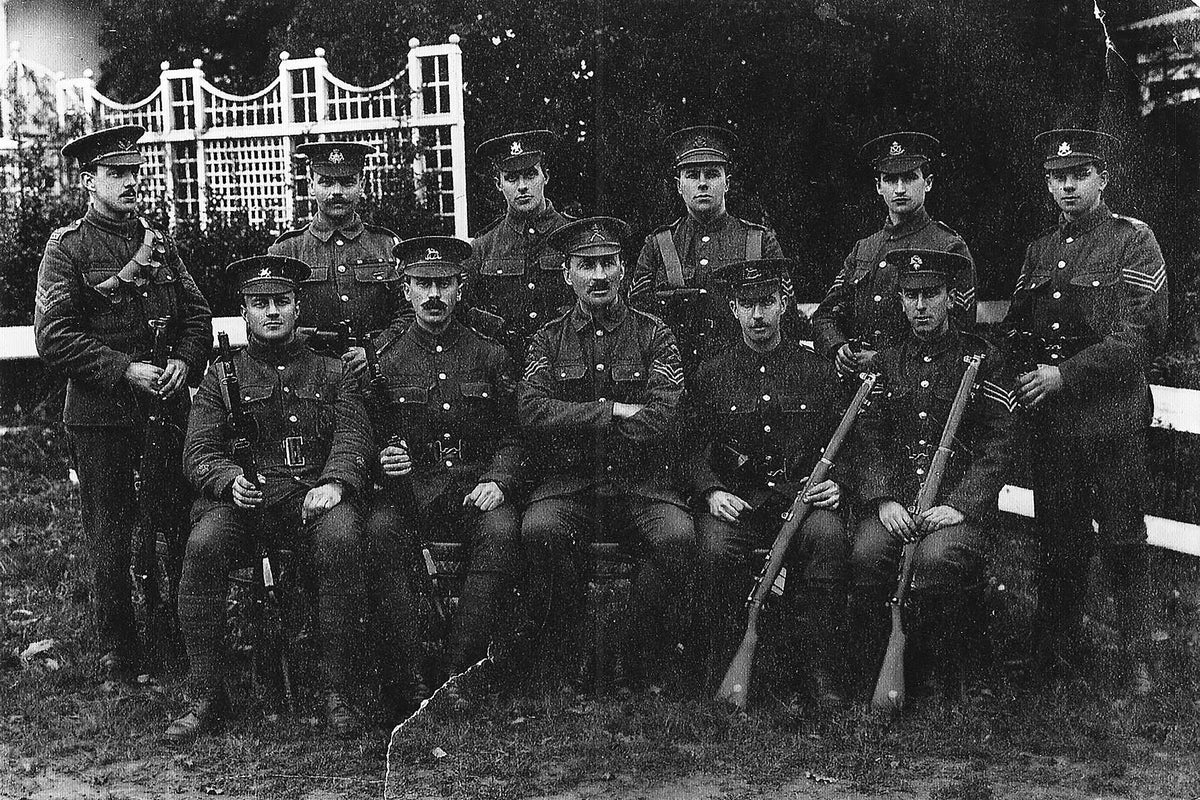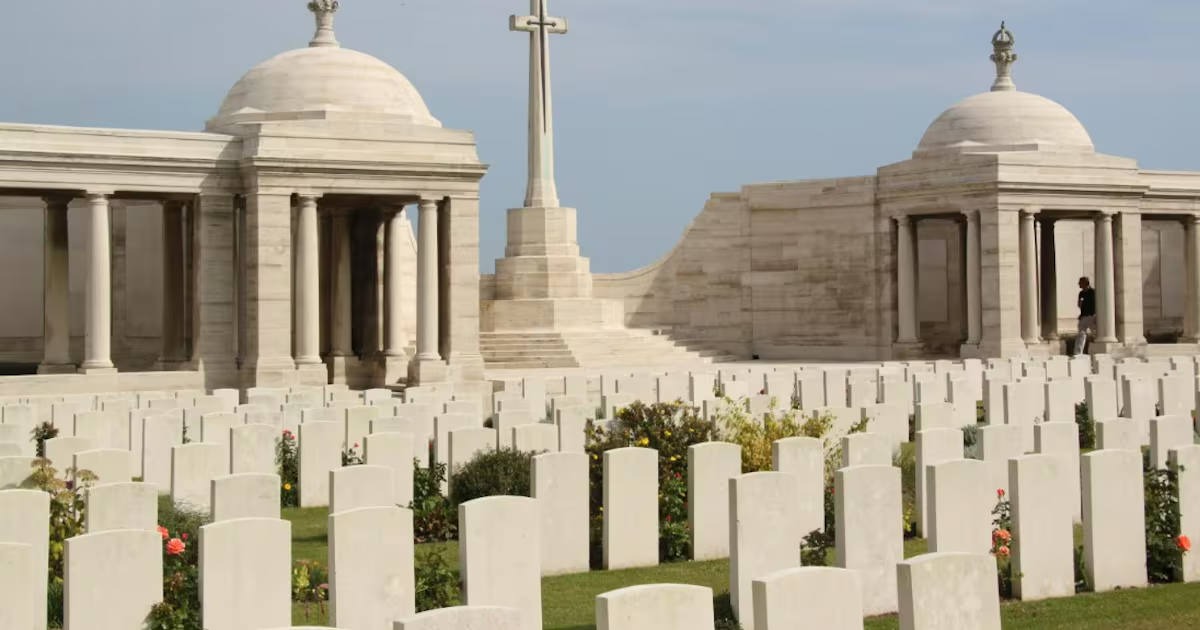
May 1916 was a tough month for hundreds if not thousands of Irish families coming to terms with the loss of a loved one.Many died on the streets of Dublin during the short-lived Easter week rebellion. As the executions of the rebel leaders got under way, telegrams were arriving by the score to all corners of the country advising that a loved one had died on the Western Front.My great-grandparents, Kate and John McGreal, received one such telegram informing them that their 20-year-old son, Patrick, had died on Saturday, April 29th, the day Patrick Pearse surrendered.He had been encouraged as a Waterford teenager by his local MP John Redmond to join up in support of Home Rule and “a just war”. Patrick probably read Redmond’s September 1914 speech to the Irish Volunteers at Woodenbridge, Co Wicklow, in the local Munster Express.“It would be a disgrace forever to our country, and a reproach to her manhood, and a denial of the lessons of her history, if young Ireland confined their efforts to remaining at home to defend the shores of Ireland from an unlikely invasion, and shrunk from the duty of proving on the field of battle that gallantry and courage which has distinguished her race through all its history,” said Redmond.Stirring words to the teenager who duly enrolled in the 8th Battalion of the Royal Inniskilling Fusiliers to become part of the 16th Irish Division. After initial training in Fermoy, he left Ireland for good in September 1915 for a further three months’ training in England.According to the Western Front Association, the training was poor and “consisted of route marching and limited target practice – and weapons were in short supply”. After a royal inspection by Queen Mary on December 2nd, they sailed for France on December 18th.He spent his first Christmas away from home camped out in a sea of mud on the infamous Loos salient in northern France.[ An Irishman’s Diary on Patrick MacGill and the Battle of LoosOpens in new window ]The 16th Division was under the command of Maj Gen William Hickie, a Tipperary man who supported Home Rule and would become a member of Seanad Éireann. Hickie reported to a staunch Ulster Unionist, Sir Henry Wilson (assassinated by the IRA in 1922), who inspected what he called “Johnnie Redmond’s pets” a few days before Christmas.Hickie agreed with him that he had “a political division of riff-raff Redmondites” on his hands.Donegal writer Patrick MacGill would go on to pen that war was 'an approved licence for brotherly mutilation'. Photograph: Getty Images The early months of 1916 were spent preparing the 16th Division for trench warfare. They were deployed to the Hulluch area, which was still scattered with human remains from the Battle of Loos fought over two weeks in September and October 1915.Loos was the first major action of the war in which the British used poison gas but with such incompetence that many of their own soldiers died in this new “fog” of war.The experience of the battle haunted Robert Graves. He recalled in Goodbye to All That, “shells used to come bursting on my bed at midnight ... strangers during daytime would assume the faces of friends who had been killed”.The Donegal writer Patrick MacGill served in Loos as a stretcher-bearer and wrote afterwards that war was “an approved licence for brotherly mutilation”.The first inkling that something terrible was about to befall the 16th Division came on the night of April 23rd when a German deserter brought news of an impending gas attack. Swarms of rats invaded no man’s land as they escaped gas leaks in the German trenches.[ An Irishman’s Diary: Kicking footballs at Germans at the Battle of LoosOpens in new window ]Patrick survived the first attack on April 27th when the Germans bombarded the Irish lines at dawn and released chlorine gas mixed with smoke. The wind changed direction and blew the gas back into the German trenches. An assault was repulsed and the attack ended.His luck ran out two days later when the German gas was carried over to the Irish lines on a light breeze and hovered over the trenches, with deadly effect.Fr Willie Doyle, an army chaplain from Dalkey, gave an unsparing account of the aftermath in a letter home to his father.“There they lay, scores of them (we lost 800, nearly all from gas) in the bottom of the trench, in every conceivable posture of human agony; the clothes torn off their bodies in a vain effort to breathe while from end to end of that valley of death came one long unceasing moan from the lips of brave men fighting and struggling for life.”Doyle had himself been caught in a gas attack during the Battle of Loos and was mentioned in dispatches for his bravery. He was killed in action the following year while administering the sacraments to wounded and dying soldiers.Patrick’s parents and seven siblings were spared the details of how he died but were simply informed by telegram that he had “succumbed to his wounds” on that dreadful day.Patrick’s name is among those of the 20,000-war dead on the Loos Memorial. While to this day, bodies are still being recovered in the land around the Lille suburb of Loos, as far as we know Patrick’s body has never been recovered.
All not so quiet on the Western Front – Frank McNally on the 16th Division’s fate in trenches
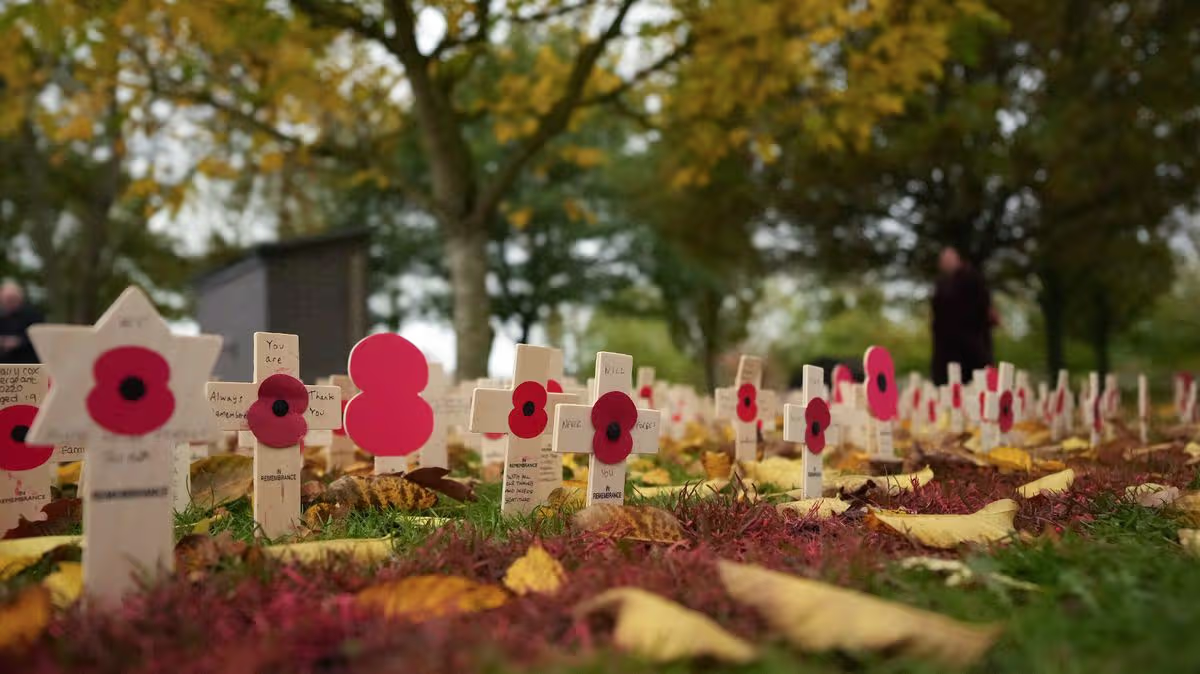
Telegrams were arriving by the score to all corners of Ireland advising that a loved one had died on the Western Front
886 words~4 min read