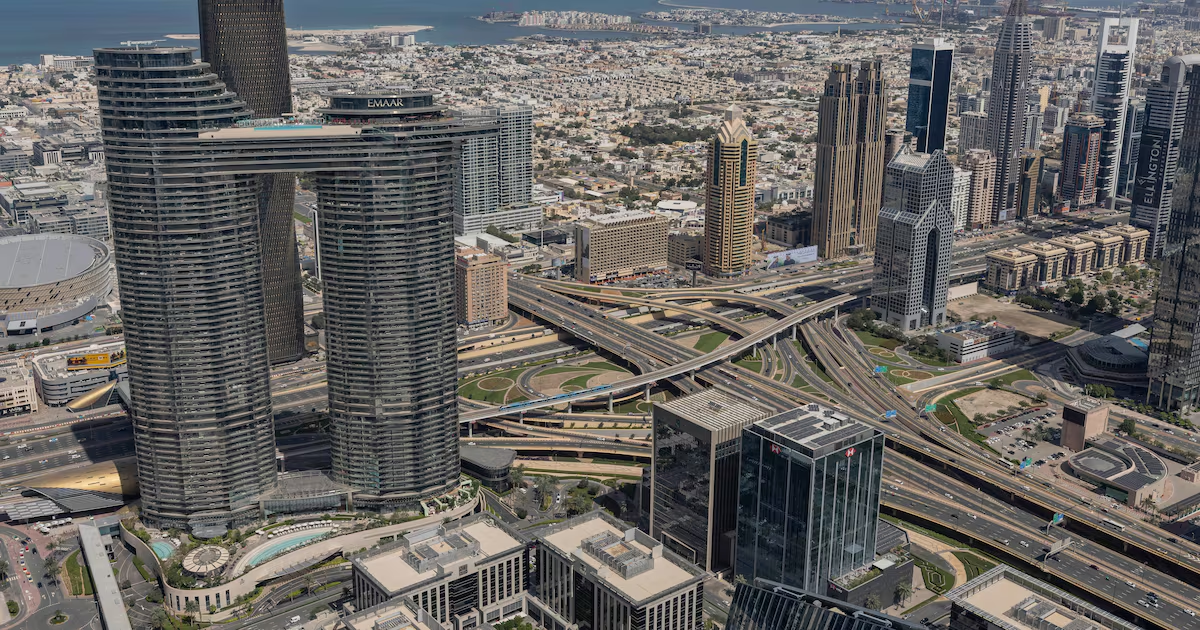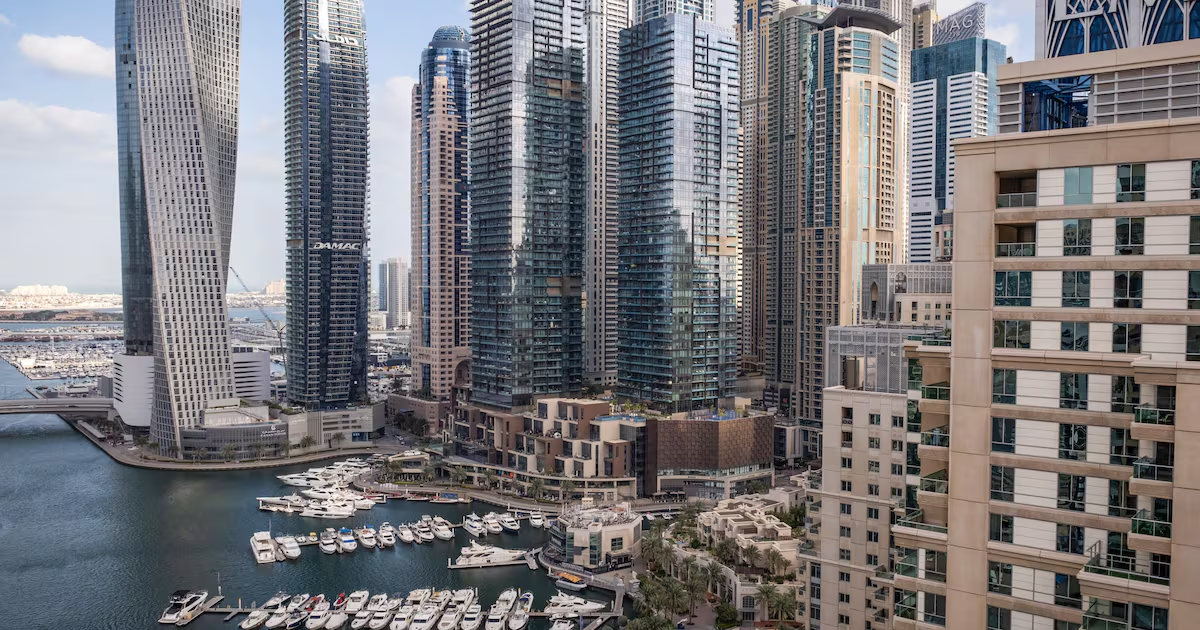
Business activity in the UAE's non-oil private sector grew at the slowest pace in five years in June, while employment contracted for the first time in more than four years, as companies tackle the fallout of the Iran war.The seasonally adjusted S&P Global UAE Purchasing Managers' Index fell to 50.8 in June, from 52.6 in May. A reading above 50 indicates growth in economic activity while one below indicates an economic contraction.Although data at the end of the second quarter marks only a marginal improvement in operating conditions, the weakest recorded since February 2021, the resilient domestic spending and public investment growth supported businesses. The broader economy is facing further headwinds from geopolitical disruptions, cautious client activity and competitive pressures.The labour market in the UAE, the Arab world’s second-largest economy, experienced a contraction, among the sharpest since August 2020 at the height of the Covid pandemic, S&P Global Market Intelligence said on Friday. The reversal in hiring trends in June reflected not only demand weakness but also the effects of rising costs and productivity drives. But the reduction in staffing enabled companies to stabilise wage costs for the first time in nearly three and a half years."The robust nature of the drop in employment underscores the hit to firms from the double whammy of soft client demand and rising cost burdens,” said David Owen, principal economist at S&P Global Market Intelligence. “While there were modest signs of an improvement in June, new business growth remained relatively mild, as clients continued to delay spending and tourism activity remained sparse.”Play00:35UAE has huge stockpile of essential goods, says Minister of Economy and TourismWar disruption The US-Israeli war with Iran has tipped the region into one of its worst geopolitical crises in decades. The conflict, which began on February 28 when Israel and the US bombed Iran, led Tehran to attack its Arab neighbours and close the Strait of Hormuz.While waves of Iranian drones and missiles struck energy sites and civilian infrastructure across the region, hospitality, aviation and tourism were among the sectors hit hardest.The US and Iran agreed to a two-month ceasefire in June and are in negotiations to reach a permanent peace deal. The initial agreement between has also led to the strait being reopened to shipping, which will relieve economic pressure on Gulf economies.Despite four months of disruption, economies in the Gulf have maintained growth momentum, albeit at a slower rate, the International Monetary Fund said in June. In May, ratings agency Fitch retained its long-term issuer default rating of AA- for the UAE, stating that oil export revenue, due to higher crude prices, is expected to remain strong despite the conflict and is to offset any immediate negative impact.Play01:11How ships are moving through Strait of HormuzOptimistic future The supply chain disruption with the closure of the strait had a cascading effect on almost every sector of the economy. In June, total private sector activity expanded at the slowest rate, “constrained by the detrimental impact of the Middle East conflict”.Businesses surveyed said the construction projects and expansion of digital services, as well as robust sales pipelines, provided “pockets of strength”, but those were not enough to offset the broader weakness. New business growth, despite accelerating to a three-month high, also remained well below the historical average, as customers delayed spending decisions. The survey panellists said tourism sector weakness and elevated price pressures also dampened demand.Although output growth softened in June, future expectations were broadly unchanged since May and “solidly optimistic”. "Looking ahead, recent moves towards an easing of geopolitical tensions in the region should help firms recover demand and normalise supply chains – indeed, the greater movement of shipping along the Strait of Hormuz in June led to shorter delivery times,” Mr Owen said. “That said, client caution has persisted so far and businesses have sufficiently moved to cut staff capacity, suggesting that a rebound in the non-oil sector may turn out to be gradual."Dubai experienced a slight growth in the non-oil private sector economy in June. Chris Whiteoak / The NationalInfoDubai PMI Dubai, a key commercial and tourism centre in the Middle East, also saw a slight growth in the non-oil private sector economy in June. A slowdown in demand growth led the Dubai purchasing managers’ index (PMI) to fall to 50.7 in June, from 52.0 in May, the weakest improvement in the health of the emirate’s non-oil private sector since January 2021. The pace of job losses in the emirate was also the quickest recorded in five and a half years. While sales growth was hindered by lower spending, businesses raised output, with the rate of expansion picking up to the fastest rate since March.
UAE's non-oil business activity grows at slowest pace in five years in June amid fallout of Iran war | The National
Employment in Emirates contracts for first time in four years as conflict dents economic growth
776 words~4 min read