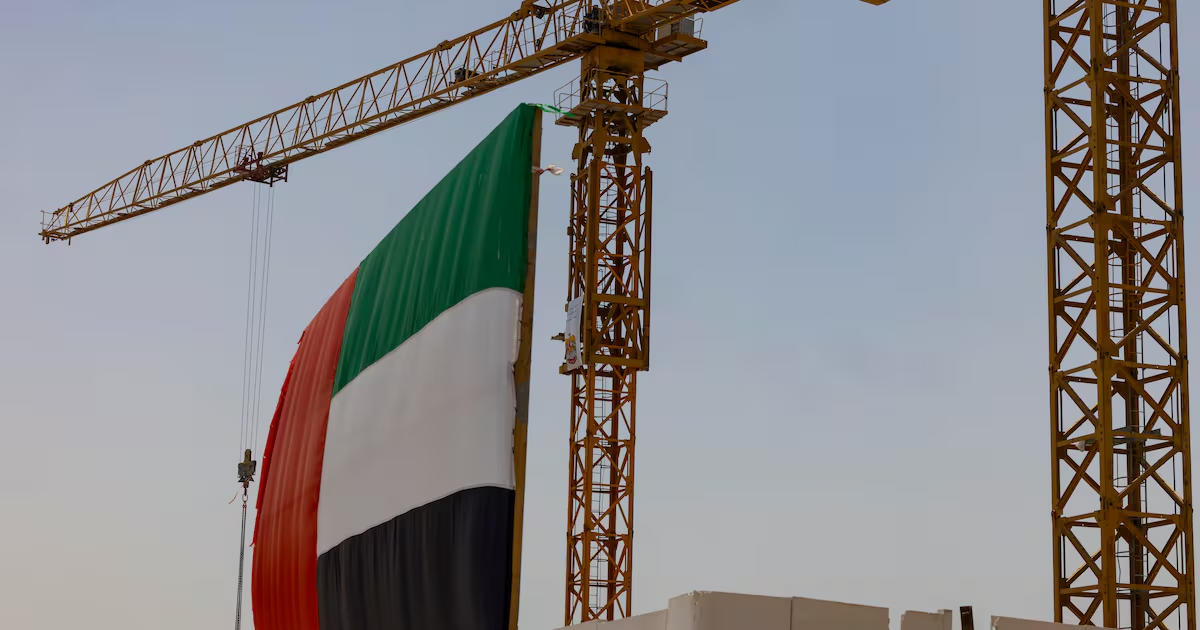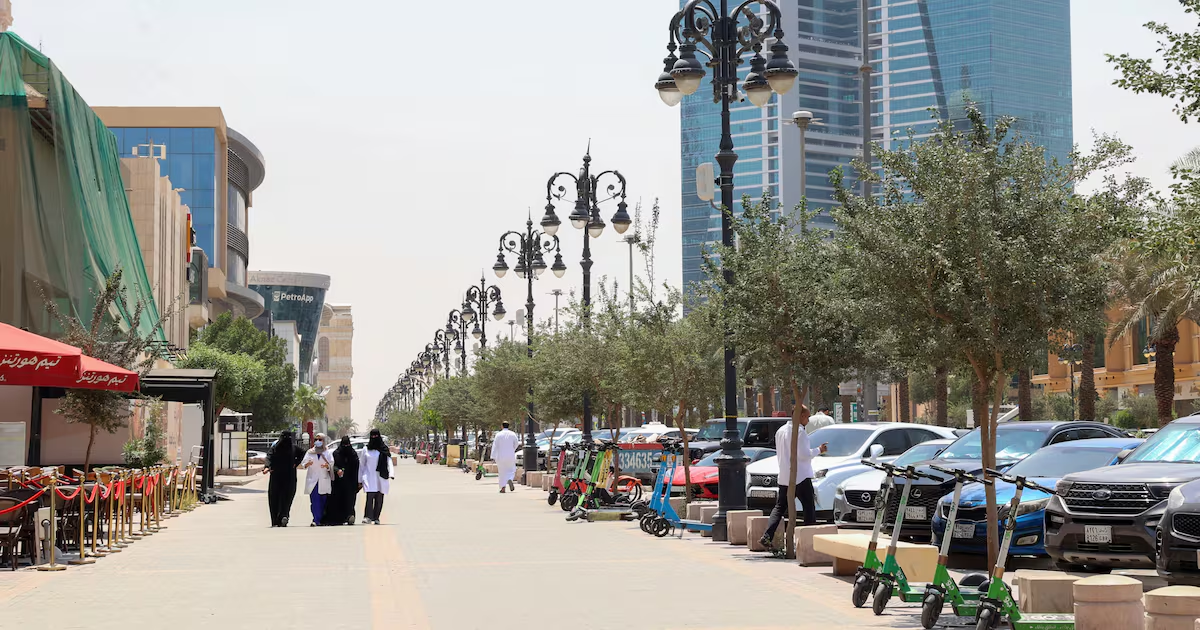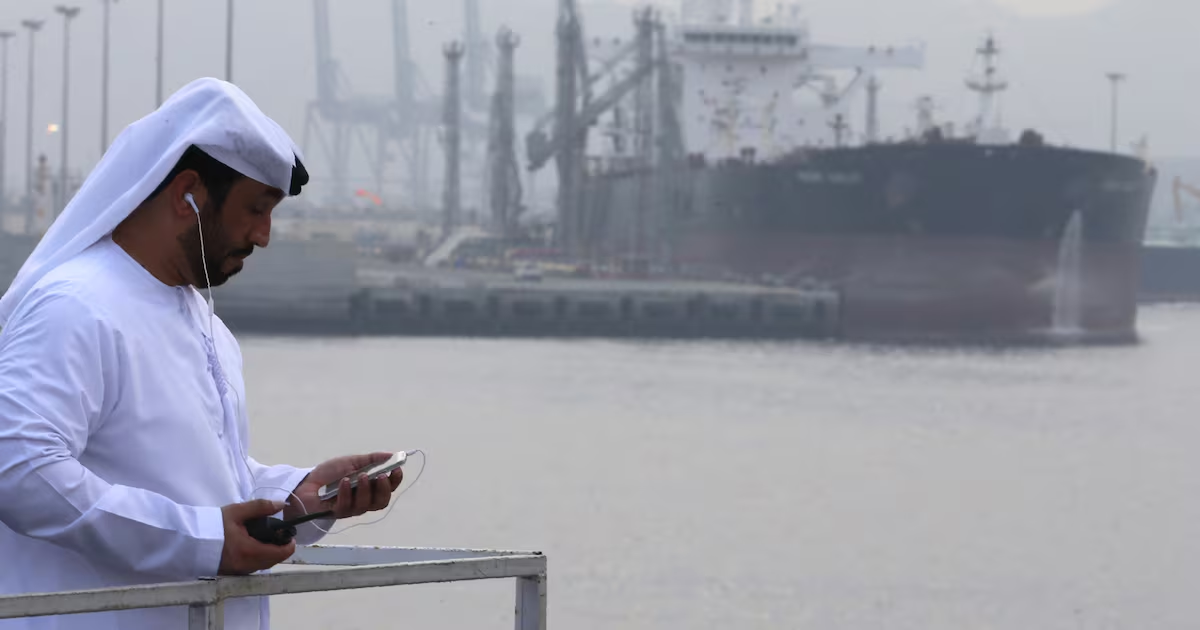
Dubai: Domestic spending and government investment helped anchor business confidence in the UAE in June, even as the non-oil private sector recorded its weakest expansion in more than five years.The seasonally adjusted S&P Global UAE Purchasing Managers’ Index fell to 50.8 in June from 52.6 in May, marking the weakest improvement in operating conditions since February 2021. A reading above 50 indicates expansion, but the latest figure showed that growth across the non-oil economy was only marginal.The slowdown came as companies faced softer client demand, delayed spending decisions, regional geopolitical disruptions, rising cost pressures and stronger competition. Total private sector activity expanded at the slowest pace in five years, with firms reporting that the Middle East conflict weighed on demand and disrupted business planning.Hiring takes the biggest hitThe labour market showed the most evident sign of strain, with employment falling for the first time in more than four years and at the fastest pace since August 2020.Companies linked the drop in staffing to weaker demand, higher costs and internal productivity measures, as firms moved to control expenses during a period of thinner margins. The fall in headcount also helped stabilise wage costs for the first time in nearly three-and-a-half years.“The robust nature of the drop in employment underscores the hit to firms from the double whammy of soft client demand and rising cost burdens," said David Owen, Principal Economist at S&P Global Market Intelligence. "While there were modest signs of an improvement in June, new business growth remained relatively mild, as clients continued to delay spending and tourism activity remained sparse. Similarly, input price inflation was the slowest seen in four months but elevated overall, which led a number of businesses to prioritise cost controls over capacity expansions.”New business growth improved to a three-month high, but remained well below the long-run average. Companies cited pockets of strength from construction projects, digital services expansion and solid sales pipelines, though these were not enough to offset broader weakness across the market.Supply chains recoverThere was a better reading on supply chains, with delivery times improving at the fastest pace in four months. Firms linked the improvement to easing shipping bottlenecks in the Strait of Hormuz, which allowed supply chains to recover after earlier disruptions.Purchasing activity also rebounded in June after contracting in May, as companies restocked in response to sales needs and built buffer inventories to guard against possible material shortages.Backlogs rose only modestly, with capacity pressures staying muted. Where delays were reported, companies pointed to shipment disruptions, production planning issues and volatility in raw material prices.Margins remain squeezedCost inflation continued to weigh on profitability, with input prices rising at a pace that remained high by historical standards. Companies reported higher purchasing expenses, transport fees and commodity costs.Selling prices rose only modestly and by much less than input costs, as businesses absorbed part of the increase to protect demand in a competitive market.Owen said, “Looking ahead, recent moves towards an easing of geopolitical tensions in the region should help firms recover demand and normalise supply chains, indeed, the greater movement of shipping along the Strait of Hormuz in June led to shorter delivery times. That said, client caution has persisted so far, and businesses have sufficiently moved to cut staff capacity, suggesting that a rebound in the non-oil sector may turn out to be gradual.”Dubai also slowsDubai’s non-oil private sector also recorded weaker growth in June, with the Dubai PMI falling to 50.7 from 52.0 in May. This was the weakest improvement in operating conditions since January 2021.New business rose only slightly, with firms reporting spending delays and weaker travel activity linked to the regional conflict. Output growth improved to the fastest pace since March, but limited capacity pressures and efforts to control costs led to a fall in staffing.Job losses in Dubai were marginal, but the rate of decline was the quickest recorded in five-and-a-half years. Input price pressures remained higher than normal despite easing, while companies raised output charges after discounting them in May.Despite the weaker June reading, business expectations remained solidly positive. Firms with confirmed contract work and exposure to public sector spending were more confident, while companies more dependent on external demand remained cautious.
Domestic spending and government investment anchor business confidence in the UAE
UAE non-oil growth slows to a five-year low as softer demand, rising costs and regional tensions hit private sector activity and jobs in June.
695 words~3 min read