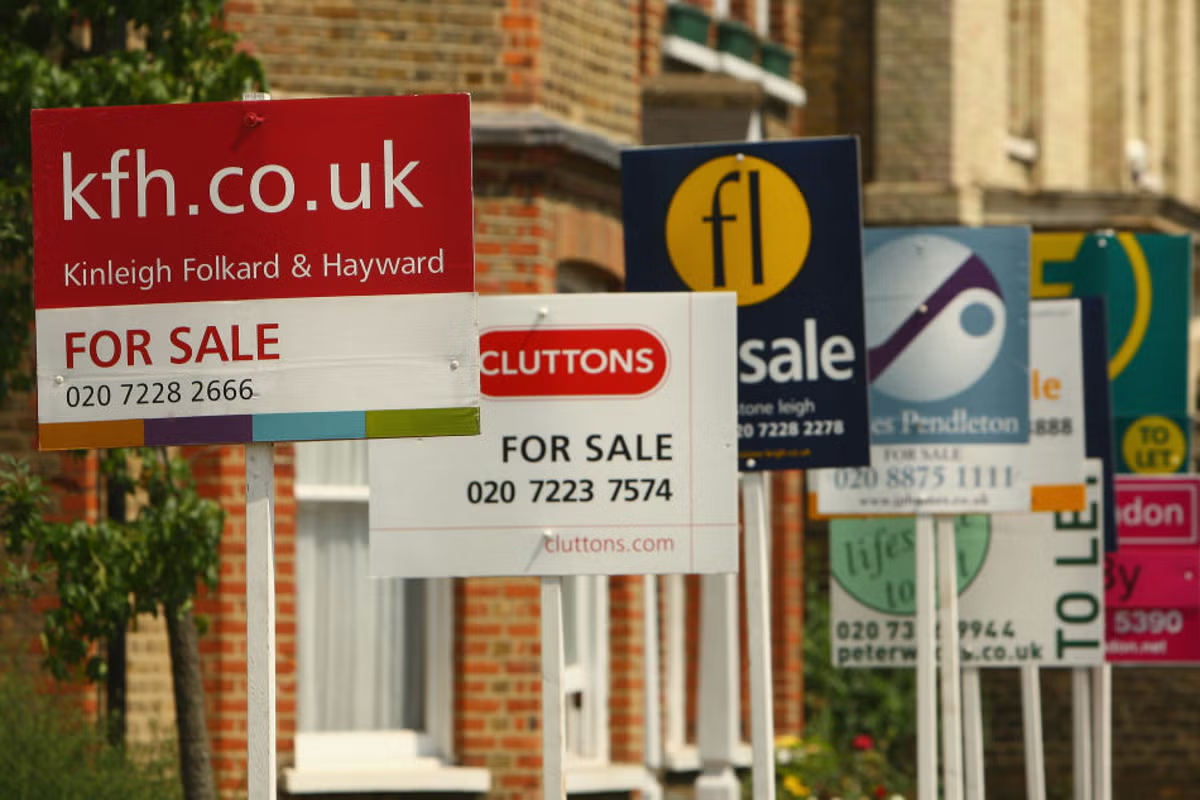
In many parts of Britain, the housing market is in the doldrums.Many homes on new-build estates are empty as higher mortgage rates, worries about job security and squeezed finances put would-be buyers off making a move. The share of new-build homes being sold before they were completed dropped to a 12-year low in 2025, according to estate agent Hamptons.Meanwhile, some landlords are deciding to call it quits because of the Renters' Rights Act, which imposes stricter rules on when they can evict their tenants or raise the rent. It means there are also swathes of former rental homes sitting on the market. At the same time, there are thousands of young families who are desperate to get a foot on the housing ladder, but are struggling to save a big enough deposit. That was the case for property account manager Luke Brayne, 24, and his nursery practitioner wife Hollie, also 24. Although they had both worked hard since the age of 16 and saved a deposit of £25,000, this wasn't enough for a 10 per cent deposit on a three-bed house in West Sussex. They had been living with Luke's parents in Burgess Hill – but when son Harvey, now 15 months, arrived in 2025 they knew it was time to find their own place. Luke and Hollie Brayne, 24, and their son Harvey, outside their rented home in Shoreham-by-Sea, West Sussex. If all goes to plan, they will own it within five years 'While we really appreciated my parents' support, we found it difficult not having our own space,' says Luke.For the Braynes, the solution was rent to own. Popular in the US but little-known in Britain, this is a homeownership scheme which sees renters move in to a home as tenants for a set period, agreeing to buy it when that term ends. While Luke and Hollie don't have credit issues, some tenants use the time to mend their credit score in preparation for buying a home. It is also used by people who are new to the country and don't have a long enough financial history to buy, or those who are self-employed and need to show lenders three years of accounts before they can get a mortgage. Did you buy your home from a landlord? Luke and Hollie are on a rent-to-own scheme run by the company BeHomed, which seeks out buy-to-let landlords who have properties they want to sell.Recent industry research from auction house Allsop found that 30.3 per cent of landlords plan to sell all of their rental properties, while a further 18 per cent are looking to sell some. Selling to a tenant gives them near-guaranteed rent, removes maintenance headaches (as the tenant-buyers take this on) and a sale at a pre-agreed price. Late last year, the couple moved into a three-bed house with a garden in Shoreham-by-Sea, close to Luke's parents in Burgess Hill and his work in Brighton. In five years, if all goes to plan, they will buy it with a 10 per cent deposit mortgage. They agreed the purchase price of £440,000 with the landlord who is selling them the property before they moved in. There are also about £3,000 worth of non-refundable fees to pay at the outset.The property price is set at a higher level than what they would pay for it today, which is around £400,000, and assumes house price rises over time. That is a risk, as the tenant could end up paying more than the home is worth if house prices fall. They are not obliged to buy the home if their plans change, and they will get their deposit contributions back - but lose 2 per cent in 'relisting fees'. We have been able to put up pictures of our family and our wedding day on the walls. If you’re renting, you don’t have these options 'I’d like to think the market will go up in four years,' Luke, who works in the property industry, says. They pay £1,700 per month for their home, which is in line with similar-sized homes in the same area. 'The rent is fixed so we don’t need to worry about price hikes,' says Luke. When tenants move in, they must pay between 2 and 5 per cent of the eventual purchase price upfront. Each month, they also pay a 'top-up' payment £150 which BeHomed pays into a Lifetime Isa to save for their deposit. Luke and Hollie pay at least £150 per month and, along with their existing £25,000, they hope their deposit will eventually total £44,000. Under the agreement, the tenant is required to handle maintenance and upkeep - but the family see this as an attraction. 'You get to treat the house as your home,' says Luke. 'We have been able to put up pictures of our family and our wedding day on the walls. If you’re renting, you don’t have these options.' But Luke is confident this is the home for his family. 'I don’t see why we wouldn’t buy,' he says. 'It is exactly what we need. It’s sizeable, and close to everything we need in our lives.'Sheila Smith founded BeHomed two years ago, when she returned from living in the US where rent-to-buy is more common. She hunts for landlord properties that have been on the market for a while or are empty, and matches them with tenants on her waiting list which they can sign up to on the BeHomed website. Tenants can also suggest properties in their area. Sheila says she is desperate for more landlords to come forward with properties, to meet the ever-expanding demand from tenants. 'Right now we have a handful of properties available,' she says. 'There has been way more demand than there are properties.'It’s so hard to get on the property ladder now and the Government solutions haven’t really worked very well.' 'We thought it was a scam'Another rent-to-buy firm, HomeNow has a different model – but the same end goal to give renters a leg up into ownership. Instead of buying homes from landlords, it buys homes from private developers. These are often new builds which they are struggling to sell. The firm aims to secure properties at a discount as they can buy several at a time. The homes are usually two, three and four-bed houses (it does not deal in flats) with an average cost of £300,000.'The families we help are typically in their early 30s and many are key workers,' says Jonathan Potter, co-founder at HomeNow. 'Over the last few years, people on good money have become more and more squeezed. 'These are double income families, hard workers, they have decent credit, they enjoy a holiday. They will normally have kids.'That perfectly describes Cris and Jerlyn Jocson, both 36, and their six-year-old daughter. Property dream: Jerlyn and Cris Jocson wanted to get on the housing ladder after relocating from the Phillipines to North West England for work They relocated to the North West of England from the Philippines in 2022 as Jerlyn, a senior nurse, had got a job at a hospital. They rented at first, but were keen to get on the property ladder as soon as possible to provide a secure home for their daughter. 'One Christmas, the boiler in our rented house exploded and we didn’t have heating or hot water for a week as our landlord took a long time to get it fixed,' Jerlyn said. 'It was then that we decided we wanted to move out.'Jerlyn came across HomeNow on her Instagram feed, and initially, she says, the deal seemed too good to be true. New residents in Britain often end up being refused for mortgages, as lenders often cannot track their financial footprint from their home country and generally perceive them as higher risk. 'We thought it might be a scam,' she says. 'I decided to give them a call – but my husband said I had to hang up if they asked me to send any money.'Thankfully for the Jocsons, it wasn't. Tenants sign a lease on the property for two years with Homenow, after undergoing income and credit checks to prove that they would be likely to qualify for a 5 per cent deposit mortgage in future. They then agree to a 'Home Purchase Plan' which outlines their obligation to buy the home at the end of the two years. Potter describes the scheme as 'PCP for houses' – though the key difference is that tenants can't just trade the house in at the end. They are obligated to buy it, unless the value of the home falls in which case the company will shoulder the loss. At the end, they get a ‘rental refund’ equal to 5 per cent of the property's current value, to use as their deposit. If the price of the house goes up more, they get more back. 'The tenants move in and rent the property as a kind of "mortgage apprenticeship," says Potter. 'If you pass, we will give you 5 per cent of the value of the property at that time. If they can't buy after two years, Homenow might extend their rental lease until they can afford the mortgage, but it also has the right to sell the home to a third party instead.In December 2025, Chris and Jerlyn moved into a home in the Dee Gardens development in Deeside, on the border between Chester and North Wales. First home: The Jocsons moved into a £275,000 property in Deeside, on the border of Chester and North Wales Cris and Jerlyn pay £1,718 per month in rent on their home. It was valued at £275,000 when they bought it. If prices increased by 5 per cent in the two years they rented it, they would purchase the property for £288,750 and get a rental refund towards their deposit of £14,500. They are delighted with their new home. 'The garden is so big and the area is so calm, the environment is so good,' says Jerlyn. 'My daughter normally wants to sleep in our room, but once she saw her room in the new house, she was actually excited to sleep in her own bed.' HOMENOW: HOW MUCH TENANTS PAY OVER TWO YEARS Change in value of property Minimum future purchase price Increases by 10% Increases by 20% Monthly rent £1,875 £1,875 £1,875 Total rent over two years £45,000£45,000 £45,000 Future purchase price£302,000£330,000 £360,000 Rental refund amount £15,100 £16,500 £18,000 Rent minus refund £29,900£28,500£27,000 Renters can apply for properties through Homenow's website. There are 200 listed at the moment on new-build developments across the country, from Exeter to Suffolk to County Durham, and it eventually wants to have 800 homes on its books. A three-bed home at The Tyrone in Ferryhill, County Durham, is available for a £995 monthly rent.At the moment, homes available include an 870 sq ft, three-bed mid-terrace house with parking for two cars on the Equinox III development four miles from Exeter city centre. It rents at £2,032 per month.Jerlyn's family are already treating the home as their own, and plan to buy it in November next year. 'We’re so grateful for the opportunity,' says Jerlyn. 'When you own your home, life is so different. We have doubled how much we clean and we haven’t even put any screws in the wall, we want to make sure it is all looked after. 'It’s all for our daughter.' Is Homenow a good idea? Nicholas Mendes, a mortgage broker at John Charcol, has the following advice:HomeNow is trying to solve a very real problem. Many renters can afford a monthly payment, but struggle to save a deposit while paying rent at the same time.For some first-time buyers, that may feel like the only realistic route out of renting. But it needs to be understood properly.It is not a loose option where you can simply try the property and decide later [if you want to buy it] with no consequences. You are entering into a structured agreement built around the expectation that you will become mortgage-ready and complete the purchase at the end.The final purchase price is based on the market value of the property at the end of the plan. If the property has gone up in value, you may need a larger mortgage than you expected. If the property has not risen enough, or has fallen, the deposit contribution may not work in the way you hoped and the route to ownership may become more complicated.The biggest risk is mortgage eligibility. HomeNow can assess whether the plan looks realistic when you apply, but no provider can guarantee that a mortgage lender will approve you in two or five years’ time. That means you need to ask a hard question before signing. If nothing improves dramatically, are you genuinely likely to qualify for a mortgage at the end? If the answer is no, this may simply delay the problem rather than solve it.You also need to understand who pays for maintenance, what changes you can make, what happens if something breaks, and whether any unresolved issues could affect the refund or final position.Before signing, compare it with the standard routes first. Check whether a traditional mortgage is possible now, whether a smaller deposit product could work, whether family support is available, whether shared ownership is suitable, or whether waiting and saving for longer leaves you in a stronger position. How to find a new mortgage Mortgage rates have soared after conflict with Iran has driven up inflation expectations and dashed hopes of interest rate cuts.If you need a mortgage because you are buying a home, or your current fixed rate deal is due to end, you should explore your options as soon as possible. This is Money has a long-standing partnership with fee-free broker L&C, to provide you with expert mortgage advice.Use This is Money and L&Cs best mortgage rates calculator to show deals matching your home value, mortgage size, term and fixed rate needs.Or use L&C’s online Mortgage Finder to search thousands of deals from more than 90 different lenders to discover the best deal for you.This is Money's mortgage tips What if I need to remortgage? Borrowers should compare rates, speak to a mortgage broker and be prepared to act. Homeowners can lock in to a new deal six to nine months in advance, often with no obligation to take it.Most mortgage deals allow fees to be added to the loan and only be charged when it is taken out. This means borrowers can secure a rate without paying arrangement fees. If you do this and don't clear the fee on completion, interest will be paid on it over the term of the loan.What if I am buying a home? Those with home purchases agreed should also aim to secure rates as soon as possible, so they know exactly what their monthly payments will be. Buyers should avoid overstretching and be aware that house prices may fall, as higher mortgage rates limit people's borrowing ability and buying power.What about buy-to-let landlords?Buy-to-let landlords with interest-only mortgages will see a greater jump in monthly costs than homeowners on residential mortgages. This makes remortgaging in plenty of time essential and our partner L&C can help with buy-to-let mortgages too. > Find your next mortgage deal with This is Money and L&CMortgage service provided by London & Country Mortgages (L&C), which is authorised and regulated by the Financial Conduct Authority (registered number: 143002). The FCA does not regulate most Buy to Let mortgages. Your home or property may be repossessed if you do not keep up repayments on your mortgage
Could you get on property ladder in home a developer can't shift?
Late last year, Luke and Hollie Brayne, both 24, and their son moved into their dream three-bed home in West Sussex. However, they won't buy it for five years.
2,603 words~12 min read