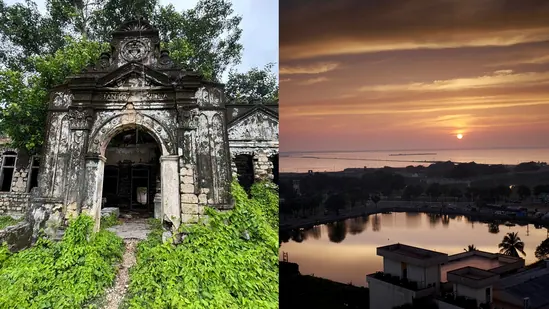
If your vision of Sri Lanka revolves around emerald tea plantations and ancient stupas, a journey to Jaffna will transform your perspective, says Kalpana Sunder Women in sarees, Tamil film music playing, heaps of mangoes, rambutan, bananas, pineapples, massive jackfruit, brinjals, and other vegetables — the whole scene washes over me with a familiar déjà vu. Friendly shopkeepers try to sell me local specialities like packets of dried fish and chunks of jaggery made from palm sugar. Palmyra is everywhere in jaggery, flour, chips, and even woven household items. The tree is central to the peninsula's identity.Why Sri Lanka's northern city deserves a spot on your itineraryJaffna is closer to India than to the Sri Lankan capital and is strongly influenced by Tamil culture and traditionsIf your idea of Sri Lanka is emerald tea plantations, beaches and stupas, then a visit to Jaffna in the country's far north will change your perception. Jaffna, also called Yalpanam in Tamil, was for decades at the heart of the devastating civil war and, therefore, long cut off from the mainland. After more than twenty-five years of war and isolation, and the scars of the 2004 tsunami, it's slowly coming out and welcoming tourists, buzzing with cafes and art spaces, for those who want to experience a Sri Lanka vastly different from the south.Woven household items made of PalmyraJaffna is closer to India than to the Sri Lankan capital and is strongly influenced by Tamil culture and traditions. It was once known for its excellent universities, and families would send their kids here for the best education. Our drive from Sigiriya in the heart of the country, towards the north, passed emerald paddy fields, palm trees and towns like Kilinochchi, that reminded us of the tragic civil war that devastated the country.Today, Jaffna is a laid-back townToday, Jaffna is a laid-back town, lined with old colonial buildings, faded churches, Hindu temples and heritage bungalows. Cycles and tuk-tuks outnumber cars, and small stalls sell local snacks like vadais. Our home away from home is the boutique hotel, Jetwing Mahesa Bhawan, set in a restored 1930s Jaffna-style, whitewashed two-storey villa, with stocky columns and surrounded by large trees.Jetwing Mahesa BhawanIt has four suites with sprawling balconies, rooms with four-poster beds named after Sri Lankan birds and animals, dotted with vintage art and antiques, with a large swimming pool, set on a quiet lane with old mansions and Dutch churches. Janka and Megala, the couple who look after the villa, provide us with local fare and glimpses into local culture.The large swimming poolJaffna's population is predominantly Tamil Hindus who once migrated from the mainland. As we drive through the city and its surrounding areas, it reminds me a lot of interior Tamil Nadu in South India, with temples with brightly coloured gopurams, emerald paddy fields, palmyra trees with fan-shaped leaves and lagoons. A British-era clock tower stands tall, which commemorates the visit of Albert Edward, Prince of Wales, to Ceylon in 1875.
Jaffna travel guide: Why Sri Lanka's northern city deserves a spot on your itinerary
If your vision of Sri Lanka revolves around emerald tea plantations and ancient stupas, a journey to Jaffna will transform your perspective, says Kalpana Sunder
495 words~2 min read