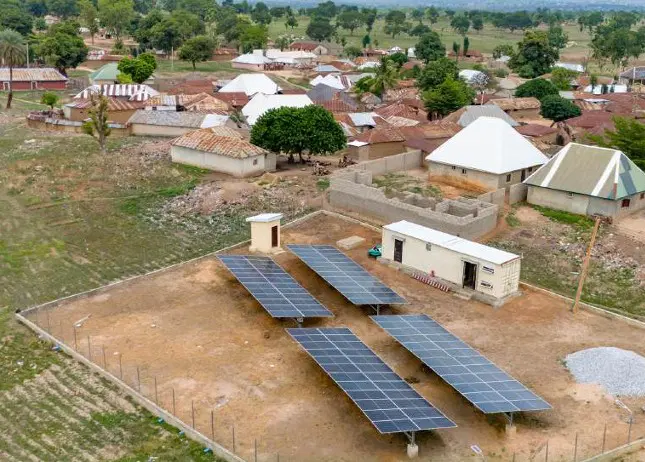
By sunset, Ajuye used to disappear.Nestled along a dusty farming corridor in North Central Nigeria, the community of Ajuye was a place that fell still after sunset. Once darkness settled over its market stalls and clay walled compounds, businesses closed early, generators sputtered to a halt and much of the town retreated indoors.
Traders rationed fuel carefully. Welders shut down their equipment before nightfall. Families relied on torchlights and battery lamps.
In the health centre, emergency cases were sometimes handled under dim improvised lighting. For generations, this was simply how life in Ajuye worked.
Today, the town glows.
From a distance, the light is the first thing visitors notice. “People coming from Abuja at night can now see the village shining brightly from afar,” says Yakubu Ahmed Maidoji, the Sarkin Ajuye, seated beneath a slowly rotating ceiling fan inside his palace. Around him, the town hums with an energy that residents say would have been difficult to imagine only a few years ago.