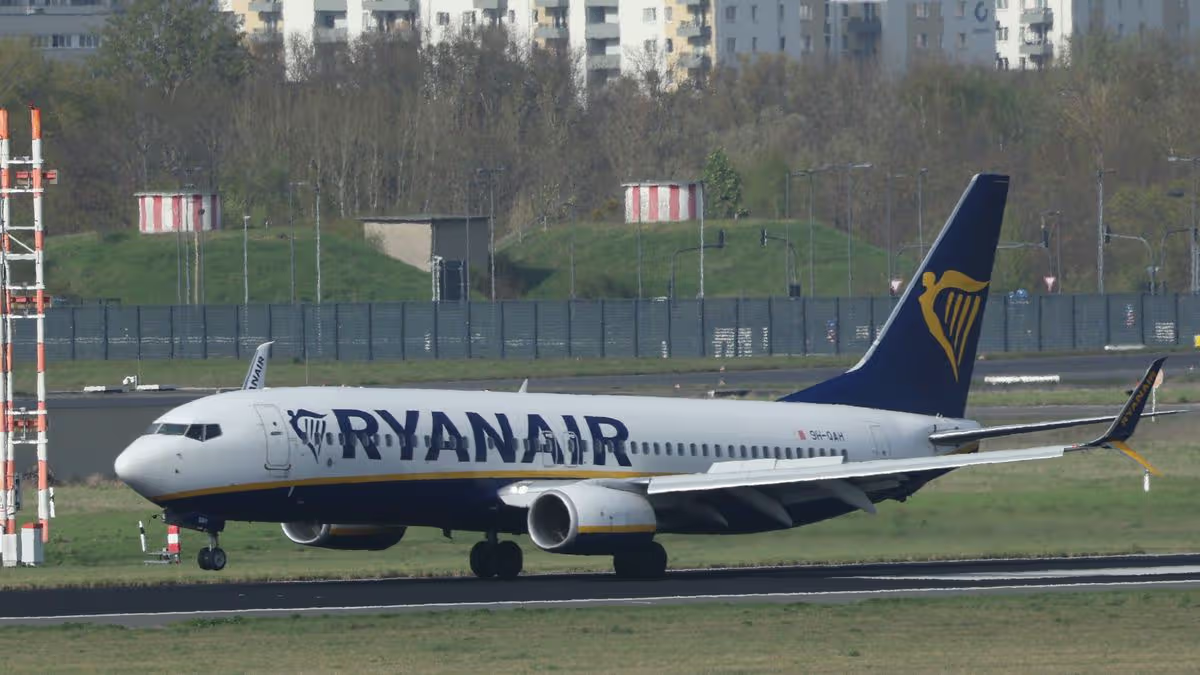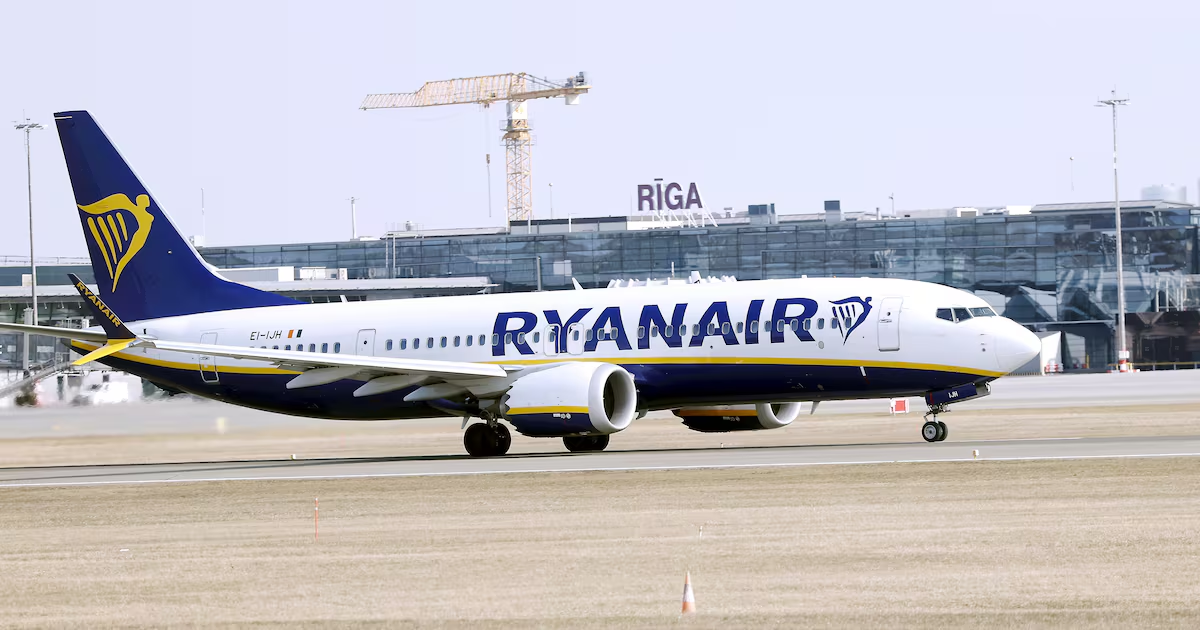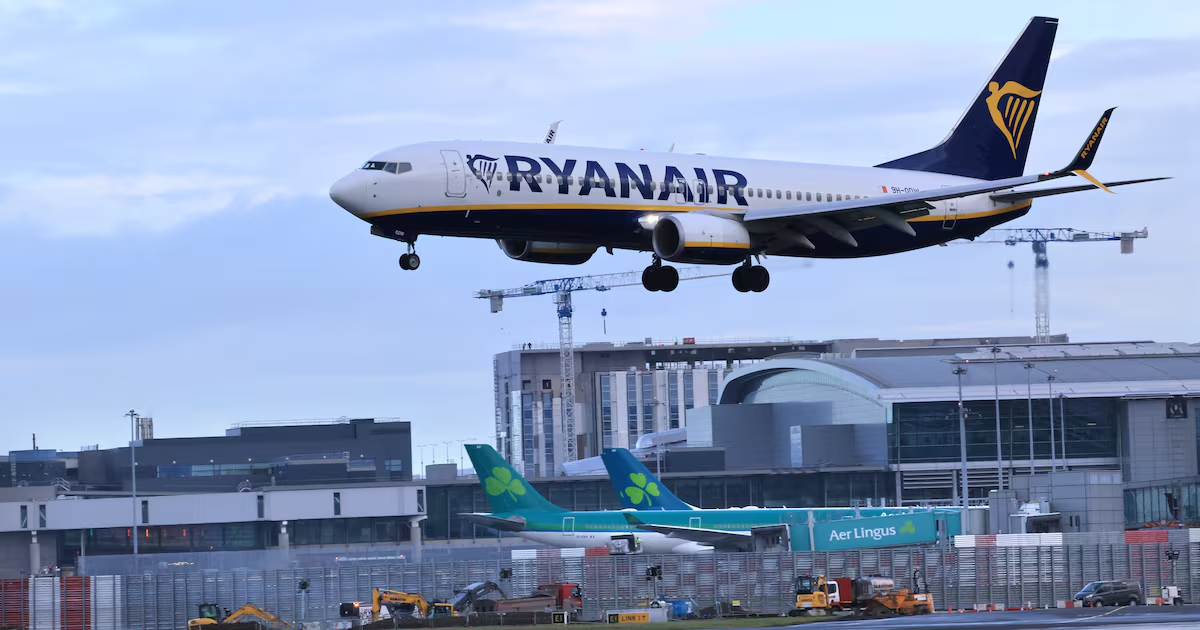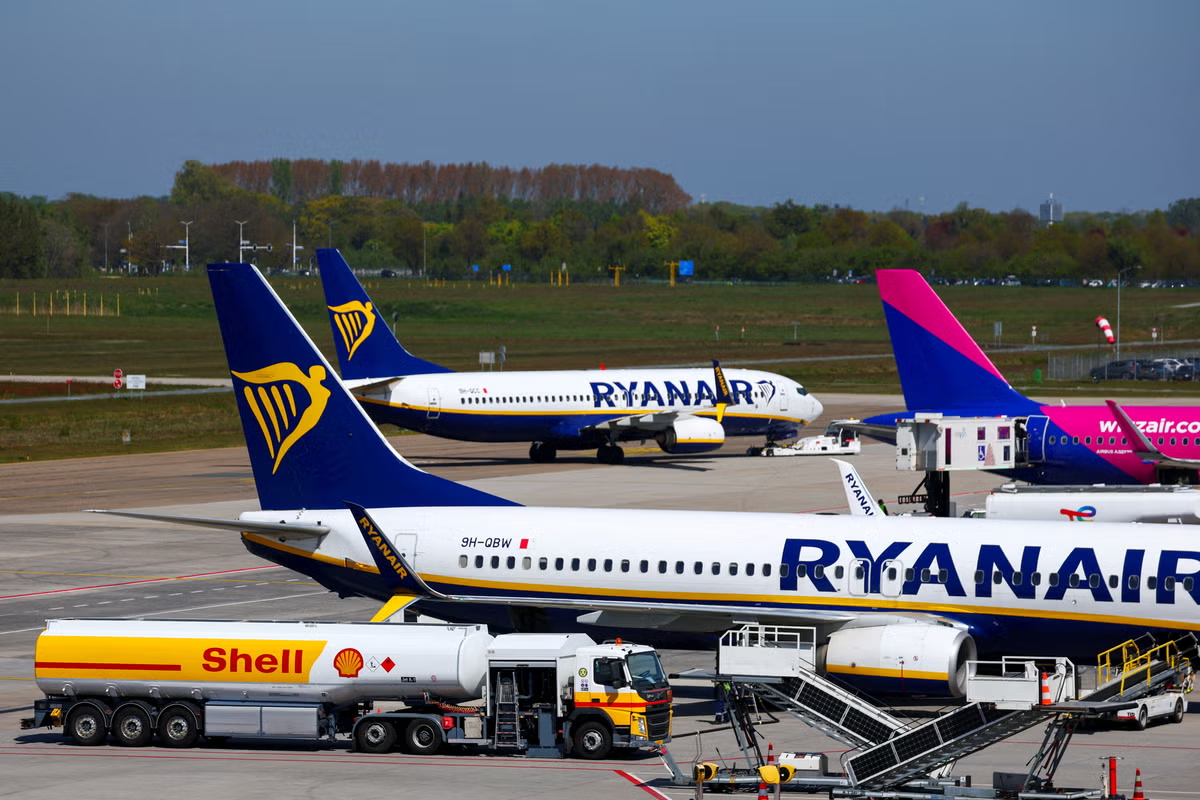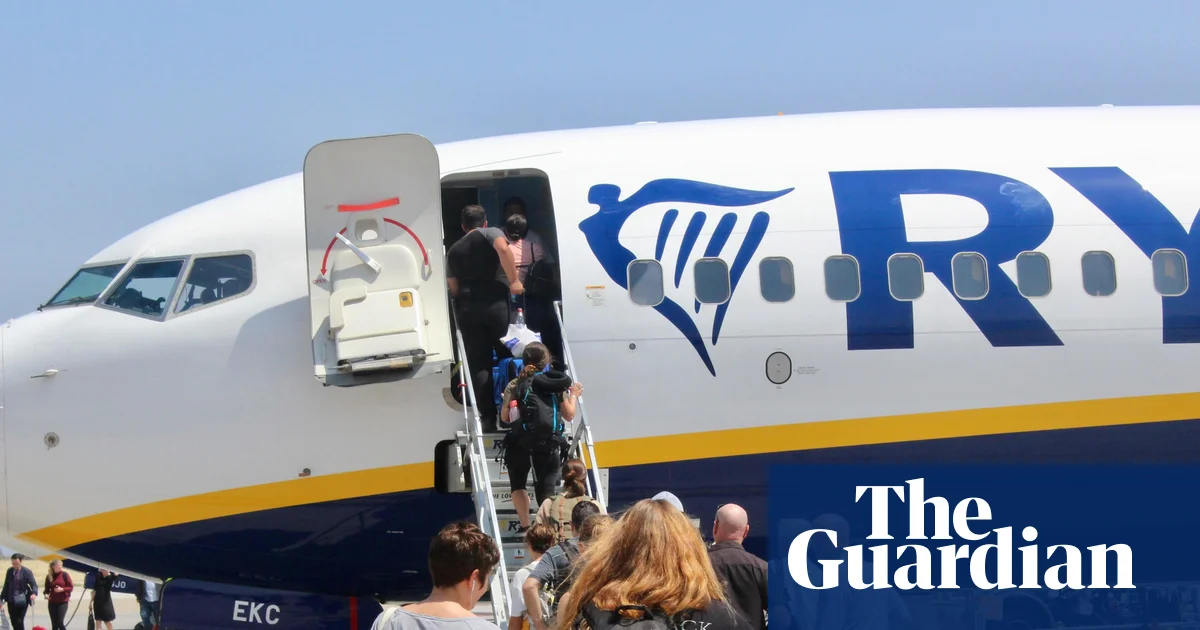
Holidaymakers canny enough to book well in advance are getting better deals this summer than last, Ryanair group chief executive Michael O’Leary, says. Uncertainty sparked by the US-Israel war on Iran left people unwilling to commit to travelling three or four months in advance. “So, we are having discount pricing essentially through the summer,” he says. “But then close-in bookings, they are stronger and at higher fares than we would normally expect.” The net effect is Ryanair will hit its target of flying 216 million passengers in the 12 months to the end of next March, but at lower fares than it had hoped.Price-sensitive customers do not worry him. Ryanair will still make “bundles of profit” while rivals will see theirs decline sharply, he says. However, he says the higher fuel prices that resulted from the conflict will feed through to higher ticket prices next year.Ryanair has hedged 80 per cent of its fuel up to March at $67 (€59) a barrel, but is paying around $90 for the remainder, against $70 before the war. Rates for next year were above $80 last week. It is likely the airline will begin hedging for next year once they drop below that number, its chief executive says.Fallout from crises such as Iran, Ukraine war and Covid, hastens what O’Leary calls the “inevitable” consolidation of European air travel into four main carriers, with Ryanair as the biggest and sole low-cost player.Its rivals will be: International Airlines Group (IAG), owner of Aer Lingus, British Airways and Iberia; Air France-KLM; and Germany’s Lufthansa. The others will fail or be taken over. The shake out leading to this is well under way, he believes. “A lot depends on what happens with the current EasyJet discussions,” he says.US private equity group Castlelake has bid £4.9 billion (€5.7 billion) for the British budget airline. “Castlelake previously did the refinancing and buyout of [Scandinavian airline] SAS, which they flipped on to Air France-KLM,” he says. “I would not be surprised if they are doing something similar with EasyJet. If they do it in the next month or two, then I think it’s more likely that somebody else will do Wizz, maybe later on this year.”He says potential buyers will be wary of Hungarian carrier Wizz’s debts and likely losses this year. But an EasyJet deal could prompt a move on the Hungarian carrier. Either Lufthansa or “somebody in the Middle East will say, ‘We’ll buy Wizz because we want the planes’.”Elsewhere, Baltic Air, which had to borrow €30 million from the Latvian government to see it through to August, and Norwegian are vulnerable. TAP in Portugal is also for sale. He thinks it could end up as part of Air France. Lufthansa already controls Italy’s Alitalia. “So gradually the pieces are moving into those big three alliances, and Ryanair is the big stand-alone low fares airline across Europe,” he says.So where does that leave competition, particularly for people seeking cheap flights? “You desperately need to have Ryanair operating in your marketplace otherwise you are going to be fried alive,” he says.Europe is going back to a “high-fare continent”, O’Leary says. However, he does not predict a retreat to total domination by high-charging legacy carriers. “I don’t think we’ll ever go back to the old days, but there is going to be less choice, less competition, going forward except in those markets where Ryanair is operating.”But with less competition, how will Ryanair avoid the temptation to become a higher-cost operator itself? “The real discipline in Ryanair is we have ordered another 300 aircraft for the next eight, 10 years, which means our traffic is going to grow from 208 million passengers last year to 300 million,” he says. “We have no choice but to keep running fast, to be very efficient, because the only way we can fill this additional capacity is by offering much lower fares.”Passengers board a Ryanair plane at Tenerife. Photograph: Nicolas Economou/Getty Ryanair ordered those planes from Boeing during Covid, allowing it to drive a harder bargain than usual. Buying aircraft more cheaply than rivals cuts costs from the start. In addition, it tends to pay for new planes with its own cash, so Ryanair is not on the hook for interest payments. The new jets, the Boeing 737 Max-10, have 20 per cent more seats and burn 20 per cent less fuel, giving a 40 per cent fuel reduction in effect.Excluding fuel, he calculates that Ryanair’s costs per passenger are €35, Wizz is at €62 while EasyJet is €90. The three bigger players range from €170 to €250. “Their costs are all rising. They have to keep fares rising and we’re going to keep growing rapidly while the newer aircraft with the lower fuel consumption will help us to keep this number flat.”O’Leary and Ryanair obsess about costs. The subject dominates discussion with investors’ analysts at the briefings that follow the publication of financial results. Before this interview began, he says he was “signing cheques”. He sent “four or five back upstairs”, querying what the company was paying.Ryanair’s mantra is that “there are no savings on safety, but everything else is up for grabs”. Airport fees and charges, along with taxes and levies imposed by governments, are very much “up for grabs”.O’Leary repeatedly says Ryanair is growing this summer in Sweden, Italy, Slovakia and Albania, where airports and states have cut charges and taxes, but not in Dublin, Germany, Belgium or others where, he says, costs are high.Michael O'Leary fears the DAA's ambitious expansion plan for Dublin Airport will lead to higher passenger charges. Photograph: Alan Currie/Getty Not for the first time, O’Leary and Ryanair are rowing with DAA, the State company responsible for Dublin Airport, a short drive from Ryanair’s head office, over costs and spending.DAA has submitted a €5.6 billion expansion plan to the regulator, the Irish Aviation Authority (IAA), which Ryanair says will double passenger charges to €20 but produce little growth. DAA says fees will increase to around €13 at most and has challenged many of O’Leary’s calculations, adding that the plan would add 10 million passengers.Part of the problem O’Leary says is that Dublin Airport’s terminal two, which Ryanair does not use, was built in a “cul-de-sac” 20 years ago, so has nowhere to grow. “Even if you looked at the numbers they make no sense,” he says. There’s €900 million for contingencies – “just in case we make a bollix of it” – €640 million for inflation, €500 million for sustainability.For €60 million, he says DAA can extend the pier stretching from terminal one, used mostly by Ryanair, and achieve far more. The plan, he says, is mostly padding designed to game the IAA, which determines the airport’s passenger charges.He has “reasonable confidence” in the regulator, but says the likeliest outcome is DAA ending up with approval for around €2 billion or €3 billion – “a children’s hospital”. As this will please neither side, everyone else will say that the authority is doing a good job, he says. But he says that “if the regulator is doing its job properly, which is to protect the public interest, Ryanair should be happy and the DAA should be miserable”.Michael O'Leary says Dublin Airport could handle as many as 60 million passengers a year. Photograph: Alan Betson Making Ryanair happy would result in the airline increasing its traffic at Dublin from around 20 million passengers a year to 40 million. It would also increase the aircraft it has based at Cork and Shannon, from four to eight in both cases, and consider a base at Knock.Ryanair believes that Dublin’s second runway, completed during Covid, gives the airport scope for 60 million travellers a year. There is “no reason” it should not grow from 36 million passengers last year to 50 million over the next decade. But O’Leary says the airline’s home country is the only place where it is routinely ignored. Department of Transport mandarins and the media believe that “if O’Leary is whingeing, something has to be right”, he says.His company has 93 other bases across Europe where it can expand while Dublin misses out, he says. So why care? “Because I really genuinely want to grow in Dublin,” he says. “What really bothers me here is the Italians are abolishing environmental taxes. Sweden – the home of Greta Thunberg and flight-shaming – has abolished aviation taxes and they’re reducing fees. Meanwhile, our mob here designs a plan to double airport charges.”The Cabinet has approved proposed legislation allowing Minister for Transport Darragh O’Brien to axe or increase a 32-million-a-year passenger limit imposed by planners on Dublin Airport 19 years ago. O’Leary says this is 18 months after the Coalition promised to end the “cap” as it is known, which contradicts Government policy to expand air travel. The Bill passed a Dáil vote this week and now goes to the Seanad.Disputes and crises have been O’Leary’s stock in trade since he first landed in Ryanair in 1988. He joined as a troubleshooter for his then boss, Tony Ryan, who founded the airline and the aircraft lessor Guinness Peat Aviation. The carrier had lost €21.6 million over the previous three years. O’Leary and Ryan’s son Declan famously advised the businessman to shut the airline. He refused.The late Tony Ryan, who cofounded Ryanair In the early 1990s O’Leary met Herb Kelleher, a key figure in US aviation who founded Southwest Airlines, then a fast-growing low-cost airline. Its success was based on a straightforward approach. Southwest flew one type of aircraft point-to-point, giving it greater control over costs. It also worked its aircraft harder, turning them around within 30 minutes of landing, compared with three times that for rivals.O’Leary got his chance to adapt the approach to Ryanair when he became chief executive in 1994. The European Union had just deregulated air travel, thanks to another Irish man, Peter Sutherland, who was then competition commissioner. Airlines licensed in one member state could operate across the bloc. Ryanair seized its chance, opening bases in multiple jurisdictions.Success prompted a lot of imitation. O’Leary remarks that at one stage, every venture capital firm was investing in a low-cost airline, all of which “heroically lost money for 20 years”. In the next, consolidated phase, Ryanair’s 300 new aircraft will boost its fleet to about 900. By 2034, it plans on carrying 300 million passengers, from 208 million this year.That growth will come within Europe. O’Leary says colleagues can already point out the airports where Ryanair will deploy its new planes. While it is open to expanding into north African and Middle Eastern countries, they cling to protectionism, making entry difficult. “The last thing they want is Ryanair arriving in with €20/€30 air fares and blowing up their local flag carrier,” he says.Surprisingly, he highlights Germany as a country ripe for growth. The country has only 80 per cent of its pre-Covid air travel capacity. But O’Leary says it has doubled aviation taxes and fees across the board. “Even Lufthansa are complaining about it now. They will slash all these taxes and fees in the next three or four years. Germany is one of the biggest countries in Europe and we will charge back in there. But only when they start cutting taxes.”O’Leary has recently agreed to remain at Ryanair until 2032. His pay will rise to €1.8 million a year from €1.2 million when his current deal ends in April 2028. Ryanair will cap his bonus at 50 per cent of pay. He will have the option of buying 10 million shares at €26.70, their pre-Iran war value, if the stock price exceeds €42 for 28 consecutive days or profits reach €4 billion, by 2032.He thinks there is a 50/50 chance of hitting those targets, but says airlines are always grappling with setbacks. “I have always argued, ‘Don’t give me a big salary, but give me a share option scheme so that I have a big target to aim at; if I get there, I get there’.”O’Leary will be 71 in 2032. By then Ryanair Holdings will have identified a new chief executive, most likely from the ranks of the airline’s next generation of management. “I think a lot of the senior management team, some of whom are in their early to mid-60s like me, by the time we get to 2030 we are all nudging close to 70.”By then it will be time to hand over to a group now coming through who are in their 40s and 50s, he says.“We have about five or six excellent internal candidates at the moment who you could readily point to, but I think we will also look externally as well because you would be stupid not to.“The difficulty is that you look for somebody external, it is very difficult to come into a business that is as unique as Ryanair. If you bring somebody in from another airline, they’d get nosebleeds from what we do. We take delivery of 50 aircraft a year.” To put that in context Aer Lingus’ entire fleet is 64 aircraft.While he has a clear picture of the airline his successor will take over, O’Leary is unwilling to predict far beyond that as things could change significantly. “In 10 years’ time, we will be carrying 300 million passengers,” he says. “We will be by far the biggest airline in Europe, we will be the largest passenger airline in the world. With a bit of luck, we will be making about €4 billion in profit, fares will be €45/€50 a passenger and I’ll be in a home for the bewildered.” CVName: Michael O’LearyJob: Chief executive, Ryanair HoldingsAge: 65Family: Married with four children.Hobbies: Farming – he owns 2,000 acres at Gigginstown, Co Westmeath – and horse racing. He has 100 or so horses in training and has won two Cheltenham Gold Cups, three Grand Nationals and multiple top-flight races in Ireland.Something you might expect: He originally trained as an accountant, with Stokes Kennedy Crowley.Something that might surprise: His Gigginstown House stud bred Mission Central, winner of last month’s King Charles III Stakes, one the showpiece races at Royal Ascot.
Michael O’Leary: ‘In 10 years’ time, Ryanair fares will be €45-€50 and I’ll be in a home for the bewildered’
Amid rising costs and industry turbulence, the Ryanair boss predicts a shake-out among European airlines
2,351 words~11 min read