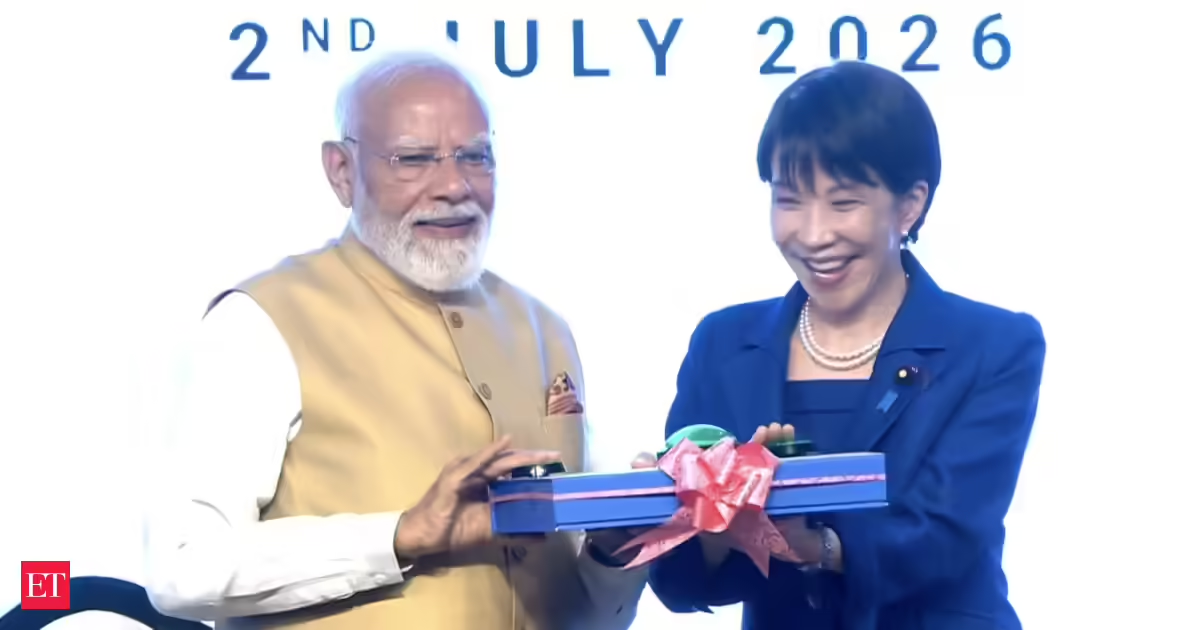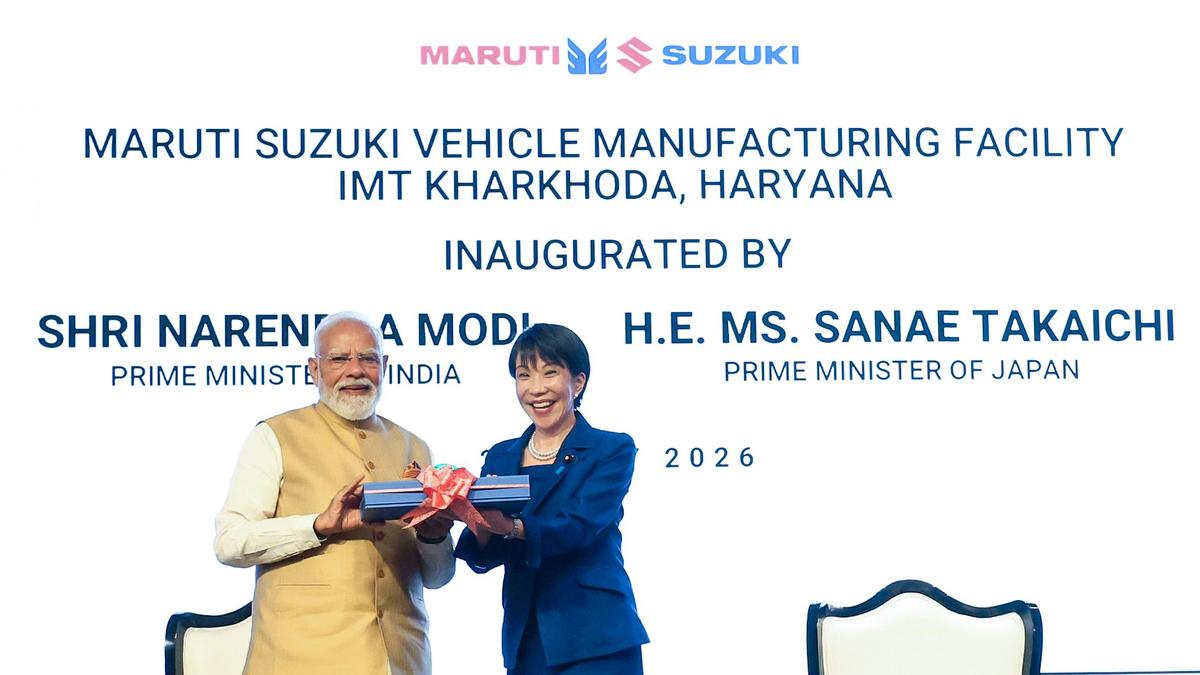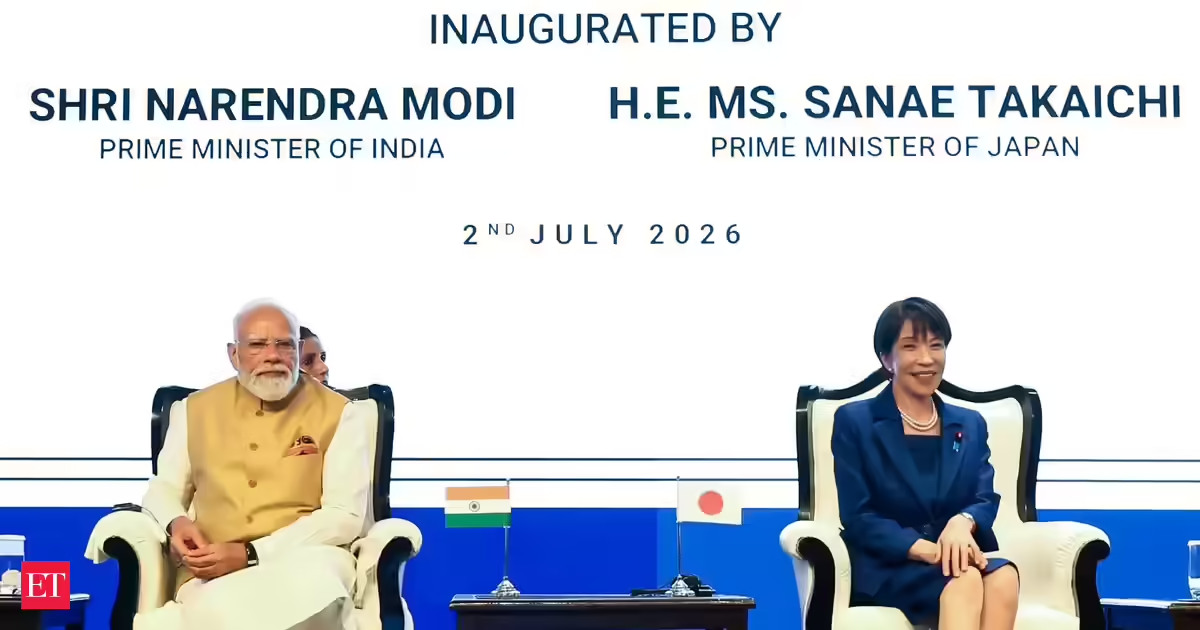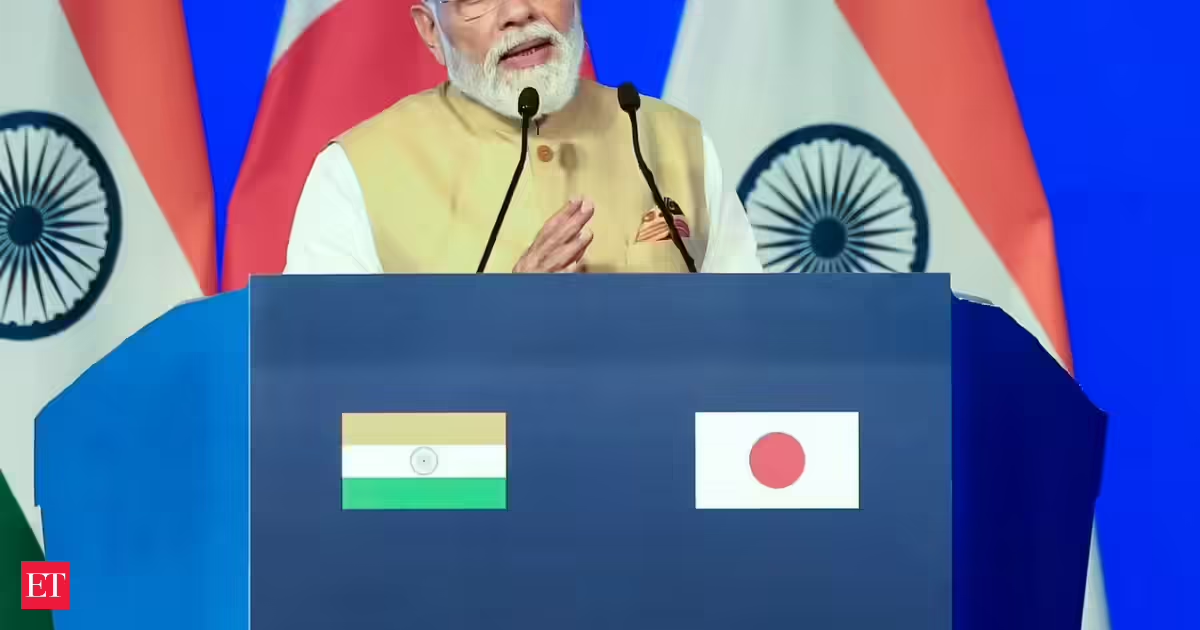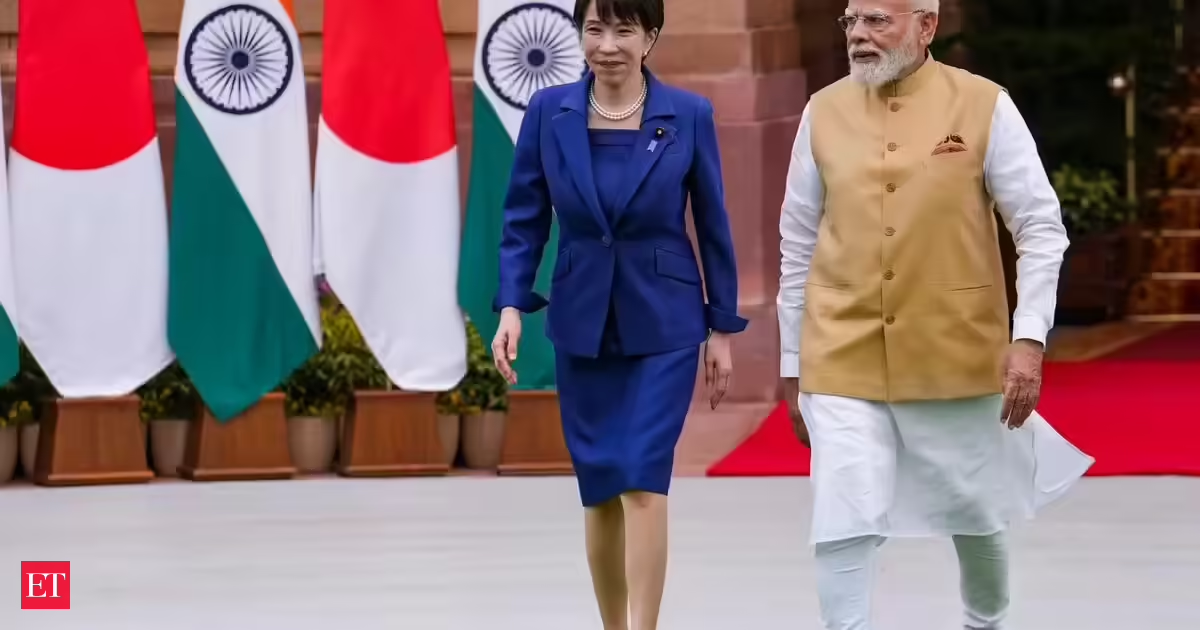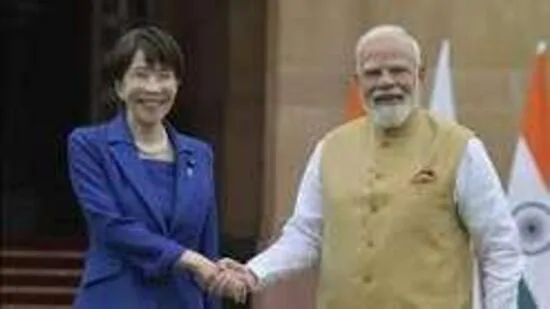
Prime Minister Narendra Modi and Japanese Prime Minister Sanae Takaichi on Thursday jointly inaugurated Maruti Suzuki India’s state-of-the-art vehicle manufacturing facility at IMT Kharkhoda in Sonepat through video conferencing.Describing the inauguration as a landmark moment for the Suzuki Group, Toshihiro Suzuki said the Kharkhoda plant symbolises the success of the India-Japan partnership and the government of India’s ‘Make in India’ initiative. (HT File)As per an official spokesperson of Maruti-Suzuki, spread across 800 acres with an integrated supplier park, the Kharkhoda facility has commenced operations with an annual production capacity of five lakh vehicles, which will eventually be doubled to one million units through a total investment of ₹35,000 crore, making it one of the largest vehicle manufacturing facilities in the world.The project is also expected to create more than 21,000 direct and indirect employment opportunities, while contributing significantly to Maruti Suzuki’s long-term target of achieving an annual production capacity of four million vehicles across India.Senior executives of Suzuki Motor Corporation and Maruti Suzuki India Limited, including representative director and president Toshihiro Suzuki and managing director and CEO Hisashi Takeuchi attended the inauguration along with senior government officials.Describing the inauguration as a landmark moment for the Suzuki Group, Toshihiro Suzuki said the Kharkhoda plant symbolises the success of the India-Japan partnership and the government of India’s ‘Make in India’ initiative.“It is a great honour for Suzuki Group that our most advanced car manufacturing facility has been inaugurated by Prime Minister Narendra Modi and Prime Minister Sanae Takaichi. The plant will expand from its current capacity of half a million vehicles to one million vehicles annually, making it one of the world’s largest automobile manufacturing facilities,” he said.Suzuki said the favourable policy environment under Modi’s leadership has encouraged the company to accelerate investments, employment generation, exports and technology development in India.“The facility also integrates Industry 5.0 manufacturing practices through Human-aware Collaborative Robots (COBOTS), allowing seamless collaboration between workers and automated systems to enhance operational efficiency and manufacturing quality,” he added.
Modi, Japanese PM inaugurate Maruti Suzuki’s Kharkhoda plant
The project is also expected to create more than 21,000 direct and indirect employment opportunities, while contributing significantly to Maruti Suzuki’s long-term target of achieving an annual production capacity of four million vehicles across India
328 words~1 min read